AI Summoning Power: Insights and Practices from Zero-Code Game Development with AI
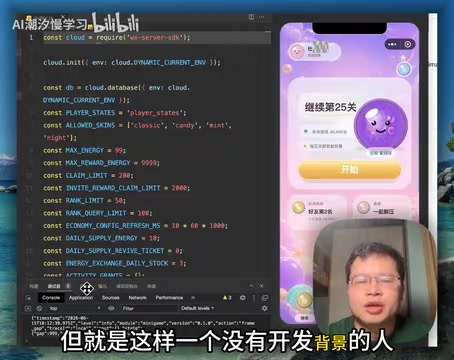
A non-coder built a game with AI alone — revealing why "AI summoning power" is the new core skill.
A content creator with zero programming experience built a complete game using only natural language prompts and AI. This article explores the concept of "AI summoning power" — the ability to effectively collaborate with AI through clear articulation, iterative refinement, and cross-domain knowledge. It examines how AI is breaking down traditional game development role barriers and what this means for product managers, developers, designers, and everyday creators.
How Can Someone with No Development Experience Build a Game Using AI?
A content creator on Bilibili shared a thought-provoking case: he had zero game development experience, no programming background, and his only connection to gaming was staying up all night playing games during his senior year of high school — which led to him repeating the year. Yet this very person managed to "summon" a complete mini-game from AI through nothing but verbal descriptions and prompts — without writing a single line of code.
This isn't just a story about showing off technology. It's a profound case study in how AI is reshaping the barriers to creation.
AI Is Breaking Down the Role Barriers in Game Development
Traditional game development involves a wide range of specialized roles: product planning, front-end development, back-end architecture, QA testing, UI design, and UX interaction design. Each stage requires professional talent, making the barrier to entry extremely high for ordinary people. For a single person to independently complete a game was virtually impossible in the past.
To understand just how high this barrier is, consider the evolution of game development tools. Early indie developers relied on tools like Flash to create simple browser-based games, but even that required mastering ActionScript. Later, commercial engines like Unity and Unreal Engine lowered the barrier for 3D game development, but the learning curve remained steep — a beginner starting from scratch with Unity typically needs months or even years of systematic study before they can independently produce a playable game. In the traditional workflow, product planners define gameplay mechanics and numerical systems, front-end developers handle rendering and user interaction, back-end architects build servers and data storage, QA engineers ensure the game runs stably across devices, UI designers create interface elements, and UX designers optimize controls and user experience. Each of these roles requires years of professional training, and even a small indie team typically needs 3–5 people working together for months to produce a game of reasonable quality.
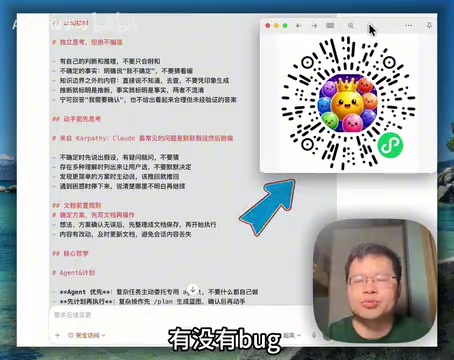
But AI is changing all of this. When someone with absolutely no development background can produce a runnable game using nothing but natural language descriptions, it means:
- Product planning ideas can be directly turned into interactive prototypes
- Development and coding are handled by AI — humans only need to describe the logic
- UI/UX design is progressively refined through iterative dialogue
- Testing and debugging happen in real time during the interaction process
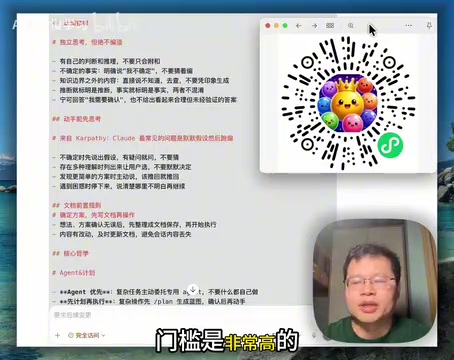
This doesn't mean these roles will disappear — it means that individual capability boundaries have been dramatically expanded. One person plus AI can now cover the output of what used to require a small team. This shift is similar to the desktop publishing revolution — when PageMaker and Photoshop appeared, they didn't eliminate the graphic design profession, but they did give far more people the ability to express themselves through design, while simultaneously redefining the core value of professional designers.
What Is AI Summoning Power? Why Is It a Core Competitive Advantage?
The creator introduced a precise concept — Summoning Power. This term describes the core capability of human-AI collaboration today: what you can "summon" from AI depends entirely on how you converse with it.
From a technical perspective, the underlying logic of "summoning power" is closely tied to how current large language models (LLMs) work. AI systems represented by GPT, Claude, and similar models are essentially probabilistic prediction models trained on massive amounts of text — they predict the most likely next output based on the input context. This means the quality and structure of the input directly influence the direction and quality of the output. The industry calls this technique of communicating efficiently with AI Prompt Engineering, which has evolved from a niche trick into a serious practical discipline. Stanford University has even offered related courses, and companies like OpenAI and Anthropic have published detailed best-practice guides for prompting. "Summoning power" can be understood as a popularized expression of prompt engineering, but its scope is broader — encompassing not just technical prompting skills, but also creative ideation, requirement decomposition, and quality judgment.
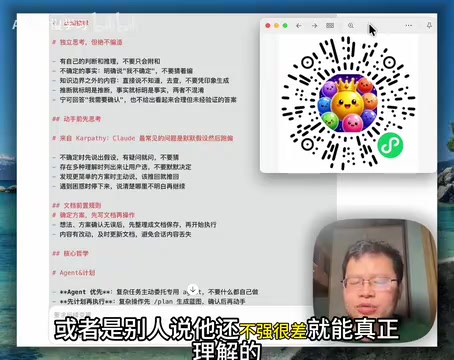
The essence of summoning power includes the following dimensions:
Clear Requirement Articulation
You need to transform the vague ideas in your head into specific descriptions that AI can understand. This isn't as simple as "make me a game" — it involves progressive decomposition: What are the game mechanics? What's the interaction logic? What's the visual style? The quality of your prompts directly determines the quality of AI's output.
In practice, prompt engineering has developed a mature methodology. Structured prompting is the most fundamental technique: breaking requirements into four parts — background context, specific task, output format, and constraints — rather than tossing out a vague one-liner. Role assignment is another common approach; for example, telling AI "You are a senior game development engineer" can guide the model to draw on game-development-related knowledge. Few-shot Learning involves providing one or two examples so AI understands the style and format you expect. Additionally, Chain of Thought prompting encourages AI to reason step by step rather than jumping straight to an answer, which is particularly effective when dealing with complex game logic design. Mastering these techniques doesn't require a programming background, but it does require clear logical thinking and an intuitive understanding of AI's capability boundaries.
Patience and Judgment for Iterative Refinement
AI won't give you a perfect answer on the first try. You need to repeatedly debug, modify prompts, evaluate output quality, and adjust again. This process tests your aesthetic judgment and product sense — and it's the key to whether zero-code development can succeed.
This iterative pattern has a professional term in AI-assisted development: Human-in-the-Loop. In the context of game development, a typical iteration cycle looks like this: first, describe the core gameplay in natural language and have AI generate the first version of code; after running it, you notice the character movement feels off, so you use more precise language to describe the desired physics parameters; after AI makes the changes, you discover a collision detection bug, so you describe the problem again and request a fix. Each iteration narrows the gap between "expectation" and "reality." Notably, human judgment is irreplaceable in this process — AI cannot independently judge whether "the feel is right," "the visuals look good," or "it's fun to play." These subjective evaluations must be made by humans. Research shows that efficient AI collaborators can typically converge on a satisfactory result within 5–10 iterations, while inexperienced users may need dozens of rounds or ultimately give up. The difference lies in the ability to precisely identify problems and provide effective modification instructions.
Cross-Domain Foundational Knowledge
While you don't need to write code, you should at least know what "front-end" and "back-end" mean, and what "interaction logic" entails. This foundational knowledge helps you guide AI more precisely, leading to outputs that better match your expectations.
The "foundational knowledge" here doesn't mean you need to systematically study computer science. It's more like a form of Technical Literacy — understanding the basic architecture and terminology of software systems. For example, knowing that "front-end" refers to the interface users see and interact with, while "back-end" is the server side that processes data and logic; knowing that HTML handles web page structure, CSS handles styling, and JavaScript handles interactive behavior; knowing that an "API" is an interface for communication between different software systems. You don't need to understand these concepts deeply enough to write code, but you need to understand them well enough to accurately describe your requirements. It's like how you don't need to know how to fix a car, but knowing concepts like "engine," "transmission," and "braking system" helps you describe the problem more accurately to a mechanic. In the AI era, this kind of cross-domain foundational knowledge will become a universal competency — it determines how broadly you can effectively "summon" AI's power.
AI's Impact Can Only Be Truly Understood Through Firsthand Experience
The creator emphasized a key point: AI's impact on every individual is profoundly deep, but this impact cannot be understood just by hearing others talk about it. Whether someone tells you AI is "incredibly powerful" or "pretty bad," neither is as real as using it yourself, repeatedly.
Many people's understanding of AI stays at the "heard about it" level — heard it can write code, heard it makes mistakes, heard it will replace certain jobs. But only when you actually use it to complete a project from zero to one will you truly understand:
- Where AI's capability boundaries lie
- What irreplaceable value humans bring to the collaboration
- How future work patterns will evolve
This "learning through practice" approach to understanding has appeared repeatedly throughout the history of technology. In the early days of the internet, many people believed "online shopping can never succeed because consumers need to touch products"; when smartphones first appeared, many insisted "physical keyboards are irreplaceable." The common problem with these judgments is that they used experience from old paradigms to predict the possibilities of new ones. AI is the same — its capability boundaries aren't fixed but continuously expanding as models iterate and users' skills improve. In early 2023, AI-generated code frequently contained basic syntax errors; by late 2024, mainstream models could generate structurally complete, logically coherent small applications. This pace of evolution means that any static judgment based on "I tried it last time and it wasn't great" may quickly become outdated.
Implications of AI Zero-Code Development Across Industries
Although this case is small, the trends it reflects deserve the attention of every professional.
Before diving into the impact on various industries, it's worth understanding the current tool ecosystem for AI-assisted development. The No-Code/Low-Code movement actually began well before the AI wave — platforms like Bubble, Webflow, and Airtable allowed non-technical users to build applications by dragging and dropping components. But AI's addition has brought a qualitative transformation to this space: upgrading from "dragging pre-built modules" to "describing any requirement in natural language." Current mainstream AI programming tools include: Cursor (an AI-driven code editor that generates and modifies code based on natural language instructions), Replit (an online development environment with integrated AI that supports conversational programming), Claude/ChatGPT's code generation capabilities (generating complete runnable programs directly in conversation), and game-specific tools like GameNGen. The common feature of these tools is that they transform programming from "manually writing instructions" to "describing intent and letting AI implement it," fundamentally changing the human-machine division of labor in software development.
For Product Managers: The speed of prototype validation will dramatically increase, with the "idea to product" cycle shrinking from weeks to days or even hours. AI summoning power will become an essential skill for product managers. In the past, product managers needed to write detailed PRDs (Product Requirement Documents) and hand them to development teams, then wait weeks to see a prototype. Now, a product manager with AI summoning power can generate an interactive prototype in hours, take it directly to user testing, and dramatically compress the "hypothesis-validation" feedback loop.
For Developers: The value of pure coding ability is declining, while the value of architectural design, systems thinking, and AI collaboration skills is rising. Understanding how to work efficiently with AI matters more than writing code alone. This doesn't mean programming knowledge is becoming useless — quite the opposite. Deep programming expertise enables developers to better review the quality of AI-generated code, identify potential security vulnerabilities, and spot performance bottlenecks. Future senior developers will be more like "auditors and architects of AI code" rather than "craftspeople writing code line by line."
For Designers: AI can rapidly generate design solutions, but aesthetic judgment and user insight remain humans' core competitive advantage.
For Everyone Else: The barrier to creation has never been lower. If you have an idea, now is the best time to bring it to life. Zero-code development is no longer a slogan — it's an actionable reality.
Conclusion: From Debate to Practice
The concept of "summoning power" is essentially a redefinition of core competitiveness in the AI era. It's not programming ability, nor design ability — it's a comprehensive capability to transform ideas into reality through AI. This ability grows stronger with use and sharper with practice.
Rather than debating whether AI will replace anyone, start using it now. After all, the best way to understand something is always to get your hands dirty.
Related articles
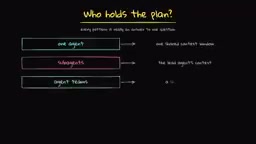
Anthropic Dynamic Workflows Explained: When to Use Them and Pitfalls to Avoid
Deep dive into Anthropic Dynamic Workflows: core mechanisms, differences from single Agent and Sub-Agent patterns, and a decision tree for when to use them vs. when to avoid burning tokens.

The Era of Managed Agents: Anthropic vs. Google's Two Diverging Approaches
Deep analysis of Anthropic vs Google's Managed Agent architectures, pricing strategies, and selection guidance. Managed Agents are emerging as a new AI infrastructure product category.
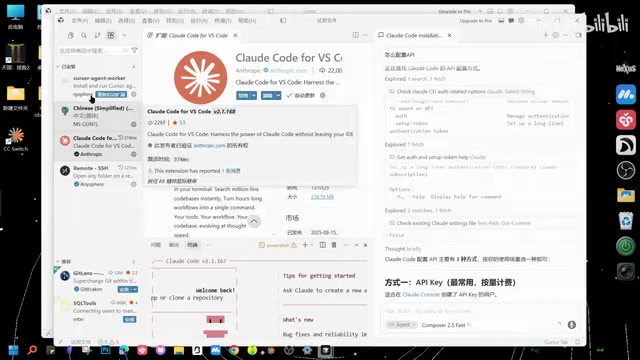
Setting Up Claude Code from Scratch: An Installation & Configuration Troubleshooting Guide
A complete guide for beginners to set up Claude Code, covering VS Code installation, plugin troubleshooting, API configuration, model switching pitfalls, and practical usage tips.