Codex and Claude Code Practical Guide: From Installation to Enterprise Project Deployment
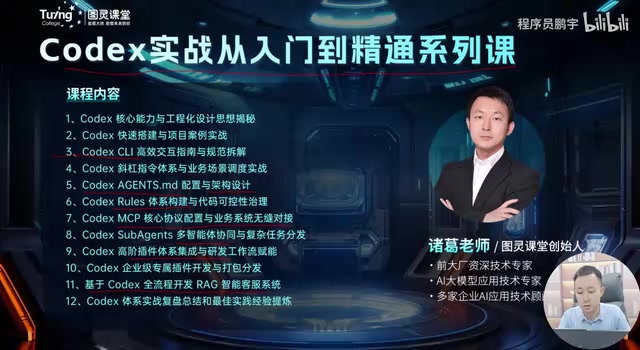
A comprehensive guide to using Codex and Claude Code for enterprise-level AI-assisted development.
This guide provides a complete walkthrough of OpenAI Codex's enterprise capabilities, from CLI installation and agents.md configuration to MCP protocol integration, multi-agent collaboration, and building a RAG-based intelligent customer service system. It covers engineering design principles, plugin systems, and best practices for production deployment.
The Rise of Two AI Programming Powerhouses: Codex and Claude Code
OpenAI's Codex recently underwent a major upgrade, and its code generation and project development capabilities now rival those of Claude Code. For developers, mastering the usage techniques and collaboration methods of these two tools has become key to boosting development efficiency.
OpenAI Codex was originally released in 2021 as the underlying model for GitHub Copilot, fine-tuned from GPT-3 and focused on code generation tasks. Between 2024 and 2025, Codex underwent a significant transformation from a cloud API to a CLI-based local tool, evolving into a full-fledged development platform with comprehensive engineering capabilities. Claude Code, on the other hand, is Anthropic's command-line AI programming assistant, renowned for its deep understanding of large codebases and safety-aligned design. The competition between the two has driven a paradigm shift in AI programming tools—from simple code completion to full-stack development assistants.
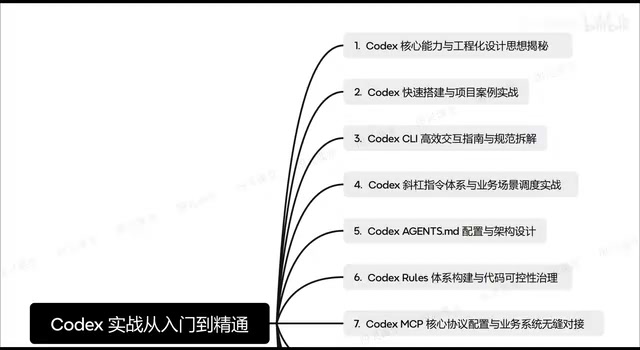
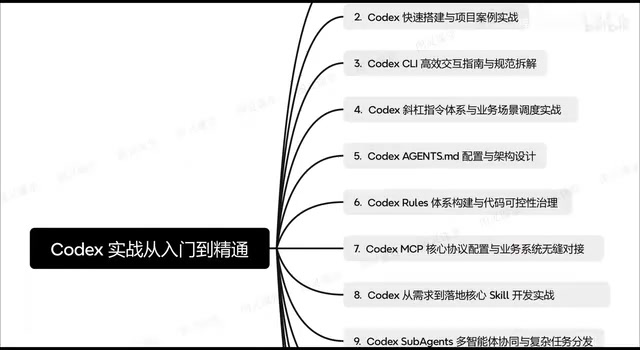
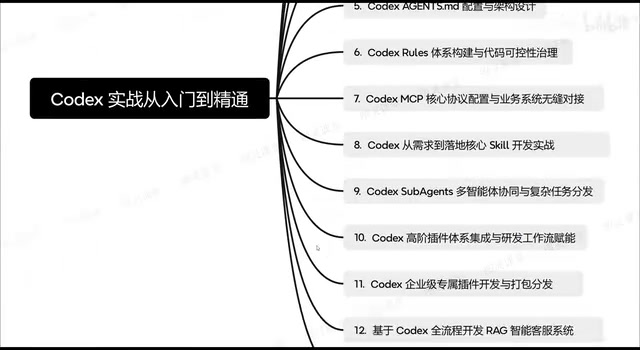
This article is based on a comprehensive Codex practical course curriculum, covering the complete knowledge framework from basic installation to enterprise-level project deployment, helping developers systematically understand and leverage AI programming tools.
Codex Core Capabilities and Engineering Design Philosophy
Codex is far more than a code completion tool—its design philosophy has elevated to the engineering level. Understanding its core capability architecture is a prerequisite for efficient usage.
Core Capability Matrix
- Code Generation and Understanding: Supports multi-language, multi-framework code generation with contextual semantic understanding
- Efficient CLI Interaction: Provides command-line level interaction interfaces suited to developer workflows. The CLI (Command Line Interface) interaction mode offers significant engineering advantages over IDE plugins or web interfaces: it naturally fits into developers' terminal workflows and can seamlessly chain with shell scripts, Git operations, and build tools; it supports pipe operations and batch processing for automation; and it avoids the context-switching cost introduced by GUIs. For developers accustomed to Vim/Neovim or terminal multiplexers (like tmux), CLI mode means the AI assistant can be embedded directly into existing workflows rather than interrupting them.
- Built-in Slash Command System: A complete set of structured commands covering common development scenarios
- MCP Protocol Support: Seamless integration with external systems to extend capability boundaries
Core Advantages of Engineering Design
Unlike traditional AI programming assistants, Codex emphasizes systematic engineering capabilities—it doesn't just help you write a few lines of code, but can participate in project architecture design, rule system construction, multi-agent collaboration, and other advanced scenarios. This makes its value in enterprise projects far exceed simple code completion.
Codex Installation and Development Environment Setup
Basic Environment Configuration Steps
Installing Codex is the first step, and proper environment configuration prevents various issues during subsequent development. The overall process includes:
- Install the Codex CLI tool
- Configure API keys and authentication information
- Initialize the project workspace
- Verify that basic functionality works correctly
Project Initialization from Scratch
After setup is complete, it's recommended to validate the environment through a small project. From requirements analysis, directory structure creation, and core module implementation to testing and deployment—run through a complete development loop. This process helps you quickly familiarize yourself with Codex's working patterns and response characteristics.
agents.md Configuration File and Architecture Design
agents.md is a critical configuration file in Codex projects that defines the AI agent's behavioral specifications, capability boundaries, and collaboration methods.
Configuration File Architecture Design Principles
agents.md and CLAUDE.md represent an emerging extension of "Infrastructure as Code" into the AI programming domain—what could be called "AI Behavior as Code." These configuration files version-control AI agent behavioral specifications, making them auditable, reproducible, and collaborative. This design borrows from the declarative configuration philosophy in DevOps: developers declare the desired AI behavior state rather than imperatively guiding it step by step. Configuration files typically use Markdown format, balancing human readability with machine parsability. Team members can collaboratively iterate on these rules through Git, enabling continuous evolution of AI behavior.
A well-designed agents.md should contain the following core elements:
- Role Definition: Clearly define the AI agent's responsibilities within the project
- Rule Constraints: Set boundaries for code style, security standards, etc.
- Context Information: Provide project background, tech stack, dependencies, and other information
- Collaboration Protocols: Task allocation and communication rules in multi-agent scenarios
Rules System and Code Controllability Governance
Codex's Rules system (similar to Claude Code's CLAUDE.md) is the key mechanism for achieving code controllability governance. Through carefully designed rules, you can ensure AI-generated code conforms to team standards, reducing the burden of manual code review.
MCP Protocol Configuration and Business System Integration
MCP (Model Context Protocol) is the bridge connecting Codex with external business systems. This is a standardized protocol open-sourced by Anthropic in late 2024, designed to solve the connection problem between large language models and external data sources and tools. It adopts a client-server architecture and defines three core primitives: Resources (such as files and database records), Tools (such as API calls and function execution), and Prompts (prompt templates). MCP's design was inspired by LSP (Language Server Protocol), which unified the communication standard between IDEs and programming language services. Through MCP, AI models can dynamically discover and invoke external capabilities without writing custom code for each integration, greatly reducing the engineering complexity of enterprise system integration.
Through MCP configuration, Codex can achieve the following integration capabilities:
- Access enterprise internal knowledge bases and documentation systems
- Call internal APIs and microservices
- Read database structures and business models
- Integrate with CI/CD pipelines
This seamless integration capability is Codex's core competitive advantage in enterprise scenarios and an important feature that distinguishes it from ordinary AI programming assistants.
Multi-Agent Collaboration and Complex Task Distribution
Sub-Agents Collaboration Mechanism Explained
For complex projects, a single AI agent's capabilities are often insufficient. Multi-Agent Systems (MAS) originate from distributed artificial intelligence research, with the core idea of decomposing complex problems into collaborative tasks among multiple autonomous agents. In the AI programming domain, this paradigm borrows from the separation of concerns principle and microservices architecture in software engineering. Each Sub-Agent has an independent context window and specialized system prompts, coordinating work through message-passing mechanisms. This design addresses the attention dilution problem that single large models face when processing extremely long contexts, while allowing different agents to use different models or parameter configurations to optimize performance on specific tasks.
Codex supports the Sub-Agents mode, which can decompose and distribute complex tasks to multiple specialized sub-agents:
- Architecture Agent: Responsible for overall design and module decomposition
- Implementation Agent: Responsible for writing code for specific features
- Testing Agent: Responsible for test case generation and quality verification
- Documentation Agent: Responsible for comments and documentation synchronization
This division-of-labor collaboration model greatly improves efficiency when handling enterprise-level complex projects, and is especially suitable for large team development scenarios.
Plugin System and R&D Workflow Empowerment
Advanced Plugin Integration Solutions
Codex's plugin system allows developers to extend its capability boundaries. Common plugin types include:
- Code review plugins
- Performance analysis plugins
- Security scanning plugins
- Deployment automation plugins
Enterprise-Level Plugin Custom Development
For teams with special requirements, Codex supports custom development of enterprise-exclusive plugins. After development, plugins can be packaged and distributed, enabling capability sharing within or across teams, further amplifying the organizational value of AI programming tools.
Enterprise Practice: RAG Intelligent Customer Service System Development
The entire course curriculum ultimately connects all core capabilities through a complete RAG (Retrieval-Augmented Generation) intelligent customer service system project.
RAG (Retrieval-Augmented Generation) is a technical framework proposed by Meta AI in 2020 that combines external knowledge retrieval with language model generation to solve the knowledge cutoff and hallucination problems of large models. Its core workflow includes: document chunking, vector embedding, index storage (typically using vector databases like FAISS, Pinecone, or Milvus), semantic search, and context-augmented generation. In intelligent customer service scenarios, RAG ensures that answers are based on actual enterprise knowledge base content rather than the model's parametric memory, significantly improving answer accuracy and traceability.
The specific development workflow is as follows:
- Requirements Analysis and Architecture Design: Use Codex for requirements decomposition and technology selection
- Knowledge Base Construction: Connect to documentation systems via MCP to build vector indexes
- Core Module Development: Multi-agent collaboration to complete retrieval, generation, dialogue management, and other modules
- Testing and Optimization: Automated test case generation and performance tuning
- Deployment and Launch: Automated deployment through the plugin system
This practical project fully demonstrates Codex's end-to-end development capabilities from requirements to launch, and validates the feasibility of multi-agent collaboration in real business scenarios.
Summary and Best Practice Recommendations
After its major version upgrade, Codex now possesses complete capabilities for enterprise-level project deployment. Here are battle-tested best practices:
- Plan Before Executing: Invest time in designing your agents.md and Rules system—sharpening the axe won't delay the woodcutting
- Leverage MCP Protocol: Maximize the use of existing business system data and capabilities
- Multi-Agent Collaboration: Don't force a single agent to handle complex tasks—decompose and distribute them appropriately
- Continuously Iterate Rules: Continuously optimize configurations and constraints as the project progresses
For developers looking to upgrade AI programming tools from "toys" to "productivity tools," systematically mastering Codex's complete capability system is one of the most worthwhile time investments right now.
Related articles
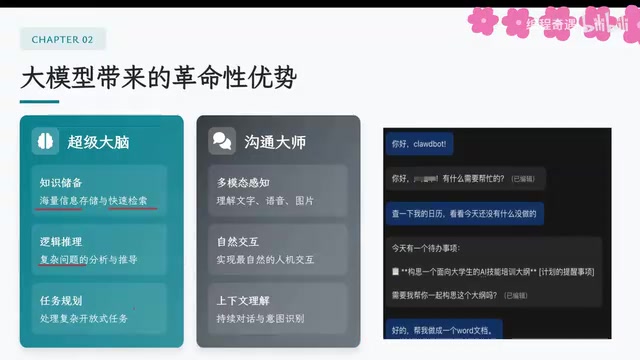
AI Agent Core Architecture Breakdown: From Concept to Enterprise-Grade Intelligent Agent Development
Deep dive into AI Agent architecture: perception, brain, and action modules. Covers RAG memory systems, tool calling mechanisms, Chain of Thought reasoning, and enterprise agent development roadmap.
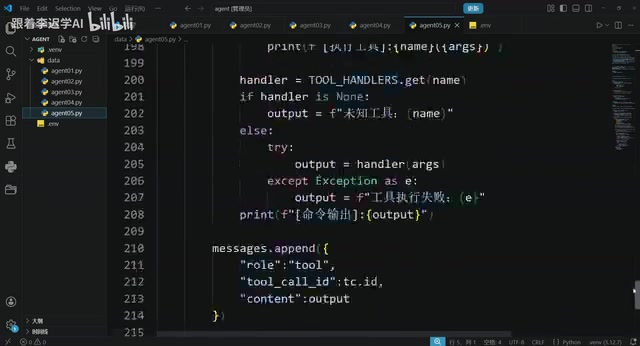
Hands-On Tutorial: Build an AI Agent from Scratch with 200 Lines of Python
Build an AI Agent from scratch with 200 lines of Python, covering prompts, memory, tool calling, RAG, and Skills — a practical guide for developers.
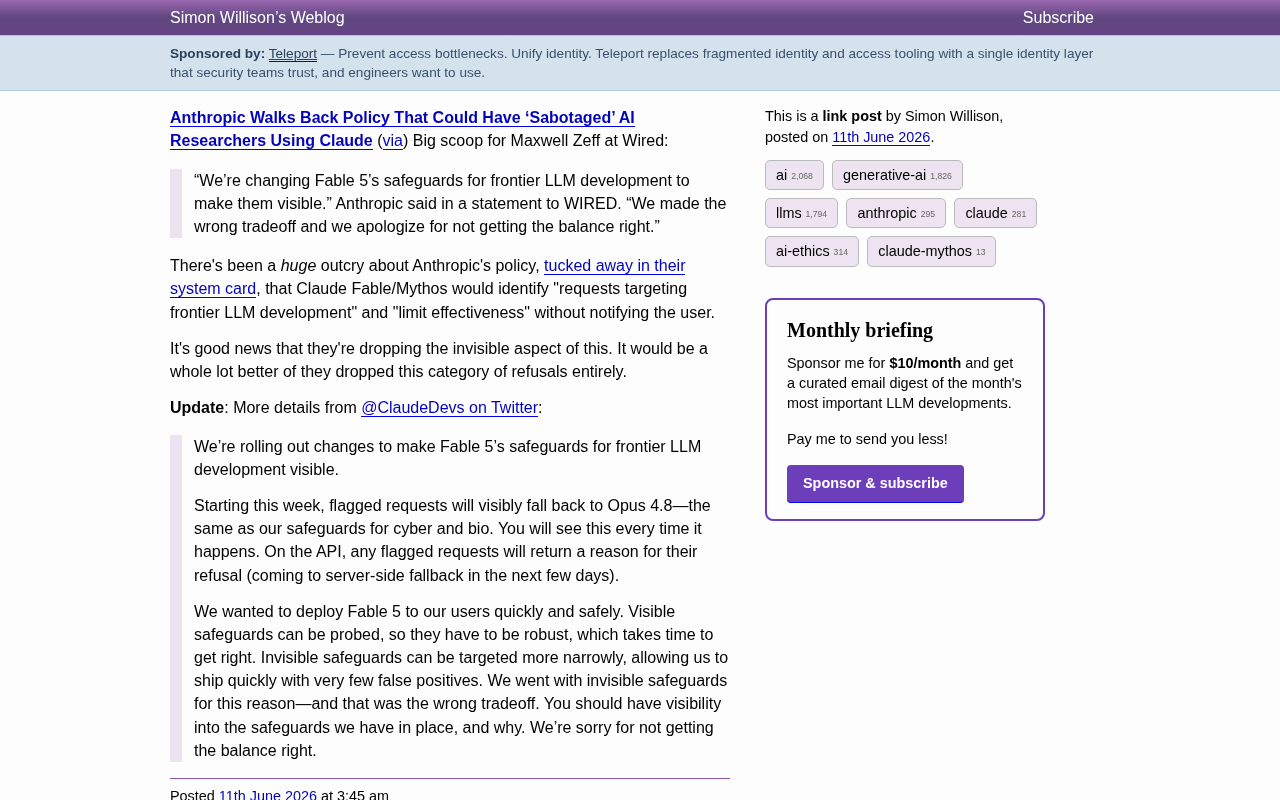
Anthropic Reverses Controversial Policy of Secretly Throttling AI Researchers Using Claude
Anthropic reverses its controversial policy of secretly throttling Claude Fable/Mythos responses to frontier LLM development requests after community backlash, raising critical questions about AI transparency.