Codex Powers Hedge Fund: Economic Analysis Cut from 2 Days to 30 Minutes

$20B hedge fund BAM uses OpenAI Codex to slash economic analysis from 2 days to 30 minutes.
Balyasny Asset Management (BAM), a $20B+ multi-strategy hedge fund, has achieved transformative results with OpenAI Codex and o3/4o models. Economic analysis that once took two days now takes 30 minutes, earnings reports are processed in near real-time, and 97% of employees actively use the AI platform daily. BAM predicts 2026 will mark AI's shift from information retrieval to autonomous task execution, reshaping competitive dynamics across the hedge fund industry.
Core Overview
Balyasny Asset Management (BAM) is a global multi-strategy hedge fund with over $20 billion in assets under management. Founded by Dmitry Balyasny in Chicago in 2001, the firm operates a multi-strategy hedge fund model — running multiple independent investment strategies simultaneously on a single fund platform, including equity long/short, macro trading, quantitative strategies, and event-driven approaches, diversifying risk through low correlation between strategies. In recent years, multi-strategy platform funds like Citadel, Millennium, and Point72 have become the dominant force in the hedge fund industry, and BAM ranks among the top players in this space.
Recently, the firm shared the real-world business results of adopting OpenAI Codex along with o3/4o models — economic analysis that once took two days can now be completed in just 30 minutes, a nearly 100x improvement in efficiency.
This is more than a technology upgrade story — it's a landmark case of deep AI adoption in the financial industry. When 97% of employees are using an AI platform daily, this is no longer a "pilot project" — it's a complete transformation of how work gets done.

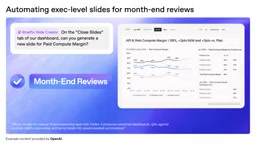

From Coding Tool to All-Purpose Assistant: Codex's Capability Evolution
BAM initially introduced Codex as a programming assistant to help quantitative teams accelerate code development. But the team quickly discovered that Codex's capabilities extended far beyond that.
To understand this transformation, it helps to know Codex's technical evolution. OpenAI Codex was originally a code generation tool fine-tuned on the GPT model series, capable of understanding natural language instructions and converting them into executable code, supporting Python, JavaScript, and dozens of other programming languages. In 2025, OpenAI gave Codex a major upgrade, repositioning it as a cloud-based software engineering agent capable of handling multiple tasks in parallel within a sandboxed environment, including writing feature modules, fixing bugs, and performing code reviews. Meanwhile, o3 and o4-mini belong to OpenAI's reasoning model series — unlike traditional GPT models, these models perform internal chain-of-thought reasoning before generating responses, significantly outperforming previous generations on tasks requiring multi-step logical reasoning such as math, programming, and scientific analysis. As the lightweight version, o4-mini dramatically reduces inference cost and latency while maintaining strong reasoning capabilities, making it particularly well-suited for enterprise scenarios requiring high-frequency calls.
According to BAM's technology lead, models like o3-mini/o4-mini "truly unlocked a new level of intelligence and a whole new tier of work that the system could accomplish." This means AI has expanded from pure code generation to multiple core business scenarios including investment research, earnings analysis, and back-office operations automation.
Key Business Areas Covered by the AI Platform
BAM's AI platform currently covers the following key business areas:
- Investment Research: Macroeconomic analysis, industry trend assessment
- Programming & Development: Quantitative strategy code, data pipeline construction
- Back-Office Operations: Process automation, compliance checks
- Earnings Analysis: Real-time interpretation of public company earnings reports
Among these, quantitative strategy code development and data pipeline construction are core tasks for hedge fund technology teams. Quantitative investing relies on mathematical models and statistical methods to identify trading opportunities in the market. The entire workflow includes factor mining, signal construction, backtesting, risk management, and execution optimization — each step requiring extensive programming work. A Data Pipeline refers to the automated process of collecting raw data from multiple sources (such as exchange market data, alternative data, news feeds, satellite imagery, etc.), cleaning, transforming, and standardizing it before storing it in a data warehouse for use by research and trading systems. The introduction of AI-assisted programming tools has enabled pipelines that previously required senior engineers weeks to build to have prototypes completed in days or even hours.
Speed Is the Edge: Real-Time Earnings Analysis
In the hedge fund industry, "speed to insight" is a core competitive advantage. This concept carries deep economic significance: under the efficient market hypothesis framework, public information is rapidly reflected in asset prices, so whoever can form effective judgments fastest after information is released can capture alpha (excess returns) before prices fully adjust. When an earnings report drops, whoever can extract key information and form investment judgments the fastest gains the upper hand in the market.
Take Earnings Season as an example — thousands of publicly traded companies release their quarterly results in concentrated windows each quarter in the U.S. stock market, with many choosing to report after market close or before market open, leaving analysts an extremely limited reaction window. A standard 10-Q (quarterly report) or 10-K (annual report) can run dozens or even hundreds of pages, containing income statements, balance sheets, cash flow statements, Management Discussion & Analysis (MD&A), and vast amounts of other information. Under the traditional model, analysts need to compare actual figures against consensus estimates item by item, identify key deviations, and then form investment judgments incorporating industry context.
BAM reports that with the combination of Codex and the latest models, earnings analysis can now be completed "nearly in real time." AI intervention has transformed this workflow from "manual reading → extraction → analysis" to "automated parsing → structured comparison → anomaly flagging," compressing core information extraction to the minute level. This is enormously significant for a multi-strategy fund — in the past, analysts might need hours or longer to digest a complex earnings report, but now AI can complete preliminary analysis in minutes, allowing portfolio managers to focus their energy on the decision-making layer.
What a 97% Daily Active Adoption Rate Really Means
One number worth reflecting on: 97% of employees use the AI platform every day.
In enterprise AI deployment, adoption rate is often the biggest challenge. According to multiple industry surveys, there is a significant gap between what large enterprises invest in AI tools and actual usage — research from firms like Gartner shows that many enterprise AI projects struggle to scale beyond the pilot phase, with employees refusing to use them due to operational complexity, lack of trust, or workflow misalignment. The typical enterprise AI adoption curve exhibits a "long tail" pattern: a small number of tech-forward pioneers actively use the tools, while most employees try them occasionally before reverting to traditional workflows. Many companies purchase AI tools but see actual usage rates of less than 20-30%.
BAM's ability to achieve 97% daily active usage reflects several key factors:
- Top-down strategic commitment: Leadership views AI as a core competitive advantage, not an optional tool
- Broad scenario coverage: The platform serves not only technical teams but also non-technical roles
- Demonstrably significant results: When a tool genuinely saves time and improves quality, users naturally adopt it proactively
BAM's AI platform is not a standalone add-on tool but is deeply embedded in employees' daily workflows — from research and analysis to internal communications, from code development to operations management, virtually every role can find an entry point where AI boosts efficiency. This "ubiquitous" design philosophy, combined with strong leadership support and ongoing internal training, is the fundamental guarantee of high adoption rates.
Future Outlook: AI's Evolution from "Search" to "Execution"
BAM's forward-looking assessment is that 2026 will be the pivotal year when AI transitions from "a system that can search for information" to "a system that can execute work."
This assessment aligns closely with industry trends. The current AI Agent wave is driving this transformation. Unlike traditional "Q&A-style" AI, agents possess the ability to autonomously plan, invoke tools, perceive their environment, and execute iteratively. A typical AI Agent workflow looks like this: receive a high-level objective → decompose the objective into subtasks → sequentially invoke external tools such as search engines, databases, APIs, and code executors → dynamically adjust strategy based on intermediate results → output a complete work product. AI is no longer just answering questions — it can autonomously complete complex multi-step tasks.
For the financial industry, this means AI will move from "assisted analysis" to "autonomous execution," including automatically monitoring global macroeconomic indicators and generating alert reports, automatically updating valuation models based on the latest data, automatically performing pre-trade compliance checks within regulatory frameworks, and even generating preliminary investment recommendations. BAM predicts 2026 will be the critical inflection point when agents move from concept to large-scale production deployment — a view highly consistent with the product roadmaps of major AI companies like OpenAI, Anthropic, and Google, all of which are accelerating the construction of more reliable and controllable agent infrastructure.
As BAM puts it: "We're at the frontier, and everyone is exploring what these systems can do next. This requires not just the ability to build tools, but the imagination for what we can build."
Implications for Finance and Knowledge-Intensive Industries
For the financial industry and all knowledge-intensive industries, BAM's case offers several important takeaways:
- AI's value lies not in point solutions but in comprehensive penetration: When an entire organization uses AI, efficiency gains become multiplicative
- The capability leap in the latest models is real: From coding tool to all-purpose analytics platform, model capability improvements directly expand the boundaries of application
- First-mover advantage is forming: In the fiercely competitive hedge fund industry, gaps in AI capability may directly translate into gaps in investment returns
The AI race in the hedge fund industry has shifted from "whether to adopt" to "who goes deeper." Leading funds like Citadel built massive technology teams years ago, with founder Ken Griffin publicly stating multiple times that technology is a core competitive moat. Two Sigma positions itself as "a technology company that does investing," with a large proportion of data scientists and engineers among its 1,600+ employees. Against this backdrop, gaps in AI capability are producing compounding effects: stronger AI capability → faster information processing → better investment decisions → higher returns → more capital inflows → larger technology investment budgets. This positive feedback loop means that funds that fail to build AI capabilities in time may face the dual pressure of talent drain and capital outflows.
BAM's practice demonstrates that even without being the largest fund, through decisive technology investment and an organization-wide adoption strategy, a firm can still secure an advantageous position in the AI race. The real competitive edge comes from deeply embedding AI into every business function — not from dabbling superficially.
Related articles

Five Common Claude Code Mistakes — How Many Are You Making?
Five common Claude Code mistakes developers make: copy-pasting code, skipping CLAUDE.md, inefficient prompting, ignoring docs, and poor context management — with fixes.
Andrew Ng's New Course Explained: A Practical Guide to Using OpenAI's O1 Reasoning Model
Deep dive into Andrew Ng and OpenAI's Reasoning with O1 course covering test-time scaling, new prompting paradigms, multi-model orchestration, and practical applications for developers.

Learning AI After College Entrance Exams: A Complete Path from Zero to Freelancing
How to efficiently learn AI skills during summer break after exams? A complete path from mastering prompts and hands-on projects to freelancing on platforms.