Codex Technical Anatomy: From CLI to Cloud Agent to Multi-Agent Orchestration Platform
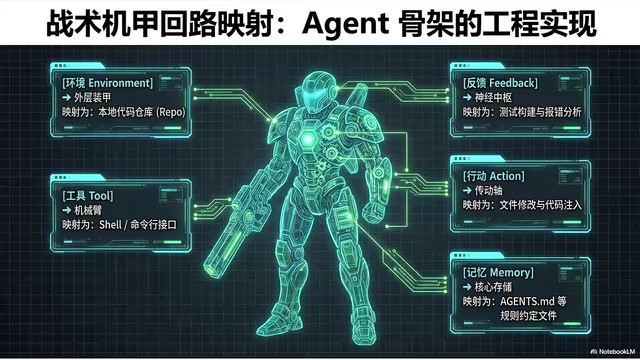
How OpenAI Codex evolves AI coding from single-Agent assistants to multi-Agent orchestration platforms.
This article dissects OpenAI Codex's three-layer architecture — Codex CLI as a local terminal Agent, cloud Agents running asynchronously in isolated sandboxes, and Codex App as a multi-Agent command center. It reveals how AI programming tools are evolving from single-Agent assistants to multi-Agent orchestration platforms, shifting developers from writing code to commanding and managing Agent workforces.
Introduction: Codex Is No Longer Just a Model
Many people still think of Codex as "that large model that writes code," but today's Codex is no longer a model name at all — it's an entire suite of Agent product forms built around software engineering tasks.
It consists of three layers: Codex CLI running in your local terminal, cloud Agents working independently in isolated sandboxes, and Codex App as a desktop workbench for multi-task management. Behind all of this lies an extremely important trend: AI programming tools are evolving from single assistants to multi-Agent orchestration platforms, and developers are moving from chatting with one Agent to managing an entire Agent workforce.
Codex CLI: The Scout in Your Local Terminal
Codex CLI's product positioning is similar to Cloud Code — both are terminal-based Coding Agents that run within local projects, capable of reading code, modifying files, running commands, and iteratively advancing tasks based on feedback.
Its core value boils down to one sentence: it never leaves your development environment. Whichever project directory you launch it in, that's the project it faces. It locks onto your real project directory, syncs with your real configuration files, and receives real local test results. It's not standing outside the project offering suggestions from a distance — it's squatting right in your trenches, making judgments based on the actual battlefield.
How Codex CLI Maps to the Agent Skeleton
The Agent Skeleton is a general framework for describing the components of an AI Agent system, originating as an engineering extension of the Agent-Environment interaction paradigm from reinforcement learning. A complete Agent typically includes six core modules: perception, tools, action, feedback, memory, and permissions. Understanding this skeleton lets you quickly assess the capability completeness and design trade-offs of any Agent product.
Codex CLI maps perfectly to this standard skeleton:
- Code repository → Environment (Perception)
- Shell → Tools
- File modifications → Action
- Test and build results → Feedback
- agents.md rules file → Project Memory
- Sandbox and approval → Permission Boundaries
Among these, agents.md is a convention-based project-level configuration file placed in the root directory of a code repository. It uses natural language to tell the Agent about the project's tech stack, coding standards, architectural conventions, testing strategies, and other key information. It's essentially an externalized form of "project memory" — turning the tacit knowledge that previously existed only in team members' heads into explicit instructions that the Agent can directly read. Similar mechanisms have different names across products, such as CLAUDE.md in Claude Code and .cursorrules in Cursor. The core insight behind this design is: large models don't inherently understand your specific project, but if you write down the project's "unwritten rules" as a document and feed it to them, they can make more reasonable judgments within that project's context.
Perception, tools, action, feedback, memory, permissions — nothing missing. From a skeleton perspective, Codex CLI and Cloud Code belong to the same category — local terminal-based Agents. If you understand Cloud Code, understanding Codex CLI is virtually effortless.
Cloud Agent: From Synchronous Blocking to Asynchronous Delegation
What truly sets Codex apart is that it breaks out of the local environment and can process software engineering tasks in parallel within cloud sandboxes.
Three Fundamental Changes Brought by Cloud Agents
In the past, when you used AI programming tools, it was mostly synchronous collaboration between human and AI — you ask something, it takes a step, you review, then continue. The entire process was blocking; you had to sit in front of the screen waiting for results.
Cloud Agents flip this approach entirely. You can delegate a relatively complete task wholesale and let it run on its own. This brings three fundamental changes:
- From synchronous to asynchronous — you don't need to watch the screen; you can work on other things simultaneously
- From single-task to multi-task — multiple cloud Agents can run different jobs at the same time
- Agents transform from chat partners to engineering execution units — they can be assigned work and deliver results
Task Types Suitable for Cloud Agent Delegation
Typical delegatable tasks include: fixing a bug, implementing a relatively independent small feature, answering codebase-related questions, writing a set of tests, performing a specific type of refactoring, or preparing a PR. What these tasks have in common is: relatively clear boundaries and the ability to be delivered independently.
The Agent runs inside a cloud sandbox, executes tasks within the code repository, runs tests, and sends results back — which might be a Diff, a ready-made PR, or a summary report.
The Diff mentioned here is a differential representation of code changes, showing line-by-line comparisons of files before and after modification. A PR (Pull Request) is a Git-based collaboration workflow where developers submit changes from their branch as a PR for team members to review (Code Review) before merging into the main branch. This workflow is the core mechanism for quality control in modern software teams — it ensures no code change can bypass human review and go directly into production. Codex forces all Agent output through Diffs and PRs, meaning the Agent's status is equivalent to a junior developer on the team: it can write code and submit changes, but the final decision on whether to adopt them always rests with the human reviewer. This is the concrete implementation of the "Human-in-the-Loop" principle in AI programming scenarios.
Sandbox Isolation: The Security Foundation of Cloud Agents
Being able to execute real tasks in the cloud means real risks. The sandbox is an absolute domain erected around each Agent:
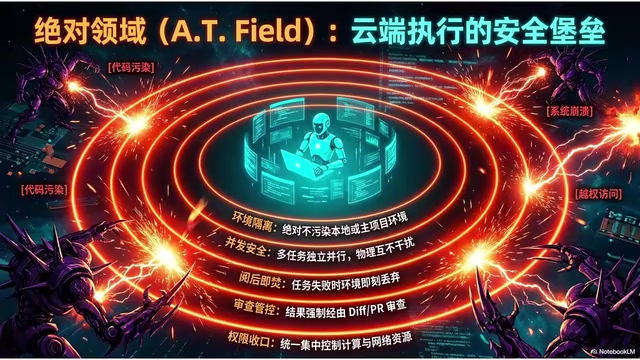
The value of sandboxes for programming Agents includes at least five aspects:
- Environment isolation: Never pollutes the local or main project environment
- Concurrency safety: Multiple tasks run independently, physically non-interfering
- Ephemeral by design: If a task fails, the environment is destroyed immediately, leaving no garbage
- Review and control: All results must go through Diff or PR, reviewed just like reviewing a colleague's code
- Comprehensive containment: Network, paths, and resources are all locked down at the sandbox layer
This illustrates something important: an Agent's advanced capabilities are never about letting AI do whatever it wants, but about giving it an isolated, controllable, and auditable execution space. This is directly in line with CI containers — CI (Continuous Integration) is a foundational practice in modern software engineering, with the core idea that every code change automatically triggers builds and tests. CI systems (such as GitHub Actions, Jenkins, GitLab CI) typically execute tasks in containerized environments — each build spins up a fresh Docker container or virtual machine, which is destroyed immediately after completion. This "use and discard" pattern delivers extremely high security and reproducibility: even if a build script has bugs or malicious code, it won't affect the host machine or other tasks. Codex's cloud sandbox fully borrows this approach, essentially extending CI's distrust of build scripts to distrust of AI Agents — not refusing to use them, but using them in isolated environments.
Codex App: The Command Center for Multi-Agent Orchestration
This is the most noteworthy part of the entire product line. Codex App positions itself as the "Agent Command Center."
When an Agent can truly complete relatively whole tasks independently, the developer's next thought is inevitably: can I dispatch several at once? This thought flips the entire problem on its head. Previously we cared about how to make one Agent smarter; now we care about how to effectively manage multiple Agents.
Core Challenges of Multi-Agent Management
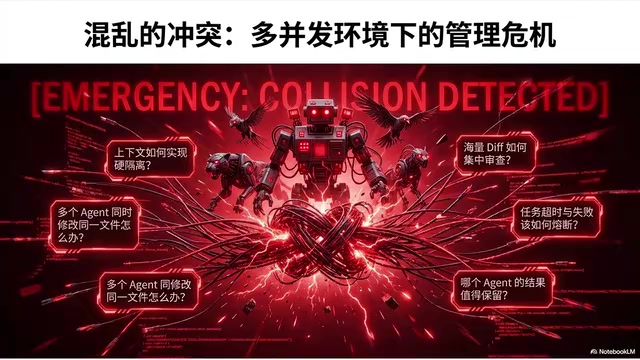
With multiple Agents working simultaneously, a string of new problems immediately emerges:
- How do you isolate context across multiple Agents?
- Will they collide by trying to modify the same file simultaneously?
- How do you centrally review the pile of Diffs produced by different tasks?
- How do you handle tasks that time out or fail?
- How do you switch between and make decisions across so many tasks?
These are all management-level problems, not questions about how smart the model is.
Implementation of Multi-Agent Physical Isolation
Multi-Agent programming can't avoid physical isolation. Implementation follows two pipelines:
- Local zone: Uses Worktrees, with each Agent modifying different branches in independent Worktrees
- Cloud zone: Uses sandboxes, with each Agent running in an independent environment
Git Worktree is a natively supported Git feature that allows multiple working directories to be checked out simultaneously under the same repository, each corresponding to a different branch. In the traditional approach, a repository can only have one working directory at a time, and switching branches means all files in the directory change accordingly. Worktree breaks this limitation — you can use the git worktree add command to create multiple independent working directories, each locked to a different branch, with file modifications completely isolated from each other. This feature was originally designed for developers handling multiple branches simultaneously, but it gained new life in multi-Agent scenarios: assigning each Agent an independent Worktree guarantees at the physical level that multiple Agents modifying code simultaneously won't overwrite or conflict with each other — a zero-additional-cost concurrency isolation solution.
Both mechanisms serve exactly the same purpose — making parallelism safe.
It's worth pointing out that Codex App didn't invent any new mechanisms from scratch. What it actually does is take capabilities that were previously scattered across Git, CI, and the command line — task lists, Worktrees, sandboxes, Diff review, status tracking — and reintegrate them into a unified interface according to Agent workflow requirements. It's not new invention; it's reorganizing old mechanisms around Agent needs — and this is precisely where productization shows the most craftsmanship.
The Developer's New Skill Tree: From Writing Code to Commanding Agents
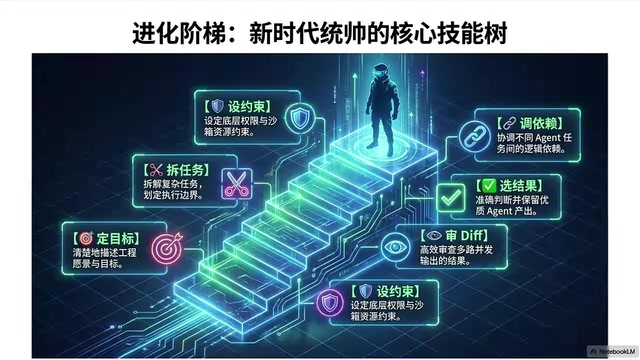
Sitting in the command seat, you need to unlock an entirely new set of skills:
- Define objectives — Clearly describe vague requirements
- Decompose tasks — Break large jobs into smaller pieces that can be independently delegated
- Set constraints — Draw permission boundaries for each Agent
- Manage dependencies — Coordinate sequencing and dependencies between multiple tasks
- Select results — Judge which Agent's output is worth keeping
- Review — Watch every Diff and guard the final gate
Notice that none of these skills involve burying your head in writing code yourself — they're all about commanding and judging. This kind of role transformation isn't unprecedented in software engineering history — from hand-written assembly to high-level languages, from manual deployment to CI/CD automation, every tool leap has freed developers from lower-level execution details and pushed them toward higher-level design and decision-making. What's different about the AI Agent era is that what's being abstracted away this time isn't some technical step, but the act of "writing code" itself. Developers' core competitiveness is shifting from "being able to write good code" to "being able to decompose problems clearly, manage Agents effectively, and review results thoroughly."
Cloud Code vs Codex: Not Replacement, but Different Levels of Agent Form
- Cloud Code excels at: Engineering refinement of terminal-based Agents, pushing a single local Agent to its limits — Cloud.md, hooks, skills, MCP, subagents all revolve around a single session
- Codex excels at: Productization of multi-Agent orchestration and task management — CLI is the entry point, cloud Agents are the underlying capability, and Codex App is the command workbench
Two key concepts from Cloud Code are worth elaborating here. MCP (Model Context Protocol) is an open protocol proposed by Anthropic aimed at standardizing connections between large models and external tools and data sources — similar to a USB port for the AI world — allowing different tool providers and model consumers to connect through a unified protocol rather than writing custom integrations for every combination. Subagents represent a hierarchical design pattern in Agent architecture: a main Agent can delegate subtasks to specialized sub-Agents, each with its own independent context and toolset. The main Agent handles orchestration and decision-making while sub-Agents handle specific execution. Cloud Code integrates MCP and Subagents into a single-session workflow, representing deep engineering of capability extension and task decomposition within a single Agent.
They represent two different levels of Agent evolution: Cloud Code represents single-Agent maturity, while Codex represents multi-Agent orchestration. The future will likely look like this — use one in the terminal for fine-grained tasks, another in the cloud for batch delegation, and a third in the IDE for local modifications, each occupying its own ecological niche.
Summary: The Evolution Path from Single Agent to Multi-Agent Orchestration
Codex's three-layer architecture clearly maps the evolution path of AI programming tools:
- CLI layer: Local terminal Agent, belonging to the same category as Cloud Code
- Cloud Agent layer: Enabling tasks to run asynchronously, in parallel, and in isolation
- Codex App layer: Turning multi-Agent management into a unified command workbench
The core trend it represents can be summed up in one sentence: Single Agents are evolving into multi-Agent systems, developers are moving from using Agents to managing Agents, and control is being handed over.
Key Takeaways
Related articles
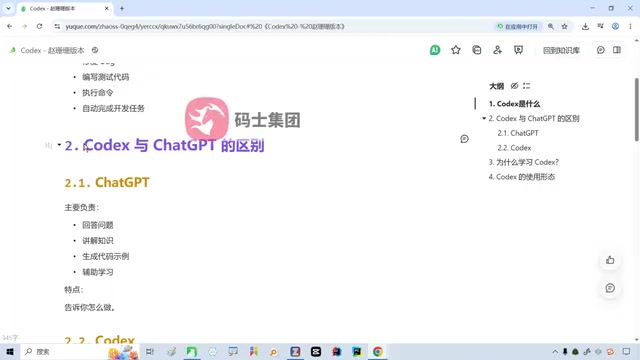
Codex AI Coding Agent Explained: What's the Real Difference from ChatGPT?
Deep dive into OpenAI's Codex coding agent, comparing Codex vs ChatGPT in programming scenarios and how AI agents are reshaping software development.
Databricks Open-Sources Omni: A Meta-Framework for Unified Management of All AI Agents
Databricks open-sources Omni under Apache 2.0 — a meta-framework unifying Claude Code, Codex & more AI Agents with shared sessions, cross-vendor review & enforced security policies.
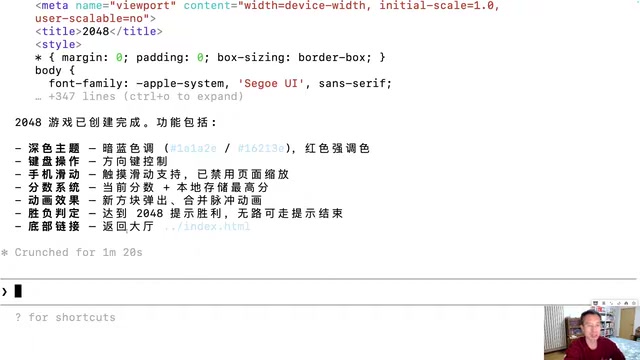
Generating 10 Web Games with One-Line Prompts: A Hands-On Claude Code Experience
A senior developer uses Claude Code to generate 10 playable web games including 2048, Gomoku, and Tetris with one-line prompts in under an hour. A deep dive into AI programming's real capabilities.