Codex vs Claude Code: AI Coding Agent Tool Comparison & Getting Started Guide
A comprehensive comparison of Codex and Claude Code, the two leading AI coding agent tools.
This guide compares OpenAI's Codex and Anthropic's Claude Code — two top-tier AI coding agents. It explains how agent tools differ from large models, analyzes each tool's architecture and ideal use cases, surveys the global AI coding tool landscape, and offers practical prompt engineering tips for both developers and non-programmers.
What Are AI Coding Agent Tools?
With AI technology evolving rapidly, many people still confuse the roles of various AI tools. Simply put, current AI tools can be divided into two major categories: large model tools and agent tools.
Large models (such as GPT, Claude, etc.) function like a "brain" — they can think and answer questions, but fundamentally they're just processing information and generating text. From a technical perspective, today's mainstream large language models are built on the Transformer architecture, learning statistical patterns and knowledge representations through pre-training on massive text datasets. When you ask a question, the model is essentially performing "next token prediction" — generating the most probable output sequence step by step based on the input context. While this process may look like "thinking," the model itself has no ability to proactively execute external operations. Its boundaries stop at text input and output.
Tools like OpenAI's Codex and Anthropic's Claude Code, on the other hand, are AI agent tools — they don't just have a "brain," they also have "hands and feet," capable of actually executing tasks, manipulating code, and completing development work. The core architecture of agent tools follows a "perceive-plan-execute" loop: first perceiving the user's requirements and current environment state (such as project code structure and file contents), then using the large model for reasoning and task planning (breaking complex requirements into multiple sub-steps), and finally executing operations through Tool Use / Function Calling mechanisms — including reading and writing files, running terminal commands, calling APIs, executing tests, and more. This three-layer architecture of "large model + tool calling + environment interaction" is precisely what distinguishes agents from ordinary chatbots.
This distinction is crucial: large models tell you "how to do it," while agent tools directly "do it for you."
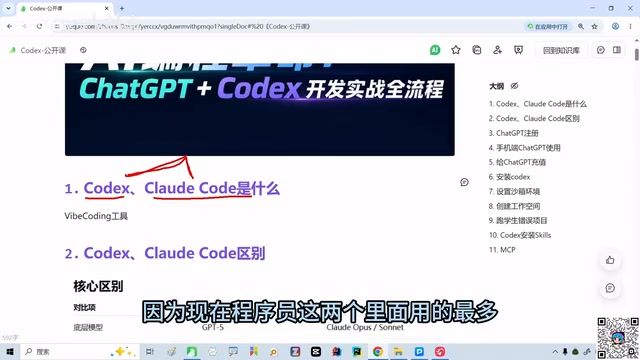
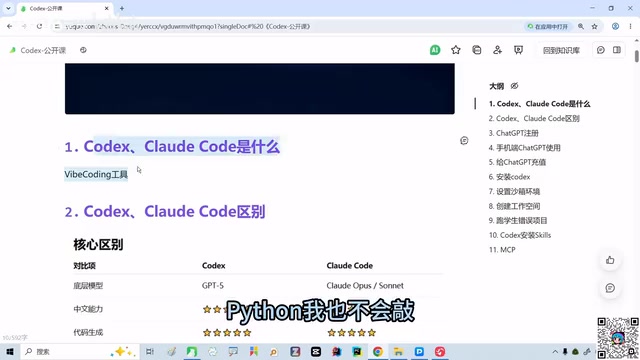
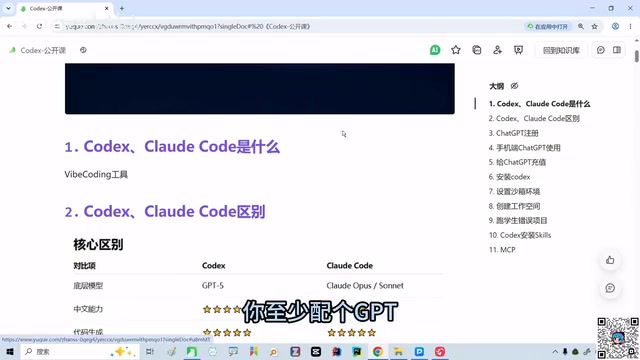
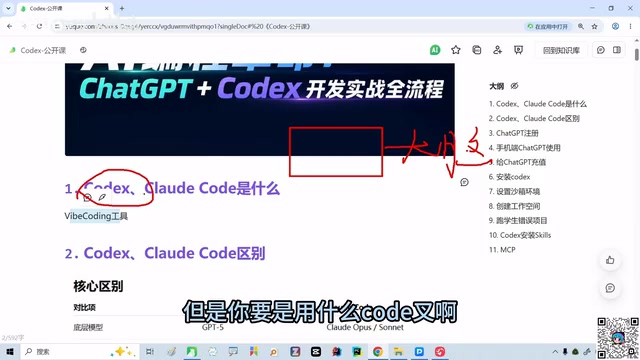
Codex vs Claude Code: A Comparison of Top-Tier AI Coding Agents
Why Are Codex and Claude Code Recognized as Top-Tier?
Among the many AI coding tools available, Codex and Claude Code are widely recognized as top-tier products. Their core advantages include:
- Strong code comprehension: Ability to understand complex project structures and context
- Outstanding execution capabilities: Not only generating code but also running and debugging directly in the development environment
- Smooth interaction experience: Supporting natural language requirement descriptions that are automatically converted into executable code
From a technical approach perspective, these two products adopt distinctly different product forms, each with its own strengths:
Codex is a cloud-based AI coding agent launched by OpenAI in 2025, powered by the code-optimized o3 model. Its core feature is cloud sandbox execution — when you submit a coding task, Codex creates an isolated sandbox environment in the cloud, automatically clones your code repository, and then independently completes code writing, test execution, and debugging within that environment. The entire process runs asynchronously, allowing you to submit multiple tasks for parallel processing. Upon completion, Codex generates a Pull Request for your review. This model is particularly suited for batch processing of code tasks, such as fixing multiple bugs or implementing multiple independent features simultaneously.
Claude Code is a terminal-native AI coding agent launched by Anthropic, powered by the latest models including Claude Sonnet 4 and Claude Opus 4. Unlike Codex's cloud-based asynchronous model, Claude Code runs directly in your local terminal, working through command-line interaction. It can directly access your local file system, execute Shell commands, and operate Git version control, enabling true WYSIWYG-style development. Claude Code's advantage lies in real-time interaction and deep contextual understanding — it can continuously perceive changes in project state during conversations, supporting more complex multi-turn collaborative development scenarios.
Based on real-world usage feedback, these two tools have the highest adoption rates among developers and have become indispensable assistants in daily development. Codex is better suited for scenarios requiring batch processing and team collaboration reviews, while Claude Code is better suited for personal development scenarios requiring deep interaction and real-time iteration.
Who Should Use AI Coding Agent Tools?
A common misconception is that AI coding tools are only for programmers. In reality, one of the major breakthroughs of these agent tools is that they lower the barrier to programming.
- Professional developers: Boost efficiency, reduce repetitive work, and enable rapid prototyping
- Non-programmers: Even with zero coding knowledge, you can describe what you want in natural language and let AI implement it for you
- AI learners: You don't need to master code related to large models to leverage these tools for completing tasks
In other words, in the AI era, mastering at least one agent tool has become a fundamental skill for professionals across all industries. This trend is profoundly changing the basic paradigm of software development — shifting from traditional "humans writing code" to "human-AI collaborative programming." In traditional development workflows, requirements analysis, architecture design, coding implementation, testing and debugging, and deployment operations progress linearly. With AI agents, these stages are being compressed and merged. The developer's role is transforming from "code writer" to "requirement definer and quality gatekeeper" — you're responsible for clearly describing "what to do" and "whether it's done correctly," while AI handles the specific implementation of "how to do it." This doesn't mean programming knowledge becomes less important. Quite the opposite — people with programming thinking can describe requirements to AI more precisely and review AI-generated code more efficiently, achieving better collaboration outcomes.
Domestic vs International AI Coding Tool Ecosystem Comparison
Current Landscape
Objectively speaking, international products (such as Codex and Claude Code) currently hold a slight edge in capabilities within the AI coding agent space. This is mainly reflected in:
- Stronger reasoning capabilities of the underlying large models
- More complete toolchain ecosystems
- More mature handling of complex programming scenarios
This leading advantage has deep-rooted reasons. At the training data level, high-quality code and technical discussions on major global open-source platforms (such as GitHub, GitLab, and Stack Overflow) are predominantly in English, providing a natural data advantage for code models in English-language contexts. At the developer ecosystem level, OpenAI and Anthropic have built comprehensive plugin systems, API interfaces, and third-party integrations around their respective coding tools, creating strong network effects. Additionally, when handling complex engineering scenarios in mainstream programming languages (Python, JavaScript, TypeScript, etc.), these models have undergone extensive specialized optimization and Reinforcement Learning from Human Feedback (RLHF), delivering more stable performance in code logic reasoning, bug localization, and architecture recommendations.
Future Trends
However, this gap is narrowing rapidly. Domestic AI coding tools are also iterating quickly, with representative products focusing on different strengths:
- Tongyi Lingma: Launched by Alibaba, deeply integrated into mainstream IDEs like VS Code and JetBrains. It has unique advantages in Chinese programming scenarios and the Alibaba Cloud ecosystem, supporting code completion, generation, explanation, and unit test generation
- MarsCode by Doubao: Launched by ByteDance, offering a cloud IDE and intelligent programming assistant, specifically optimized for frontend and full-stack development scenarios, with support for one-click deployment and project templates
Domestic tools have natural advantages in Chinese requirement comprehension, adaptation to local tech stacks (such as WeChat Mini Programs, Alipay ecosystem, domestic databases, etc.), and data compliance. For enterprise users dealing with sensitive data, domestic tools provide more reliable guarantees regarding data sovereignty and compliance with local regulations.
In the long run, differences between tools will continue to shrink, and users' selection criteria will likely depend more on pricing and localization experience rather than pure technical capability gaps.
Practical Tips for Getting Started with AI Coding Agents
For users looking to get started with AI coding agent tools, here are some recommendations:
- Start with one tool: Don't try to learn everything at once — pick either Codex or Claude Code and dive deep
- Begin with simple tasks: Start by completing small features to gradually build confidence
- Learn to describe requirements well: The effectiveness of AI tools largely depends on the quality of your prompts
- Stay tool-aware: Even if you're not doing development, it's recommended to at least have ChatGPT set up for daily information queries and problem-solving
The third point is particularly critical and worth elaborating on. Prompt Engineering has its own unique practices in the context of AI coding agents. Unlike ordinary chat conversations, prompts for coding agents need to be more structured and precise. Here are some practical tips:
- Provide sufficient context: Tell the AI what tech stack your project uses, what coding conventions you follow, and what constraints exist. For example, "This is a frontend project using React 18 + TypeScript with Tailwind CSS for styling" is far more effective than "Help me write a frontend page"
- Leverage configuration files: Both Codex and Claude Code support project-level configuration files (such as Claude Code's
CLAUDE.mdand Codex'sAGENTS.md), where you can preset project background, coding standards, testing requirements, and other information. This way, the AI automatically picks up this context in every conversation, significantly improving output quality - Describe complex requirements step by step: For complex features, don't try to describe every detail at once. Instead, first describe the overall goal, then gradually refine the specific requirements for each module
- Define acceptance criteria: Tell the AI things like "run the test suite after completion to ensure all tests pass" or "make sure the code passes ESLint checks," giving the agent clear self-verification standards
Once you master these techniques, even users without a technical background can significantly improve their collaboration efficiency with AI coding agents.
Conclusion
AI coding agent tools represent a critical leap for AI — from "being able to think" to "being able to act." As the current top-tier products, Codex and Claude Code are worth investing time to learn and master, whether or not you're a professional programmer. In an era where AI capabilities are becoming increasingly accessible, knowing how to use these tools is itself a core competitive advantage.
From a broader perspective, the widespread adoption of AI coding agents is creating a new capability divide: future competitiveness will no longer depend solely on whether you can write code, but on whether you can collaborate efficiently with AI — clearly defining problems, precisely describing requirements, and effectively reviewing results. This "human-AI collaboration ability" will become one of the most important universal skills of the digital age.
Related articles

Five Common Claude Code Mistakes — How Many Are You Making?
Five common Claude Code mistakes developers make: copy-pasting code, skipping CLAUDE.md, inefficient prompting, ignoring docs, and poor context management — with fixes.
Andrew Ng's New Course Explained: A Practical Guide to Using OpenAI's O1 Reasoning Model
Deep dive into Andrew Ng and OpenAI's Reasoning with O1 course covering test-time scaling, new prompting paradigms, multi-model orchestration, and practical applications for developers.

Learning AI After College Entrance Exams: A Complete Path from Zero to Freelancing
How to efficiently learn AI skills during summer break after exams? A complete path from mastering prompts and hands-on projects to freelancing on platforms.