Codex vs Claude Code vs Cursor: How to Choose Among the Big Three of AI Coding
A head-to-head comparison of Codex, Claude Code, and Cursor to help developers pick the right AI coding tool.
This article provides a comprehensive comparison of the three leading AI coding tools — Codex, Claude Code, and Cursor — across pricing, stability, and capability focus. Codex offers lower API costs, no rate limits, and excels at frontend UI tasks. Claude Code shines in backend logic and code architecture but suffers from rate limiting issues. Cursor remains a strong veteran choice. The best strategy: master one, stay familiar with all three.
AI Coding Tools Enter a Three-Way Race
Competition among AI coding tools has reached a fever pitch. Cursor, Claude Code, and Codex each hold their ground, leaving developers both excited and torn — which one should you pick?
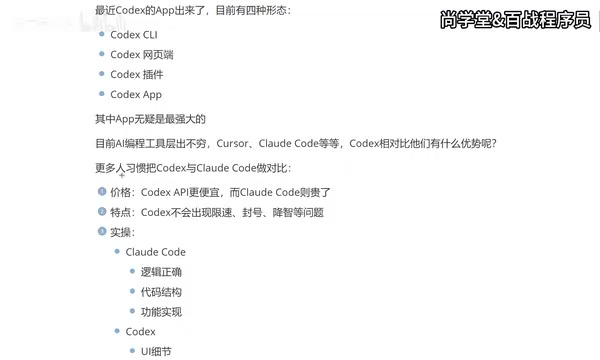
Recently, OpenAI's Codex received a major update with the launch of a standalone App. Combined with the previously available CLI terminal, web interface, and plugin formats, Codex now offers four distinct usage modes. A Chinese tech YouTuber (Bilibili UP主) published a detailed tutorial on Codex, with particularly noteworthy comparative analysis against competitors. This article distills those core insights to help developers make smarter choices.
Codex's Four Modes: The Standalone App Is the Most Powerful
Codex currently offers four ways to use it:
- CLI Terminal: Command-line interaction
- Web Interface: Use directly in the browser
- Plugin Mode: Integrated into development tools like VS Code
- App (Standalone Application): The newly launched desktop client
CLI (Command Line Interface) is a way of interacting with computers through text commands, as opposed to a graphical user interface (GUI). In the developer tools space, CLI has long been the preferred interaction method for professional developers because it supports scripting, automation, and pipeline operations. Codex's CLI mode is similar to Claude Code's terminal interaction mode — developers can type natural language instructions directly in the Terminal, and the AI reads the code context within the current project directory to execute modifications. The advantage of this approach is seamless integration with command-line tools like Git and Docker, but it presents a steep learning curve for users unfamiliar with terminal operations.
Previously, most developers used Codex as a plugin integrated into various IDEs. IDE (Integrated Development Environment) plugin mode is the earliest and most common distribution method for AI coding tools. VS Code, currently the code editor with the highest global market share (according to Stack Overflow's 2024 survey, approximately 73% of developers use VS Code), has seen its extension marketplace become a battleground for AI coding tools. The core advantage of plugin mode is that developers don't need to switch work environments — AI capabilities are embedded directly into the editor's code completion, inline hints, and sidebar conversations. However, plugin mode has limitations — it's constrained by the host IDE's API capabilities and cannot deliver all the features a standalone application can offer, such as independent file management and multi-project parallel processing.
But with the launch of the standalone App, things have changed. Among the four modes, the App is undoubtedly the most powerful — it not only offers the most complete feature set but also works alongside traditional development tools like VS Code to create a more efficient workflow.
For developers who dislike terminal CLI interaction, the App mode provides a friendlier graphical interface that significantly lowers the barrier to entry.
Codex vs Claude Code: A Comprehensive Comparison of Price, Stability, and Capabilities
Many developers naturally compare Codex and Claude Code side by side, and this is indeed the most valuable comparison in the AI coding space right now.
Price Comparison: Codex Is More Affordable
In terms of API pricing, Codex's API is cheaper, while Claude Code's usage costs are relatively higher. AI coding tool pricing typically falls into two models: subscription-based and token-based API billing. A token is the basic unit that large language models use to process text — one English word typically corresponds to 1-2 tokens, while Chinese characters are roughly 1-2 tokens each. In coding scenarios, because large amounts of code context need to be passed in (sometimes the entire project's file structure and key code serve as context), token consumption is often far greater than in ordinary conversation scenarios. Therefore, even small differences in API pricing get significantly amplified under high-frequency development use.
For individual developers or small teams, price is a factor that cannot be ignored. Over long-term, high-frequency use, the cost difference becomes very noticeable.
Stability Comparison: Codex Has No Rate Limits or Account Bans
Claude Code has a frustrating issue — rate limiting and account bans. Many developers have reported encountering rate limits during heavy Claude Code usage, and even having their accounts banned. In contrast, Codex performs much more reliably in this regard, with no rate limiting or account ban issues.
The inference process of large language models consumes significant GPU computing power, with each request requiring GPU memory and computational resources. To prevent individual users from monopolizing server resources and degrading the experience for others, AI service providers typically implement rate limiting — restricting the number of requests or token consumption within a given time window. Anthropic's rate limiting policy for Claude Code is particularly strict: when users send a large volume of complex coding requests in a short period, they may trigger hourly or daily usage caps. In more severe cases, if the system detects abnormal usage patterns (such as automated scripts making batch calls), it may directly ban the account. This issue is especially prominent among developers in China, as some users access the service through third-party channels, making their usage patterns more likely to trigger risk control rules.
Regarding "quality degradation," while some users have reported declining output quality from Codex, actual usage experience hasn't shown noticeable degradation. This may vary from person to person and depend on specific use cases.
Capability Focus: Codex for Frontend, Claude Code for Backend
This is an extremely valuable takeaway from real-world practice:

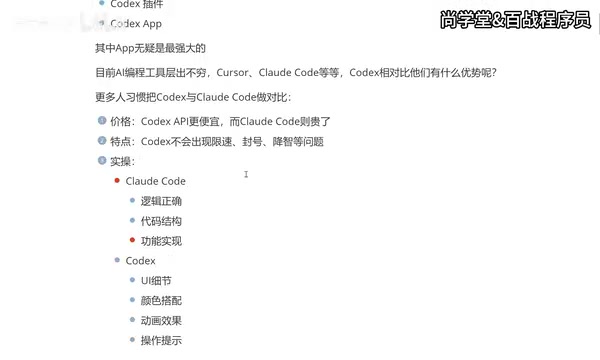
Claude Code excels at:
- Logical correctness
- Code structure design
- Completeness of feature implementation
Therefore, backend developers tend to prefer Claude Code, as backend development demands greater logical rigor and architectural design.
Codex excels at:
- Polishing UI details
- Sensible color schemes
- Animation effects
- Comprehensive interaction prompts
Therefore, frontend developers and app developers tend to favor Codex, as visual presentation and interaction experience are crucial in frontend work.
The differing demands that frontend and backend development place on AI coding tools fundamentally reflect the distinct technical characteristics of the two domains. Frontend development involves HTML/CSS/JavaScript along with frameworks like React and Vue, with core challenges in pixel-perfect visual reproduction, responsive layout adaptation, smooth CSS animations, and cross-browser compatibility. These tasks require the AI to understand visual design and generate style code that meets design specifications. Backend development involves database design, API architecture, concurrency handling, security authentication, and more, with core challenges in business logic correctness, system architecture scalability, and code robustness. Anthropic's emphasis on logical reasoning during model training gives Claude Code an edge in handling complex business logic, while OpenAI's accumulated strengths in multimodal understanding (including comprehension of images and design mockups) give Codex an advantage in frontend visual tasks.
This conclusion comes from extensive frontend development practice. While it carries some subjectivity, it offers strong reference value for developers working in similar domains.
The Big Three Landscape: You Should Know Cursor, Claude Code, and Codex
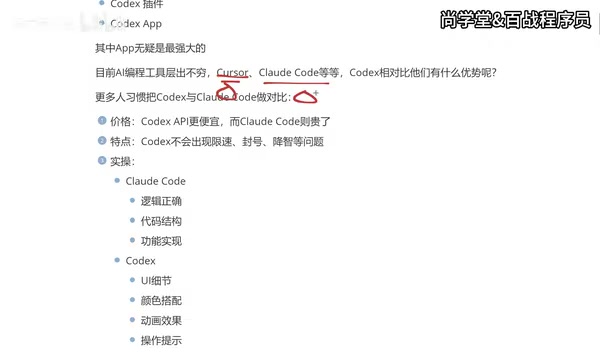
While AI coding tools are proliferating, only three have truly formed the top tier: Cursor, Claude Code, and Codex.
Cursor, developed by Anysphere, launched in early 2023 and was one of the first products to deeply integrate AI into a code editor. It's a deep customization (fork) of VS Code's open-source version, meaning it inherits VS Code's entire ecosystem (plugins, shortcuts, themes, etc.) while natively integrating AI capabilities at the architectural level. Cursor's core technical advantages include: intelligent code indexing (understanding the entire project's code structure), multi-model support (switching between GPT-4, Claude, and other models), and its unique Composer feature (supporting batch code modifications across files). By 2024, Cursor's valuation exceeded $9 billion with over a million monthly active users, making it the most funded and largest user-base product in the AI coding tool space. However, its $20/month subscription price plus additional premium request fees make its total cost of use the highest among the three.
Here's one developer's real tool migration path:
- Started with Cursor: Used it for over six months — powerful features but expensive, "it hurt every time I paid"
- Switched to Claude Code: Costs dropped after connecting to domestic models, but the experience wasn't ideal, and they disliked terminal interaction
- Settled on Codex: The App mode launch was the turning point — paired with VS Code, it delivered the best experience
But here's a crucial point: You should learn to use all three tools, not just master one. The reason is practical — different companies may provide different accounts or require different AI tools. Mastering multiple tools keeps you competitive in the workplace.
Developer migration between different AI coding tools reflects the rapid iteration characteristic of today's AI tool market. According to multiple developer surveys from early 2025, over 60% of professional developers use two or more AI coding tools simultaneously. Several factors drive this multi-tool trend: first, different tools perform noticeably differently on different tasks, so developers tend to choose the optimal tool for specific tasks; second, AI model capabilities are evolving rapidly, and today's best choice might be surpassed next month; finally, enterprise users are often constrained by their company's security compliance requirements and procurement agreements, forcing them to use designated tools. Therefore, the ability to quickly learn and switch between AI tools has become an important soft skill for modern developers.
Who Is Codex Best Suited For?
Based on the analysis above, the following types of developers are particularly well-suited to adopt Codex as their primary tool:
- Frontend developers: Codex delivers superior performance in UI details and visual effects
- Beginners or non-professional developers: Codex's output is more visually intuitive, and the App mode lowers the barrier to entry
- Cost-conscious individual developers: Lower API pricing with no rate limiting or account ban concerns
- Users who dislike terminal operations: The App mode provides a friendlier graphical interface
Conclusion: Choosing the Right Tool Matters Less Than Using It Right
There's no absolute right or wrong when choosing an AI coding tool — what matters is matching your development scenario and usage habits. Codex has clear advantages in pricing, stability, and frontend development experience, while Claude Code is superior in backend logic and code architecture. Cursor, as the veteran player, still holds its ground.
For most developers, the most pragmatic strategy is: Make one tool your primary choice while staying familiar with the basics of the other two. In an era of rapidly iterating AI tools, the ability to switch flexibly is itself a core competitive advantage.
Related articles
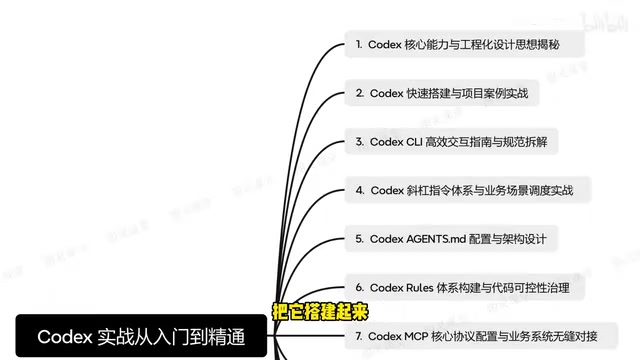
The Complete Guide to OpenAI Codex CLI: From Installation and Configuration to Enterprise-Level Practice
In-depth guide to OpenAI Codex CLI: covering installation, agents.md design, multi-agent collaboration, MCP protocol integration, and a RAG customer service project.

Decoding Google's AI Control Roadmap: A Defense Framework for When AI Goes Off the Rails
Google releases its AI Control Roadmap, a new safety paradigm that assumes alignment may fail and builds defenses at the system architecture level.

Agent Factory: Voice-Driven AI Coding — A Hands-On Guide to Building Apps for Free
Agent Factory wraps Claude Code into a voice-driven AI coding tool with dozens of free models, letting you build apps, games, and websites through conversation.