Codex vs. Cloud Code Practical Guide: Mastering AI Coding Agents from Beginner to Expert
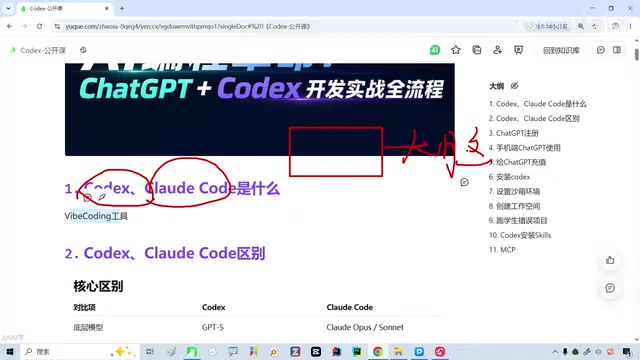
A practical guide comparing Codex and Cloud Code AI coding agents for developers and non-programmers alike.
This guide provides an in-depth comparison of OpenAI's Codex and Anthropic's Cloud Code, the two leading AI coding agents. It explains how they differ from traditional LLMs through tool use and execution capabilities, compares their architectures and use cases, and offers practical advice for both programmers and non-programmers to get started with AI-assisted development.
From Large Models to Agents: The Essential Leap in AI Programming Tools
Many people using ChatGPT may still be stuck at the "conversational Q&A" level—asking a question and getting an answer. But if you're still at this stage, your understanding of AI programming tools may already be behind the curve.
The AI programming field is currently undergoing a critical transformation: evolving from pure large model tools to AI coding agents with execution capabilities. This distinction is crucial. A large model is like a person with only a brain—it can think and analyze, but it can't actually do things for you. Agent tools like Codex and Cloud Code are equivalent to equipping that brain with hands, feet, and tools—they can not only think but also act.
From a technical architecture perspective, the essence of a Large Language Model (LLM) is a text generation system based on the Transformer architecture. It acquires powerful language understanding and generation capabilities through training on massive corpora, but its operating paradigm is single-turn or multi-turn "input-output" dialogue. AI Agents build upon LLMs by introducing critical capabilities such as Tool Use, Environment Perception, and Action Planning. Agent architectures typically include a reasoning loop: perceive current state → formulate plan → invoke tools for execution → observe results → adjust strategy. This "ReAct" (Reasoning + Acting) paradigm transforms AI from passive response to active execution.
In simple terms, traditional large models can only give you a code snippet to paste yourself, while AI coding agents can directly modify files, run tests, submit code, and complete the entire process from conception to implementation.
Codex and Cloud Code: The Two Top-Tier AI Coding Agents
Among the many AI programming tools available, OpenAI's Codex and Anthropic's Cloud Code currently sit in the absolute top tier. These two tools are the most widely used AI coding agents among programmers, far surpassing other similar products in code generation quality and task execution capability.
Why Do Codex and Cloud Code Stand Out?
The reason is that they not only possess powerful code understanding and generation capabilities, but more critically, they can:
- Directly operate on code repositories: Read, modify, and create files, rather than merely outputting code snippets
- Understand project context: Grasp the entire project's architecture and dependency relationships
- Execute multi-step tasks: From requirements analysis to code implementation to test verification, forming a complete closed loop
- Deeply integrate with development environments: Seamlessly embed into existing development workflows
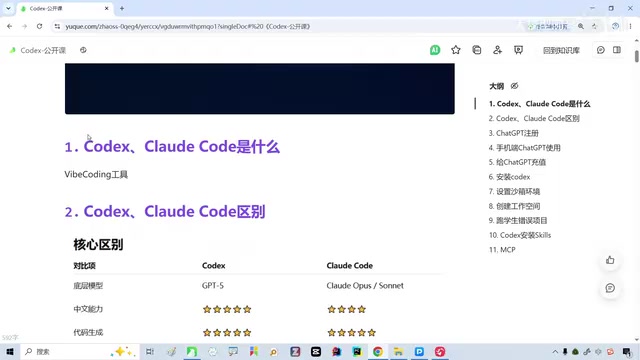
Positioning Differences Between Codex and Cloud Code
While both Codex and Cloud Code belong to the top tier, they each have different focuses:
OpenAI's Codex was originally released in 2021 as a specialized model fine-tuned on billions of lines of public code from GitHub, built on top of GPT-3. It also served as the underlying engine for GitHub Copilot. In 2025, OpenAI launched a completely new Codex agent version that runs in a cloud sandbox environment within ChatGPT. It can clone users' code repositories, execute code in isolated containers, run test suites, and submit modifications in the form of Pull Requests. Its underlying codex-1 model is a version optimized through reinforcement learning for software engineering tasks, built on top of o3.
Claude Code is Anthropic's command-line AI coding agent that runs directly in the developer's terminal environment. Unlike Codex's cloud sandbox model, Claude Code adopts a local-first architecture that can directly access the file system, Git repositories, and development toolchains on the developer's machine. It relies on the Claude model series, particularly Claude 3.5 Sonnet and Claude 4 series, which excel in long context windows (supporting up to 200K tokens) and code reasoning. Anthropic's Constitutional AI training methodology also gives Claude unique advantages in following complex instructions and safety constraints.
| Comparison Dimension | Codex | Cloud Code |
|---|---|---|
| Underlying Model | OpenAI GPT series (codex-1 optimized on o3) | Anthropic Claude (3.5 Sonnet / Claude 4) |
| Execution Mode | Cloud sandbox environment | Local terminal command line |
| Core Strengths | General code generation, multi-language support, cloud-isolated execution | Code reasoning, long-context understanding, deep local environment integration |
| Use Cases | Rapid prototyping, multi-language projects, CI/CD integration | Complex logic analysis, large codebases, local development workflows |
For developers, choosing between them depends more on specific use cases and cost considerations—use whichever delivers better results at lower cost. In practice, many developers use both simultaneously, switching flexibly based on task characteristics.
Not Just for Programmers: The Core Value of AI Coding Agents
A critically important point: AI coding agents are not just tools for programmers—they're a fundamental capability everyone should master.
This might sound like an exaggeration, but the logic is clear:
For Non-Programmers
Even if you don't know Java, Python, or any code at all, AI coding agents still offer tremendous value. You can describe requirements in natural language and have AI generate scripts, process data, or build simple applications for you. At the very minimum, having a ChatGPT for daily queries and work assistance is already a significant efficiency booster.
For example, operations staff can have AI automatically generate data analysis scripts, and product managers can quickly build prototypes to validate ideas. Work that previously required scheduling development time can now be done independently. The essence of this transformation is the democratization of programming barriers—natural language is becoming a new programming language, and AI agents serve as translators between human intent and machine instructions.
For Programmers
If you're a professional developer, these tools are even more indispensable. They can free you from repetitive coding work, allowing you to focus on higher-level thinking like architecture design and business logic. Code reviews, bug fixes, unit test writing—these time-consuming tasks can all be delegated to agents. According to multiple industry surveys, developers using AI coding agents typically see efficiency improvements of 30%-50% on daily coding tasks, and for boilerplate code generation and documentation writing, the improvement can be several times over.
The Gap Between Domestic and International AI Coding Models and Development Trends
Regarding the gap between domestic (Chinese) and international AI models, a relatively objective assessment is: international models currently lead by a small margin, but this gap is rapidly narrowing.
From actual usage experience, OpenAI and Anthropic models still hold advantages in code generation quality and complex logical reasoning. However, domestic large models are iterating rapidly, especially showing impressive capabilities in Chinese-language scenarios and specific vertical domains.
Particularly noteworthy is DeepSeek's DeepSeek-Coder series, which has achieved near GPT-4 levels on multiple code benchmarks (such as HumanEval and MBPP) while using a Mixture of Experts (MoE) architecture to significantly reduce inference costs. Alibaba's Qwen series also performs excellently on code generation tasks, with Qwen2.5-Coder even surpassing international models of similar parameter sizes in some evaluations. The open-source strategies of these models have also accelerated the development of China's AI programming ecosystem, enabling more developers and enterprises to build their own programming assistance tools based on these models. Baidu's ERNIE Bot continues to deepen its presence in Chinese programming scenarios and enterprise applications, forming differentiated competitive advantages.
In the long run, the choice of AI programming tools will increasingly depend not on "domestic or international" but on cost-effectiveness and scenario fit. As model capabilities across providers converge, cost and usability will become the decisive factors.
Practical Advice: Getting Started with AI Coding Agents from Scratch
For readers looking to get started with AI coding agents, here's a proven learning path:
- Start with ChatGPT: Familiarize yourself with the basic patterns of conversational programming with AI, and learn to precisely describe requirements in natural language
- Try Codex or Claude Code: Choose one to use in depth and understand the essential difference between agents and regular conversations. Codex suits users who prefer graphical interfaces and cloud workflows, while Claude Code is better suited for developers comfortable with command-line operations
- Practice with small projects: Don't jump into large projects right away. First use AI to complete small scripts and tools, such as automated file organization or data format conversion
- Learn Prompt Engineering: Good prompts are key to getting high-quality output—this is a skill that requires deliberate practice. Prompt engineering is far more than just "writing good prompts"—it's actually a methodology for efficient collaboration with AI systems. Core techniques include: Few-shot Prompting (providing a few examples to guide output format), Chain-of-Thought (asking AI to reason step by step rather than giving direct answers), role assignment (designating an expert identity for AI to activate domain-specific knowledge), and constraint declarations (explicitly specifying output language, format, length, and other limitations). In AI coding agent scenarios, you also need to learn how to describe project architecture, specify code style conventions, and how to decompose complex requirements into sub-tasks executable by the agent
- Stay tool-neutral: Don't lock yourself into any single tool. Maintain sensitivity to new tools and the ability to learn them. AI programming tools iterate extremely fast—today's optimal choice may be surpassed by new tools in just a few months
The era of AI coding agents has arrived. Regardless of your background, it's not too late to start learning now. The key is taking the first step and continuously accumulating experience through practice. Once you've truly experienced the entire process of having AI help you build a small tool from scratch, you'll understand why this is a capability everyone should master.
Key Takeaways
Related articles
Wise Large Transfer Delayed Two Weeks: How Should Cross-Border Entrepreneurs Respond?
Wise Business users face 10-14 day delays on large transfers, sparking debate on whether fintech is repeating traditional banking mistakes. Analysis and practical tips for cross-border entrepreneurs.

Perplexity Partners with Intel: Local AI Models and Hybrid Inference Come to Laptops
Perplexity partners with Intel to bring local AI models and hybrid inference to Core Ultra Series 3 laptops. We break down the architecture, NPU capabilities, and the cloud-to-edge AI trend.

AI Large Model Learning Roadmap Breakdown: Three Stages from Application Development to Model Fine-Tuning
Deep breakdown of a popular AI large model learning roadmap covering LangChain, RAG, Agent, and LoRA fine-tuning across three stages, with analysis of its strengths and limitations for career changers.