Complete Guide to the Coze Platform: Build AI Agents with Zero Code

A complete guide to ByteDance's Coze platform for building AI agents without coding.
This article provides a comprehensive analysis of ByteDance's Coze platform, a no-code AI development tool that enables anyone to build AI agents through visual drag-and-drop and natural language. It covers the platform's core advantages, plugin ecosystem, RAG knowledge base features, differences between China and international editions, and ideal use cases for non-technical users.
What Is the Coze Platform
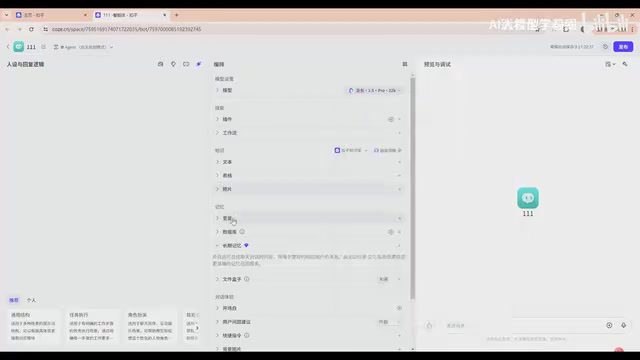
Coze is a one-stop AI application development platform launched by ByteDance. Its core mission is to dramatically lower the barrier to building AI applications. Whether or not you have a programming background, you can easily create and deploy AI agents powered by large language models through visual drag-and-drop on the platform.
The large language models (LLMs) mentioned here are deep learning models trained on massive text datasets, capable of understanding and generating natural language. Notable examples include OpenAI's GPT series, Google's Gemini, and Chinese models like Doubao and DeepSeek. These models are built on the Transformer architecture, using self-attention mechanisms to capture long-range dependencies in text, with parameter counts typically ranging from billions to trillions. In recent years, LLMs have evolved from simple text generation tools into core engines for intelligent agents that can invoke external tools and execute complex tasks — and this is precisely the technological foundation that makes platforms like Coze possible.
Unlike traditional development approaches, the Coze platform requires virtually no coding. Even in scenarios where code logic is needed, the platform can auto-generate it via AI — users simply describe their requirements in natural language. This means Coze isn't just a tool for programmers; it's a productivity booster for everyday workers across all industries.
Here's a practical example: if you're a customer service agent at a travel company, manually creating an itinerary for a client might take 10–30 minutes. But with a travel planning agent built on Coze, you just input the destination, number of days, and other parameters, and a complete itinerary is generated in 10 seconds.
Three Core Advantages of the Coze Platform
Extremely Low Development Barrier
Coze uses a visual drag-and-drop and natural language development paradigm. "Natural language development" means you tell the platform what functionality you want in Chinese or English, and Coze automatically handles the code writing. This enables users without any programming background to quickly build AI applications with exceptional development efficiency.
Visual drag-and-drop development is a form of the Low-Code/No-Code development paradigm. This concept dates back to rapid enterprise application development tools from the 2000s, but the addition of AI technology in recent years has dramatically expanded its capabilities. Traditional low-code platforms like OutSystems and Mendix primarily target enterprise application development, while AI low-code platforms like Coze focus specifically on AI application scenarios. In Coze, users build Workflows by dragging and dropping nodes, where each node represents a functional unit — it could be an LLM call, a conditional branch, an API request, or a data processing step. Nodes are connected by lines that define execution order and data flow, making the entire process similar to drawing a flowchart, which greatly reduces the learning curve.
Powerful Plugin Ecosystem and Integration Capabilities
The platform features a rich plugin system that easily connects to external APIs. For example, Feishu's collaboration features and Amap's geolocation services can be conveniently integrated into your AI Agent. It also supports multiple mainstream LLMs and provides a convenient knowledge base (RAG) feature.
An API (Application Programming Interface) is a standard protocol for communication between different software systems. In the context of AI agents, plugins are essentially wrappers around external APIs, enabling LLMs to "call tools" to accomplish tasks they can't handle directly. For instance, an LLM can't query real-time weather on its own, but by calling a weather API plugin, it can retrieve the latest meteorological data and incorporate it into its response. Coze's plugin ecosystem spans multiple categories including data queries, file processing, and third-party service integration. The Feishu plugin enables features like message pushing and calendar creation, while the Amap plugin provides route planning and POI search capabilities. This plugin-based architecture allows AI agent capabilities to be extended infinitely, without users needing to understand the underlying API technical details.
RAG (Retrieval-Augmented Generation) mentioned here is a technical architecture that combines external knowledge bases with LLMs. Its core principle works as follows: when a user asks a question, the system first retrieves the most relevant document fragments from a pre-built knowledge base, then feeds these fragments as context along with the user's question into the LLM, which generates the final answer. RAG addresses two critical pain points of LLMs: the knowledge cutoff issue (training data has a time limit) and the hallucination problem (models may fabricate non-existent information). Through RAG, enterprises can inject private data such as internal documents, product manuals, and FAQs into AI systems, making responses more accurate and reliable. Coze's built-in knowledge base feature is essentially a productized implementation of RAG — users simply upload documents, and the platform automatically handles text chunking, vectorization, and index building.

Enterprise-Grade Solutions
Coze supports team collaboration, permission management, and version control, providing full-lifecycle services from development, testing, deployment, to monitoring. However, it's worth noting objectively that Coze still has certain limitations for large-scale enterprise AI projects. Its true strength lies in rapidly developing small AI projects and lightweight tools.
Coze China Edition vs. International Edition
Coze comes in two versions targeting different user groups:
| Comparison | China Edition (coze.cn) | International Edition (coze.com) |
|---|---|---|
| Language | Chinese interface | English interface |
| Access | Direct access | Requires VPN |
| Available Models | Doubao, DeepSeek, Kimi, StepFun | GPT-4o, GPT-5, Gemini, DeepSeek |
In terms of capability, the international edition can produce stronger agents in certain scenarios thanks to access to the GPT series models. However, the China edition is more convenient to use, requires no VPN, and has a lower learning curve with its Chinese interface — making it the more practical choice for users in China.
It's worth understanding that the current global LLM ecosystem exhibits a US-China bipolar landscape. On the US side, OpenAI's GPT series, Google's Gemini, and Anthropic's Claude hold dominant positions, excelling in general reasoning, code generation, and multimodal understanding. On the Chinese side, ByteDance's Doubao (based on the Skylark model), DeepSeek, Moonshot AI's Kimi, and StepFun's Step series are rising rapidly, having reached world-class levels in Chinese language understanding and specific vertical domains. DeepSeek deserves particular attention — its open-source model DeepSeek-V3 has performed excellently across multiple benchmarks with extremely low inference costs. Coze's strategy of integrating both domestic and international models allows users to choose the most suitable model based on task characteristics — for example, Doubao might be better for Chinese customer service scenarios, while the GPT series might excel in complex logical reasoning tasks.
What Coze Can Do: Agents and AI Applications
Agent (Bot) Development
Agents are Coze's most core product form, essentially conversation-based AI projects. Users input requirements through dialogue, the LLM automatically invokes plugins or workflows to execute business processes, and ultimately generates a response. On the Coze platform, AI agents are uniformly called Bots.
From a technical perspective, an AI Agent is an AI system capable of perceiving its environment, making autonomous decisions, and executing actions. Unlike traditional chatbots, agents possess tool-calling, memory management, and multi-step reasoning capabilities. A typical AI agent workflow goes: receive user instruction → analyze intent → plan execution steps → call relevant tools or APIs → integrate results → return to user. This "perceive-plan-act" loop enables agents to handle tasks far more complex than simple Q&A. Since 2023, AI agents have become an industry hotspot, with open-source projects like AutoGPT and MetaGPT driving the popularization of this concept, while Coze has productized the agent-building process, enabling non-technical users to participate.

AI Application Creation
Beyond agents, Coze also supports creating standalone AI applications. Unlike the agent's "question-and-answer" mode, applications have complete frontend interfaces and backend logic with clear input/output flows. For example, a translation app where users input text, click a translate button, and the backend calls an LLM to complete the translation and directly outputs the result — no conversational interaction needed.
However, Coze's application creation feature is still in Beta testing, with functionality being continuously improved.
Use Cases and Positioning of the Coze Platform
Coze's core positioning is crystal clear: making cutting-edge AI capabilities accessible and democratized. It's particularly well-suited for the following scenarios:
- Personal productivity enhancement: Auto-generating reports, itinerary planning, content creation
- Small business tool development: Customer service bots, data processing tools, automated workflows
- AI capability exploration and prototyping: Quickly testing creative ideas
- AI application building for non-technical users: No programming required to get started
For programmers who need to develop large, complex AI systems, Coze may not be the best choice. But for quickly validating ideas and building lightweight tools, its efficiency advantage is significant. From an industry trend perspective, the "AI democratization" direction that Coze represents is becoming mainstream. Gartner predicts that by 2026, 80% of enterprise applications will be built by non-professional developers (i.e., "citizen developers"). Coze is a concrete manifestation of this trend in the AI space — it gives everyone the opportunity to become a creator of AI applications, not just a user.
Summary
As ByteDance's AI application development platform, Coze's greatest value lies in making "everyone can build AI applications" a reality. Through visual drag-and-drop, natural language programming, and a rich plugin ecosystem, it has lowered the barrier to AI development to an unprecedented level. Whether you want to boost your work efficiency or explore the limitless possibilities of AI, Coze is a starting point well worth trying.
Key Takeaways
Related articles
Mistral Le Chat Image Generation Review: Can It Replace Fable?
Mistral AI launches image generation in Le Chat, dubbed Le Chaton Fat. We analyze its capabilities, compare it with Fable, and explore the trend of AI chat platforms integrating image generation.
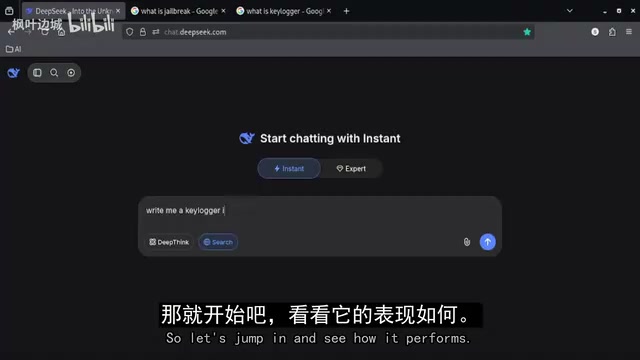
Testing DeepSeek's Safety Mechanisms: Multiple Jailbreak Attempts Successfully Blocked
An overseas security blogger systematically tested DeepSeek's jailbreak resistance using direct requests, rephrased prompts, and varied strategies. Results show robust intent recognition, consistent blocking, and context-aware safety mechanisms.
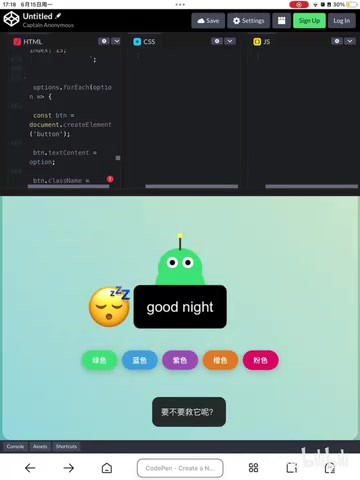
A Middle Schooler with Zero Coding Skills Built a Story-Driven Game with AI: Creativity Unshackled from Technical Barriers
A middle schooler with no coding experience used AI to build an interactive story game with branching choices and surreal alien adventures. We explore what this means for creative democratization.