Complete Vibe Coding Tutorial: 15 Key Steps to Building an AI Agent from Scratch
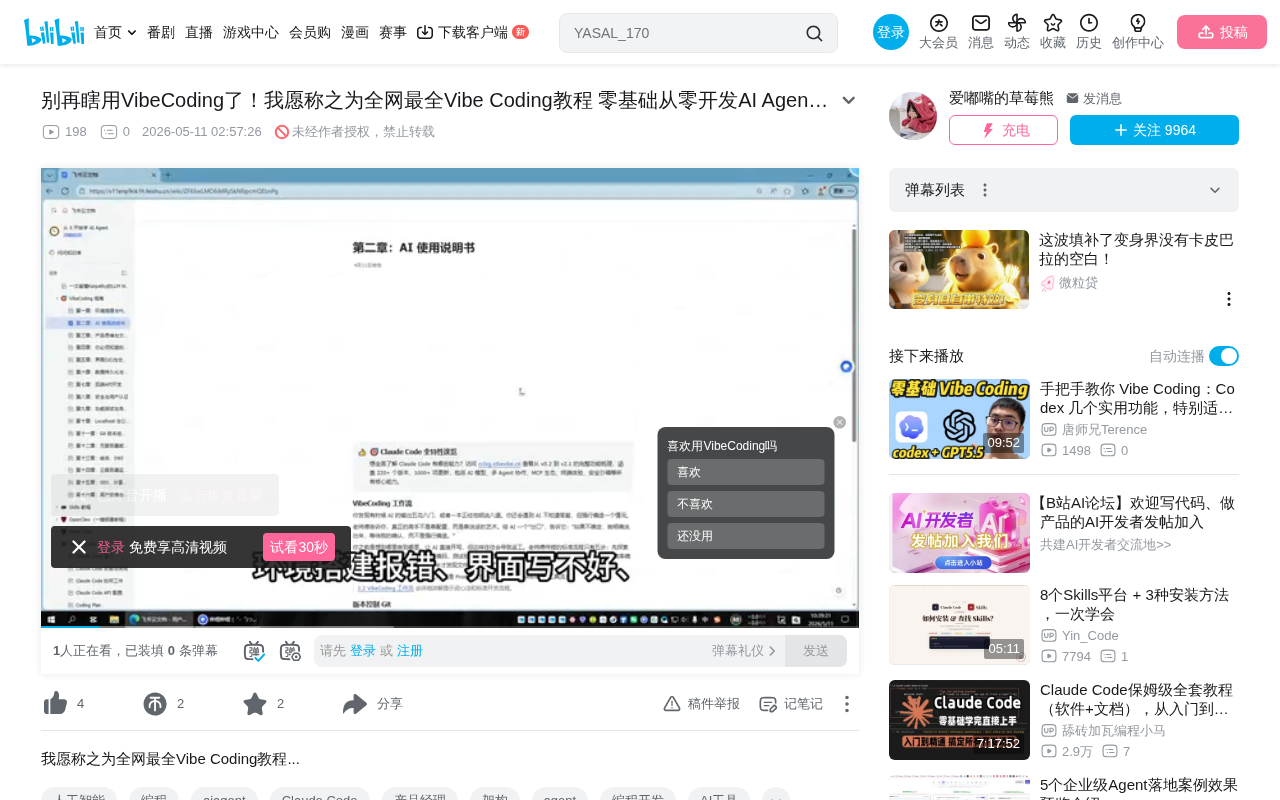
Vibe Coding requires systematic engineering thinking, not just throwing prompts at AI.
Vibe Coding, introduced by Andrej Karpathy, is an AI-assisted development approach, but shipping real AI Agent projects requires a complete engineering methodology. Based on a 15-step tutorial, this article breaks development into five modules: environment setup, product documentation thinking, frontend UI, backend data layer, and testing/deployment. It emphasizes the importance of structured PRDs, AI-friendly tech stack choices, and engineering best practices — systematic methodology far outweighs fragmented tips.
What Is Vibe Coding? Why Do You Need to Learn It Systematically?
Vibe Coding is the hottest AI-assisted development approach of the past two years — you don't need to master programming languages; you just describe your requirements in natural language and let AI generate the code for you. This concept was formally introduced by OpenAI co-founder Andrej Karpathy in early 2025, who described it as a programming style where you "fully give in to the vibes, embrace exponentials, and forget that the code even exists." The rise of this philosophy is rooted in the qualitative leap of large language models (LLMs) in code generation — from GPT-4 to Claude 3.5 Sonnet to DeepSeek Coder (optimized specifically for programming), models have reached industrial-grade proficiency in understanding natural language requirements and outputting runnable code. Meanwhile, the proliferation of AI-native IDEs like Cursor, Windsurf, and GitHub Copilot has provided a complete toolchain for Vibe Coding, bringing the "natural language → code" workflow into the mainstream developer landscape.
Sounds great, but here's the reality: Most people just throw random prompts at AI, then struggle endlessly with environment setup errors, poorly built interfaces, broken API connections, and deployment failures.
The root of the problem is that Vibe Coding isn't "chat casually and get a product" — it requires a complete engineering mindset and standardized workflow. Recently, a tutorial on Bilibili claiming to be the "most comprehensive Vibe Coding guide" gained significant attention. It uses 15 mind maps to cover the complete development loop for building an AI Agent from scratch, and its methodology is worth breaking down.
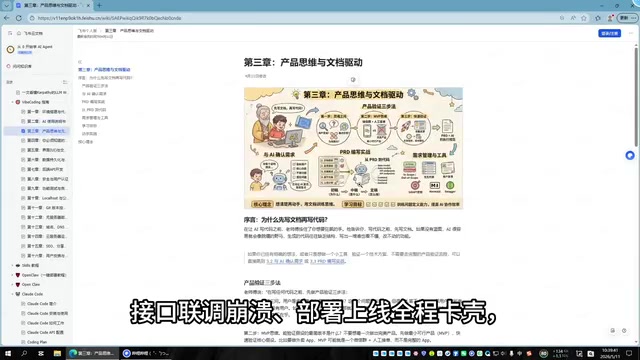
Breaking Down the 15 Steps: The Complete AI Agent Development Loop
The greatest value of this tutorial is that it doesn't teach individual tools in isolation — instead, it breaks AI application development into a complete end-to-end pipeline. We can organize these 15 steps into five major modules:
Module 1: Infrastructure Setup
The first step of any project is environment configuration. The tutorial starts with terminal environment setup, which is precisely where many non-technical users get stuck. Node.js version management, Python virtual environments, package manager selection — these seemingly trivial details determine whether subsequent development can proceed smoothly.
For Vibe Coding, environment setup also includes configuring AI programming tools, such as installing Cursor, Windsurf, and other IDEs and setting up API Keys. A craftsman must first sharpen their tools — skip or rush this step, and every subsequent step will cost you double.
Module 2: Product Thinking & AI Workflow

This is the most valuable part of the entire tutorial. It emphasizes the importance of an AI standard workflow and product documentation thinking.
Product documentation thinking means organizing requirements, architecture, and data flows into structured documents before writing a single line of code. This isn't traditional software engineering bureaucracy — it's giving AI clear context. A PRD (Product Requirements Document) traditionally serves as the bridge between product managers and development teams, but in the Vibe Coding context, it takes on an entirely new role: providing high-quality context for AI. The generation quality of large language models is highly dependent on the information density and structural clarity of the input — this is the core principle of what the AI field calls "Prompt Engineering." A PRD containing user stories, data flow diagrams, API contracts, and boundary conditions essentially compresses AI's "guessing space," moving the model from "possibly correct" to "most likely correct." Industry practice has shown that incorporating Architecture Decision Records (ADRs) and technical specifications into prompt context can improve the first-pass usability of AI-generated code by over 40%.
The quality of prompts you give to Cursor or Claude directly depends on how deeply you understand the product. A good PRD is worth more than a hundred scattered prompts. This is the critical leap from "randomly using Vibe Coding" to "systematic Vibe Coding."
Module 3: Frontend UI/UX Development
The tutorial chose the most mainstream tech stack combination: Tailwind CSS + Shadcn UI. This is a highly pragmatic choice with deep technical logic behind it.
Tailwind CSS is an "atomic CSS" framework whose core philosophy is using large numbers of fine-grained utility classes directly in HTML to describe styles, completely abandoning traditional semantic CSS naming. This approach is extremely AI-friendly because Tailwind class names are precise descriptions of styles themselves (e.g., bg-blue-500 rounded-lg shadow-md). AI has seen massive amounts of Tailwind code in its training data, so the accuracy of generated code is far higher than with custom CSS. Shadcn UI is a component library built on Radix UI primitives, with a unique "non-encapsulated" design — component code is copied directly into your project, giving developers full ownership and control of the source code rather than depending on black-box npm packages. This design allows AI to directly read and modify component implementations, creating truly "programmable UI."
Tailwind provides atomic styling capabilities, Shadcn UI provides reusable high-quality components, and together they enable rapid interface building while maintaining design quality. When you tell Claude "build a card list with a search box using a dark theme," it can directly output production-grade Tailwind code.
Module 4: Backend & Data Layer
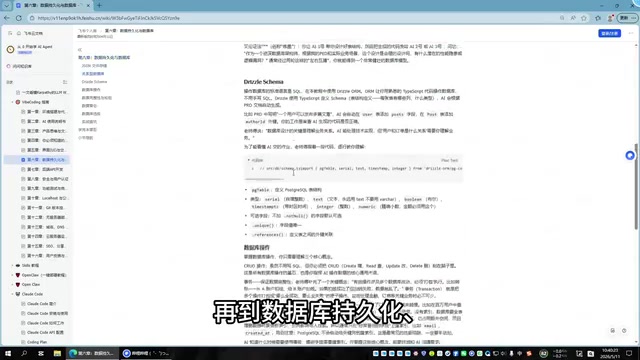
This module covers three critical areas:
- Database Persistence: Supabase is currently the most popular Backend as a Service (BaaS) platform in the Vibe Coding ecosystem. Built on PostgreSQL, it provides an all-in-one solution for databases, real-time subscriptions, authentication, edge functions, and object storage. Choosing the right database solution and designing data models is the foundation for whether a project can support business growth.
- Backend API Development: Building RESTful or GraphQL interfaces to handle business logic. For AI Agent projects, the backend also needs to handle interactions with LLM APIs, vectorized storage of conversation history (for semantic retrieval), real-time streaming responses (Server-Sent Events or WebSocket), and fine-grained token usage metering.
- Account Security & Permission Management: RBAC (Role-Based Access Control) is the standard model for enterprise-grade permission management. It assigns permissions to roles rather than directly to users, dramatically reducing permission management complexity. In multi-tenant SaaS scenarios, the combination of RBAC with Row Level Security (RLS) is the key mechanism for protecting user data isolation. This is something many individual developers overlook but must solve before going live.
None of these are problems the frontend can solve — they are the true pillars of getting an AI Agent project into production.
Module 5: Testing, Deployment & Operations
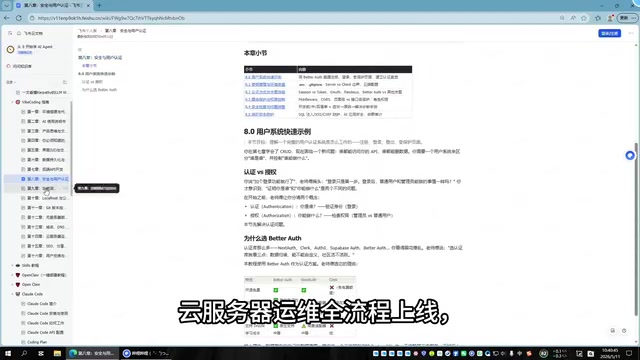
The final module covers the "last mile" from development to production. Between local development environments and production environments lies what the industry calls the "last mile" engineering gap, with core challenges spanning multiple dimensions: environment variable management (local .env files vs. cloud platform secret management), HTTPS certificate configuration, CDN and static asset optimization, database connection pool management, and establishing logging and monitoring systems.
- Automated Testing: Ensuring code quality — AI-generated code especially needs test verification. Since AI may generate large amounts of code changes at once, automated testing is the first line of defense against "AI-generated code avalanche."
- Git Version Control: The foundation for team collaboration and code rollback. Especially important in AI-assisted development — developing the habit of frequent commits and branch isolation is a critical safety net.
- Domain & DNS Configuration: Giving your application a proper access address.
- Cloud Server Deployment & Operations: Vercel is optimized for modern frontend frameworks like Next.js, offering zero-config deployment and a global edge network; Railway is better suited for full-stack applications requiring persistent services; while AWS/GCP and other cloud platforms offer maximum flexibility but steeper learning curves.
Many Vibe Coding tutorials stop at "running locally," but between a project running on localhost and a product that's actually live lies exactly these engineering steps.
Three Pieces of Advice for Vibe Coding Learners
Build a Global Perspective First, Then Go Deep on Specifics
The mind-map structure of this tutorial gives us an important insight: Don't start by grinding on a specific technical detail. First understand what steps exist in the entire pipeline, what problem each step solves, then tackle them one by one. This is ten times more efficient than watching scattered tutorials aimlessly.
Product Thinking Matters More Than Coding Skills
In an era where AI can write code, your core competitive advantage isn't "being able to write code" but "knowing what code should be written." Invest time in learning product design, user experience, and business models — the half-life of these skills is far longer than any specific tech stack.
From Imitation to Creation, From Projects to Products
The tutorial mentions "grab templates and use them immediately" — this is a good starting point but shouldn't be the endpoint. Real learning happens when you modify templates, encounter problems, and solve them. Every error message is a learning opportunity, not a reason to give up.
Conclusion
Vibe Coding is lowering the barrier to software development, but it hasn't eliminated the complexity of software engineering. Environment configuration, architecture design, security protection, deployment and operations — these "unsexy" engineering steps are precisely what determines whether an AI Agent project can actually ship. Rather than chasing the illusion of "building an app in five minutes," it's better to methodically work through all 15 steps. A systematic methodology is always more valuable than fragmented tips and tricks.
Related articles
 Tutorials
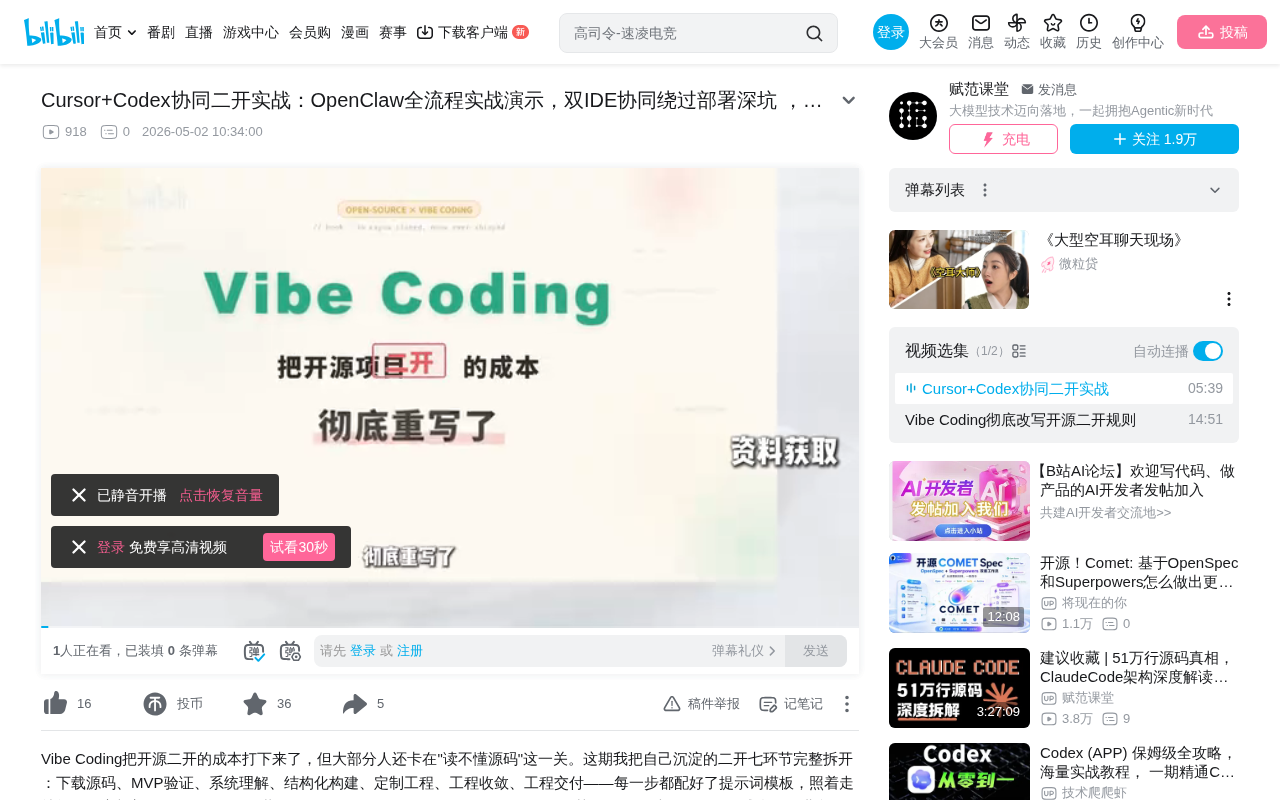
Cursor + Codex Dual-IDE Collaboration: A Practical Methodology for Open-Source Project Customization
A complete methodology for open-source project customization based on real-world experience, detailing the Cursor+Codex dual-IDE workflow, seven-stage process, MVP validation, and AI source code reading techniques.
 Tutorials
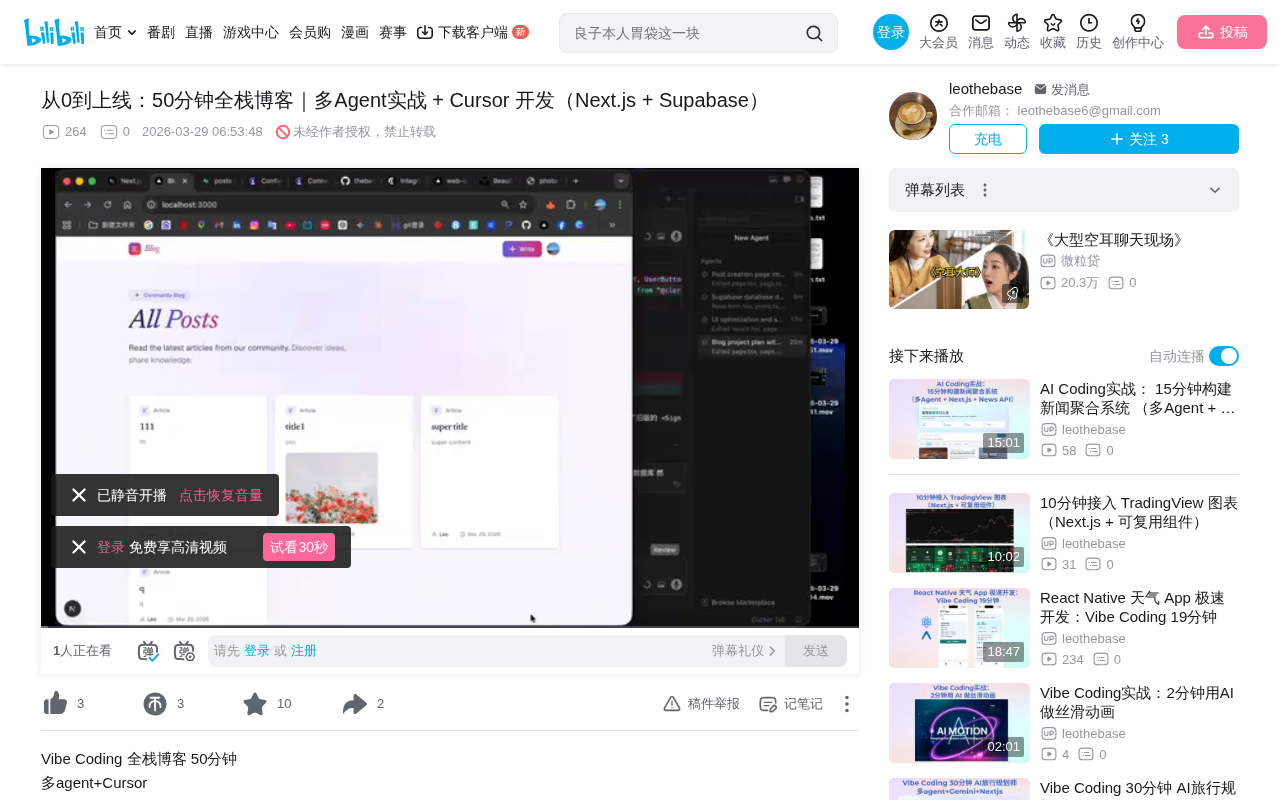
Cursor Multi-Agent in Practice: Building a Full-Stack Next.js Blog in 50 Minutes
Build a full-stack blog in 50 minutes using Cursor IDE's multi-Agent mode with Next.js, Clerk auth, and Supabase. Learn the 4-phase AI Agent workflow and key integration pitfalls.
 Tutorials
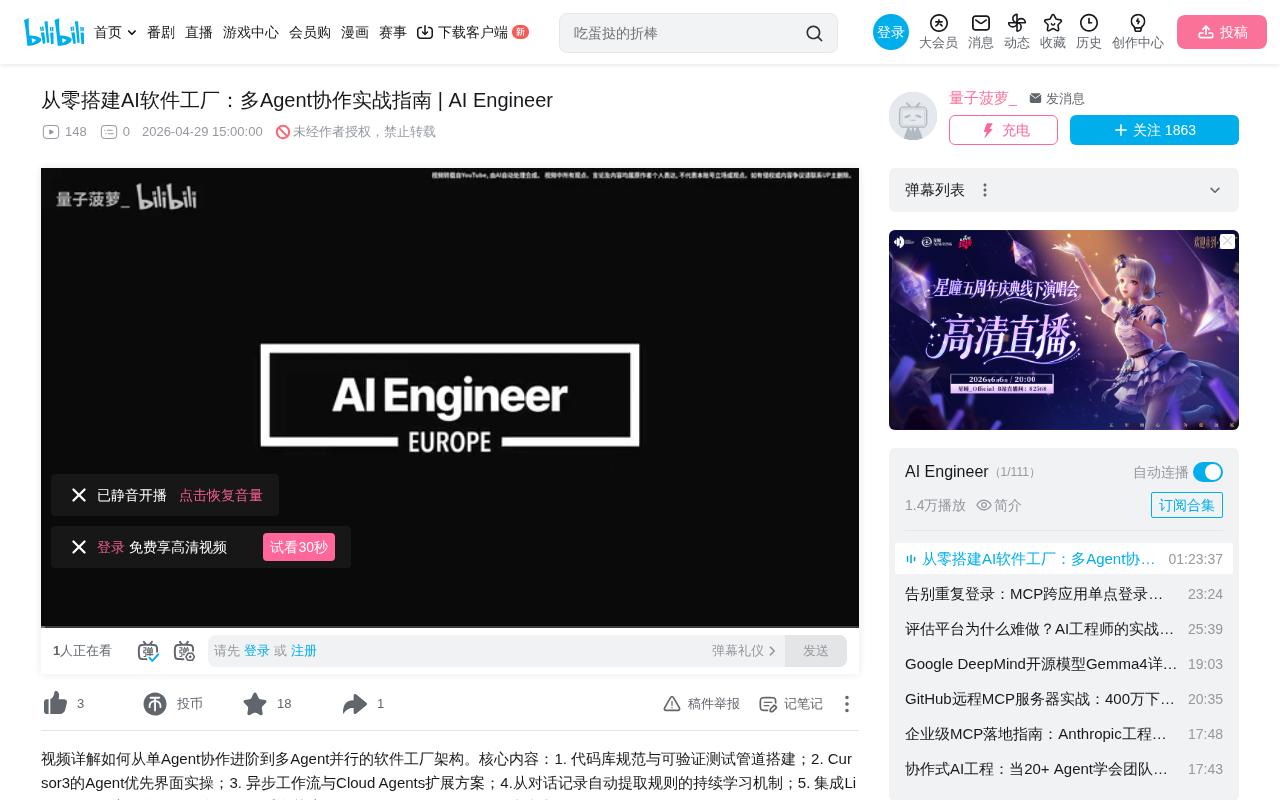
Building an AI Software Factory from Scratch: A Cursor Engineer's Hands-On Experience with Multi-Agent Collaboration
Cursor engineer Eric shares practical insights on building an AI software factory: automation levels, guardrail design, parallel Agent management, and scaling to 1000+ Agents for 24/7 development.