Cook Takes the Helm: The Signal Behind Apple's Major AI Strategy Pivot
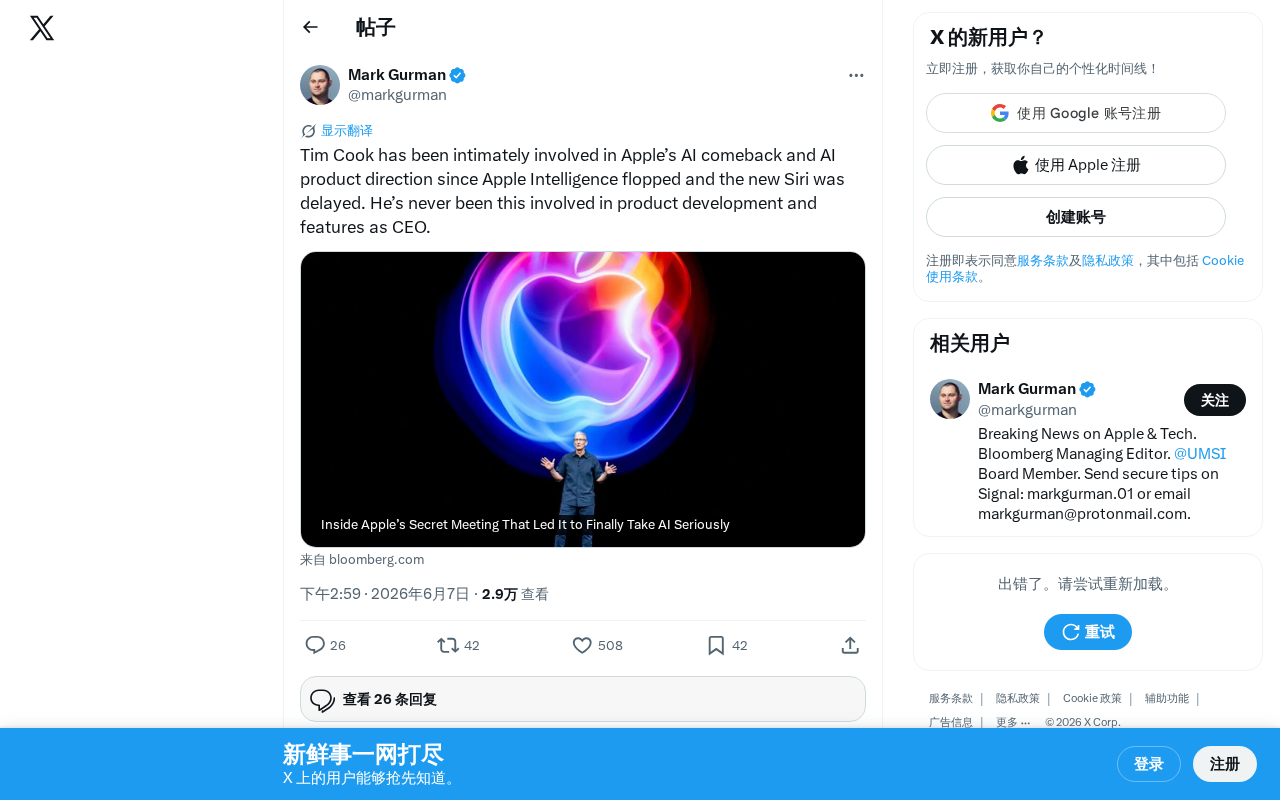
Cook's unprecedented involvement in Apple's AI strategy signals a company-wide pivot after Apple Intelligence underperforms.
Apple CEO Tim Cook has taken an unprecedented hands-on role in reshaping Apple's AI strategy after Apple Intelligence fell short of expectations and the new Siri faced significant delays. This rare deep involvement breaks Apple's traditional management model and signals massive resource reallocation toward AI, as the company scrambles to close the gap with competitors like OpenAI and Google.
Cook's Rare Deep Involvement in Product Development
According to tech reporter Mark Gurman, since Apple Intelligence underperformed expectations and the new Siri faced delays, Apple CEO Tim Cook has become deeply involved in replanning Apple's AI strategy and setting product direction. Reports indicate this is an unprecedented level of engagement in product development and feature design since Cook became CEO.
This sends a strong signal: Apple internally now views AI as a company-level strategic priority, not merely a technical iteration for a single product team.
Why Apple Intelligence Is Seen as a "Failure"
Market Feedback Far Below Expectations
When Apple launched Apple Intelligence, expectations were sky-high. However, after its actual rollout, users and industry analysts widely agreed that its functional depth and practicality lagged noticeably behind competitors (such as OpenAI's ChatGPT and Google's Gemini). Features like email summarization and emoji generation were interesting but failed to create killer use cases.
The Deeper Reasons Behind the New Siri's Delay
Even more concerning for the market is that the highly anticipated "all-new Siri" — the AI assistant capable of understanding context and performing cross-app actions — has been significantly delayed. This means Apple has encountered greater technical challenges than anticipated in integrating large language models at the system level. Siri's delay isn't just a timeline issue; it exposes Apple's shortcomings in foundational AI capabilities.
What Cook's Personal Involvement Means
Breaking Apple's Traditional Management Model
Apple has long employed a "functional organizational structure" where the CEO typically doesn't dive into specific product feature decisions. Cook's previous management style leaned more toward operations and supply chain optimization, with product direction primarily handled by VPs and SVPs. His personal involvement now indicates that the AI challenge has escalated to a level requiring top-level resource coordination and breaking down departmental silos.
A Precursor to Resource Reallocation
When a CEO personally intervenes in a particular direction, it often signals that large-scale resource reallocation is imminent. We can expect Apple to increase investment in the following areas:
- Foundational AI model capabilities: Potentially accelerating in-house large model development or deepening integration with external partners
- Talent recruitment and team restructuring: AI-related teams may receive higher priority and more headcount
- Product cadence adjustments: Some non-AI features may be postponed to make way for AI
Apple's Path to an AI Breakthrough
Apple's core advantages lie in its massive device ecosystem and commitment to user privacy. If it can combine powerful AI capabilities with these two moats, there's still an opportunity to find differentiated positioning in the AI race. Cook's deep involvement may be precisely aimed at ensuring Apple doesn't fall behind in this AI revolution.
However, the challenges are equally enormous: delivering top-tier AI experiences while prioritizing privacy, and providing smooth intelligent services with limited on-device computing power — these technical hurdles won't automatically disappear just because the CEO is paying attention. Apple needs not only strategic resolve but also technological breakthroughs.
Industry Implications
Cook's move also sends a message to the entire tech industry: AI is no longer a "nice-to-have" feature but the core battleground that will determine tech giants' fate over the next decade. When the CEO of the world's most valuable company personally takes charge of AI products, every company should reassess their own AI strategic priorities.
Related articles
A Three-Month Roadmap to LLM Development: A Deep Dive into the Learning Path from Zero to Freelancing
A deep dive into the three-step LLM development learning path: from prompt engineering and RAG knowledge bases to AI Agent development, with realistic timelines for beginners and experienced developers.
Struggling to Deploy AI Agents? Engineering Is the Key to Going from Demo to Product
57% of projects have deployed AI Agents, but 40% will be killed. This article analyzes the engineering methodology for taking AI Agents from Demo to enterprise product, covering the full process from requirements to deployment.
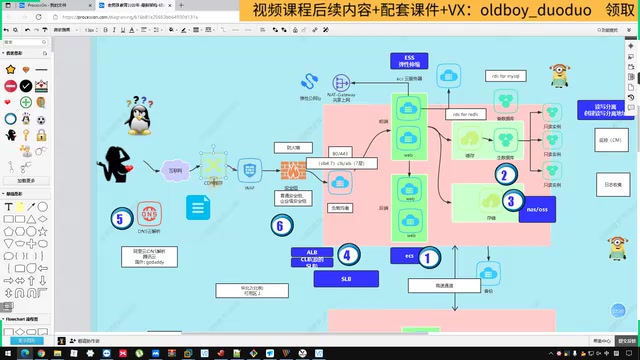
Complete Guide to Alibaba Cloud Website Architecture: The Full Request Path from DNS to Auto Scaling
A systematic guide to Alibaba Cloud website architecture covering DNS, CDN, WAF, CLB/ALB, ECS, Redis, NAS/OSS, and auto scaling along the full user request path.