Cursor + MCP + AScript Automation in Practice: How AI Programming Lowers the Development Barrier

Technical analysis and risk assessment of AI tool combinations for platform task automation.
This article analyzes a solution using Cursor + MCP + AScript to automate tasks on short-video platforms for earning rewards. While the approach significantly lowers the barrier to automation script development through AI programming tools, it carries platform compliance and legal risks. The article recommends applying AI automation capabilities to compliant directions such as enterprise RPA and productivity tools rather than platform exploitation.
Overview: How AI Automation Tools Are Changing Platform Task Execution
With the rapid development of AI programming tools, more and more developers are exploring the use of Cursor, MCP, and other tools to automate task execution. A Bilibili creator recently shared a hands-on tutorial on using AScript combined with Cursor + MCP tools to automatically complete tasks on short-video platforms for earning rewards, attracting considerable attention.
This article provides an objective analysis of this automation approach from three dimensions: technical implementation, platform rules, and risk considerations.
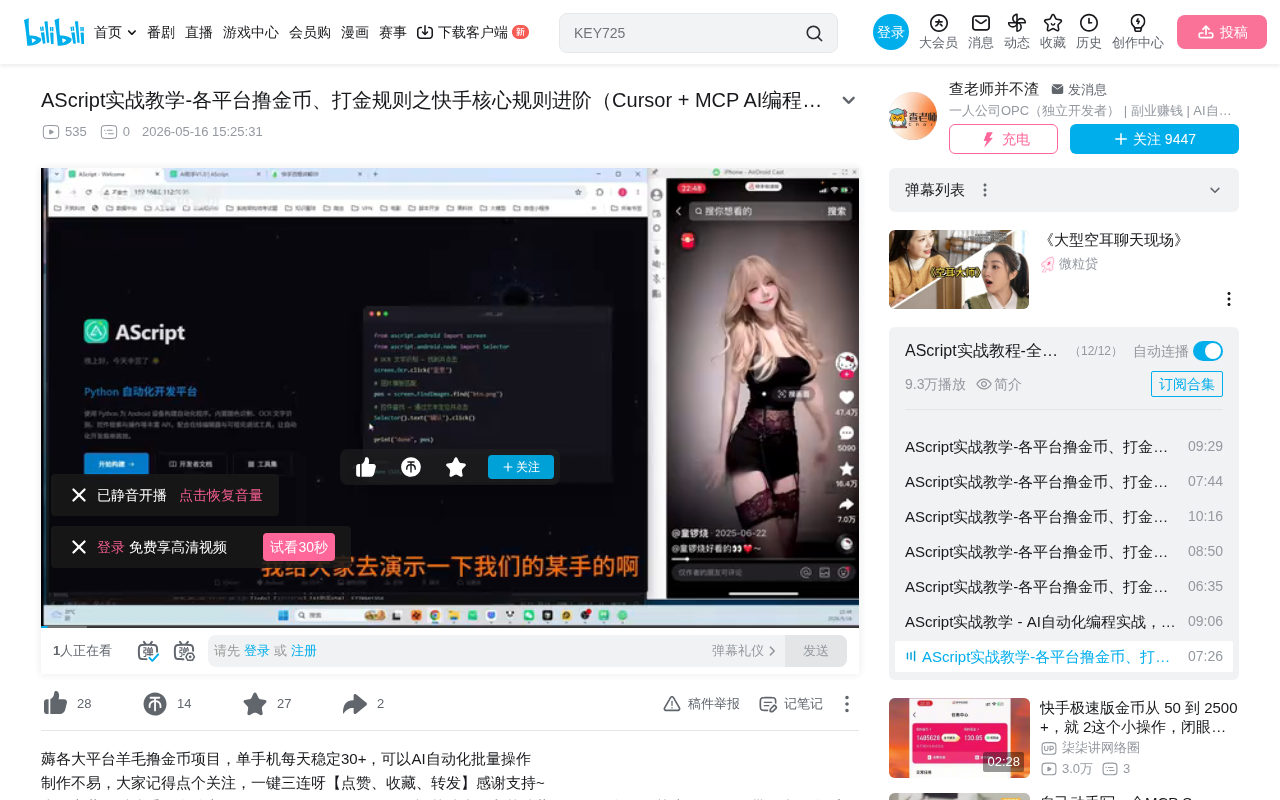
Technical Solution: The AScript + Cursor + MCP Combo
Core Tech Stack
The technical architecture of this solution consists of the following layers:
- AScript: An Android automation scripting framework that supports accessibility mode, root-free operation, color recognition, HID space, and various other automation methods
- Cursor: An AI-assisted programming IDE capable of generating code from natural language descriptions
- MCP (Model Context Protocol): A protocol that enables AI to call external tools and data sources
AScript Automation Framework: Technical Background
AScript is a relatively mature automation scripting framework on the Android platform. Its core advantage lies in supporting multiple automation modes. Accessibility Service is a native assistive interface provided by the Android system, originally designed to help visually impaired users operate their phones, but widely adopted for UI automation in scripts. Root-free means it can run without obtaining the highest system privileges, lowering the device barrier. HID (Human Interface Device) space operates by simulating human input devices, making it harder for application-layer anti-automation detection to identify compared to direct system API calls. Color recognition is an element-positioning method based on screen pixel color changes, suitable for scenarios where elements cannot be located by control IDs. The combination of these technologies gives AScript certain advantages in countering application-layer anti-automation detection.
How Cursor AI Programming IDE Works
Cursor is a deeply customized AI programming IDE based on VS Code. Its core capabilities come from deep integration with large language models (such as Claude and GPT-4). Unlike simple code completion, Cursor supports multi-file context understanding, project-level code generation, and Agent mode for autonomous programming. In Agent mode, AI can independently plan task steps, create and modify multiple files, run terminal commands, and iteratively fix code based on execution results. This means developers only need to describe the end goal, and the AI can independently complete the development work like a junior programmer. Cursor's Tab completion, Cmd+K inline editing, and Chat-based conversational programming interactions make human-machine collaboration far more efficient than traditional IDEs. In 2024, Cursor's valuation exceeded several billion dollars, reflecting the market's enormous expectations for AI programming tools.
MCP Protocol: Technical Principles and Ecosystem
MCP (Model Context Protocol) is an open protocol standard released by Anthropic in late 2024, designed to solve the connection problem between large language models and external tools and data sources. Before MCP, every AI application that needed to integrate external tools required separate adapter interfaces, creating N×M integration complexity. MCP reduces this complexity to N+M by defining a unified communication protocol—tool providers only need to implement an MCP Server once, and AI applications only need to implement an MCP Client once. In this case, MCP's role is to enable the AI model in Cursor to directly read AScript's API documentation, call the file system, and even execute test commands, achieving end-to-end generation from requirement descriptions to runnable code. Currently, the MCP ecosystem has hundreds of open-source Server implementations covering databases, file systems, web browsers, and various SaaS APIs.
Traditional automation script development requires developers to manually consult API documentation and write code line by line. Now, with the Cursor + MCP combination, developers only need to describe requirements and rules, and the AI automatically generates the corresponding automation script code.
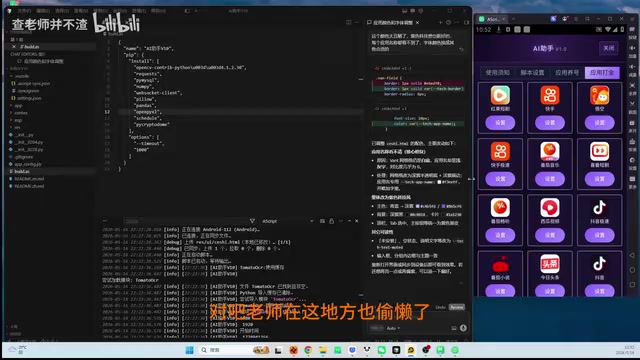
Detailed Automation Workflow
Based on the video content, the overall automation workflow is roughly as follows:
- Preparation Phase: Configure accounts and device environment
- Rule Input: Feed platform rules to the AI in text and image format
- Code Generation: Cursor automatically generates AScript automation scripts based on the rules
- Task Execution: Scripts automatically complete various tasks within the platform
- Reward Redemption: Automatically complete coin exchange and withdrawal
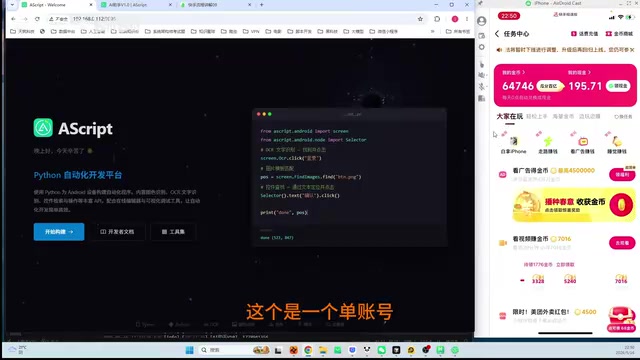
According to the demonstration, a single account running for 1-2 hours can generate considerable earnings, with support for multi-device parallel operation.
Platform Rules and Anti-Detection Strategy Analysis
Account Tags and Behavior Simulation
The video emphasizes the importance of "core rules," primarily involving the following aspects:
- Account Tag Management: Need to establish normal user behavior tags to avoid being identified as an abnormal account by the system
- Daily Activity Maintenance: Normal account activity behavior is needed before automated execution
- Anti-Detection Strategies: Need to understand the platform's risk control mechanisms to avoid triggering ban rules
Technical Principles of Platform Risk Control
Mainstream short-video and content platforms typically employ multi-layer detection mechanisms in their risk control systems. At the device fingerprint level, platforms collect hundreds of dimensions including device model, system version, installed app lists, and sensor data to generate unique device identifiers. At the behavioral analysis level, platforms use machine learning models to analyze user operation time intervals, swipe trajectories, dwell times, and other behavioral features to identify non-human operation patterns. At the network level, they check IP address geolocation, whether it's a data center IP, and account density under the same IP. Modern risk control systems also incorporate graph computing technology to analyze relationships between accounts (such as device associations, IP associations, and behavioral similarity). Once group characteristics are detected, batch actions are taken. This is why the video emphasizes maintaining account tags and daily activity—essentially trying to make automated behavior statistically resemble real users.
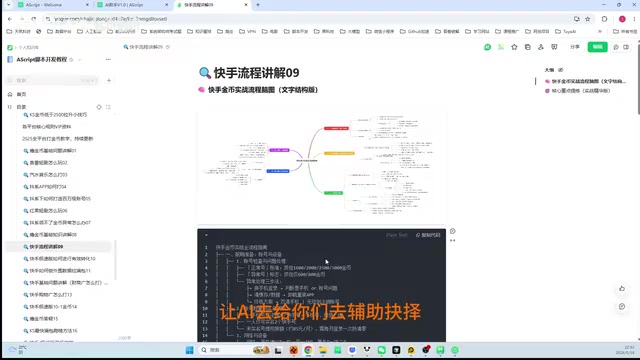
Rule Documentation Driving AI Execution
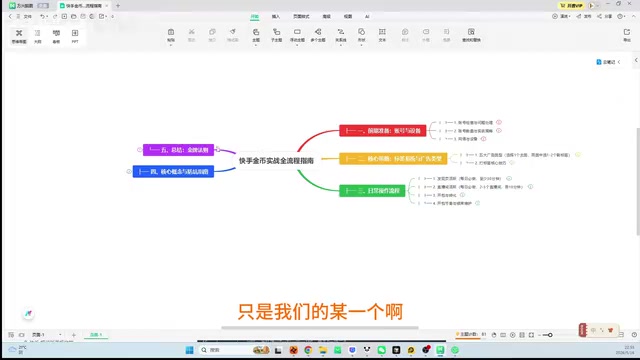
A noteworthy approach is: organizing platform rules into structured text-and-image documents, then having AI make decisions and generate code based on these rules. This "rule-driven + AI execution" model indeed significantly lowers the technical barrier to automation development, enabling people without deep programming skills to get started quickly.
The essence of this methodology is converting human tacit experiential knowledge (such as "what time periods are safer for operations" or "how long should intervals between operations be") into explicit rules that AI can understand and execute. In software engineering, this is similar to extracting business logic from code into a configurable rules engine—except now the "rules engine" is a large language model, whose understanding and execution capabilities far exceed traditional if-else rule systems.
Technical Value and Risk Considerations
Technical Insights
From a purely technical perspective, this case demonstrates several valuable directions:
- AI Programming Lowers Development Barriers: Automation scripts that previously required months of iteration can now be completed quickly with Cursor AI assistance
- Practicality of the MCP Protocol: MCP gives AI the ability to call external tools, expanding automation application scenarios
- Rule Documentation Mindset: Converting tacit knowledge into structured information that AI can understand is a reusable methodology
Risks That Must Be Acknowledged
However, the following risks must be pointed out:
- Platform Compliance: Most platforms' user agreements explicitly prohibit using automation tools to farm rewards. Violations may lead to account bans or even legal risks
- Revenue Instability: Platform rules can change at any time. A solution that works today may become completely ineffective tomorrow
- Gray Area: These operations essentially exist in a gray area of platform rules, with significant long-term uncertainty
From a legal perspective, China's Anti-Unfair Competition Law and the Measures for the Administration of International Networking Security Protection of Computer Information Networks have clear regulations against using technical means to interfere with the normal operation of others' network products or services. Additionally, if automated operations involve fake traffic or data fabrication, they may trigger provisions related to "destruction of computer information systems" or "fraud" under the Criminal Law. Even at the civil level, platforms have the right to recover all earnings obtained through violations based on user agreements.
More Worthwhile Compliant Automation Directions
Rather than using AI automation capabilities for platform exploitation, consider more sustainable application directions:
- Enterprise RPA Process Automation: Helping enterprises reduce costs and increase efficiency—strong market demand
- Personal Productivity Tool Development: Automating repetitive work to boost productivity
- AI Application Productization: Packaging automation capabilities as SaaS products for stable income
- Tool Development Within Compliance Boundaries: Such as data collection, content management, and other legitimate scenarios
Enterprise RPA Market Status and Prospects
RPA (Robotic Process Automation) is an important tool for enterprise digital transformation. The global RPA market is expected to exceed $13 billion in 2025, with a compound annual growth rate exceeding 30%. Traditional RPA tools (such as UiPath, Automation Anywhere, and Blue Prism) primarily achieve process automation through recording and replaying user operations, but face issues like high maintenance costs and poor adaptability. With the addition of AI large models, the new generation of AI+RPA solutions can understand unstructured data, handle exceptions, and adapt to interface changes, significantly expanding automation coverage and stability. For individual developers, mastering AI automation technology enables them to provide customized process automation solutions for small and medium enterprises—a compliant and high-demand business direction.
The Trend of One-Person Companies (OPC) Combined with AI Tools
The video also mentions the concept of a "One Person Company" (OPC)—using AI tools to maximize individual productivity. This direction is indeed worth exploring in depth, but it's recommended to choose more compliant and sustainable tracks.
The One Person Company concept has regained attention in recent years due to the maturation of AI tools. Its core idea is: with AI tools, a single person can accomplish the workload that previously required a small team. Typical AI-empowered scenarios include: developing products with AI programming tools, completing visual design with AI design tools, producing content with AI writing tools, and handling operational tasks with automation tools. Silicon Valley has already seen multiple cases of AI-native companies operated by 1-2 people generating over a million dollars in annual revenue. The essence of this trend is that AI drives marginal costs toward zero, enabling individuals to experiment and scale at extremely low cost. However, it's important to note that a sustainable one-person company model should be built on creating real value for others, rather than relying on short-term arbitrage through platform rule loopholes.
Conclusion
The Cursor + MCP + AScript technology combination indeed demonstrates the powerful capabilities of AI programming tools, enabling non-professional developers to quickly build automation solutions. But technology itself is neutral—what matters is the choice of application direction. Developers are advised to invest their energy in compliant, sustainable automation scenarios to truly achieve technology-empowered personal growth.
From a broader perspective, we are at a critical juncture in the democratization of AI tools. When programming barriers are significantly lowered by AI, true competitiveness will no longer be about "whether you can write code" but "whether you can find valuable problems to solve." Choosing to use these powerful tools to create real value versus exploiting platform rule loopholes is not just a technical decision—it's a strategic choice that affects long-term development.
Key Takeaways
- The Cursor + MCP + AScript combination can rapidly generate automation scripts, significantly lowering the development barrier
- Documenting platform rules and feeding them to AI enables rule-driven automated code generation
- A single account can generate earnings in 1-2 hours, with support for multi-device parallel scaling
- Platform automation exploitation carries compliance risks and account ban risks
- AI automation capabilities are better suited for compliant directions such as enterprise RPA and productivity tools
- The MCP protocol is building a unified standard for AI tool invocation—a technology trend worth watching
- The one-person company model has become viable due to mature AI tools, but must be built on creating real value
Related articles
 Tutorials
Cursor + Codex Dual-IDE Collaboration: A Practical Methodology for Open-Source Project Customization
A complete methodology for open-source project customization based on real-world experience, detailing the Cursor+Codex dual-IDE workflow, seven-stage process, MVP validation, and AI source code reading techniques.
 Tutorials
Cursor Multi-Agent in Practice: Building a Full-Stack Next.js Blog in 50 Minutes
Build a full-stack blog in 50 minutes using Cursor IDE's multi-Agent mode with Next.js, Clerk auth, and Supabase. Learn the 4-phase AI Agent workflow and key integration pitfalls.
 Tutorials
Building an AI Software Factory from Scratch: A Cursor Engineer's Hands-On Experience with Multi-Agent Collaboration
Cursor engineer Eric shares practical insights on building an AI software factory: automation levels, guardrail design, parallel Agent management, and scaling to 1000+ Agents for 24/7 development.