David Attenborough's Documentary 'Ocean': Saving the Ocean Means Saving Ourselves
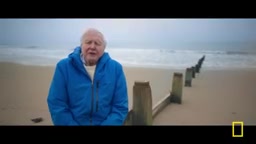
Attenborough's 'Ocean' reveals marine destruction and the urgent case for protecting one-third of the sea.
David Attenborough's National Geographic documentary *Ocean* delivers a sweeping look at the state of our seas — from groundbreaking discoveries like 40,000 sea mounts and vast seagrass meadows, to the devastation of bottom trawling and industrial overfishing. It also showcases the ocean's remarkable resilience: no-take zones restore ecosystems in years, and whale populations have rebounded after hunting bans. The film's core message: we must fully protect at least one-third of the ocean to avert ecological collapse.
Introduction: A Centenarian's Love Letter to the Ocean
In Ocean, a special documentary produced by National Geographic for World Oceans Day, David Attenborough — now nearly 100 years old — draws on a lifetime of observation and reflection to deliver a profound warning: the most important place on Earth is not on land, but in the ocean.
This documentary is not a simple nature film. It is a comprehensive diagnosis of the ocean's current state — from unprecedented scientific discoveries, to shocking ecological destruction, to inspiring stories of recovery. With his signature calm narration, Attenborough weaves together scientific facts, personal experiences, and the fate of humanity into an epic work about the sea.
A Golden Age of Ocean Discovery: Paradigm-Shifting Scientific Breakthroughs
The Open Ocean Is No Blue Desert
The documentary begins by overturning a long-held assumption — that the open ocean is a vast, empty blue desert. By tracking the migration routes of sharks and tuna, scientists have discovered that these creatures undertake spectacular journeys spanning the entire planet. Their navigational secret lies in sea mounts — underwater peaks rising up to three miles from the ocean floor, standing in the path of currents and pushing deep-sea nutrients upward to create oases of life.
The most exciting finding: the number of sea mounts is nearly double what was previously known, with approximately 40,000 scattered across the global seabed. The open ocean is far more interconnected than we ever imagined.
Coastal Shallows: A Severely Underestimated Carbon Sink
In the shallow waters near coastlines, the documentary reveals equally astonishing discoveries. Giant kelp forests, seagrass meadows, and coral reefs form underwater jungles rivaling terrestrial tropical rainforests. Scientists have only recently discovered the world's largest seagrass meadow — a finding that increased the estimated global seagrass habitat area by nearly half.
The more critical data point: ocean jungles and meadows absorb far more carbon than an equivalent area of terrestrial rainforest. Marine phytoplankton remove nearly one-third of human carbon emissions each year and produce more oxygen than all the trees on Earth combined — half the air we breathe comes from the ocean.
The Shocking Reality of Ocean Destruction
Bottom Trawling: Bulldozers on the Seabed
One of the documentary's most devastating segments exposes the practice of bottom trawling. Modern industrial trawlers drag metal chains and heavy beams across the ocean floor, destroying virtually everything in their path. More than three-quarters of trawl catch is discarded — a staggering level of waste.
The area of seabed trawled each year is roughly equivalent to the entire Amazon rainforest, and many areas are plowed repeatedly. This disturbance of seabed sediments releases massive amounts of carbon dioxide, further accelerating global warming. Even more absurd: bottom trawling remains legal in many so-called "marine protected areas," and governments worldwide spend $20 billion annually subsidizing overfishing.
From Abundance to Depletion: The Collapse of Fish Stocks
Attenborough cites historical records from 400 years ago: coastal waters were once so thick with fish that boats could barely pass through. Today, two-thirds of large predatory fish have disappeared, and roughly 400,000 industrial fishing vessels operate in every corner of the ocean. The words of an African fisherman in the documentary are particularly heartbreaking: "Our nets used to be full. Now we chase even the smallest fish because there are none left. These days, when I cast my net, what I pull up is plastic."
Industrial fishing fleets have even reached Antarctica, harvesting krill on a massive scale — the tiny crustaceans that form the foundation of the entire Antarctic ecosystem. The captured krill is processed into fish feed, health supplements, and even pet food.
Rays of Hope: The Ocean's Astonishing Resilience
The Spillover Effect of No-Take Zones
Perhaps the documentary's most important message is this: the ocean recovers far faster than we ever imagined. After more than 200 years of overfishing, a nearly 300-square-mile stretch of ocean was designated as a fully protected no-take zone. In just five years, kelp forests flourished again and the ecosystem regained its vitality.
Even more significant is the "Spillover Effect." Lobsters within the no-take zone grew larger and produced more eggs, with larvae carried by currents beyond the protected boundaries, revitalizing surrounding fishing grounds. One fisherman recalled: "One day, fishing at the edge of the protected area, I pulled up the fullest pot of my entire career."
The Mediterranean offers an equally inspiring case. As one of the most overfished seas on the planet, Mediterranean fish populations had nearly completely collapsed. But after a small protected area was established off the French coast, life rapidly returned. By protecting less than 1% of the Mediterranean's surface area, the largest fish species began to come back.
Coral Reefs Show Resilience Under Strict Protection
The world has experienced the worst coral bleaching event ever recorded. But the documentary highlights a key finding: in areas strictly protected from fishing, large populations of herbivorous fish thrive, suppressing the algae growth that smothers coral and creating conditions for recovery. Protection has made these reefs among the most resilient coral reefs on Earth.
Whale Conservation: A Proven Success Story
Attenborough uses the success of whale conservation as the film's emotional climax. Industrial whaling drove nearly every whale species to the brink of extinction in just 100 years, reducing blue whale populations to a mere 1%. After the commercial whaling ban was implemented, South Atlantic humpback whale numbers tripled in just ten years. Blue whales — once thought impossible to encounter again — now swim alongside Attenborough's own boat.
A Call to Action: Protect One-Third of the Ocean
Currently, less than 3% of the world's oceans are truly protected. Scientists point out that to prevent ecological collapse, at least one-third of the ocean must be fully protected. Conservation efforts should focus on two priorities: heavily fished coastal areas, and biodiversity hotspots in the open ocean such as sea mounts.
Nearly every nation on Earth has already agreed on paper to meet this minimum target. Papahānaumokuākea in Hawaii — the largest fully protected area on the planet — has already proven that large-scale protection works: tuna within the reserve are able to breed, and populations in surrounding areas have grown by 54%.
Conclusion: A Century of Wisdom
At the end of the documentary, Attenborough says: "When I was a little boy and first saw the sea, people thought of it as a wilderness to be conquered. Now, as I near the end of my life, we know the truth is the very opposite."
This man, who has witnessed nearly a century of change on our planet, uses his remaining strength to deliver a simple yet profound message: saving the ocean means saving ourselves. The ocean is not some distant world unrelated to life on land — it is the lifeblood of our home. Protecting it is not about opposing fishing; it is about ensuring that there will still be fish to catch, air to breathe, and a climate fit for living.
As one fisherman in the film puts it: you wouldn't pick every apple from the tree in your backyard in a single day. You take only what you need and let the tree keep growing. The same is true of the ocean.
Related articles
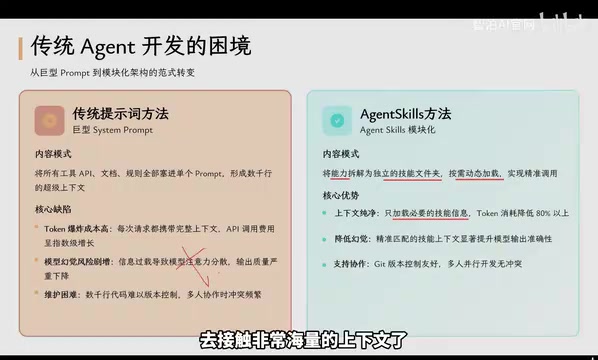
Agent Skills: Folders as Skills — Making AI Produce Precise, Template-Based Output
Agent Skills splits AI capabilities into independent skill folders with on-demand loading and progressive disclosure, cutting token costs by 80% and reducing hallucinations for template-based output.

Five Common Claude Code Mistakes — How Many Are You Making?
Five common Claude Code mistakes developers make: copy-pasting code, skipping CLAUDE.md, inefficient prompting, ignoring docs, and poor context management — with fixes.
Andrew Ng's New Course Explained: A Practical Guide to Using OpenAI's O1 Reasoning Model
Deep dive into Andrew Ng and OpenAI's Reasoning with O1 course covering test-time scaling, new prompting paradigms, multi-model orchestration, and practical applications for developers.