Deep Agents: Key Topics from the LangChain Chicago Meetup Explained
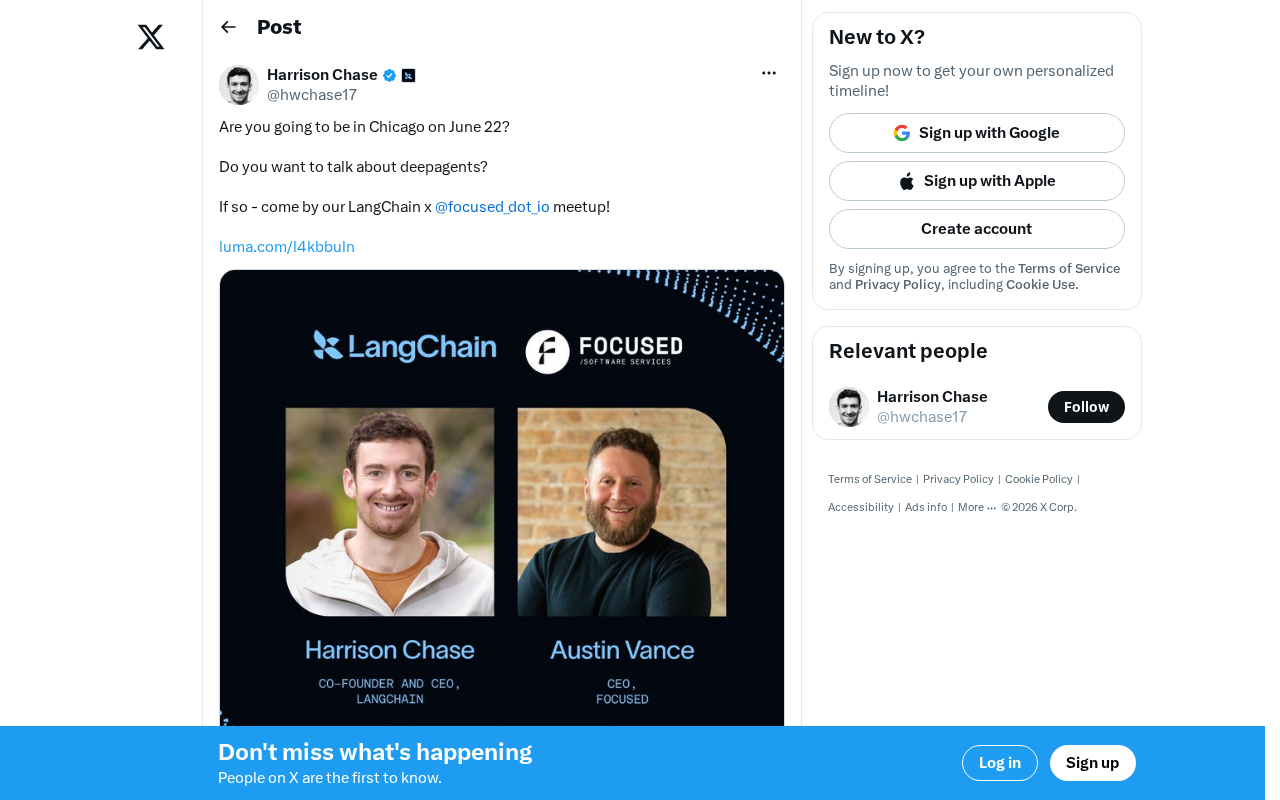
LangChain's Chicago Meetup highlights Deep Agents as the next frontier in AI Agent evolution.
LangChain's upcoming Chicago Meetup focuses on Deep Agents — AI agents capable of multi-layered reasoning, long-chain task execution, and autonomous decision-making. The article traces the evolution from ReAct to LangGraph to Deep Agents, examines breakthroughs in reasoning models like OpenAI's o-series and Claude's Extended Thinking, and explores the growing multi-Agent collaboration ecosystem including CrewAI and AutoGen.
Event Overview
LangChain recently announced an in-person Meetup event scheduled for June 22, 2025 in Chicago, USA, centered on one of the hottest topics in AI today — Deep Agents. Co-hosted by LangChain and Focused.io, the event is open to all developers and practitioners interested in AI Agent technology.
Deep Agents: The Next Evolution of AI Agents
The Leap from Simple Agents to Deep Agents
The concept of "Deep Agents" is rapidly gaining traction in the AI community. Unlike traditional AI Agents that perform single-step, single-tool invocations, Deep Agents emphasize multi-layered reasoning, long-chain task execution, and autonomous decision-making. These intelligent agents can perform deep planning in complex environments, coordinate multiple subtasks, and dynamically adjust strategies during execution.
From a tech stack perspective, LangChain — one of the most widely adopted AI Agent development frameworks — continues to push the boundaries of Agent capabilities. From the early ReAct pattern to LangGraph's state machine orchestration, and now the exploration of Deep Agents, LangChain's technical roadmap clearly reflects the industry-wide shift from "tool invocation" to "autonomous agents."
It's worth understanding the deeper context here. ReAct (Reasoning and Acting) is an Agent paradigm proposed jointly by Princeton University and Google in 2022. Its core idea is to have large language models alternate between "thinking" and "acting" during task execution — the model first reasons about the current state, decides on the next action, executes it, observes the result, and then enters the next reasoning cycle. This pattern laid the foundational architecture for modern AI Agents. LangGraph, on the other hand, is a state machine orchestration framework released by the LangChain team in 2024. It models an Agent's execution flow as a directed graph, where each node represents a processing step and edges represent state transition conditions. Compared to the linear Chain pattern, LangGraph supports loops, conditional branching, and parallel execution, making it possible to build Agents with complex control flows. The progression from ReAct to LangGraph is essentially a leap from single-turn decision-making to multi-step orchestration — and Deep Agents represent a further leap beyond that, pursuing truly autonomous planning and long-horizon execution capabilities.
Why Deep Agents Deserve Your Attention
Deep Agents have become a hot topic for several key reasons:
- A qualitative shift in reasoning capability: As LLM reasoning capabilities continue to improve (e.g., OpenAI's o-series, Claude's extended thinking), the "depth of thought" available to Agents has undergone a qualitative leap
To understand this, we need to look at the technical breakthroughs in reasoning models. OpenAI's o-series models (such as o1 and o3) introduced a "chain-of-thought reasoning" training paradigm, where the model generates extensive intermediate reasoning steps before arriving at a final answer. This approach has shown significant improvements in math, coding, and logical reasoning tasks. Anthropic's Claude achieves similar capabilities through its Extended Thinking feature, allowing the model to perform longer internal reasoning before producing output. These reasoning breakthroughs are critical for Deep Agents because deep agents need to perform multi-step planning and self-correction when executing complex tasks, rather than simply mapping user requests to tool calls. The stronger the reasoning capability, the better an Agent can handle ambiguous instructions, anticipate execution risks, and formulate contingency plans.
- Multi-Agent collaboration has become essential: Complex tasks often require multiple specialized Agents working in concert, placing higher demands on orchestration frameworks like LangGraph
In the multi-Agent collaboration space, a rich technical ecosystem has already emerged. CrewAI is a framework focused on multi-Agent role-playing and collaboration, allowing developers to define Agent roles with different professional backgrounds (e.g., researcher, writer, reviewer) and achieve collaboration through task delegation mechanisms. Microsoft's AutoGen adopts a conversation-driven multi-Agent architecture where Agents negotiate and distribute tasks through message passing. These two frameworks form a complementary ecosystem with LangChain/LangGraph: LangGraph excels at complex state management within a single Agent, while CrewAI and AutoGen focus more on inter-Agent coordination strategies. In the Deep Agents context, the common challenges these frameworks face include: how to avoid deadlocks between multiple Agents, how to achieve efficient task decomposition, and how to gracefully degrade when an Agent fails.
- Urgent demand for enterprise-grade deployment: Application scenarios such as automated workflows, code generation, and data analysis have clear requirements for Agent reliability and deep execution capabilities
LangChain's Community Ecosystem Strategy
Interestingly, LangChain has noticeably ramped up its in-person community events recently. Choosing a tech hub like Chicago for a Meetup allows them to reach developers in the Midwest while demonstrating LangChain's strategic intent to build a developer ecosystem across the entire United States.
As one of the most important tech centers in the American Midwest, Chicago is home to over 6,000 tech companies and a thriving AI startup ecosystem. Well-known tech companies like Grubhub and Groupon were born here, and in recent years, investment in AI and machine learning in Chicago has grown significantly. Additionally, top-tier universities such as the University of Chicago and Northwestern University provide a steady pipeline of AI research talent to the region. LangChain's choice to host an event here not only reaches a large number of enterprise AI developers but also helps build broader developer awareness beyond Silicon Valley and New York.
The co-hosting partnership with Focused.io is also worth noting. Such collaborations typically indicate synergies at the technology or product level and may signal deeper integration partnerships down the road.
Takeaways for AI Developers
Although this is a local in-person event in the US, the signals it sends are equally relevant for AI developers worldwide:
- Deep Agents are becoming an industry consensus direction — it's worth keeping a close eye on the latest developments in deep agent capabilities from frameworks like LangChain, CrewAI, and AutoGen
- Community-driven knowledge sharing remains the most efficient way to disseminate technical knowledge in the AI field — the broader community needs more high-quality Agent technology exchange events
- The gap between frameworks and applications is shrinking — mastering Agent orchestration skills will become a core competency for AI engineers
For developers who can't attend in person, it's recommended to follow LangChain's official channels for post-event recaps and technical content. Core topics from Meetups like this are typically published as blog posts or videos, making them excellent sources for staying up to date on Deep Agents developments.
Key Takeaways
Related articles
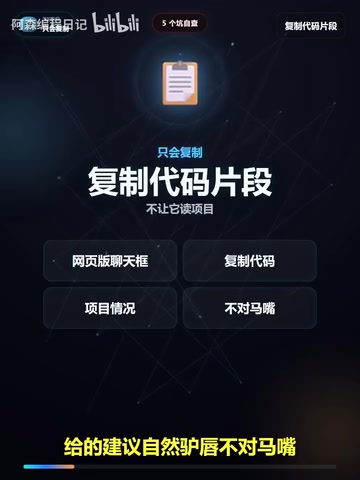
Five Common Claude Code Mistakes — How Many Are You Making?
Five common Claude Code mistakes developers make: copy-pasting code, skipping CLAUDE.md, inefficient prompting, ignoring docs, and poor context management — with fixes.
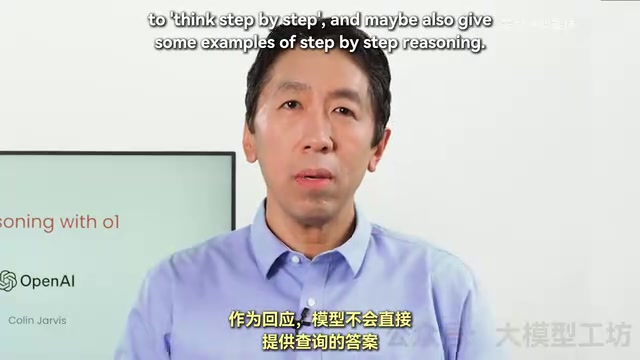
Andrew Ng's New Course Explained: A Practical Guide to Using OpenAI's O1 Reasoning Model
Deep dive into Andrew Ng and OpenAI's Reasoning with O1 course covering test-time scaling, new prompting paradigms, multi-model orchestration, and practical applications for developers.

Learning AI After College Entrance Exams: A Complete Path from Zero to Freelancing
How to efficiently learn AI skills during summer break after exams? A complete path from mastering prompts and hands-on projects to freelancing on platforms.