Deep Dive into Claude Code's Seven-Layer Architecture: Source-Level Analysis of the ReAct Loop and Configuration-Driven Design

Source-level breakdown of Claude Code's seven-layer architecture, ReAct loop, and configuration-driven design.
This article explores a 452-page technical book that reverse-engineers Claude Code's architecture. It covers the seven-layer design with clear separation of concerns, the ReAct (Reasoning + Acting) loop that powers the AI Agent's iterative decision-making, and configuration-driven design patterns. Common pitfalls like config bloat, over-layering, and parameter coupling are also addressed with practical solutions.
Why You Need to Deeply Understand Claude Code's Architecture
In an era where AI programming tools are flourishing, Claude Code has become an indispensable part of the developer's toolkit thanks to its powerful code generation and comprehension capabilities. However, most users still operate at a surface level — entering prompts, getting code, and copy-pasting. Few have a deep understanding of the critical underlying technologies: the seven-layer architecture design, the core ReAct loop principles, and the configuration-driven mechanisms.
Recently, a Bilibili content creator known as "Programming Party Fengshen" recommended a Chinese technical book titled Claude Code Architecture Decoded. Spanning 452 pages, the book systematically deconstructs Claude Code's core design logic through reverse engineering of the source code and architectural analysis. The book has reportedly been recommended by technical teams at Tsinghua University and ByteDance, generating significant buzz in the AI programming community.

A Complete Overview of Claude Code's Seven-Layer Architecture
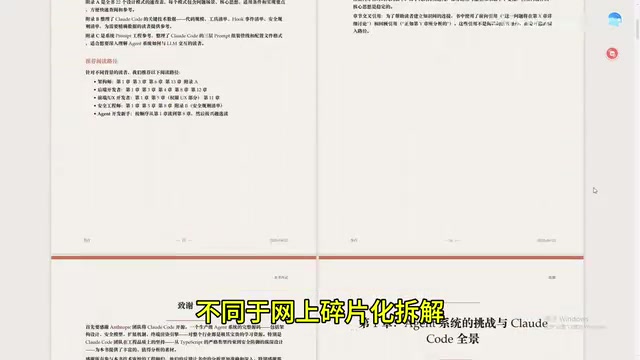
One of the book's most valuable contributions is its systematic breakdown of Claude Code's seven-layer architecture. Unlike the fragmented analyses scattered across the internet, the book deconstructs each layer from top to bottom, covering the full technology stack from the user interaction layer to the security and permissions layer.
Responsibilities and Boundaries of Each Layer
According to the book's architectural analysis, Claude Code's layered design follows a clear separation of concerns principle:
- User Interaction Layer: Handles user input, displays output, and manages command-line interaction logic
- Reasoning & Decision Layer: The core layer where the AI model performs intent understanding and task planning
- Tool Invocation Layer: Manages the scheduling of specific tools such as file read/write, code execution, and search
- Security & Permissions Layer: Controls file access permissions, command execution scope, and other security boundaries
Each layer has clearly defined interface contracts, enabling independent evolution of individual layers without compromising overall system stability. For developers looking to build similar AI Agent systems, this layered architecture approach offers highly valuable reference material.
The ReAct Loop: The Beating Heart of an AI Agent
The Complete Reasoning-Action-Observation Cycle
The ReAct (Reasoning + Acting) loop is the core operational mechanism that powers Claude Code as an AI Agent. This loop consists of three key steps:
- Reasoning: The AI analyzes the current task state and decides what to do next
- Acting: It invokes the appropriate tools to perform specific operations, such as reading files or running commands
- Observation: It captures the results of tool execution, which serve as input for the next round of reasoning
This loop iterates continuously until the task is completed or a termination condition is met. Understanding the ReAct mechanism is foundational to grasping how all AI Agents work. Through source-level analysis, the book demonstrates how Claude Code makes decisions in each iteration, handles exceptions, and optimizes the efficiency of multi-turn interactions.
The Fundamental Difference from Traditional Programming Tools
Traditional IDE plugins and code completion tools use a single request-response model, whereas AI Agents based on the ReAct loop possess the ability to autonomously plan and iteratively self-correct. They can automatically adjust strategies when encountering errors and proactively search for context when information is insufficient — this is precisely the fundamental reason Claude Code is more powerful than traditional tools.
Configuration-Driven Design: Avoiding Common Pitfalls
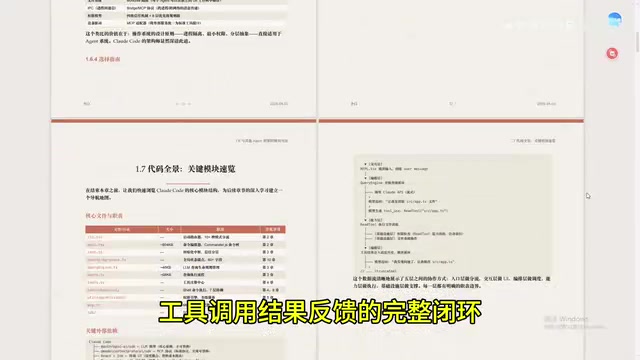
Another important chapter in the book focuses on Claude Code's configuration-driven design pattern, providing an in-depth analysis of how key parameters like the Query Engine work.
The Most Common Configuration Pitfalls for Developers
According to the book's summary, the most frequently encountered issues when using or referencing Claude Code's architecture include:
- Config Bloat: Uncontrolled growth of configuration options leads to a sharp increase in system complexity and skyrocketing maintenance costs
- Over-Layering: Creating architecture for architecture's sake — too many abstraction layers actually increase the difficulty of understanding and debugging
- Parameter Coupling: Configuration parameters across different modules become interdependent, so modifying one setting has cascading effects throughout the system
These problems are extremely common in real-world AI Agent development. The book not only identifies these issues but also provides corresponding solutions and best practices to help developers avoid similar risks in their own projects.
Who Is This Book For?
Based on its content positioning, Claude Code Architecture Decoded is primarily aimed at the following audiences:
- Power users of AI programming tools: Those who want to advance from "knowing how to use it" to "understanding how it works," improving their day-to-day efficiency
- AI Agent developers: Those looking to reference the architectural design of a mature product and apply it to their own projects
- Architects and technical leads: Those who need to understand design patterns and engineering best practices for AI Agent systems
- Computer science students: Those working on graduation projects or research topics who need systematic technical reference material
The entire book is written in Chinese and includes source code analysis and architecture diagrams, significantly lowering the barrier to reading English source code. The content progresses from foundational architectural concepts to advanced implementation techniques, making it suitable for readers at different skill levels to explore as needed.
Summary and Reflections
In today's rapidly evolving AI Agent landscape, merely staying at the tool-usage level is no longer sufficient. Understanding the underlying architecture and core principles is essential for making sound decisions in technology selection, system design, and troubleshooting.
As one of the most mature AI programming Agents available today, Claude Code's architectural design embodies a wealth of engineering experience. Whether or not you use Claude Code directly, its seven-layer architecture philosophy, ReAct loop operational mechanism, and configuration-driven design patterns are all invaluable references for building any AI Agent system.
That said, it's worth noting that every technical book has a shelf life. Claude Code itself is still rapidly iterating, and some of the source code analysis in the book may change with version updates. Readers are advised to cross-reference the latest official documentation and source code while reading to achieve the best learning outcomes.
Related articles
 Tutorials
Cursor + Codex Dual-IDE Collaboration: A Practical Methodology for Open-Source Project Customization
A complete methodology for open-source project customization based on real-world experience, detailing the Cursor+Codex dual-IDE workflow, seven-stage process, MVP validation, and AI source code reading techniques.
 Tutorials
Cursor Multi-Agent in Practice: Building a Full-Stack Next.js Blog in 50 Minutes
Build a full-stack blog in 50 minutes using Cursor IDE's multi-Agent mode with Next.js, Clerk auth, and Supabase. Learn the 4-phase AI Agent workflow and key integration pitfalls.
 Tutorials
Building an AI Software Factory from Scratch: A Cursor Engineer's Hands-On Experience with Multi-Agent Collaboration
Cursor engineer Eric shares practical insights on building an AI software factory: automation levels, guardrail design, parallel Agent management, and scaling to 1000+ Agents for 24/7 development.