Deep Dive into Six Major Open Source Projects: GitHub Native Stacked PRs, Open Source Figma Alternative, and More
Deep Dive into Six Major Open Source P…
Six open source projects spanning dev workflows, design tools, testing, AI Agents, social media management, and search.
This tech roundup covers six open source projects: GitHub's native Stacked PRs bringing stacked code review to the mainstream; Open Pencil reverse-engineering Figma's format with built-in AI; Happy DOM as Vitest's default lightweight headless browser; E2B's Open Agents providing a microVM-based cloud coding Agent reference; Bright Beans Studio offering self-hosted social media management; and Fuse.js delivering efficient fuzzy search in 8KB. The overarching trend: open source is systematically challenging closed-source products, with AI integration becoming standard.
This week's tech roundup covers six noteworthy open source projects and technical developments: GitHub native Stacked PRs, the open source design editor Open Pencil, the headless browser environment Happy DOM, the cloud-based coding Agent reference implementation Open Agents, the social media management platform Bright Beans Studio, and the fuzzy search library Fuse.js. Each represents an important evolutionary direction in its respective field.
GitHub Native Stacked PRs: From Niche Workflow to Mainstream
GitHub has officially launched native Stacked PRs support, allowing developers to split a large change into several sequentially stacked PRs with one-click merging of the entire chain. The solution includes a web-based visual interface and the GHStack command-line tool, where the CLI automatically handles the tedious operations of branch creation, cascading rebase, pushing, and PR generation.
The core idea behind the stacked PR workflow originates from the practical needs of large software engineering teams for "small batch, high frequency" code reviews. Meta's internal Phabricator system and Google's Critique system both natively support this pattern. The theoretical foundation lies in the continuous integration principle of "small commits" — the smaller each change, the lower the cognitive burden on reviewers, and the lower the probability of merge conflicts. The traditional single large PR model often leaves reviewers facing thousands of lines of changes with no clear starting point, while the stacked structure decomposes complex features into logically independent small units, each PR independently understandable and reviewable, dramatically improving code review quality and efficiency.
Regarding permission management, branch protection rules apply to the final target branch rather than intermediate direct base branches, meaning security policies won't be bypassed due to the stacked structure. Additionally, GitHub provides an NPM package that enables AI Agents to programmatically create stacked PRs.
This stacked PR workflow has been used internally at Meta, Google, and other major tech companies for years, while external developers have long relied on third-party tools like Graphite and ghstack. GitHub stepping in with native integration marks the formal transition of this efficient code review pattern from niche to mainstream. The feature is currently in Private Preview.
Open Pencil: An Open Source Design Editor That Opens Figma Files
Open Pencil is an open source design editor whose biggest highlight is its ability to natively open Figma files, with copy-paste between Figma achieved through the Keyway binary editor while maintaining high fidelity.
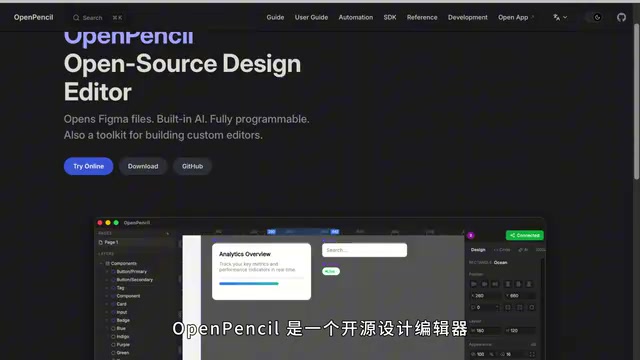
To understand this breakthrough, you need to appreciate Figma's ecosystem lock-in: Figma's file format is not fully public, its REST API provides read-only access, and write capabilities are extremely limited. This closed strategy makes deep third-party integration difficult and creates strong platform dependency for designers. Open Pencil's ability to parse Figma files means the team has reverse-engineered Figma's proprietary binary format — technically extremely challenging and the project's most critical technical moat.
Core Capabilities
- AI Integration: Built-in conversational AI with approximately 90 tools, can serve as an MCP Server for Claude Code and Cursor
- Real-time Collaboration: Supports peer-to-peer real-time collaboration via WebRTC
- Headless CLI: For quickly reading design files, with output to Tailwind CSS or JSON
Figma's stance in the AI era has always been hard to read, showing considerable conservatism in API openness. While Open Pencil still has some compatibility issues, it enables Agents to conveniently read and write design files, potentially breaking through Figma's established market boundaries. Worth noting is that Claude Design, released this week, poses yet another major challenge to the design SaaS space.
Happy DOM: A Critical Piece of Frontend Testing Infrastructure
Happy DOM is a headless browser environment implemented in TypeScript, providing complete DOM APIs including Custom Elements, Shadow DOM, Mutation Observer, Fetch, and more. It's used as the default or optional DOM environment by testing frameworks like Vitest, Jest, and Bun, supporting testing for mainstream frameworks like React and Vue.
Why Do We Need Happy DOM?
For a long time, jsdom was virtually the only option for testing DOM in Node.js environments, but it's relatively heavy and slowly maintained. jsdom's implementation philosophy is to simulate browser behavior as completely as possible, resulting in relatively high startup overhead and memory usage. Happy DOM chose to rewrite a lighter implementation that dramatically improves execution speed while ensuring coverage of mainstream APIs — Vitest's default recommendation of it as a test environment is the best endorsement.
In an era where frontend infrastructure increasingly prioritizes speed, Happy DOM is a critical piece of the infrastructure layer in the acceleration wave driven by Bun and Vite. However, its limitations are also clear — API coverage still falls short of jsdom, and you occasionally need workarounds when encountering obscure DOM features.
Open Agents: E2B's Open Source Cloud Coding Agent Reference Implementation
Open Agents is an open source backend coding Agent reference implementation from E2B Labs, comprising a complete tech stack including Web UI, Agent runtime, sandbox orchestration, and GitHub integration.
Architecture Design Highlights
Architecturally, it decouples the Agent from the sandbox: the Agent runs outside the VM and interacts with the file system and Shell inside the VM through tool calls. This separation means Agent logic can evolve independently while sandboxes can be swapped as needed. Understanding this architecture requires knowledge of E2B's core technology: its sandboxes are based on microVM technology (similar to AWS Firecracker), capable of launching a complete Linux environment in milliseconds. This isolation approach is more secure than Docker containers because each sandbox has its own independent kernel, fundamentally eliminating container escape risks — critical for executing untrusted AI-generated code and one of the mainstream security approaches in the current AI coding Agent space.
Feature-wise, it supports multi-step persistent execution, streaming output, snapshot recovery, auto-commit and PR pushing, and even integrates ElevenLabs for voice input. This is E2B's open source answer to the cloud Agent space, letting developers avoid building from scratch. Of course, for E2B itself, this is also a strategy to promote its Sandbox product.
Bright Beans Studio: An Open Source Self-Hosted Social Media Management Platform
Bright Beans Studio is an open source self-hosted social media management platform that currently supports nearly all major international platforms (with relatively less support for Chinese platforms). Feature-wise, it covers the complete workflow of content creation, scheduling, approval, publishing, unified inbox, and client portals.
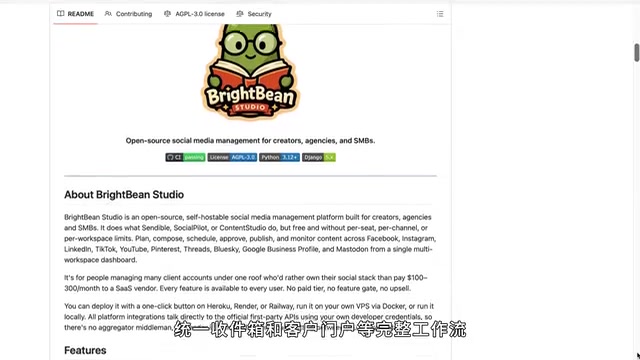
SaaS social media tools have long charged by account count and seat count, making costs prohibitively high for small to medium agencies managing multiple clients with single operators. The core value of self-hosted solutions isn't just cost savings — it's maintaining control over data and credentials. However, it's particularly important to note that this project uses the AGPL license. AGPL (Affero General Public License) is the network service extension of GPL, with a core clause requiring: if you modify AGPL software and provide services over a network, you must disclose your modified source code to users. This directly constrains SaaS business models — well-known projects like MongoDB and Grafana have used AGPL as a commercial moat. Many enterprises therefore blacklist AGPL, and license risks need careful evaluation in commercial use scenarios.
Fuse.js: A Lightweight Powerhouse for Frontend Fuzzy Search
Fuse.js is a zero-dependency JavaScript fuzzy search library implementing fault-tolerant matching based on the Bitap algorithm, with a full version of only 8KB. It supports weighted fields, nested fields, extended search syntax, and logical expressions, running in browser, Node.js, and Deno environments.
The Bitap algorithm (also known as Shift-Or or Baeza-Yates–Gonnet algorithm) is a bit-parallel approximate string matching algorithm proposed by Ricardo Baeza-Yates and Gaston Gonnet in 1992. It uses bitmasks to track all possible match states in parallel, with time complexity of O(mn/w), where w is the machine word size (typically 64). This means the algorithm can simultaneously process match states for 64 characters in a single bit operation, making it extremely efficient for short pattern strings. Compared to regular expressions or edit distance algorithms, Bitap's performance advantage is particularly pronounced in real-time input response scenarios — this is the fundamental reason Fuse.js can achieve high-quality fuzzy matching in just 8KB.
In the pure client-side frontend search scenario, Fuse.js has virtually no competitors. Even today, with AI-powered Q&A in full swing, many documentation sites still rely on it for instant search — because many users need millisecond-level responses rather than waiting for AI-generated answers. Even when combined with AI, Fuse.js's query capabilities serve as an excellent foundational tool.
Summary
This week's six projects span multiple dimensions: development workflow (Stacked PRs), design tools (Open Pencil), testing infrastructure (Happy DOM), AI Agent architecture (Open Agents), operations tools (Bright Beans Studio), and search capabilities (Fuse.js). A common trend emerges: open source solutions are systematically challenging closed-source products across vertical domains, and AI capability integration is becoming standard equipment for every tool.
Key Takeaways
- GitHub natively supports Stacked PRs, bringing the stacked code review workflow used internally at major tech companies for years to mainstream developers
- Open Pencil, the open source design editor, can natively open Figma files, has built-in AI and can serve as an MCP Server, potentially breaking through Figma's closed ecosystem
- Happy DOM, as a lightweight headless browser environment, is recommended by default in Vitest, becoming a critical piece of infrastructure in the frontend acceleration wave
- E2B's open source Open Agents adopts an Agent-sandbox separation architecture with microVM isolation technology underneath, providing a complete reference implementation for cloud coding Agents
- Fuse.js achieves zero-dependency fuzzy search in just 8KB, with its Bitap algorithm delivering outstanding performance in real-time search scenarios, virtually unrivaled in frontend client-side search
Related articles
 Tech Frontiers
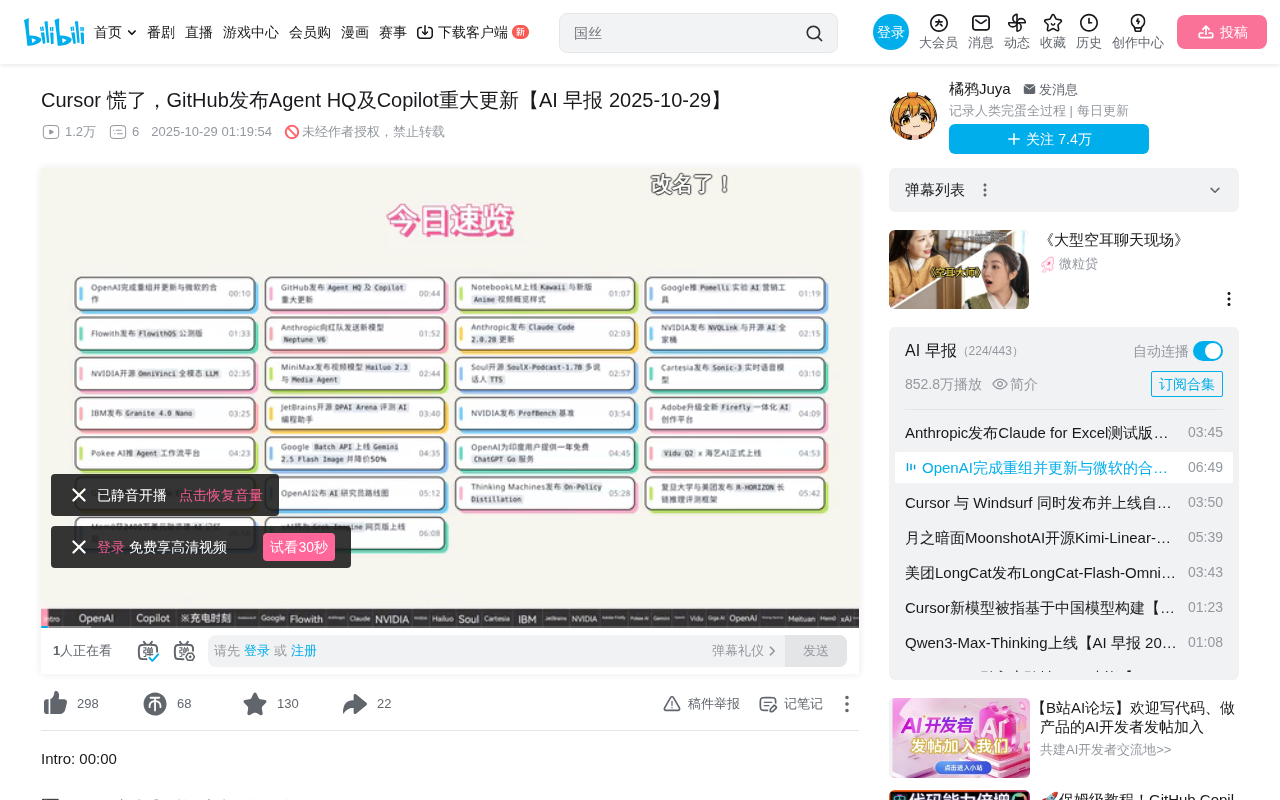
GitHub Agent HQ Launch: AI Coding Tools Enter the Era of Platform Competition
GitHub Universe unveils Agent HQ platform for unified coding agent management, Copilot upgrades with multi-model support. OpenAI completes restructuring, Anthropic tests new model, NVIDIA open-sources AI models.
 Tech Frontiers
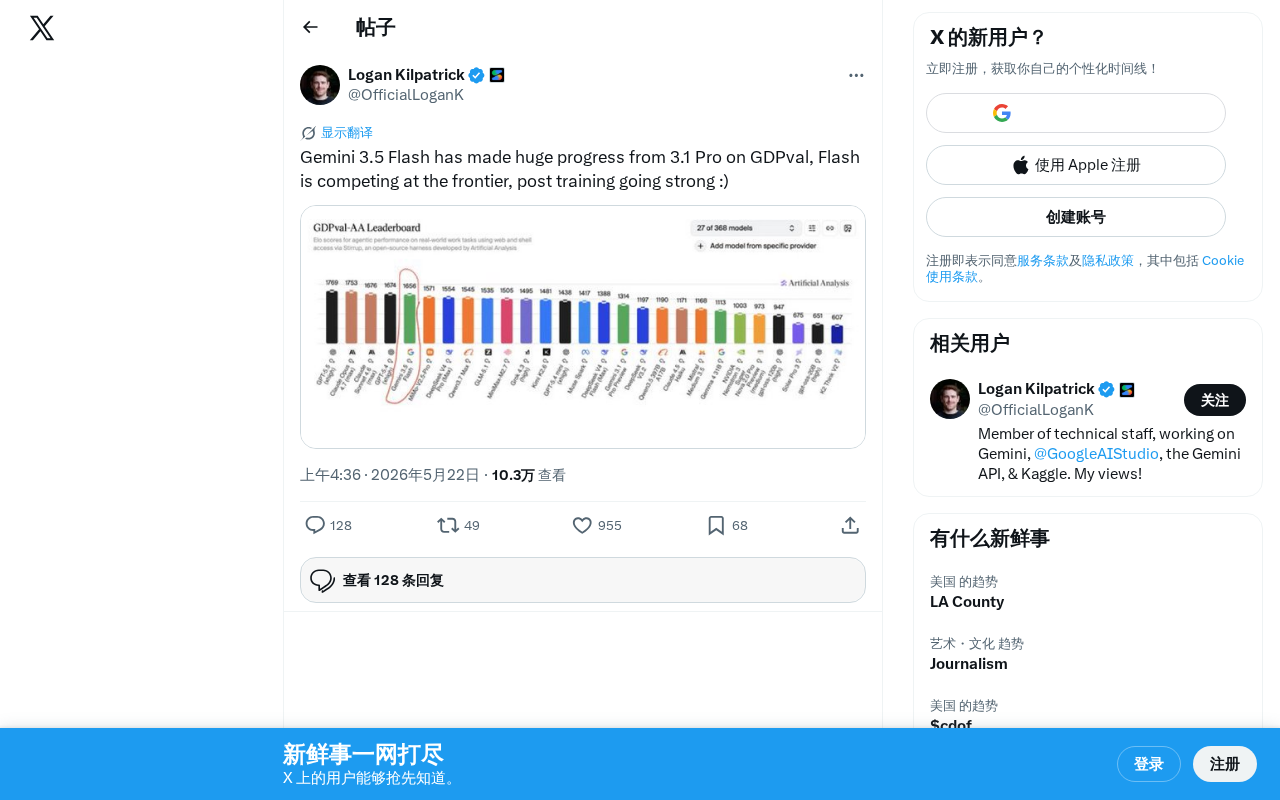
Gemini 3.5 Flash Achieves a Massive Leap on the GDPval Benchmark
Google Gemini 3.5 Flash surpasses Gemini 3.1 Pro on the GDPval benchmark. The lightweight Flash model leverages post-training techniques to approach frontier-level performance, redefining the balance between quality and cost.
 Tech Frontiers
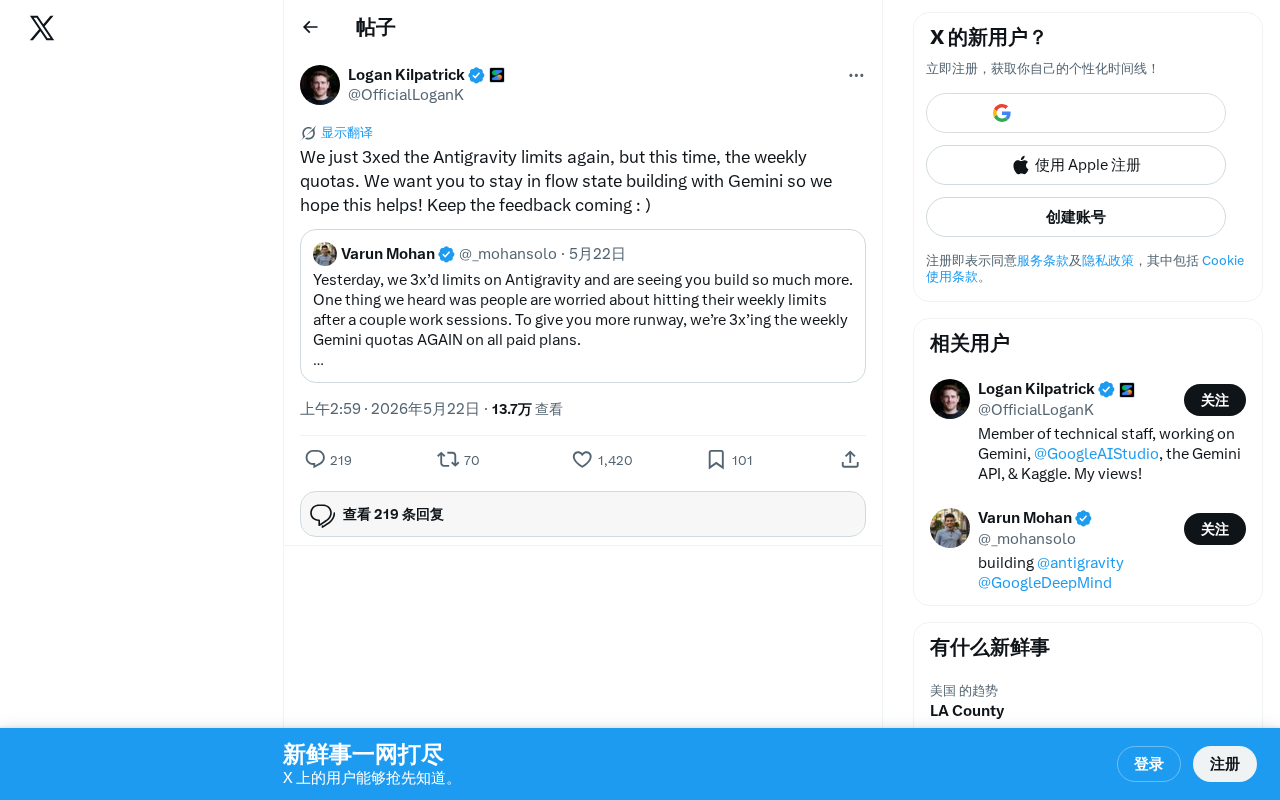
Google Gemini Antigravity Weekly Quota Tripled — AI Coding Without Limits
Google Gemini triples Antigravity weekly quotas following a prior daily quota boost. Analyzing the impact on developers and its strategic significance in AI coding.