Deep Dive into the AI Bubble: The Death Spiral of Losing $1.22 for Every $1 Earned
A forensic breakdown of why the AI industry's trillion-dollar boom is a financial death spiral.
This deep dive exposes the AI bubble through hard financial data: OpenAI loses $1.22 for every $1 earned, enterprises burn annual token budgets in months with no measurable ROI, NVIDIA inflates revenue through circular leasing schemes, and AI-generated code is degrading software quality industry-wide. With private credit and pension funds now leveraged into data center construction, the coming reckoning threatens far more than just tech stocks.
The Biggest Lie in Tech: Is AI Actually Making Money?
While everyone pretends artificial intelligence is profitable, an epic capital bubble is quietly taking shape. Headlines everywhere tell us that whoever owns more GPUs will dominate, but peel back this veneer of blazing prosperity, and the books of companies actually paying for AI services tell a radically different story—costs spiraling out of control, zero return on investment, and budgets burned through in mere months.
This technological frenzy dubbed the "Fourth Industrial Revolution" is morphing into a generational bubble built on capital misallocation and executive ignorance.
Token-Based Pricing: The Meat Grinder for Enterprise AI Budgets
When AI services shifted from fixed subscriptions to per-token usage billing, the truth could no longer be concealed. Companies simply cannot predict how many tokens a given task will consume—different models, different prompts, and different code environments all cause costs to fluctuate wildly.
The case studies are alarming:
- UBR COO Andrew McDonald discovered his company burned through its entire annual AI token budget in just four months
- Zillow had consumed 98% of its annual budget by the end of May
- A major payment processing company even had a single engineer burn through $100,000 in tokens within one week—and management was completely unaware
The more fatal problem: nobody can calculate the ROI on these investments. The metrics companies use to measure AI utility are laughable—counting how many code merge requests AI generated, or tallying how many AI conversations employees initiated per day. It's like measuring a restaurant's revenue by how many times the front door was pushed open. The entire industry's KPIs have completely diverged from business fundamentals, all pointing toward "token maximization."
The Financial Truth About OpenAI and Anthropic: The More They Sell, The More They Lose
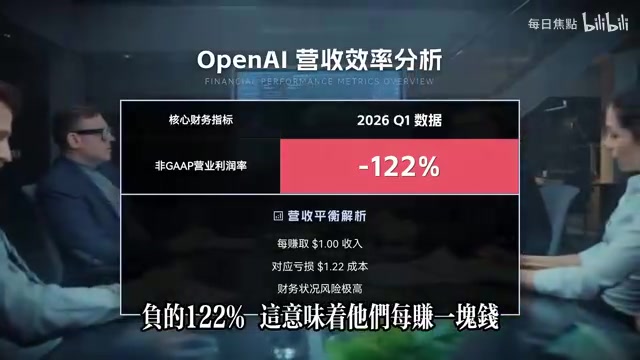
If demand-side companies start hitting the brakes, supply-side AI giants face existential catastrophe. Take OpenAI: data shows its Q1 2026 non-GAAP operating profit margin was an astonishing negative 122%—for every dollar earned, they lose a dollar and twenty-two cents.
Anthropic's situation is equally dire. Over 85% of its revenue depends on API calls, yet it remains deep in the red. CEO Dario Amodei himself has admitted that if the company miscalculates its allocation between compute and inference spending, it could go bankrupt at any moment. They carry hundreds of billions of dollars in cloud service commitments—a cash burn rate rarely seen in the history of human commerce.
This creates a dangerous death spiral:
- AI startups need to continuously raise astronomical sums
- Those funds get paid to cloud providers like Microsoft, Google, and Amazon
- Most of the money goes toward maintaining daily inference costs rather than building assets with long-term moats
- Once the funding chain breaks, all that's left is a pile of rapidly depreciating digital waste
NVIDIA's Shell Game: The Truth Behind $81 Billion in Revenue
All of humanity seems to have accepted that NVIDIA is the only guaranteed winner in the AI gold rush—the "pick-and-shovel seller." But look closely at their books, and there's a spine-chilling detail: NVIDIA has committed to spending approximately $30 billion over the coming years to lease back GPUs it originally sold to its own customers.
This is a textbook circular financing shell game—sell the goods to you, then pay to rent compute back from you, making the revenue numbers look spectacular through this maneuver. This explains why despite NVIDIA generating a staggering $81 billion in quarterly revenue, its actual cash on hand increased by a paltry $600 million.

The Surreal Reality of Data Center Construction
Silicon Valley giants casually announce $800 billion or $900 billion in data center investments, yet projects Microsoft began with great fanfare in 2023 have almost none that are truly completed and fully operational. NVIDIA has pre-sold tens of billions of dollars worth of GPUs, but these expensive chips aren't actually running—they're either collecting dust in warehouses or sitting on buyers' balance sheets continuously depreciating.
According to a short-seller report from Coopa Research, as much as 20% of NVIDIA's revenue may be flowing into restricted regions through various intermediaries in violation of regulations. If regulators confirm this tightrope act, that massive chunk of revenue will evaporate instantly.
AI Is Destroying Software Quality: The Code Ecosystem Collapse
Step outside the financial statements and look at end products—this technology supposedly "disrupting human history" is turning the entire software ecosystem into a mess. Compare the software experience before ChatGPT's birth in 2022: apps now force-fed AI features have become more bloated and sluggish, with inexplicable system bugs popping up constantly.
Over-reliance on AI is causing irreversible skill atrophy among programmers. When developers get accustomed to letting chatbots do the work and stop personally building underlying logic, they gradually lose the ability to write high-quality code by hand. AI-generated code snippets are like a stitched-together "Frankenstein"—they appear to run on the surface but are riddled with hidden logic landmines underneath.
Companies spend fortunes on tokens encouraging employees to frantically submit AI-generated code, only to produce industrial waste that requires even more time to patch and test.
Collective Cognitive Dissonance Among Management: Who's Driving This Frenzy?
The core force driving this frenzy is the group that creates the least actual value in modern business—highly paid middle managers and MBA graduates. They don't understand how technology works at a fundamental level, have never written a single line of code, and their understanding of AI is limited to grand narratives heard on podcasts.

In these managers' eyes, AI is packaged as the perfect tool to "suppress workers." Their ultimate fantasy is to squeeze employees' creativity dry, feed it to models, then use those models to replace the employees. But because they never get their own hands dirty, they cannot judge how poor AI output quality actually is, and therefore cannot measure true ROI.
Don't think this blindness only exists in small and medium enterprises. Google's Sundar Pichai, Microsoft's Satya Nadella—facing compute costs that multiply daily and commercial applications that perpetually fail to materialize—these tech giant executives actually have no Plan B. Their only option is to keep throwing money on the table and pray that models one day suddenly become money-printing machines.
The AI Bubble and the Financial System: A Trillion-Dollar Time Bomb
The danger of this bubble extends far beyond the tech sector. The entire data center construction frenzy is deeply intertwined with Wall Street's credit system. Massive amounts of private credit have been drawn in, and behind that private credit are insurance companies and ordinary people's pension funds. Top asset managers like Blackstone have already leveraged up several times over on AI infrastructure.
The trigger for collapse could be utterly mundane—all it takes is one slightly sober voice somewhere in the capital chain. If someone with approval authority asks:
"Are there actually real customers in the market to lease these data centers? Can even a single company prove this thing generates profit exceeding its costs?"
The entire compute empire will crumble in an instant.
Why This Is More Dangerous Than the Dot-Com Bubble
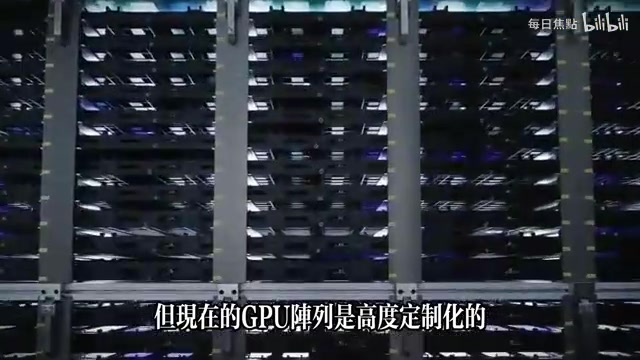
Unlike the 2000 internet bubble, the undersea fiber optic cables laid back then at least provided infrastructure for the subsequent spread of the internet. But today's GPU compute centers custom-built for AI large models cannot easily be repurposed—once they lose their intended use, they become worthless electronic junk that still demands exorbitant maintenance fees.
Conclusion: Common Sense Is Dead, Reckoning Is Coming
When an industry needs to constantly invent new buzzwords to cover financial holes, when a company's core competency becomes how cleverly it can play shell games, when an entire society's resources are bankrolling an experimental product whose ROI can't even be calculated—common sense is already dead.
What the market lacks most right now isn't the next-generation model with a trillion parameters, but someone brave enough to point out that the emperor has no clothes. If a tool cannot make work more efficient, products higher quality, or balance sheets healthier, it doesn't deserve the insane valuations it currently commands. All this apparent prosperity is simply waiting for the final sucker who can't pay the bill.
Related articles

Claude Phone Number Verification Failed? SMS Receiving Platform Solutions
Guide to solving Claude registration phone verification failures using online SMS receiving platforms. Get a temporary foreign number and complete verification in 5 steps.

Apple Executives' Secret Meeting Exposed: Admitting AI Lag, WWDC Counterattack Plan Emerges
Bloomberg reveals Apple executives held a secret meeting without Tim Cook, admitting they've fallen behind in AI. With WWDC 2025 approaching, Apple's counterattack plan against OpenAI and Google emerges.

iOS 27 New Details Leaked: Major Notification Center Gesture Changes, Find My Interface Redesign
iOS 27 leaks reveal major changes: Notification Center gesture moves to upper left with new animations, Find My visual redesign, Photos Clean Up improvements, and under-the-hood security upgrades.