iOS 27 New Details Leaked: Major Notification Center Gesture Changes, Find My Interface Redesign

iOS 27 leaks reveal notification gesture changes, Find My redesign, Clean Up improvements, and security upgrades.
iOS 27 details have leaked revealing several notable changes: the Notification Center gesture is moving to the upper left corner with redesigned animations, the Find My app is getting a visual overhaul, the Photos Clean Up AI eraser feature is being enhanced, and significant under-the-hood security improvements are included. These changes reflect Apple's iterative approach of refining interaction details while gradually strengthening AI capabilities.
Overview
Recently, tech leakers have revealed multiple new changes coming to iOS 27 on social media. From notification system interaction redesigns to a visual refresh of the Find My app, and improvements to the Photos app's Clean Up feature, iOS 27 is being refined and upgraded across multiple dimensions.
Notification Center Gesture Migrates to Upper Left Corner
One of the most notable changes in iOS 27 is the migration of the Notification Center swipe gesture from its traditional top-of-screen position to the upper left corner. This change directly affects the visual presentation when notifications arrive — Apple has redesigned the notification pop-up animation accordingly.
This change may seem minor but is actually significant. Since the iPhone X introduced the full-screen design in 2017, Apple has faced a fundamental interaction challenge: how to accommodate multiple operations previously handled by physical buttons using limited screen edge areas without a Home button. Apple's solution was to divide the top of the screen into two functional zones — swiping down from the left to invoke Notification Center, and swiping down from the right to invoke Control Center. This Spatial Gesture Mapping design philosophy essentially maps physical-world spatial cognition onto the digital interface, allowing users to distinguish between different functions through positional memory.
Now, explicitly anchoring the Notification Center gesture to the upper left corner may indicate that Apple is establishing clearer zone divisions for future interaction logic. Notably, with the introduction of Dynamic Island, the top-center area of the screen has already taken on the responsibility of displaying Live Activities, further compressing the available gesture trigger zones. Apple needs to find non-conflicting trigger methods for notifications, Control Center, Dynamic Island interactions, and other operations within limited edge space. For users, this requires some muscle memory rebuilding, but in the long run, more clearly defined gesture zones help reduce accidental triggers and reserve space for potential new interaction paradigms in the future.
Find My App Visual Redesign
The Find My app will receive a visual-level redesign. While specific design details haven't been fully revealed yet, considering that Find My's interface style has changed little since it became a standalone app in iOS 13, this visual refresh is worth looking forward to.
Find My's predecessor can be traced back to 2010's "Find My iPhone" and the later "Find My Friends," which were merged into the unified "Find My" app in iOS 13. In 2021, Apple launched the AirTag Bluetooth tracker and opened up the Find My Network to third-party accessory manufacturers. The technical principle behind the Find My Network is quite elegant: it leverages hundreds of millions of Apple devices worldwide as anonymous relay nodes. When any Apple device detects a nearby AirTag or Find My-enabled device, it uploads the encrypted location information to iCloud, allowing the device owner to view the location in the Find My app. The entire process uses end-to-end encryption, and the relay device owners are completely unaware. Currently, the Find My Network supports hundreds of third-party accessories, from bicycles to headphones to luggage, with the ecosystem continuing to expand.
As this ecosystem continues to grow, the types and quantities of objects users manage in Find My are increasing, making a more modern interface design a pressing need. Users need to quickly locate devices, share locations, and track items in daily use, and clearer visual hierarchy and information architecture will directly improve usage efficiency.
Photos Clean Up Feature Enhancement
The Photos "Clean Up" feature launched with iOS 18 last year was Apple's significant foray into AI image processing, allowing users to intelligently erase unwanted elements from photos using AI. iOS 27 will further improve this feature.
The technical core of the Clean Up feature is Image Inpainting technology. Its working principle is: after a user marks an area for removal, the AI model analyzes visual information around the removed area — including texture, lighting, perspective relationships — then "imagines" and generates what the area should look like with the obstructing object removed, and finally seamlessly fills the generated content into the original image. Modern inpainting technology is primarily based on Diffusion Models or Generative Adversarial Networks (GANs), capable of understanding semantic information in images rather than simply performing pixel interpolation. Google's Magic Eraser launched with the Pixel 6 as early as 2021 and has become quite mature after years of iteration; Samsung's Object Eraser also performs impressively. Apple is a latecomer in this space, but its advantage lies in leveraging Apple Silicon's Neural Engine for efficient on-device inference, providing AI capabilities while protecting user privacy.
Based on user feedback, the current version still has room for improvement in scenarios involving complex backgrounds (such as foliage, water reflections), large-area erasure, and removing elements closely adjacent to foreground objects. Apple is expected to optimize erasure precision, processing speed, and edge blending effects to close the gap with competitors.
Under-the-Hood Security Improvements Not to Be Overlooked
Beyond user-perceivable interface changes, iOS 27 also includes "many under-the-hood security improvements." While these improvements won't be directly reflected in the user interface, they are crucial for the system's overall security protection capabilities.
iOS's security architecture is a multi-layered defense system, nested from hardware to software. At the deepest level is the Secure Enclave, an independent security coprocessor separate from the main processor, responsible for managing encryption keys, biometric data, and other highly sensitive information — even if the main system is completely compromised, data in the Secure Enclave remains safe. Above that are kernel-level security mechanisms, including KTRR (Kernel Text Readonly Region) to prevent kernel code tampering, and PAC (Pointer Authentication Codes) to prevent memory attacks. Further up is the application-level Sandboxing mechanism, where each app runs in an isolated environment and cannot directly access other apps' data.
As AI features increasingly penetrate every layer of the system, security challenges are also evolving. For example, Apple Intelligence needs to process users' emails, messages, photos, and other private data to provide personalized services, requiring AI inference to be completed within strict privacy boundaries. Apple introduced the Private Cloud Compute architecture for this purpose, ensuring that even when data needs to be uploaded to the cloud for processing, servers cannot retain or access user data. How to ensure user data security while providing intelligent experiences is a challenge Apple must continuously balance, and each under-the-hood security improvement is a concrete manifestation of this balancing strategy.
Summary
These detailed changes in iOS 27 reflect Apple's consistent strategy in system iterations: improving user experience through continuous refinement of interaction details and gradual enhancement of AI capabilities while maintaining overall framework stability. As WWDC approaches, more iOS 27 feature details are expected to be revealed.
Key Takeaways
Related articles
Claude Phone Number Verification Failed? SMS Receiving Platform Solutions
Guide to solving Claude registration phone verification failures using online SMS receiving platforms. Get a temporary foreign number and complete verification in 5 steps.
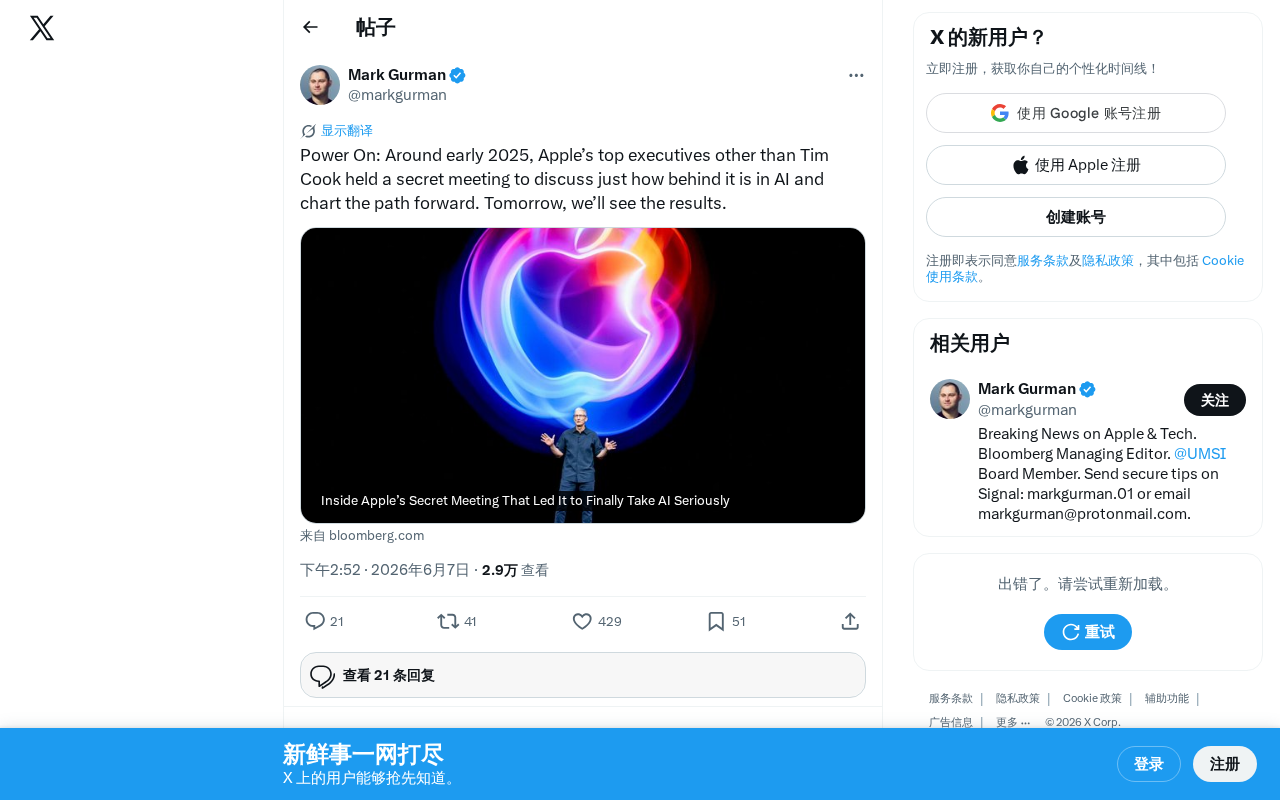
Apple Executives' Secret Meeting Exposed: Admitting AI Lag, WWDC Counterattack Plan Emerges
Bloomberg reveals Apple executives held a secret meeting without Tim Cook, admitting they've fallen behind in AI. With WWDC 2025 approaching, Apple's counterattack plan against OpenAI and Google emerges.

Deep Dive into the AI Bubble: The Death Spiral of Losing $1.22 for Every $1 Earned
Deep analysis of the AI industry bubble: OpenAI's -122% profit margin, enterprise token budgets burned in months, NVIDIA's shell game, and collapsing software quality.