DeepSeek Novel Writing Pitfall Guide: A Practical Tutorial for Beginners to Get Published

A structured DeepSeek workflow for writing web novels, from topic selection to platform contract signing.
This article addresses three common mistakes beginners make when using AI for web novel writing (skipping market research, vague prompts, and not understanding contract approval techniques), presenting a proven DeepSeek writing workflow: first browse trending charts to determine genre, then use structured prompts to complete character settings, outline generation, and chapter writing step by step, and finally use dedicated contract approval prompts to ensure opening chapter quality meets platform signing standards.
Introduction: The Era of AI Novel Writing Has Arrived
With the maturation of large language models like DeepSeek, more and more creators are using AI-assisted writing for web novels and successfully signing contracts on platforms like Tomato Novel (番茄小说). DeepSeek is a large language model developed by the Chinese company DeepSeek, built on Transformer architecture and trained on massive text datasets to achieve powerful text generation capabilities. Compared to international models like GPT-4 and Claude, DeepSeek performs exceptionally well in Chinese creative writing and offers free usage quotas, significantly lowering the barrier to entry for creators. The core principle of large language models is generating coherent text by predicting the next token, making them naturally suited for long-form narrative content generation.
However, for beginners, simply asking AI to "write me a novel" typically produces poor results — without structured prompt design, the output is neither publishable nor readable.
This article breaks down a proven DeepSeek novel-writing workflow to help beginners avoid the three most common pitfalls and systematically complete the entire process from topic selection to contract signing.
Pitfall #1: Writing Blindly Without Market Research
Many beginners' first instinct is to open AI and start writing immediately, but this is actually the biggest mistake. Without market-validated topics, even well-written content struggles to gain traction.
The right approach: Check the trending charts first to find what readers actually want to read.
Before writing, browse the trending charts on platforms like Tomato Novel and Qimao to see what genres and styles are currently popular. Tomato Novel (under ByteDance) and Qimao Novel are currently the mainstream free reading platforms in China, operating on a "traffic revenue sharing" model — authors don't rely on reader payments but instead earn a share of advertising revenue based on readership. This means a work's "retention potential" (whether readers are willing to keep reading) directly determines income levels, and the platform's algorithm decides whether to allocate more recommendation traffic based on the completion rate of the first few chapters.
Observe what common features top-ranked works share: urban revenge stories, fantasy cultivation, or sweet romance? Once you understand market demand, use AI tools with a clear direction in mind.

Pitfall #2: Vague Prompts Leading to Low-Quality AI Output
The second common problem is giving AI overly generic instructions. With a prompt like "write me a fantasy novel," AI can only produce generic content. High-quality AI writing requires structured, step-by-step prompt design.
This relates to the core principle of Prompt Engineering: the output quality of large language models is highly dependent on the information density and structural clarity of the input. Vague instructions activate the model's "generic response mode," producing mediocre content; structured prompts narrow the generation space to high-quality regions by specifying clear constraints (such as word count, style, and target audience). Another advantage of templated prompts is reusability — once validated, they can be applied in bulk across different genres.
Step 1: Enable Deep Thinking Mode
After opening DeepSeek, first enable Deep Thinking mode (DeepThink). In this mode, AI performs more thorough reasoning, significantly improving the logic and creativity of its output. Deep Thinking mode introduces a Chain-of-Thought mechanism, allowing the model to perform multi-step logical reasoning before outputting the final answer. For novel writing, this means AI will first consider whether the plot logic is consistent and character motivations are reasonable before generating specific text, thereby avoiding common logical holes and plot issues.
Step 2: Input Structured Requirement Prompts
Use a templated prompt format to clearly tell AI what you need. A good requirement prompt should include:
- Novel type and genre
- Target reader demographic
- Expected word count and number of chapters
- Style references (mention similar works)
- Core selling points and satisfaction design
For example, instead of saying "write an urban novel," say "write an urban rebirth story targeting male readers aged 18-35, total word count of 1 million words divided into 4 volumes, style referencing Rebirth: Urban Cultivation, with core satisfaction points being business revenge + face-slapping." The more specific the information, the more precise the AI output.
Step 3: Develop Character and Background Settings
After confirming requirements, the next step is to have AI output detailed character background settings. Here's a tip: request AI to output in table format — this makes character information clearer and more structured, making it easier to maintain character consistency during subsequent writing.
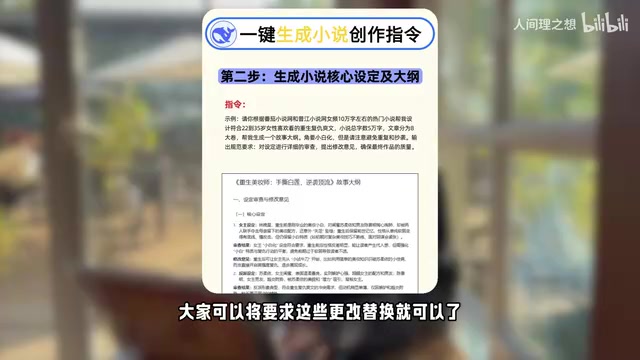
The table should include each character's name, age, personality traits, backstory, relationship with the protagonist, and other key information. Another important function of tabular settings is saving context space — when you need to continue writing in a new conversation later, tables carry the most key information with the fewest tokens, allowing the model to quickly "recall" all character settings.
Step 4: Generate Volume Outlines
After character settings are complete, input the outline requirement prompt. Here you need to adjust the number of chapters per volume and pacing based on your novel's planned total word count. Again, table format output is recommended for easy comparison and modification.
Pacing design in the outline is particularly critical: web novel readers' attention curves require a minor climax every 3-5 chapters and a major climax at the end of each volume. By specifying these pacing requirements in your prompts, AI will arrange conflict escalation and emotional turning points accordingly.

Pitfall #3: Not Understanding Contract Approval Techniques, Getting Repeatedly Rejected
With an outline in hand, many beginners have AI write everything at once and submit it, only to get repeatedly rejected by platforms. Contract approval has specific requirements and techniques.
The signing threshold typically requires submitting 1-3 chapters of main text (approximately 4,000-6,000 words) plus a complete outline for platform editor review. Editors primarily evaluate a work's "retention potential" — they judge from the reader's perspective: after finishing the first chapter, is there a desire to continue reading? This is why opening chapter quality is far more important than subsequent chapters.
Key Elements of Contract Approval Prompts
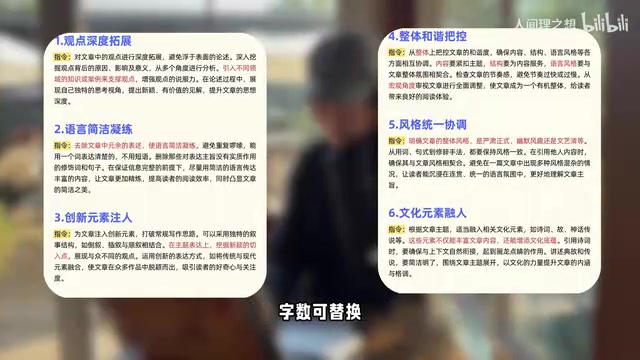
Based on various platforms' signing standards, the first chapter (which editors focus on during review) needs to achieve:
- Conflict or suspense from the very opening
- Core conflict established within the first 2,000 words
- Vivid character portrayal without dragging
- Smooth writing with no obvious AI traces
When generating first chapter content, use a dedicated "contract approval prompt" that explicitly tells AI these requirements. Word count can be adjusted according to platform standards. The requirement for "no obvious AI traces" exists because platforms use AI detection tools (such as text perplexity analysis and repetitive pattern recognition) to screen purely machine-generated content. AI-generated text often has fixed sentence structure preferences and overly uniform paragraph structures, which need to be manually disrupted.
Handling Continuation and Conversation Limits
Repeat the above operation for each subsequent chapter. If DeepSeek's conversation reaches its limit (typically a context length restriction), you need to start a new conversation and paste in previous settings, outlines, and recent chapter content as background information to ensure continuity.
Here you need to understand the "context window" concept of large language models: it refers to the maximum text length the model can process in a single conversation. DeepSeek's context window is typically 64K-128K tokens, equivalent to approximately 50,000-100,000 Chinese characters. When the novel's length exceeds this limit, the model will "forget" earlier conversation content, leading to character inconsistencies, plot breaks, and other issues. The solution is to provide "compressed context" in new conversations — inject character setting tables, outlines, and the most recent 2-3 chapters as background information, allowing the model to maintain consistency without exceeding window limits.
Complete Workflow Summary
The entire process can be summarized in six steps:
- Market Research → Browse trending charts, determine genre direction
- Requirement Prompts → Describe novel requirements in structured format
- Character Settings → Output character information in table format
- Outline Generation → Plan pacing by volume and chapter
- Chapter Writing → Output chapters one by one using contract approval prompts
- Publishing & Signing → Submit for review per platform requirements
The steps don't progress linearly but require iterative refinement. For example, during chapter writing you might discover that the outline's pacing is unreasonable in certain places and need to go back and adjust; or during market research you might discover new trending elements that need to be incorporated into existing settings. View this process as a cyclical optimization system rather than a one-time assembly line.
Final Thoughts
It's important to emphasize that AI is an assistive tool, not a replacement. Even with structured prompt templates, generated content still requires manual polishing and adjustment. Creators who can consistently monetize their work are those who add their own creativity and judgment on top of AI output.
Additionally, platform policies regarding AI-generated content are constantly evolving. Since 2024, web novel platforms have shifted from tacit acceptance to formalized regulation of AI-assisted creation. Platforms like Tomato Novel haven't completely banned AI-assisted writing but explicitly require works to undergo "substantial human creative effort" and prohibit low-quality content mass-produced purely by AI. Creators using AI-assisted writing should ensure content undergoes thorough secondary creation and personalization — adjusting sentence structures, incorporating personal expression, adding unique descriptive details — so that the text's statistical characteristics more closely resemble human writing. This is both responsible to readers and a necessary measure to reduce review risks.
Key Takeaways
- Before writing, beginners should conduct market research by browsing trending charts to determine genre direction, avoiding blind writing
- Use DeepSeek's Deep Thinking mode combined with structured prompt templates to complete character settings, outline generation, and chapter writing step by step
- Request AI to output character settings and outlines in table format to maintain information clarity and character consistency
- The first chapter requires dedicated contract approval prompts to ensure the opening has conflict, suspense, and vivid characters
- When conversation limits are reached, start a new conversation and paste in background information to ensure writing continuity
Related articles
 Tutorials
Cursor + Codex Dual-IDE Collaboration: A Practical Methodology for Open-Source Project Customization
A complete methodology for open-source project customization based on real-world experience, detailing the Cursor+Codex dual-IDE workflow, seven-stage process, MVP validation, and AI source code reading techniques.
 Tutorials
Cursor Multi-Agent in Practice: Building a Full-Stack Next.js Blog in 50 Minutes
Build a full-stack blog in 50 minutes using Cursor IDE's multi-Agent mode with Next.js, Clerk auth, and Supabase. Learn the 4-phase AI Agent workflow and key integration pitfalls.
 Tutorials
Building an AI Software Factory from Scratch: A Cursor Engineer's Hands-On Experience with Multi-Agent Collaboration
Cursor engineer Eric shares practical insights on building an AI software factory: automation levels, guardrail design, parallel Agent management, and scaling to 1000+ Agents for 24/7 development.