DeepSeek TUI: A Terminal AI Coding Assistant Built in Rust with 2.3K GitHub Stars
DeepSeek TUI: A Terminal AI Coding Ass…
AI industry roundup: DeepSeek TUI goes viral, AI giants embrace joint ventures, Agent infrastructure expands
This article covers key AI developments: DeepSeek TUI, a Rust-built terminal coding tool optimized for DeepSeek, surpasses 2.3K GitHub stars, offering developers an accessible AI coding experience. OpenAI and Anthropic pivot to joint venture models for enterprise markets, while Sierra's $950M raise validates the Agent-replacing-SaaS trend. AWS rolls out comprehensive Agent lifecycle infrastructure, image AI emerges as the new mobile app growth engine, and the Musk vs. OpenAI lawsuit continues to escalate.
DeepSeek TUI: A Terminal Coding Tool Optimized for DeepSeek
An open-source project called DeepSeek TUI has recently skyrocketed on GitHub, surpassing 2.3K stars and attracting widespread attention from the developer community. Built in Rust by developer HunterBone, this terminal tool has been dubbed "Claude Code for DeepSeek" — it delivers a smooth AI coding experience directly in the terminal, specifically optimized for DeepSeek's API.
TUI (Terminal User Interface) refers to a graphical interface drawn with characters within a command-line terminal. Unlike GUIs, TUIs run inside terminal emulators, using text characters to simulate windows, buttons, menus, and other interface elements. In recent years, as developers increasingly pursue lightweight, high-efficiency tools, TUI applications have experienced a renaissance. Libraries like ratatui and crossterm in the Rust ecosystem provide a solid foundation for building high-performance TUI applications. Their advantages include running without a graphical environment (ideal for remote server operations), extremely low resource consumption, fast startup times, and usability over SSH.
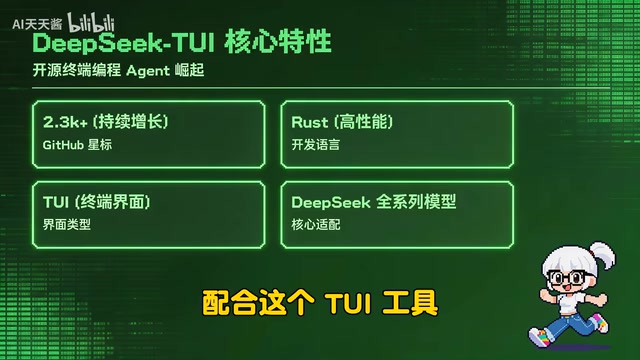
For developers, especially those in regions where Claude Code access is limited, this tool is significant. Claude Code is Anthropic's terminal AI coding assistant that allows developers to interact with Claude models directly from the command line for code generation, file editing, project analysis, and more. It pioneered the "terminal-native AI coding" paradigm — developers can get AI assistance without ever leaving their terminal environment. However, Claude Code faces barriers due to network restrictions and API costs in certain regions. DeepSeek TUI combines DeepSeek's cost-effective models and fast response times with the extreme performance that Rust delivers, making terminal AI coding truly accessible. Similar tools include Aider, Cursor's terminal mode, and others, collectively forming a rapidly growing terminal AI coding tool ecosystem.
Why Build a Terminal AI Tool in Rust?
Rust's advantages in system-level tool development are well recognized: memory safety, zero-cost abstractions, and minimal runtime overhead. "Zero-cost abstractions" is one of Rust's core design philosophies, originating from a principle articulated by C++ creator Bjarne Stroustrup: "What you don't use, you don't pay for; what you do use, you couldn't hand-code any better." In Rust, high-level abstractions like generics, traits, and iterators are fully expanded and optimized at compile time, generating machine code comparable in performance to hand-written low-level code. This means developers can write high-level, maintainable code without worrying about runtime performance penalties.
For a coding assistant that needs real-time interaction in the terminal, Rust ensures maximum efficiency for streaming output parsing, concurrent request management, and other operations — the tool itself never becomes a performance bottleneck. This reinforces a broader trend: vertical optimization for specific use cases, rather than one-size-fits-all solutions, is the right direction for productivity tools.
A New Commercialization Path for AI Giants: The Rise of Joint Ventures
OpenAI and Anthropic have both been quietly advancing enterprise-level joint venture plans. This signals that AI giants are no longer content with simply selling APIs — they want to deeply integrate with leading companies in vertical industries, establishing joint entities to deliver customized AI services.
The traditional AI commercialization path is the AI-as-a-Service (AIaaS) model: AI companies provide general-purpose APIs, and customers pay per call. But this model faces several bottlenecks: data sovereignty compliance requirements prevent sensitive industries from calling external APIs directly; general-purpose models lack industry-specific expertise, leading to subpar results; and per-token pricing struggles to support large-scale enterprise deployments. The joint venture model, by establishing independent legal entities, resolves data sovereignty issues while allowing AI companies to gain deep access to industry data and business processes for extensive model customization. This is essentially a strategic shift from "selling water" to "partnering to mine gold."
The advantages of this model are clear: it circumvents many data privacy and compliance barriers while acquiring industry know-how through deep collaboration. As competition among general-purpose models reaches a fever pitch, going deep into the enterprise trenches through joint ventures is becoming a shared commercialization path.
Sierra Raises $950 Million: A Signal That AI Agents Will Replace SaaS
Sierra, founded by prominent AI figure Brett Taylor, just completed a massive $950 million funding round. Brett Taylor is one of Silicon Valley's most influential technology leaders, having served as co-CEO of Salesforce, chairman of Twitter's board, and earlier as co-creator of Google Maps. In 2023, he co-founded Sierra with former Google AI lead Clay Bavor, positioning it as an enterprise AI Agent platform.
Sierra's core product isn't a simple chatbot — it helps large enterprises build autonomous Agents capable of handling complex business logic. Its technical approach differs fundamentally from traditional customer service bots: it builds Agent systems that understand an enterprise's complete business logic, possess autonomous decision-making capabilities, and can handle complex multi-step tasks like returns, order modifications, and account management — not just simple FAQ responses.
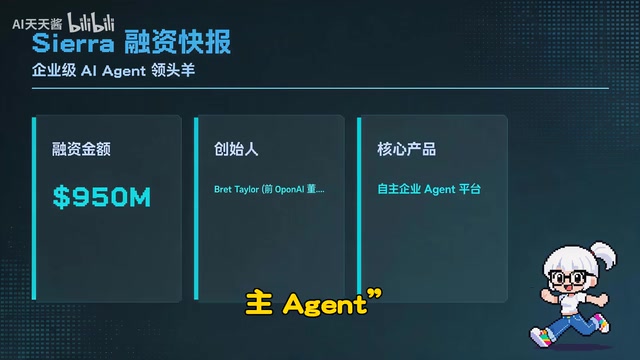
This funding sends a strong signal: Silicon Valley's confidence in Agents replacing traditional SaaS has reached new heights. The core interaction model of traditional SaaS is "human-driven": users operate software through interfaces, and the software executes preset logic to return results. Agentic workflows are "goal-driven": users simply describe their objective, and the Agent autonomously plans execution steps, invokes tools, handles exceptions, and completes task chains. This means software architecture will shift from "deterministic process orchestration" to "dynamic task decomposition and execution."
For developers, this signals that future enterprise application architecture will fully transition to Agentic workflows — instead of humans operating software, Agents will autonomously complete task chains. Future enterprise application development may no longer involve writing business logic code, but rather defining Agent capability boundaries, toolsets, and security policies. This represents a fundamental shift in the software engineering paradigm.
AWS Goes All-In on Agent Infrastructure
AWS SageMaker AI released three major updates at once, comprehensively covering the full lifecycle management of Agents. AWS SageMaker originally started as a machine learning model training and deployment platform and has since evolved into infrastructure covering the entire AI stack. Agent lifecycle management encompasses several key phases: the development phase requires framework support, the evaluation phase needs systematic benchmarking capabilities, and the deployment phase requires elastic compute scheduling and fault tolerance.
The three updates released are:
- Agent Core Optimization Environment (Preview): Solves the closed-loop challenge of Agent performance evaluation, finally giving developers a systematic way to measure Agent performance. This addresses the industry's weakest link — because Agent behavior is non-deterministic, traditional software testing methods don't directly apply, requiring entirely new evaluation frameworks
- Agent-Guided Workflows: Lowers the barrier to model customization, enabling non-specialist teams to build customized Agents
- Automatic Instance Fallback: Automatically switches to backup nodes when compute resources are constrained, ensuring service stability. This essentially applies cloud computing's high-availability principles to AI inference services
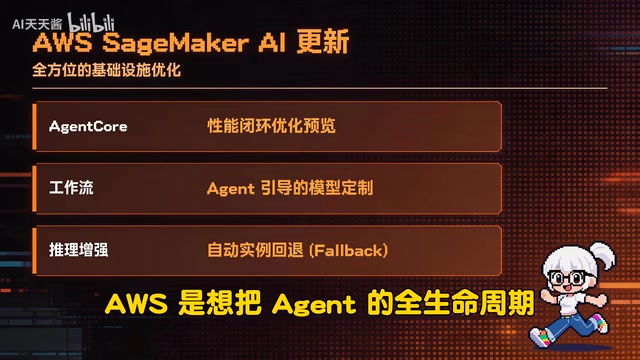
The intent behind this combination is crystal clear: AWS wants to lock in the entire Agent workflow — from development, evaluation, to deployment and operations — within its cloud ecosystem. For enterprise users, this represents both convenience and lock-in: once you choose AWS's Agent infrastructure, migration costs will only increase over time.
Image AI Becomes the New Growth Engine for Mobile Apps
A noteworthy industry trend: according to TechCrunch, the core driver of mobile app growth is no longer chatbot upgrades but image AI models. Users show significantly higher willingness to pay for image generation and editing features compared to pure text conversations.
There are several deep reasons why image AI leads text AI in commercialization: First, value perception is intuitive — users can immediately "see" the quality of AI output, making purchase decisions easier. Second, application scenarios are broad — from social media content creation and e-commerce product image generation to professional design assistance, image AI covers the full spectrum from consumer to enterprise needs. Finally, replacement costs are quantifiable — a professional product photo shoot might cost hundreds of dollars, while AI generation costs just a few cents, making the ROI crystal clear.
Doordash's recently launched AI photo editing tool is a prime example — it optimizes merchant food display images, directly impacting click-through rates and conversion rates, with an extremely short business feedback loop. This demonstrates that in multimodal AI commercialization, image capabilities remain at the forefront — users are more willing to pay for AI capabilities they can "see."
Musk vs. OpenAI Lawsuit Continues to Escalate
The legal dispute between Musk and OpenAI has seen new developments. OpenAI claims that after seeking a settlement, Musk sent "ominous text messages" to Sam Altman and Greg Brockman. Meanwhile, Musk's sole expert witness has publicly expressed fears about the AGI arms race.

The core dispute in this lawsuit traces back to OpenAI's founding mission. In 2015, when Musk participated as a co-founder and primary funder in creating OpenAI, the organization was a nonprofit with the mission of ensuring AGI (Artificial General Intelligence) benefits all of humanity. After OpenAI restructured as a "capped-profit" company in 2019, Musk argued this violated the founding agreement. Key legal issues in the lawsuit include: the boundaries of fiduciary duty for nonprofit organizations, the legal validity of oral agreements, and compliance of AI company governance structures.
This clash between Silicon Valley titans has evolved from an initial disagreement over technical direction into a suspense-filled personal drama. Regardless of the final outcome, this lawsuit is profoundly shaping public perception of AI safety governance, and its verdict could set legal precedents for corporate governance and open-source commitments across the entire AI industry.
Summary and Outlook
The explosive popularity of DeepSeek TUI proves once again: in the AI tools space, vertical optimization targeting specific models and user groups often resonates with developers more than broad, general-purpose solutions. Meanwhile, the giants' pivot toward joint venture models signals that AI has officially moved from laboratory curiosity into serious commercial territory.
For everyday developers, now is the best time to embrace terminal AI coding tools — costs are dropping, tools are maturing, and the ecosystem is solidifying.
Key Takeaways
- DeepSeek TUI has surpassed 2.3K GitHub stars, offering a Rust-built terminal coding tool optimized for DeepSeek, dubbed the DeepSeek version of Claude Code
- OpenAI and Anthropic are advancing enterprise joint venture models; Sierra's $950M raise confirms the trend of Agents replacing traditional SaaS
- AWS SageMaker AI released three updates, comprehensively building out Agent full-lifecycle management infrastructure
- Image AI models have replaced chatbots as the core growth driver for mobile apps, with stronger user willingness to pay
- The Musk vs. OpenAI lawsuit continues to escalate, evolving from a technical direction dispute into a personal confrontation
Related articles
 Tech Frontiers
GitHub Agent HQ Launch: AI Coding Tools Enter the Era of Platform Competition
GitHub Universe unveils Agent HQ platform for unified coding agent management, Copilot upgrades with multi-model support. OpenAI completes restructuring, Anthropic tests new model, NVIDIA open-sources AI models.
 Tech Frontiers
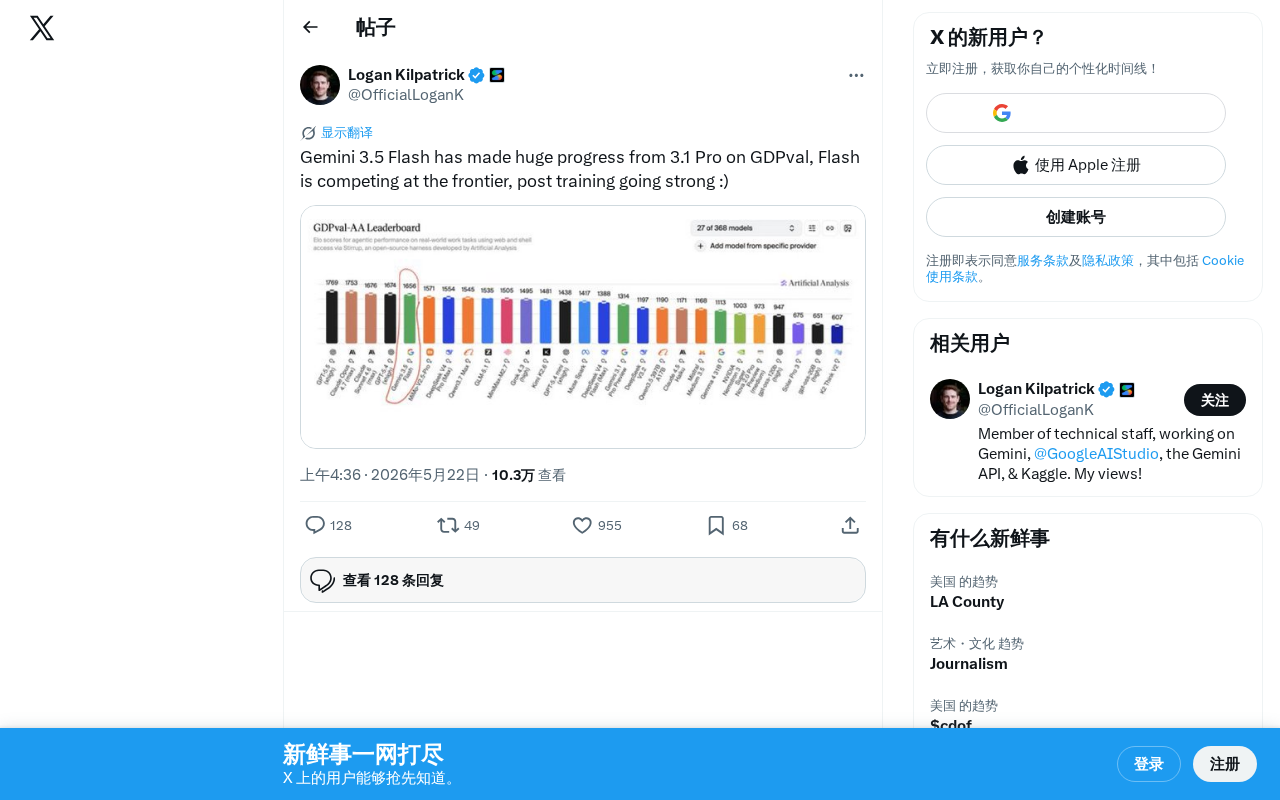
Gemini 3.5 Flash Achieves a Massive Leap on the GDPval Benchmark
Google Gemini 3.5 Flash surpasses Gemini 3.1 Pro on the GDPval benchmark. The lightweight Flash model leverages post-training techniques to approach frontier-level performance, redefining the balance between quality and cost.
 Tech Frontiers
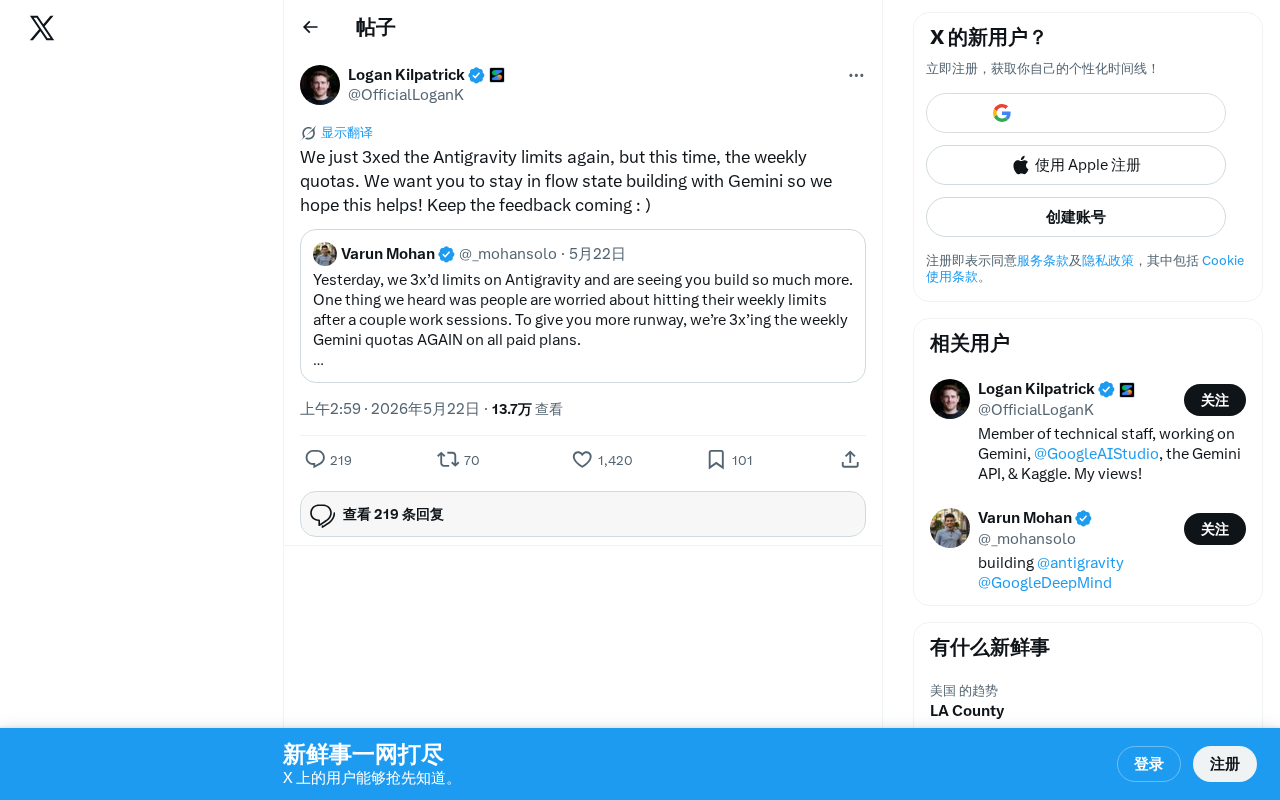
Google Gemini Antigravity Weekly Quota Tripled — AI Coding Without Limits
Google Gemini triples Antigravity weekly quotas following a prior daily quota boost. Analyzing the impact on developers and its strategic significance in AI coding.