DiffusionGemma: Google's Open-Source Diffusion Language Model with 4x Faster Inference
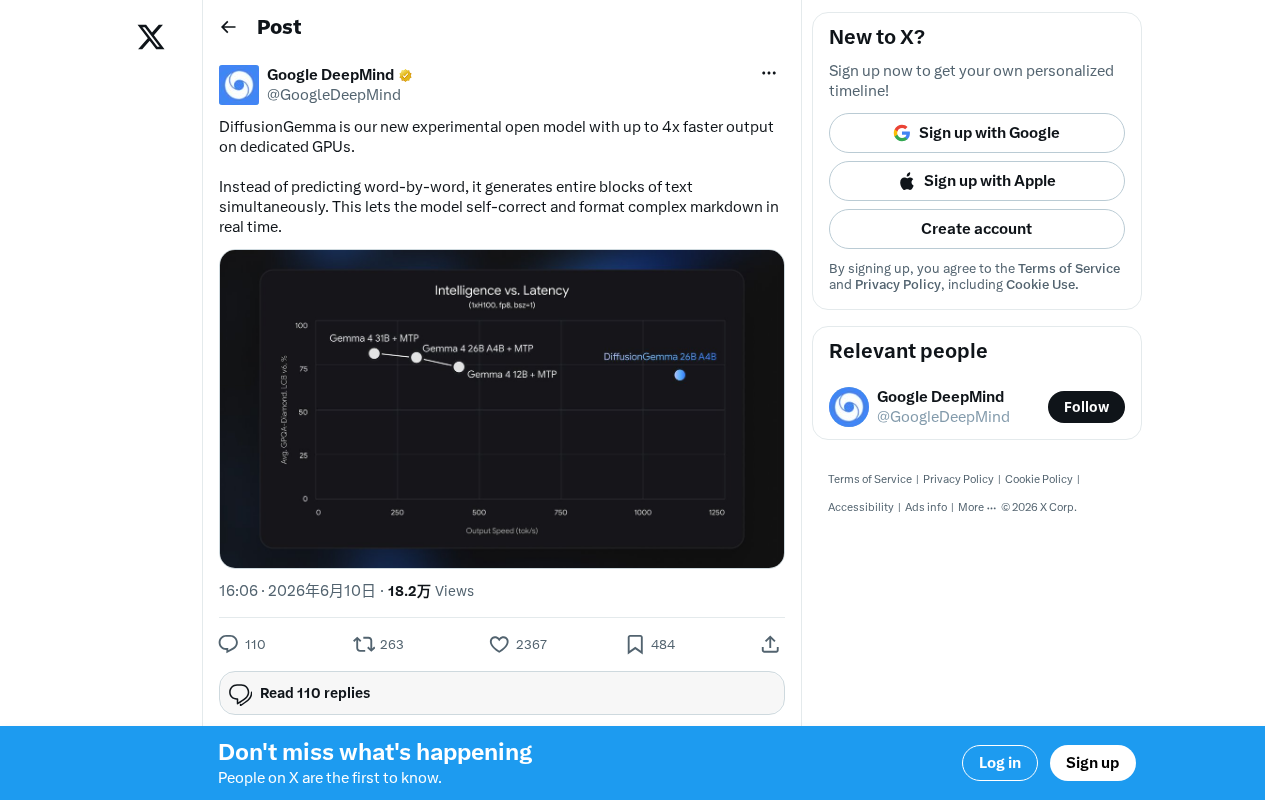
Google's DiffusionGemma applies diffusion model concepts to text generation for 4x faster inference.
Google has released DiffusionGemma, an experimental open-source language model that replaces traditional autoregressive token-by-token generation with a diffusion-based approach that generates entire text blocks in parallel. The model achieves up to 4x speed improvement on dedicated GPUs and features real-time self-correction capabilities. While still experimental, it signals a promising new direction for LLM architecture.
What Is DiffusionGemma
Google recently released an experimental open-source model called DiffusionGemma — a language model built on an entirely new architecture. Unlike traditional large language models that generate text word by word, DiffusionGemma borrows ideas from diffusion models to generate entire blocks of text simultaneously. According to official claims, DiffusionGemma can produce output up to 4x faster than traditional approaches on dedicated GPUs.
This announcement marks a significant exploration in LLM inference efficiency. Today's mainstream LLMs (such as GPT, Gemma, Llama, etc.) all use an autoregressive architecture, predicting the next token one at a time. While this approach is mature and effective, it hits a natural speed bottleneck with longer texts — generation speed scales linearly with text length and is inherently difficult to parallelize.
Core Technology: From Sequential to Parallel Generation
How Diffusion Model Concepts Apply to Text Generation
DiffusionGemma's core innovation lies in transferring the diffusion model paradigm from image generation to text generation. In image generation, diffusion models simultaneously generate all pixels of an image through a gradual denoising process, rather than painting pixel by pixel. DiffusionGemma applies a similar parallel generation strategy to text: the model generates an entire text block at once, then iteratively refines it to improve quality.
This approach delivers two notable advantages:
- Dramatically faster inference: By generating multiple tokens in parallel, it achieves up to 4x speed improvement on dedicated GPUs
- Stronger global coherence: The model can "see" the entire text block during generation, rather than relying solely on previously generated context
Real-Time Self-Correction
Google specifically highlighted DiffusionGemma's self-correction capability. Traditional autoregressive models have difficulty going back to fix a token once it's been generated — errors accumulate along the generation chain, which is one of the root causes of the "hallucination" problem. DiffusionGemma, with its iterative refinement approach, can revise and adjust previously generated content during the generation process.
This feature is particularly impressive when handling complex formatted content. According to official descriptions, DiffusionGemma can format complex Markdown text in real time. This means that when generating structured content (such as tables, code blocks, nested lists, etc.), the model can ensure formatting correctness from a global perspective, rather than taking a "one step at a time" approach like autoregressive models.
Technical Significance and Industry Impact
Why Diffusion-Based LLMs Deserve Attention
DiffusionGemma is not the first attempt at diffusion-based language models. The academic community has previously explored this direction through works like MDLM and SEDD, which investigated discrete diffusion models for text generation. However, Google — as a leading AI company — officially releasing a usable open-source model undoubtedly brings this technical approach into much broader spotlight.
One detail worth noting: DiffusionGemma is positioned as an "experimental" model, meaning it may not yet match the performance of mature autoregressive models on certain tasks. But if the 4x speed improvement can be validated in real-world applications, the commercial value would be substantial — inference cost is one of the core pain points in large-scale LLM deployment today.
Continuing the Open-Source Strategy
Google's decision to release DiffusionGemma as an open-source model continues the Gemma series' open-source strategy. This not only helps the community conduct deeper research and improvements on diffusion-based language models, but also reflects Google's ongoing competition with Meta and other rivals in building open-source ecosystems.
Outlook: Will Diffusion Models Become the Future of LLMs?
Will diffusion-based language models become the mainstream architecture for the next generation of LLMs? It's too early to draw conclusions. Autoregressive models have built deep technical foundations over years of iteration in areas like reasoning quality, instruction following, and context understanding. But the speed advantages and self-correction capabilities demonstrated by DiffusionGemma do offer the industry a promising new path worth exploring.
A likely future trend is hybrid architectures — using diffusion-based models in scenarios that demand high-speed generation (such as real-time conversations and batch content production), while continuing to use autoregressive models where maximum precision is required. Regardless, the release of DiffusionGemma adds new possibilities to the technical evolution of LLMs.
Related articles
Databricks Open-Sources Omni: A Meta-Framework for Unified Management of All AI Agents
Databricks open-sources Omni under Apache 2.0 — a meta-framework unifying Claude Code, Codex & more AI Agents with shared sessions, cross-vendor review & enforced security policies.
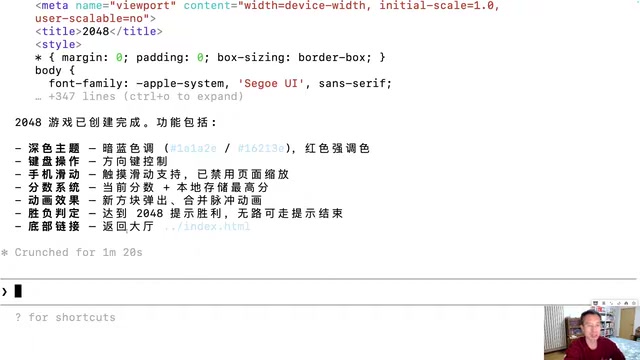
Generating 10 Web Games with One-Line Prompts: A Hands-On Claude Code Experience
A senior developer uses Claude Code to generate 10 playable web games including 2048, Gomoku, and Tetris with one-line prompts in under an hour. A deep dive into AI programming's real capabilities.
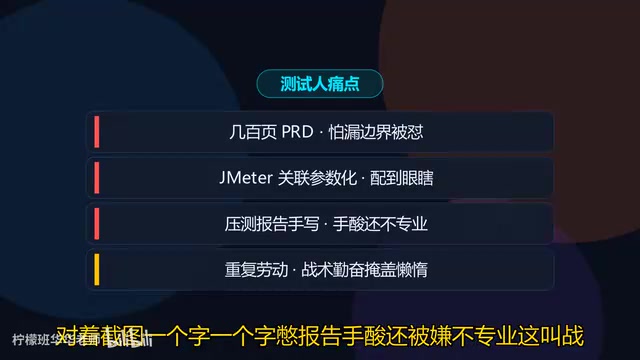
Five Essential Cursor Skills Every QA Engineer Needs: A Complete Breakdown
A detailed guide to five essential Cursor Skills for QA engineers: PRD analysis, test case generation, JMeter scripting, load test reports, and web automation.