Diverging Product Strategies Among AI Giants: Will Convergence or Fragmentation Win?
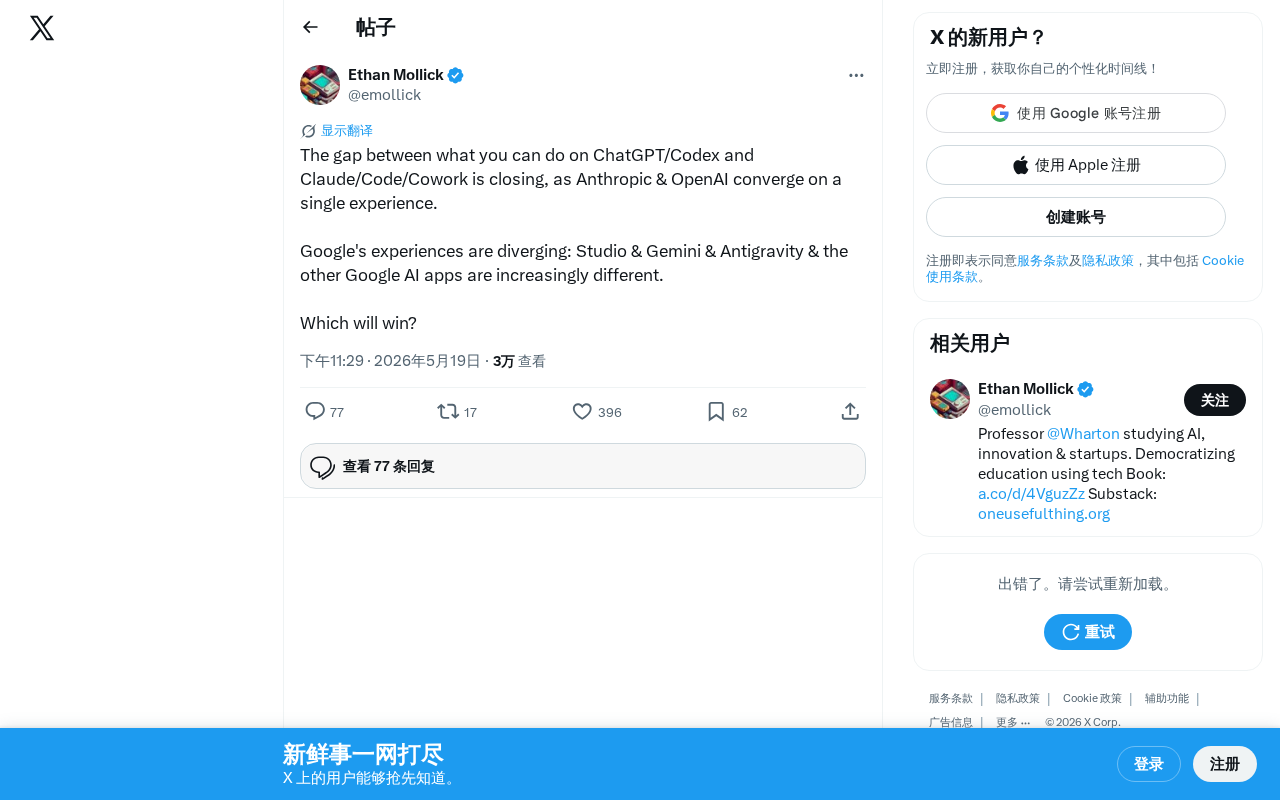
OpenAI and Anthropic converge on unified AI experiences while Google bets on product fragmentation.
The AI industry faces a strategic split: OpenAI and Anthropic are converging toward unified, all-in-one AI platforms combining chat, coding, and collaboration, while Google fragments its AI offerings across multiple independent products. This article analyzes the logic behind each approach—data flywheel effects favoring convergence vs. specialized excellence favoring fragmentation—and concludes that execution quality and user needs at different stages will determine the winner.
A Strategic Battle Over AI Product Form
The AI industry is currently witnessing a fascinating divergence in product strategy: Anthropic and OpenAI are converging toward similar approaches, while Google has chosen a distinctly different path—product line fragmentation. This observation emerged from discussions among tech industry observers on social media, sparking deep reflection on the future form of AI products.
It's worth noting that understanding this strategic battle requires some background on the two companies' origins. Anthropic was founded in 2021 by former OpenAI Research VP Dario Amodei, his sister Daniela Amodei, and other former OpenAI team members who departed due to disagreements over AI safety philosophy. This explains why the two companies exhibit a kind of "shared origin, divergent streams" convergence in product form—they share similar technical understanding of LLM capability boundaries, conversational interaction paradigms, and the direction toward AI agents. Anthropic's Claude series is known for its "Constitutional AI" training methodology, emphasizing safety and controllability, while OpenAI ignited the consumer market with ChatGPT. The gradual convergence from underlying technical philosophy to product form reflects an emerging industry consensus on product definition in the generative AI space.
OpenAI and Anthropic: Different Paths to the Same Unified Experience
Why Product Features Are Highly Convergent
The feature gap between ChatGPT/Codex and Claude/Code/Cowork is shrinking rapidly. Both companies are building a unified AI work experience:
- Conversational AI Assistant: ChatGPT and Claude as core conversational entry points
- Code Generation and Collaboration: Codex and Claude Code providing professional programming capabilities
- Collaborative Workspaces: OpenAI's Canvas and Anthropic's Cowork both creating collaborative creative environments
The "collaborative workspace" represented by Canvas and Cowork has been a major direction in AI product evolution since 2024, driven by a paradigm shift from "Q&A tool" to "AI Agent." Early ChatGPT was essentially a single-turn chat box, while Canvas, Cowork, Artifacts (Claude's similar feature), and others allow AI to collaboratively iterate on documents, code, or design drafts with users in a persistent canvas, where AI can proactively plan tasks, invoke tools, and execute step by step. This form is closer to a true "digital employee" capable of handling complex tasks requiring multi-step reasoning and tool invocation. Codex and Claude Code extend this trend into programming—they don't just generate code snippets but can understand entire codebases, execute commands, and debug, becoming developers' autonomous programming partners.
This convergence is no accident. Both companies recognize that users need an "all-capable AI partner"—one that can chat, write code, and collaboratively complete complex tasks. The convergence in product form reflects a shared understanding of user needs: reducing tool-switching costs and providing a one-stop AI experience.
The Product Logic Behind Convergence
From a product strategy perspective, the convergence approach of OpenAI and Anthropic has clear rationale:
- Reducing User Cognitive Load: A unified entry point is easier to acquire and retain users than multiple scattered tools
- Data Flywheel Effect: A unified platform better accumulates user behavior data to feed back into model optimization
- Clear Monetization Path: A single subscription model is easier to promote than multi-product pricing
The "data flywheel effect" mentioned here is one of the core competitive dynamics in AI products. The data flywheel means that greater product usage accumulates more real user interaction data, which feeds back into model training through mechanisms like RLHF (Reinforcement Learning from Human Feedback), improving model performance and attracting more users in a positive cycle. Conversational AI is especially dependent on this mechanism, as every user question, edit, and piece of feedback is a valuable training signal. This is why OpenAI and Anthropic prefer concentrating capabilities in a unified entry point—fragmented products split the data flow and weaken the flywheel effect. In contrast, while Google commands massive data across Search, Android, Chrome, and other domains, its fragmented AI product line may prevent interaction data from achieving synergy.
Google's Fragmentation Strategy: A Multi-Front Gamble
An Increasingly Scattered AI Product Matrix
Google's AI product line is heading toward the other extreme. Currently, Google has at least the following relatively independent AI products:
- Gemini: A consumer-facing general AI assistant
- Google AI Studio: A developer-facing model debugging and API platform
- Antigravity: A recently revealed AI coding/creation tool
- Other Google AI applications: AI features scattered across various business lines
The experience gaps between these products are growing, with each serving different user groups and use cases.
Pros and Cons of the Fragmentation Strategy
Potential Advantages:
- Customized experiences for different user groups
- Allows teams to iterate independently and quickly
- Covers broader market segments
Potential Risks:
- Brand confusion—users don't know which product to use
- Internal resource fragmentation and redundant development
- Google has historically failed multiple times due to overly fragmented product lines (e.g., in instant messaging)
Convergence vs. Fragmentation: Who Will Win?
Short-Term Experience, Long-Term Ecosystem
In the short term, the convergence strategy likely has the advantage. When users face AI tools, their biggest pain points are "not knowing what to use" and "high switching costs." The one-stop experience from OpenAI and Anthropic directly addresses these issues.
But in the long run, Google's fragmentation strategy has its own unique value. If each vertical product can achieve excellence in its respective domain, professional users may prefer "the best tool" over "the most comprehensive tool."
Lessons from History
Looking back at tech history, we can find successful cases for both strategies:
- Convergence Success: Apple's ecosystem integration
- Fragmentation Success: Microsoft's multi-product matrix in the enterprise market
The key lies in execution. Convergence requires extremely strong product integration capabilities, while fragmentation requires each line to have sufficient resources and independent decision-making authority.
Conclusion
This divergence in AI product strategy is fundamentally about different answers to the question: "In what form should AI serve users?" OpenAI and Anthropic are betting on a "unified entry point," while Google is betting on "scenario specialization." The ultimate outcome depends on whether users truly need a universal assistant or a set of precision tools. The answer is likely: both are needed, but at different stages and for different user groups, the emphasis will differ.
Key Takeaways
Related articles
OpenAI Codex Deep Dive: The AI Develop…
OpenAI Codex Deep Dive: The AI Development Tool That Makes Programming Feel Like Flying
Deep dive into how OpenAI Codex redefines programming. From real developer feedback to the Time to Fly project, analyzing Codex's strengths in code generation, context understanding, and the AI coding tool competitive landscape.
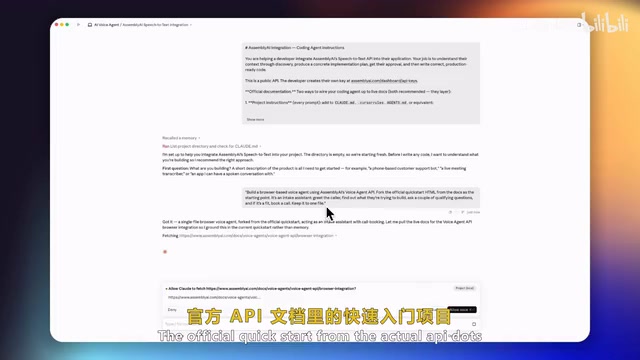
Claude Code + AssemblyAI in Practice: A Complete Tutorial for Building a Voice Agent in One Afternoon
Learn how to build a Voice Agent with speech recognition, conversation understanding, and calendar booking using Claude Code and AssemblyAI in one afternoon.
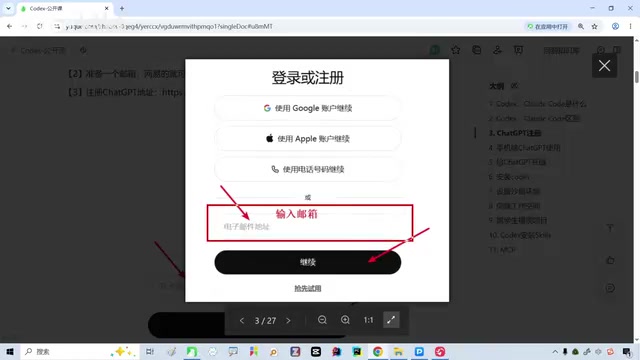
Getting Started with Codex from Scratch: Complete Guide from Registration to Setup
Complete guide to getting started with Codex: GPT registration, SMS verification, US Apple ID setup, ChatGPT app installation, and subscription plan selection for beginners.