Duel Agents: Multi-AI Agent Competition Mechanism That Automatically Selects the Most Cost-Effective Coding Solution
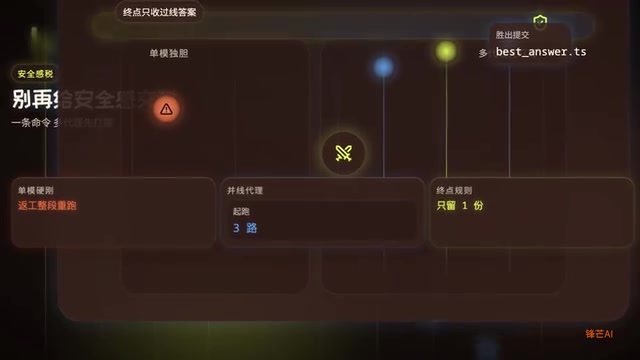
Duel Agents pits multiple AI models against each other to automatically pick the cheapest good-enough coding solution.
Duel Agents introduces a multi-AI agent competition mechanism that sits as a routing layer before tools like Claude Code. It distributes coding tasks to multiple models simultaneously, uses a quality check layer to evaluate results, and selects the cheapest answer that meets quality standards. Combined with recursive task decomposition, it claims approximately 70% cost savings over flagship models while maintaining output quality.
Core Idea: Not the Strongest, but the Best Value
If you're still relying on a single flagship model to power through all your coding tasks, you might not be paying for efficiency — you're paying a tax for peace of mind.
Duel Agents proposes a straightforward approach: send the same command to multiple AI agents simultaneously, and use whichever one finishes first with a good-enough answer. This isn't about chasing the single strongest model — it's about optimizing for overall cost-effectiveness.
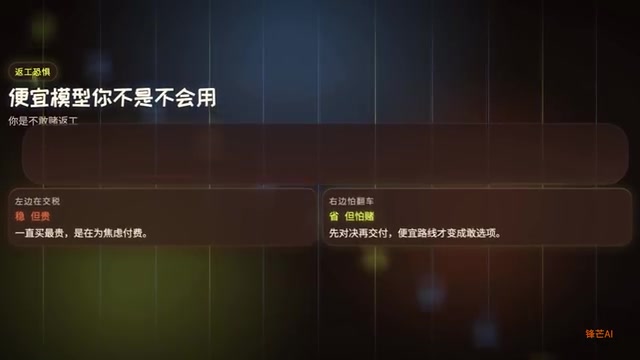
The real pain point in the AI coding agent space is no longer "can AI write code" — it's that using a flagship model every time is too expensive. Many tasks can be handled by smaller models, but developers don't dare take the gamble — because if things go wrong, the cost of rework exceeds the savings. Duel Agents attempts to solve this trust problem systematically.
To understand the severity of this pain point, consider the current cost structure: with Claude Code as an example, using Claude 4 Opus for a moderately complex coding task can cost $0.50–$2.00 per call, while Claude Haiku costs roughly one-tenth of that for the same token volume. A similar price gradient exists between OpenAI's GPT-4o and GPT-4o-mini. For development teams issuing dozens or even hundreds of coding commands daily, model selection directly determines whether monthly AI spending lands in the hundreds or thousands of dollars. This is why "intelligent routing" has become a real engineering need rather than a purely academic discussion.
Architecture Design: Routing Layer + Quality Check Layer + Recursive Decomposition
Not Building a New IDE — Acting as a "Pre-Router"
The smartest thing about Duel Agents is its positioning: rather than building a new IDE from scratch, it plugs directly in front of existing tools like Claude Code and Codex, serving as a routing layer.
Here's the specific workflow:
- The user issues a coding command
- Duel Agents distributes this command simultaneously to multiple AI models of different tiers
- Multiple models execute in parallel, each returning results
- A quality check layer evaluates the results and picks the answer that's both cheap and good enough
This "competition-style" architecture essentially trades parallel redundancy for certainty in cost optimization. You don't need to decide whether "this task should use GPT-4o or Claude Haiku" — the system tries them all and picks for you.
This mechanism has a classic theoretical foundation in distributed systems — "Hedged Requests." Google first systematically described this strategy in its famous paper The Tail at Scale: when you're unsure which path is optimal, fire off multiple requests simultaneously and take the first valid result that returns. This strategy is widely used in latency-sensitive systems, with the tradeoff being extra computational resources for more stable response quality and more predictable completion times. Duel Agents extends this concept from latency optimization to cost optimization — not just taking the fastest result, but taking the one that's "good enough and cheapest."
Recursive Task Decomposition
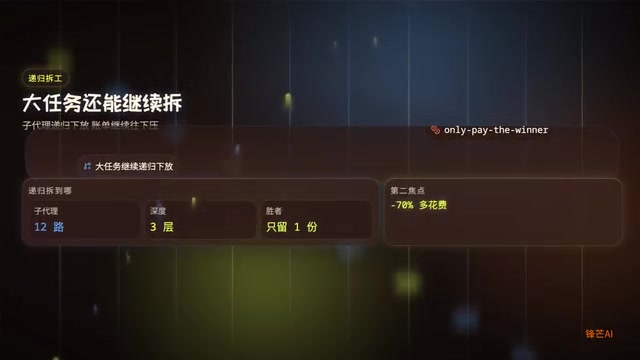
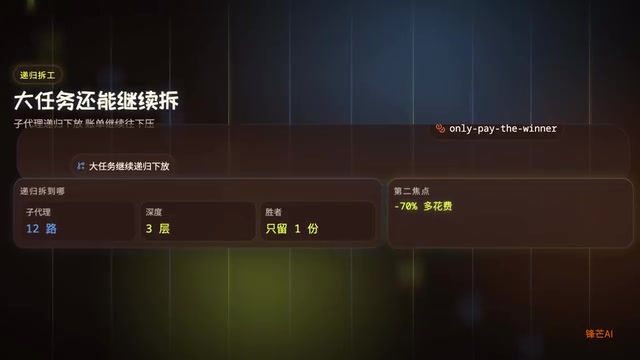
The team has also added a recursive decomposition mechanism: large tasks can be broken into multiple sub-agent tasks, and sub-agents can further delegate subtasks to cheaper, smaller models. This creates a hierarchical agent orchestration architecture:
- Top layer: Complex architectural decisions, core logic → handled by flagship models
- Middle layer: Modular feature implementation → handled by mid-tier models
- Bottom layer: Formatting, simple refactoring, test generation → handled by cheap small models
This approach mirrors "separation of concerns" in software engineering — not all code deserves to be written by the most expensive model.
Recursive task decomposition isn't a Duel Agents original — it stems from classic paradigms in Multi-Agent Systems. Frameworks like Microsoft's AutoGen, CrewAI, and LangGraph are all exploring similar hierarchical agent architectures. The core challenge lies in "granularity control of task decomposition" — too coarse, and small models still can't handle it; too fine, and context dependencies between subtasks cause information loss, resulting in assembled code that lacks coherence. The current industry consensus is that function-level decomposition is usually a good balance point: each subtask corresponds to an independent function implementation with clear input/output interfaces and manageable context dependencies.
Official Claims and Critical Thinking
The Cost Savings Promise
The homepage leads with a striking number: for equivalent tasks, approximately 70% savings compared to running flagship models directly. If this data is reliable, it represents a very significant cost optimization for teams that heavily use AI coding tools.
Maintaining Rationality
But a dose of cold water is necessary: Duel Agents is currently in its initial open application phase, and product maturity needs to be validated by real user feedback. Several key questions deserve attention:
- Latency issues: With multi-model parallel competition, will response times increase significantly?
- Quality check accuracy: Can the automated quality check layer reliably judge code quality? If the quality check itself is unreliable, the money saved might be paid back double during subsequent debugging
- Task decomposition boundaries: At what granularity does recursive decomposition work best? Could over-decomposition introduce context loss problems?
Regarding the quality check layer — this is the most critical and most fragile component of the entire architecture. The industry currently has three main implementation approaches: the first is deterministic verification based on static analysis and test cases, judging code correctness by running predefined unit tests; the second uses another LLM as a "judge" (LLM-as-Judge), having a model score the generated code for quality; the third is a hybrid approach combining code execution results, type checking, lint rules, and LLM review. Each approach has clear limitations — test cases can't cover all edge cases, and LLM reviews themselves can hallucinate. Which approach Duel Agents' quality check layer specifically adopts will directly determine the credibility of its "save money without breaking things" promise.
Industry Trend: From "Single-Model Arms Race" to "Agent Orchestration Competition"
The direction this project represents is very much worth watching.
Over the past year, competition in AI coding has been driven by larger parameters, stronger capabilities, and longer context windows. But as model capabilities converge, the competitive focus is shifting: it's not about who has the single most powerful model, but who's better at orchestrating a group of agents to work together.
Several key factors are accelerating this trend. First is the "commoditization" of model capabilities — when GPT-4o, Claude Sonnet 4, and Gemini 2.5 Pro differ by only single-digit percentages on most coding benchmarks, the marginal returns of purely pursuing model performance diminish sharply. Second is the rise of open-source small models — Qwen, DeepSeek, Llama, and others can achieve 80–90% of closed-source flagship model performance on specific tasks at one-tenth the cost. Third is the emergence of standardization protocols like MCP (Model Context Protocol), making switching and orchestration between different models more engineering-friendly. These three factors combined are transforming the "orchestration layer" from an optional optimization into a necessary infrastructure layer.
This mirrors the evolution of cloud computing — early on, everyone competed on single-server performance; later, the competition shifted to distributed scheduling and resource orchestration efficiency. The AI agent space may follow a similar path:
- The model layer continues to compete on performance
- The orchestration layer handles assigning the right tasks to the right models
- The quality check layer ensures output quality doesn't suffer
Duel Agents is still very early-stage, but the direction it points to — letting a group of agents compete in the ring first, then handing you the best-value answer — is very likely to be a core competitive advantage in the next phase of AI coding tools.
For developers, there's no need to rush in now, but it's worth continuously following the development of these "agent orchestration" tools. When the product matures, it could fundamentally change how we use AI coding assistants: from "pick the most expensive model and pray it works" to "let the system automatically find the optimal cost-performance solution for you."
Related articles

Your Pension Forced to Buy AI Bubble Stocks: The Truth Behind Nasdaq's Rule Changes
Nasdaq's fast-track rule changes may force your 401K and pension funds to buy SpaceX, OpenAI, and Anthropic stock. Analysis of the $4T valuation bubble and what investors can do.

GPT 5.6 Internal Testing Codename Revealed, Google Pays SpaceX $920M Monthly for Computing Power
OpenAI begins GPT 5.6 Kindle Alpha internal testing with stronger base reasoning. Google partners with SpaceX at $920M/month for computing power. Gemma 4 QAT enables edge deployment, Claude Cowork doubles credits.
Create Now Review: Can You Really Build Apps with Natural Language and Zero Coding Experience?
In-depth review of Create Now's AI software development tool: intelligent requirements discovery, modular development, visual iteration, and one-click deployment. Can zero-experience users turn ideas into real software?