Your Pension Forced to Buy AI Bubble Stocks: The Truth Behind Nasdaq's Rule Changes

Nasdaq rule changes may force retirement funds to buy overvalued AI stocks through index inclusion.
Nasdaq's new fast-track entry rules—slashing waiting periods, eliminating free float thresholds, and adding weight multipliers—are designed to rapidly include SpaceX, OpenAI, and Anthropic in major indices. This forces passive investors' 401Ks and pension funds to buy into $4 trillion in combined valuations, even as these companies show negative ROI and circular revenue patterns among tech giants.
Your Retirement Account Is About to Passively Buy AI Stocks
An unsettling truth is emerging: in the coming weeks to months, your retirement accounts and 401K plans may be forced to buy shares of SpaceX, OpenAI, and Anthropic—even if you don't want to.
This isn't a conspiracy theory. Larry Fink, CEO of BlackRock—the world's largest asset manager—has publicly stated that retirement funds and pension funds will be used to build AI infrastructure. And Nasdaq's "fast-track entry rule" introduced on May 1st is the key mechanism making all of this possible.

Three Core Changes in Nasdaq's Rule Modification
Waiting Period Shortened from 3 Months to 15 Trading Days
Previously, new companies had to wait for Nasdaq's next annual review to be included in the index, potentially waiting an entire year. The new rule dramatically compresses the waiting period to just 15 trading days.
Free Float Threshold Eliminated Entirely
The old rule required companies to have at least 10% public free float to qualify for index inclusion. But SpaceX plans to go public with only 4% to 5% free float—directly disqualifying it under the old rules. The new rule eliminates this threshold.
Hidden Multiplier Mechanism Artificially Inflates Weighting
For any company with less than 20% free float, Nasdaq artificially increases its weight in the index—4% free float gets calculated as if it were 12%, essentially a 3x multiplier. This means index funds are legally required to buy far more stock than what's actually available in the market.
Major Indices Following Suit
Nasdaq isn't acting alone. FTSE Russell allows companies to be included in indices just five days after listing, and S&P is making similar changes. All major index providers are rushing to modify their rules simultaneously, with announcements conveniently published just weeks before some of the largest IPOs in human history.
The $4 Trillion Valuation Bubble: Who's Holding the Bag?
The Valuation Reality of SpaceX, OpenAI, and Anthropic
SpaceX is expected to be valued at $1.75 trillion, making it the largest IPO in human history—surpassing Saudi Aramco's 2019 record. But here's the critical difference: Saudi Aramco was the world's most profitable company when it went public. SpaceX actually lost $5 billion last year.
SpaceX consists of three business segments:
- Rocket business: ~$4 billion annual revenue
- Starlink: $11.4 billion revenue, 63% profit margin
- xAI: Burns over $1 billion per month
The money earned by Starlink and the rocket business is essentially all consumed by xAI.
Combined with OpenAI and Anthropic, the three companies have a total valuation of approximately $4 trillion. When all three complete their IPOs, the total capital raised will be equivalent to the combined total of all 300 internet company IPOs in 2000 (adjusted for inflation).
Retirement Funds Are the Only Buyer Large Enough
The logic chain is crystal clear: insiders entered early at low prices and now want to cash out. To sell trillions of dollars worth of stock, the only buyer with sufficient scale is the trillions sitting in the nation's 401K accounts and index funds—passive investors.
Passive investors don't choose what to buy; they buy everything included in the index. So if the rules say you don't qualify for index inclusion, just change the rules.
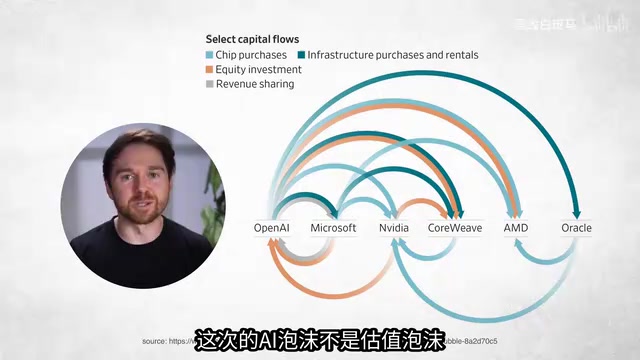
The AI Revenue Loop: An Accounting Game Among Tech Giants
Money Circulating Between Big Companies
Here's how the system actually works:
- Big tech companies invest in AI startups
- AI startups use that money to rent compute from the same big tech companies
- Big tech companies book the investment returns as profit
- Then use those "profits" as justification for even more spending
Specific numbers: OpenAI has committed to pay Microsoft $280 billion and Amazon $138 billion; Anthropic has committed to pay Microsoft $30 billion and Amazon $100 billion. OpenAI and Anthropic's spending commitments account for half of Microsoft's total remaining performance obligations, 54% of Oracle's, and 51% of Amazon's.
Financial Times ROI Analysis
Financial Times analysts calculated the AI investment ROI for Microsoft, Google, Amazon, Meta, and Oracle through 2030. Even assuming zero costs—no salaries, no electricity bills, no operational expenses whatsoever—the results are striking:
| Company | AI Investment ROI |
|---|---|
| Microsoft | -9.2% |
| -15.7% | |
| Meta | -28.8% |
| Oracle | -35.6% |
| Amazon | +7.2% (only positive) |
This year alone, these companies have issued over $150 billion in corporate bonds to finance AI spending—more than double the amount from two years ago. JPMorgan predicts that by 2027, several of these companies will have negative free cash flow.
Why an Earnings Bubble Is Harder to Defend Against Than a Traditional Bubble
A More Concealed Form of Bubble
BCA Research points out that this AI bubble isn't a traditional valuation bubble—it's a harder-to-detect "earnings bubble."
In a traditional bubble, stock prices rise while earnings stagnate, P/E ratios skyrocket, and it's easy to spot. But in an earnings bubble, the earnings themselves are inflated, so P/E ratios can remain at seemingly reasonable levels. The problem lies in the "E" (earnings) number itself—it's artificially elevated.
Historical outcomes of earnings bubbles: homebuilders before 2008 and banks before the financial crisis all had P/E ratios that looked perfectly reasonable—right up until the moment of sudden collapse.
Warning Signals from the Semiconductor Cycle
Global semiconductor sales have gone parabolic, and historically, every time this pattern has appeared, it's been followed by a brutal earnings collapse. Nvidia's stock fell 83% after peaking in 2001 and dropped 53% after peaking again in 2021—both times the stock price fell first, with earnings blowing up afterward.
Multiple Macro Risks Are Stacking Up
The market is currently exhibiting a phenomenon that has never occurred before in history: the S&P 500 has hit all-time highs four consecutive times with negative market breadth—the index is rising, but more stocks are declining than advancing. AI-related stocks now account for nearly 49% of the S&P 500's market cap—just 41 out of 500 constituent stocks make up nearly half.
Meanwhile, multiple risk factors are surfacing simultaneously:
- U.S. personal savings rate has fallen to 2.6%, a four-year low
- The Strait of Hormuz has been shut down for three months due to the Iran situation
- ExxonMobil expects oil prices to rise to $150-160/barrel
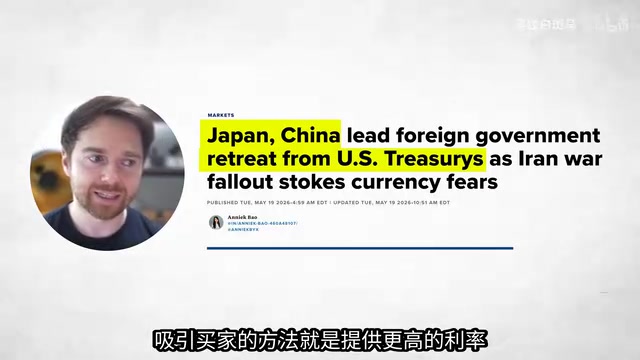
- Emerging markets sold U.S. Treasuries in March at the fastest pace since 2023
- 27 countries have applied to the World Bank for emergency assistance
Historical Pattern: Technology Changing the World Doesn't Mean Investors Make Money
The 19th-century railroad boom completely transformed America, but nearly all investors who funded the railroads lost everything. The 1990s fiber optic boom laid the backbone of the internet, but every company that laid the cables went bankrupt. It was those who later bought these assets at rock-bottom prices who built the world we live in today.
AI technology is real, and it will change the world. But technology succeeding and investors making money are two entirely different things. Those who enter at a $1.75 trillion valuation, and the passive funds forced in by rule changes, will likely bear all the potential losses.
Strategies for Ordinary Investors
Know what your index funds hold. In the coming weeks, these funds will include SpaceX, followed later by OpenAI and Anthropic. Understanding where your money is actually going is the prerequisite for making any decision.
Face the concentration risk head-on. If you're invested in an S&P 500 index fund, nearly 50% of your money is essentially betting on the AI industry. This level of concentration is historically rare.
Diversify across different scenarios. Investing isn't about betting on one single outcome—it's about allocating capital based on the probability of different scenarios. Find the balance point between AI continuing to rise and a potential correction that matches your personal risk tolerance.
Maintain historical perspective. Maybe this time is different. Maybe everything works out fine. But understanding the context behind the rule changes and historical patterns will at least help you make more clear-headed decisions.
Related articles
NestJS + LangChain: A Practical Guide for Frontend Engineers Transitioning to AI Full-Stack Architecture
How can frontend engineers transition to AI full-stack? This guide covers NestJS + LangChain, TypeScript fundamentals, AI Agent development, local model deployment, and cross-language architecture skills.
Building a Complete Mini Program with Codex: A Full-Process Walkthrough from Zero to Launch
A detailed walkthrough of building a complete WeChat Mini Program from scratch using OpenAI Codex, covering seven image tool features, membership system, WeChat Pay integration, and AI-assisted development strategies.
OpenAI Codex Deep Dive: The AI Develop…
OpenAI Codex Deep Dive: The AI Development Tool That Makes Programming Feel Like Flying
Deep dive into how OpenAI Codex redefines programming. From real developer feedback to the Time to Fly project, analyzing Codex's strengths in code generation, context understanding, and the AI coding tool competitive landscape.