NestJS + LangChain: A Practical Guide for Frontend Engineers Transitioning to AI Full-Stack Architecture

A practical guide for frontend engineers to transition into AI full-stack development using NestJS + LangChain.
This article provides a comprehensive roadmap for frontend engineers looking to transition into AI full-stack development. It covers why NestJS is the ideal server-side framework choice, TypeScript's critical role in AI development, enterprise-grade AI Agent development with LangChain.js, local model deployment strategies, and how to transfer architectural thinking across languages like Java, Go, and Python.
The Frontend Dilemma and the Way Forward
The current job market is showing clear signs of contraction — whether in frontend, backend, or testing/DevOps, job openings are declining sharply. In this environment, how can frontend engineers break through? The answer points to a clear direction: AI + Full-Stack.
From real-world cases, developers who still manage to secure 20%-30% salary increases in this market have done one core thing right: transitioning toward AI full-stack development. Specifically, this means mastering the NestJS (server-side framework) + LangChain (AI Agent framework) technology combination to build complete development capabilities for enterprise-grade AI applications.
This isn't simply stacking technologies — it's an upgrade to your capability model. It's about evolving from a pure UI developer into a full-stack architect capable of independently delivering AI-driven products.

Technology Selection: Why NestJS Is the Best Choice for Frontend-to-Full-Stack Transition
The Logic Behind Node.js as the Full-Stack First Choice
For frontend engineers, Node.js is the most natural entry point into server-side development. There's zero language switching cost, and the ecosystem integrates seamlessly with frontend toolchains. But among the many Node.js frameworks (Express, Koa, NestJS, etc.), why specifically recommend NestJS?
Four Core Advantages of NestJS
The choice of NestJS isn't arbitrary — it's based on the following considerations:
-
Architectural Rigor: NestJS borrows Angular's modular philosophy, providing a clear layered architecture (Controller-Service-Module) that's crucial for enterprise project maintainability. This layered design evolved from the classic MVC (Model-View-Controller) pattern — Controllers handle receiving and routing HTTP requests, Services encapsulate core business logic, and Modules serve as organizational units that aggregate related Controllers and Services together, forming a high-cohesion, low-coupling code structure.
-
Native TypeScript Support: NestJS was built on TypeScript from the ground up, aligning perfectly with the type safety requirements of AI development.
-
Dependency Injection Mechanism: Enterprise applications require good decoupling design, and NestJS's DI container makes service composition elegant. Dependency Injection (DI) is a design pattern originating from Java's Spring framework. Its core idea is to separate object creation and dependency management from business code, delegating it to the framework's IoC (Inversion of Control) container for unified management. In NestJS, developers simply annotate service classes with decorators, and the framework automatically handles instantiation, lifecycle management, and dependency resolution. This means when an AI Agent service depends on a database service, cache service, and model invocation service, developers don't need to manually assemble these dependencies — NestJS automatically injects the correct instances at runtime, greatly reducing coupling in complex systems.
-
Ecosystem Completeness: From WebSocket to microservices, from GraphQL to message queues, NestJS provides out-of-the-box solutions.
Compared to Express's excessive freedom and Koa's lightweight minimalism, NestJS is better suited for building enterprise AI services that require long-term maintenance.
TypeScript: The Essential Foundation for AI Full-Stack Development
TypeScript is now more important than JavaScript. If you haven't mastered TS by now, you'll face enormous difficulties whether transitioning toward AI or improving your existing skills.
TypeScript's value in AI full-stack development manifests at three levels:
-
More Controllable Agent Development: LangChain.js's type definitions provide explicit constraints on AI Agent inputs and outputs. Developers can catch parameter type mismatches and return value structure errors at compile time, rather than discovering them at runtime.
-
Decorator Pattern Support: NestJS's core mechanisms rely on TS's metadata reflection capabilities. TypeScript's metadata reflection (Reflect Metadata) is the underlying technology that enables NestJS's decorator pattern. When developers use decorators like @Controller or @Injectable on classes or methods, the TypeScript compiler attaches metadata — type information, parameter information, etc. — to target objects via the reflect-metadata library. NestJS's IoC container reads this metadata at runtime to determine what dependencies each class needs and which handler corresponds to each route. This mechanism essentially builds a static-type-driven framework infrastructure on top of JavaScript's dynamic nature, enabling the framework to perform complex automated configuration without intruding into business code.
-
Data Flow Safety: Complex AI applications with multi-layer data transformations need a type system to prevent runtime errors. For example, an AI Agent's output might pass through formatting, validation, storage, and other stages — TypeScript's generics and interface definitions ensure the data structure at each stage is explicit and traceable.
AI Agent Development: Enterprise-Grade LangChain.js Practices
Framework Selection Approach
For developing AI Agents in the TypeScript ecosystem, mainstream choices include LangChain.js, LangGraph, Vercel AI SDK, and others. As an enterprise-grade Agent development framework, LangChain.js provides a complete abstraction layer from model invocation to tool orchestration, making it the preferred solution for building complex AI applications.
LangChain was created by Harrison Chase in 2022. Its design philosophy abstracts LLM invocation processes into composable "chains." Traditional LLM calls follow a single request-response pattern, but real enterprise applications often require multi-step reasoning, tool calling, memory management, and other complex workflows. LangChain standardizes these complex processes through four core abstractions: Chain, Agent, Tool, and Memory. Among these, Agent is the most central concept — it grants LLMs autonomous decision-making capabilities. The model can dynamically choose which tools to call and in what order based on user input, achieving a leap from "passive answering" to "proactive action."
Local Model Deployment: A Key Strategy for Reducing Development Costs
Compared to directly calling commercial APIs like OpenAI, Doubao, Tongyi Qianwen, etc., local model deployment offers significant advantages during the development phase:
- Zero API Costs: Ideal for high-frequency calls during development and debugging
- Data Security Compliance: Data stays local, meeting enterprise security requirements
- Flexible Comparison and Evaluation: Freedom to switch between and compare different models' actual performance
Local model deployment typically relies on tools like Ollama, LM Studio, or vLLM. Taking Ollama as an example, it provides a Docker-like model management experience where developers can pull and run open-source models like Llama 3, Qwen, and Mistral with simple commands. These models run on local GPUs or CPUs and expose services through OpenAI-compatible API interfaces, meaning that when developing with LangChain, you only need to modify the endpoint configuration to seamlessly switch between local models and cloud APIs. For models around 8B parameters, a consumer-grade GPU (such as an RTX 4060 8GB) can run them smoothly, fully meeting development and debugging needs.
Recommended Development Environment Configuration
| Tool | Recommended Version/Choice |
|---|---|
| Node.js | ≥ 20.10 (stable), recommended 22.16.0 |
| IDE | VSCode / Cursor (AI-assisted coding) |
| Version Control | Git |
| Model Choice | Locally deployed models / Doubao / Tongyi Qianwen / GLM |
NestJS + LangChain: Full-Stack AI Architecture Integration
Combining NestJS's server-side capabilities with LangChain's AI capabilities creates a complete AI full-stack development pipeline. Their responsibilities are divided as follows:
NestJS handles the infrastructure layer:
- API gateway and routing management
- User authentication and access control
- Data persistence and caching
- Business logic orchestration
LangChain handles the AI capability layer:
- LLM invocation and response processing
- Prompt template management and optimization
- Tool calling and Agent orchestration
- Conversation memory and context management
Among these, tool calling (Function Calling / Tool Use) is the key capability that distinguishes modern AI Agents from ordinary chatbots. Here's how it works: developers pre-define a set of tools (such as database queries, API calls, file operations, etc.) and describe each tool's functionality and parameter format using structured JSON Schema. When a user makes a request, the LLM analyzes the intent and decides whether to call a tool, which tool to call, and what parameters to pass. After the framework executes the tool, it returns the results to the LLM, which then generates the final answer based on the real data returned by the tool. This "reasoning-action-observation" loop (ReAct pattern) enables AI applications to interact with real-world data and systems rather than relying solely on the model's training knowledge.
Integration Approach: Wrap LangChain's Chain/Agent within NestJS's Service layer, exposing RESTful or WebSocket interfaces externally so the frontend can directly call them to access AI capabilities. In practice, this typically involves creating a dedicated AI Module containing services like AgentService (managing Agent instances), ToolService (handling tool registration and execution), and MemoryService (persisting conversation history), all composed together through NestJS's dependency injection to form clear responsibility boundaries.
The core value of this architecture is that frontend engineers can use a single language (TypeScript) and a single mental model to complete full-chain development from user interface to AI reasoning.
Capability Transfer: From TypeScript to Java, Go, and Python
Once you've mastered the architectural thinking behind NestJS + LangChain, even if a target company uses Java (Spring Boot + LangChain4j), Go, or Python (FastAPI + LangChain) tech stacks, you can quickly make the transition.
The key is understanding universal architectural patterns in server-side development:
- Authentication and authorization module design (JWT Token mechanisms, OAuth2.0 flows, RBAC permission models)
- Data access layer abstraction (Repository pattern, ORM mapping, connection pool management)
- Caching strategy formulation (multi-level caching, cache invalidation strategies, hot data preloading)
- Message queue integration (async task processing, event-driven architecture, peak shaving)
- API versioning standards (URL path versioning, Header version negotiation, backward compatibility strategies)
While implementation details differ across languages and frameworks, the core design principles are universal. For example, NestJS's Guards correspond to Spring Boot's Filters/Interceptors, and NestJS's Pipes correspond to Spring Boot's Validators. Once you understand one framework's design philosophy, migrating to another only requires learning API differences rather than re-understanding the architecture.
With this architectural knowledge, combined with AI coding tools (like Cursor, GitHub Copilot), you can quickly implement equivalent architectures in any language. This is the true meaning of "AI full-stack architect" — it's not about mastering every language's syntax, but about grasping architectural thinking and leveraging AI tools for cross-language delivery.
Summary: The AI Full-Stack Breakthrough Path for Frontend Engineers
The next growth point for frontend engineers isn't in learning more frontend frameworks — it's in deepening toward AI full-stack development. The NestJS + LangChain combination provides the shortest path from frontend to AI full-stack:
- Language Unity: TypeScript throughout, zero switching cost
- Clear Architecture: NestJS's layered design, enterprise-grade maintainability
- Complete AI Capabilities: LangChain's ecosystem covers the entire Agent development workflow
In the current market environment, this may be the most pragmatic technology investment direction for frontend engineers to achieve salary breakthroughs.
Key Takeaways
Related articles

iOS 27 New Details Leaked: Major Notification Center Gesture Changes, Find My Interface Redesign
iOS 27 leaks reveal major changes: Notification Center gesture moves to upper left with new animations, Find My visual redesign, Photos Clean Up improvements, and under-the-hood security upgrades.
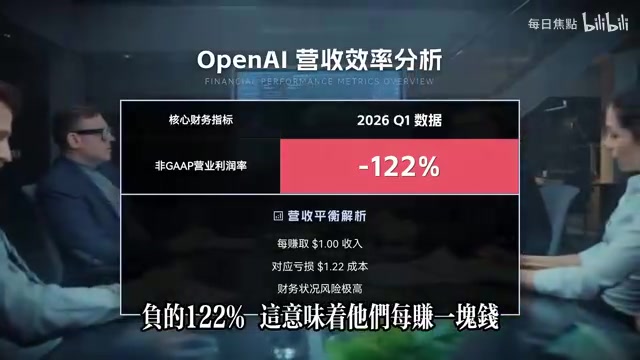
Deep Dive into the AI Bubble: The Death Spiral of Losing $1.22 for Every $1 Earned
Deep analysis of the AI industry bubble: OpenAI's -122% profit margin, enterprise token budgets burned in months, NVIDIA's shell game, and collapsing software quality.

WWDC 2026 Preview: Major Siri Overhaul and Comprehensive Apple Intelligence Upgrade
Deep analysis of WWDC 2026 Apple AI strategy: standalone Siri app, iOS 27 as an AI-native OS, and Apple Intelligence 2.0 rebuilt from the ground up.