WWDC 2026 Preview: Major Siri Overhaul and Comprehensive Apple Intelligence Upgrade

WWDC 2026 set to bring a standalone Siri app, AI-native iOS 27, and a complete Apple Intelligence overhaul.
WWDC 2026 is shaping up to be a pivotal moment for Apple's AI strategy. Key expected announcements include a standalone Siri app transforming it from voice assistant to AI agent, iOS 27 as Apple's first AI-native operating system with deep system-level integration, and Apple Intelligence 2.0 rebuilt from the ground up with more powerful on-device models and enhanced multimodal capabilities.
Introduction: A Critical Turning Point for Apple's AI Strategy
As WWDC 2026 draws closer, leaks about Apple's next-generation AI strategy are surfacing at an increasing pace. From a completely revamped Siri and a standalone Siri app to iOS 27 and a thoroughly rebuilt Apple Intelligence, Apple is brewing an unprecedented AI experience upgrade.
This isn't just a routine system iteration — it's more like Apple's comprehensive attempt to "catch up" and "overtake" after two years of AI groundwork. Under mounting pressure from competitors like ChatGPT and Gemini that continue to evolve, Apple needs to prove the unique value of its AI approach.
The New Siri: From Voice Assistant to AI Agent
The Strategic Significance of a Standalone Siri App
According to current leaks, Apple may launch a standalone Siri application (Siri App), marking the most significant form-factor change for Siri since its debut in 2011. Siri has always existed as a system-level overlay, and a standalone app signals Apple's intention to give Siri a richer interactive interface and more complex task-handling capabilities.
The deeper logic behind this change is clear: when an AI assistant needs to handle multi-step processes, multi-turn conversations, and visual result displays, the traditional voice overlay interface is far from sufficient. A standalone app can provide a complete conversational interface similar to ChatGPT while retaining Siri's deep system-level integration advantages.
Siri's Capability Reconstruction
The new Siri is expected to achieve qualitative leaps across several dimensions:
- Natural Language Understanding: Based on Apple's in-house large language model, achieving more accurate intent recognition and contextual understanding
- Cross-App Operations: Truly enabling complex commands like "find last week's meeting notes in my email, summarize them, and send to the team"
- Personalized Memory: Building user profiles based on on-device data to deliver responses more tailored to individual habits
iOS 27: An AI-Native Operating System
Deep System-Level AI Integration
iOS 27 is believed to be Apple's first truly "AI-native" operating system version. Unlike the tentative introduction of Apple Intelligence in iOS 18, iOS 27 is expected to permeate AI capabilities into every corner of the system.
From intelligent notification summaries and automatic email categorization to smart photo editing and health data analysis, AI will no longer be a feature users need to actively invoke — instead, it will be an intelligent engine running silently at the system's foundation.
AI-ification of the Developer Ecosystem
For developers, iOS 27 may introduce entirely new AI development frameworks, enabling third-party apps to more easily tap into Apple Intelligence capabilities. This will greatly enrich the application scenarios within Apple's AI ecosystem, creating differentiated competitive advantages distinct from Google and OpenAI.
Apple Intelligence 2.0: Rebuilding the Foundation
The Leap from "Functional" to "Excellent"
While the first generation of Apple Intelligence set a benchmark for privacy protection, it had a noticeable capability gap compared to competitors. The comprehensive overhaul of Apple Intelligence indicates that Apple has recognized this issue and is determined to transform it from the architectural level up.
Expected upgrade directions include:
- More Powerful On-Device Models: Leveraging the computational advantages of M-series and A-series chips to deploy larger local models with more parameters
- Cloud Collaboration Optimization: Further enhancing cloud inference capabilities building on Private Cloud Compute
- Enhanced Multimodal Capabilities: Comprehensive coverage of multimodal scenarios including image understanding, video analysis, and document processing
Balancing Privacy and Capability
Apple has always emphasized a "privacy-first" AI philosophy, but this has also limited AI capability to some extent. How to dramatically improve AI performance while maintaining privacy commitments will be the core challenge facing Apple Intelligence 2.0.
Industry Impact and Outlook
Apple's major AI upgrade will have far-reaching implications for the entire industry. If Siri truly achieves the transformation from "voice assistant" to "AI agent," then Apple's ecosystem — with over 2 billion active devices — will instantly become the world's largest AI application platform.
For everyday users, WWDC 2026 may be the pivotal moment that determines the direction of smartphone experiences for years to come. Whether Apple can deliver on these promises remains to be seen.
Related articles

Claude Phone Number Verification Failed? SMS Receiving Platform Solutions
Guide to solving Claude registration phone verification failures using online SMS receiving platforms. Get a temporary foreign number and complete verification in 5 steps.
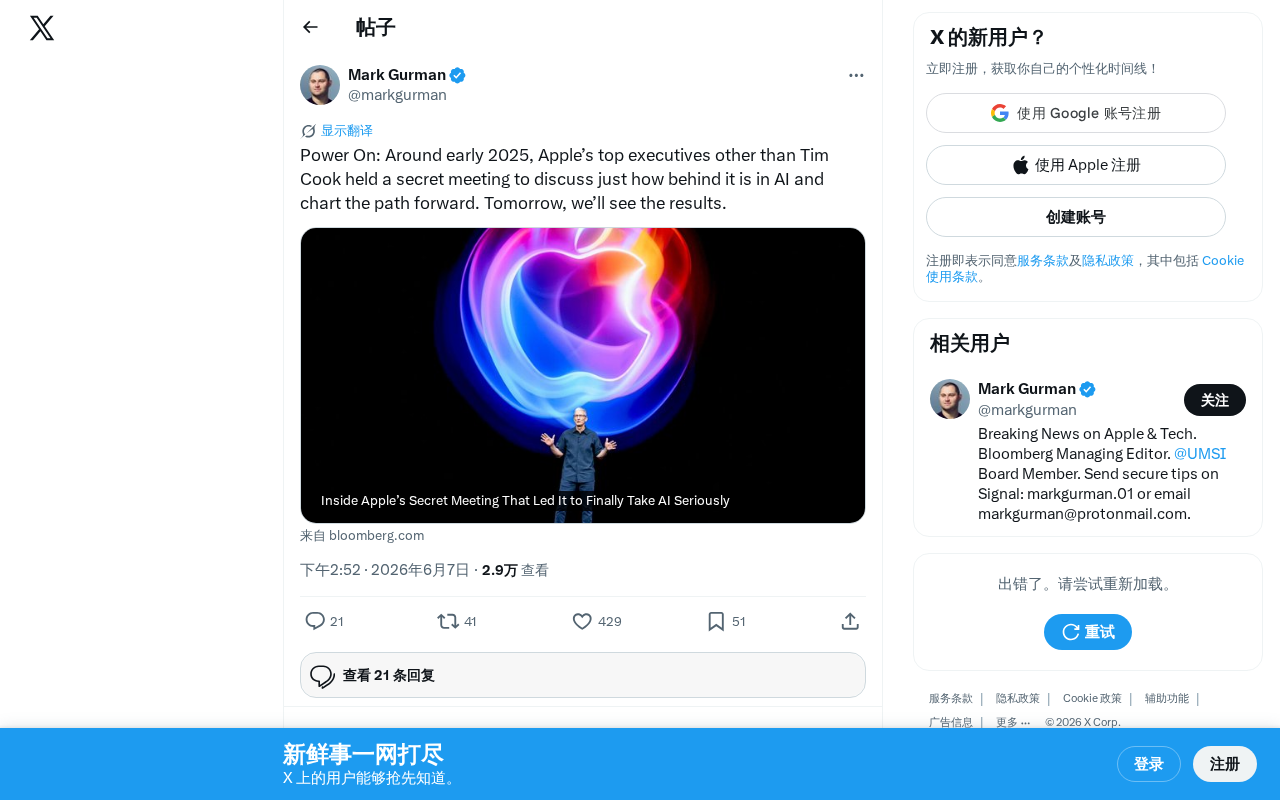
Apple Executives' Secret Meeting Exposed: Admitting AI Lag, WWDC Counterattack Plan Emerges
Bloomberg reveals Apple executives held a secret meeting without Tim Cook, admitting they've fallen behind in AI. With WWDC 2025 approaching, Apple's counterattack plan against OpenAI and Google emerges.

iOS 27 New Details Leaked: Major Notification Center Gesture Changes, Find My Interface Redesign
iOS 27 leaks reveal major changes: Notification Center gesture moves to upper left with new animations, Find My visual redesign, Photos Clean Up improvements, and under-the-hood security upgrades.