Efficient PyTorch Learning: A Source Code-Driven Methodology
Efficient PyTorch Learning: A Source C…
Master PyTorch efficiently through a source code-driven, practice-first learning methodology
This article presents an efficient PyTorch learning methodology: spend 2-3 days quickly covering foundational concepts like Tensor and nn.Module, then immediately transition to a "source code-driven learning" phase by reading open-source projects like U-Net and ViT line by line. Through contextualized learning — looking things up as you encounter them in real code — you build practical experience far more effectively than studying documentation in isolation. The approach also emphasizes setting clear priorities based on career or research goals, ultimately forming a practice-driven learning loop of look up → read → modify → run experiments.
Introduction: Common Pitfalls in Learning PyTorch
Many beginners in deep learning fall into two extremes when learning the PyTorch framework: either they grind through the official documentation, overwhelmed by the sheer volume of APIs and functions, or they follow along with hundreds of episodes of lengthy tutorials, studying every advanced feature one by one, only to give up halfway through.
The common problem with both approaches is that the return on investment is far too low. So, is there a more efficient path to learning PyTorch? This article outlines a proven methodology to help you master PyTorch's core capabilities in the shortest time possible.
Quickly Cover the Basics: Build a Framework Understanding in Two to Three Days
Focus on Core Modules — Don't Try to Cover Everything
The first step in learning PyTorch is not reading the official documentation from cover to cover. Instead, it's quickly scanning the most fundamental core modules to build a rough knowledge framework. Specifically, you should prioritize understanding the following key concepts:
- Tensor: The most basic data structure in PyTorch — understand how to create them, perform operations, and manage devices
- Neural Network Construction: How to build a simple neural network using
nn.Module - Common Layer Parameters: The parameter meanings of core layers like convolutional layers (Conv), fully connected layers (Linear), pooling layers (Pooling), etc.
The Essence of Tensors: Tensors are a mathematical generalization of multi-dimensional arrays and serve as the core data structure of deep learning frameworks. A scalar is a 0-dimensional tensor, a vector is a 1-dimensional tensor, a matrix is a 2-dimensional tensor, and the image batch data commonly seen in deep learning is a 4-dimensional tensor (batch size × channels × height × width). PyTorch Tensors are highly similar to NumPy arrays but offer two key advantages: first, they can run on GPUs, accelerating matrix operations via CUDA; second, they have a built-in automatic differentiation (Autograd) mechanism that can automatically track the computational graph and backpropagate gradients — the mathematical foundation of neural network training.
The goal of this phase is crystal clear: no more than two to three days, and you only need a rough impression of PyTorch's basic concepts. You don't need to memorize every function's usage, you don't need to understand every parameter's details — just knowing "this thing exists" is enough.
Why You Shouldn't Spend Too Much Time on the Basics
The reason is simple: memorizing knowledge points in isolation from real projects leads to extremely fast forgetting. You might memorize all seven or eight parameters of nn.Conv2d today, but after three days without using them, they'll be completely gone. The way to truly make knowledge stick is to encounter it repeatedly, look it up repeatedly, and understand it repeatedly through actual use.
It's worth noting that the reason PyTorch is so popular in the research community is precisely because of its Dynamic Computational Graph mechanism — the framework builds the computational graph in real-time during each forward pass, allowing flexible changes to the network structure at runtime and making the debugging process more intuitive. This stands in stark contrast to the static graph design of early TensorFlow versions. Understanding this underlying logic will help you grasp the framework's design philosophy more quickly when reading source code later.
Source Code-Driven Learning: The Most Efficient Path to Advancement
Core Method: Read Open-Source Project Code Line by Line
Once you've covered the basics, immediately find a real open-source project and read its source code line by line. This is the single most efficient method for learning PyTorch, bar none.

Here's the specific approach:
-
Choose suitable beginner projects: Two projects with simple code structures and complete open-source repositories on GitHub are recommended:
- U-Net: A classic image segmentation network with minimal code and a clear structure
- ViT (Vision Transformer): A Vision Transformer with a relatively concise architecture, representing the current mainstream direction
-
Read the code line by line: Open the source code and start from the first line, reading one line at a time. When you encounter an unfamiliar module — for example, you see
nn.SomeModuleand don't know what it is — look it up immediately. Use Google, the official documentation, tech blogs, whatever works. -
Focus on three core questions when looking things up:
- What does this line of code do?
- What are its parameters, and what does each one mean?
- What does it return, and how is it used downstream?
Why is U-Net recommended as a beginner project? U-Net was proposed by Ronneberger et al. in 2015, originally for medical image segmentation tasks. Its name comes from the network's symmetric structure — the encoder (downsampling path) progressively compresses spatial resolution to extract semantic features, while the decoder (upsampling path) progressively restores resolution. The two are connected via Skip Connections that directly pass fine-grained features. This design enables the model to capture both global semantics and local details simultaneously. U-Net's code structure is clean and highly modular, making it an ideal beginner project for learning PyTorch engineering practices.
Why is ViT recommended as an advanced project? Vision Transformer (ViT) was proposed by the Google Brain team in 2020, bringing the hugely successful Transformer architecture from natural language processing into computer vision. Its core idea is to split an image into fixed-size patches, flatten each patch and treat it as a token in a sequence, then model global dependencies through Multi-Head Self-Attention. Unlike convolutional neural networks that rely on local receptive fields, ViT can capture relationships between any two positions in an image from the very first layer, representing the mainstream architectural direction in the vision domain today.
Why Is Source Code-Driven Learning the Most Effective?
The process of reading and looking things up as you go IS the real learning process.
When you encounter an unfamiliar PyTorch module in source code, you look up the documentation with specific context in mind. At that point, you not only understand the module's functionality itself but also understand how it's used in a real project and why it's used in that particular place. The retention from this kind of "contextualized learning" far exceeds that of studying documentation in isolation.
By reading through the source code of two or three complete projects, you'll naturally accumulate the most commonly used modules and design patterns in PyTorch, while building an understanding of the overall engineering logic of deep learning projects. A complete deep learning training pipeline typically consists of five core modules: Data Loading (Dataset and DataLoader handle batch reading and preprocessing), Model Definition (inheriting nn.Module to build network architectures), Loss Function (measuring the gap between predictions and ground truth, such as cross-entropy or mean squared error), Optimizer (algorithms like SGD and Adam that update parameters based on gradients), and the Training Loop (the iterative process of forward pass → loss computation → backpropagation → parameter update). This pipeline is highly consistent across different projects, and once you master its logic, the learning cost of transferring to new tasks drops dramatically.
Set Clear Priorities: Choose Your Focus Based on Your Goals
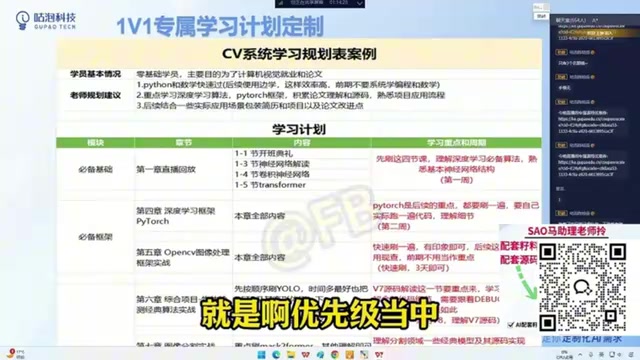
Career-Oriented vs. Research-Oriented
Different career goals dictate completely different areas of emphasis when learning PyTorch:
If your goal is employment:
- Prioritize engineering skills: data processing pipelines, model training and tuning, model deployment
- Focus on implementation details and variants of mainstream models
- Accumulate complete project experience and the ability to independently build training pipelines from scratch
If your goal is research/publications:
- Prioritize understanding the design philosophy and mathematical principles behind model architectures
- Focus on mastering how to modify and extend existing models
- Learn to quickly reproduce experimental results from papers
Additional advice for the research track: Research-oriented learners need a deeper understanding of PyTorch's automatic differentiation mechanism. When
loss.backward()is called, the framework traverses the computational graph in reverse, using the chain rule to automatically compute gradients for each parameter. Understanding this process helps you accurately predict gradient flow and behavior when designing custom loss functions, novel attention mechanisms, or non-standard training strategies, avoiding common issues like vanishing or exploding gradients.
Don't Try to "Learn Everything"
This is the most common mistake beginners make. PyTorch's feature set is incredibly rich — from basic tensor operations to distributed training, quantized deployment, and custom operators — the content is virtually endless. Trying to cover every knowledge point during the beginner stage will only leave you in the awkward position of "knowing a little about everything but mastering nothing."
The right approach is: determine your learning priorities based on the problem you need to solve right now. Learn what you need when you need it, and gradually expand your knowledge boundaries through practice.
PyTorch Learning Path Summary
Combining the analysis above, an efficient PyTorch learning path can be summarized as follows:
| Phase | Duration | Core Tasks |
|---|---|---|
| Basics Overview | 2-3 days | Understand basic concepts of Tensor, nn.Module, and common layers |
| Source Code Deep Reading | 1-2 weeks | Read through the complete code of simple projects like U-Net and ViT line by line |
| Hands-On Projects | Ongoing | Modify code, run experiments, solve real problems |
| Targeted Deep Dives | Ongoing | Study advanced features based on career/research goals |
Final Thoughts
Learning PyTorch is fundamentally the same as learning any programming framework — practice always trumps theory. Rather than spending months watching hundreds of tutorial episodes, spend a few days covering the basics and then dive headfirst into real project source code.
Look things up when you don't understand them, keep reading after you look them up, modify the code after you've read it, and run experiments after you've modified it. After repeating this cycle a few times, you'll find that PyTorch has become a tool you wield with ease, rather than a mountain you have to look up at.
Remember: The process of looking things up is where you learn. The process of doing things is where you grow.
Key Takeaways
- PyTorch basics should be covered in 2-3 days — quickly build a framework understanding rather than memorizing API documentation
- The most efficient learning method is reading open-source project code line by line (e.g., U-Net, ViT), looking things up as you go
- Set reasonable learning priorities based on whether your goal is employment or research — avoid blindly pursuing comprehensive coverage
- Contextualized learning (looking up documentation when you encounter problems in real code) yields far better retention than studying documentation in isolation
- The practice-driven learning loop — look up → read → modify → run experiments — is the core path to mastering PyTorch
Related articles
 Tutorials
Cursor + Codex Dual-IDE Collaboration: A Practical Methodology for Open-Source Project Customization
A complete methodology for open-source project customization based on real-world experience, detailing the Cursor+Codex dual-IDE workflow, seven-stage process, MVP validation, and AI source code reading techniques.
 Tutorials
Cursor Multi-Agent in Practice: Building a Full-Stack Next.js Blog in 50 Minutes
Build a full-stack blog in 50 minutes using Cursor IDE's multi-Agent mode with Next.js, Clerk auth, and Supabase. Learn the 4-phase AI Agent workflow and key integration pitfalls.
 Tutorials
Building an AI Software Factory from Scratch: A Cursor Engineer's Hands-On Experience with Multi-Agent Collaboration
Cursor engineer Eric shares practical insights on building an AI software factory: automation levels, guardrail design, parallel Agent management, and scaling to 1000+ Agents for 24/7 development.