Fable 5 vs Opus 4.8 Real-World Showdown: Three Projects to Determine the AI Coding Champion

Fable 5 dominates Opus 4.8 across three AI coding challenges: e-commerce, 3D museum, and RTS game.
A rigorous head-to-head test pits Fable 5 against Opus 4.8 on three demanding projects: an e-commerce website, an interactive 3D art museum, and an Age of Empires-style RTS game. Fable 5 wins all three rounds decisively, demonstrating superior design aesthetics, dramatically better token efficiency, autonomous error correction in agent mode, and unprecedented 3D rendering capabilities — establishing a new benchmark for AI-assisted development.
Introduction: A Hardcore AI Coding Face-Off
What happens when Anthropic's two flagship models — Claude Opus 4.8 and Fable 5 — are placed on the same starting line and given identical prompts to complete three highly demanding projects? A content creator on Bilibili designed an extremely rigorous test: a full e-commerce website, an interactive 3D art museum, and an Age of Empires-style real-time strategy game. The rules were simple — one-shot output, no revisions, deploy immediately.
This wasn't a simple code completion test. It was a comprehensive examination of AI model capabilities across architecture design, UI aesthetics, data processing, 3D rendering, and more. The results were stunning: Fable 5 dominated Opus 4.8 in nearly every dimension.
Round 1: E-Commerce Website — The Devil Is in the Details
Test Setup
The prompt required building a complete e-commerce website for a fictional candle brand called "Soulburn," featuring 30 products, distinctive product images, clear text contrast, category filtering, and more. This single project tested homepage design, e-commerce interactions, and database architecture all at once.
Opus 4.8's Performance
Opus 4.8 delivered a result that was an improvement over its previous dynamic workflow version — at least the text was readable and the candles had labels. But detail issues abounded: candle images were placed where they obscured text, the category filter had too many options making it look cluttered, the shopping cart icon resembled a trash can, and the navigation experience was poor. The overall impression was "functional but rough."
Fable 5's Performance
Fable 5's output had a distinctly more "e-commerce" feel: a top notification bar, elegant gradient backgrounds, carousel buttons, and product hover-to-zoom effects were all present. Most impressive was the image generation quality — the model autonomously learned how to prompt image generation models, producing candle photos with small twigs, shadows, sunlight, and textured backgrounds. It even drew color inspiration from the candles themselves to coordinate the overall palette.
Behind this "aesthetic awareness" lies a deep understanding of visual design principles. Traditional AI code generation focuses solely on functional implementation, but Fable 5 demonstrated a grasp of color theory, visual hierarchy, and brand consistency — it wasn't just writing code, it was doing product design.
Data Comparison
| Metric | Opus 4.8 | Fable 5 |
|---|---|---|
| Output Tokens | 4.898M | 588K |
| Estimated Cost | $21.41 | $36.84 |
| Completion Time | ~50 min | ~35 min |
Tokens are the basic units that large language models use to process text. Typically, one English word corresponds to 1-2 tokens, and a single line of code might contain 10-30 tokens. Opus 4.8 consumed 4.898 million output tokens, while Fable 5 achieved better results with just 588K — meaning Fable 5's code generation density and precision improved by an order of magnitude. Improved token efficiency typically stems from model architecture optimization, better attention mechanisms, and a higher proportion of high-quality code samples in training data. Fewer tokens not only mean lower latency and cost but also indicate the model has dramatically reduced redundant code and wasted attempts.
Although Fable 5 has a higher per-token price, its token efficiency is extremely high, and it was about 15 minutes faster. Round 1: Fable 5 wins decisively.
Round 2: 3D Art Museum — From Concept to Jaw-Dropping Reality
An Ambitious Vision
The difficulty ramped up sharply with this project: build a zoomable interactive timeline covering all major art periods, where clicking on an artist opens a 3D gallery to browse their works. Data needed to be fetched in real-time from the Wikipedia API and stored in a Neon database. The creator specifically emphasized: "No half-hearted Three.js demos — the gallery should be as realistic as possible, including lighting and tone mapping."
Neon is a Serverless PostgreSQL database service that combines traditional PostgreSQL with cloud-native architecture, supporting on-demand scaling and database branching. The AI model needed to fetch data from the Wikipedia API and store it in Neon, involving API calls, data cleaning, database schema design, ORM mapping, and a whole series of backend engineering capabilities. Three.js is currently the most popular WebGL wrapper library, abstracting low-level OpenGL ES shader programming into a JavaScript API that lets developers build 3D scenes in the browser with relatively concise code. The tone mapping mentioned in the test is a critical stage in the 3D rendering pipeline — it maps high dynamic range (HDR) lighting calculations to the low dynamic range (LDR) that displays can show, directly determining whether the image looks realistic and natural. For an AI model to generate runnable Three.js code, it needs to understand scene graphs, cameras, light sources, and also handle texture loading, raycasting (for mouse click interactions), animation loops, and other complex logic — far more difficult than generating ordinary web page code.

Opus 4.8: Good Ideas, Broken Execution
Opus 4.8 produced a color-coded timeline view with decent organization and visual hierarchy. But a fatal problem emerged — canvas panning and click events conflicted, making it impossible for users to click into artist galleries. This is a classic event bubbling and capturing issue in frontend development: when a user clicks on a draggable canvas, the browser can't distinguish between "drag" and "click" intent, requiring movement thresholds or delayed judgment to resolve. The quality checks the agent should have performed clearly weren't done. Core functionality missing equals project failure.

Fable 5: Breathtaking Completeness
Fable 5's performance was nothing short of stunning. The timeline adopted a star map-like design where artists overlapped based on their lifespans. Zooming out turned them into dots; zooming in revealed detailed information — perfectly realizing the "infinite canvas" concept. This semantic zooming interaction pattern draws from classic information visualization principles, dynamically adjusting information density based on zoom level so users can freely switch between macro overview and micro detail.
Even more impressive was the 3D gallery experience: clicking on Degas opened his dedicated gallery, where users could drag with the mouse or use arrow keys to walk through the virtual space, admiring paintings on the walls and clicking any piece for detailed information. All data came from Wikipedia, covering hundreds of artists and nearly a thousand paintings.

The creator's reaction was genuine: "This is so f***ing cool! Imagine having this as a kid — learning would have been so much fun!" It was the first time he'd seen an AI model achieve this level of detail and interactivity.
Cost and Efficiency
| Metric | Opus 4.8 | Fable 5 |
|---|---|---|
| Input Tokens | 51K | 54K |
| Output Tokens | 437K | 280K |
| Estimated Cost | ~$46 | ~$64 |
Fable 5 used fewer output tokens but cost more (about 37% higher). However, given the vast difference in output quality, the premium is entirely justified. Interestingly, Fable 5 demonstrated excellent agent coordination during the build — it autonomously discovered bugs (like the Wikipedia disambiguation issue with "Bacon") and even proactively adjusted 3D scene lighting. This kind of "opinionated" behavior was unprecedented.
The term "agent coordination ability" refers to how an AI model performs in agentic coding mode. In this mode, the model doesn't output all code at once but works iteratively like a human developer: writing code, running tests, finding issues, fixing bugs — forming a complete development loop. Fable 5's ability to autonomously discover the Wikipedia "Bacon" disambiguation issue — painter Francis Bacon (1909-1992) shares a name with philosopher Francis Bacon (1561-1626) — demonstrates contextual reasoning and data validation capabilities rather than blindly accepting API results. This autonomous error-correction ability is a key marker of AI evolving from "code generation tool" to "AI developer."
Round 3: Age of Empires — The Gap Becomes a Chasm
The Ultimate Challenge
The final project required building a playable Age of Empires-style real-time strategy game in the browser: a full 3D world, Three.js rendering, starting from a town center, enemy attacks, and a complete civilization-building system. Even the creator himself was "highly skeptical" it could come close to the original.
An Age of Empires-style real-time strategy (RTS) game is widely recognized as one of the most complex categories in game development. It requires simultaneously handling multiple tightly coupled subsystems: pathfinding algorithms (typically based on A* or flow field pathfinding, calculating optimal paths in real-time for dozens or even hundreds of units on a grid map), resource management systems (balancing collection and consumption of food, wood, stone, and gold), building placement and collision detection, unit AI state machines (switching logic between idle, moving, attacking, gathering states), fog of war, and synchronized updating and rendering optimization for multiple entities. Even professional game teams need weeks to develop a minimum viable RTS prototype.
Opus 4.8: Essentially Unplayable
Opus 4.8's output consisted of just some colored blocks — no zooming, no camera movement, the building system threw errors, and the entire application was essentially in a crashed state. The creator gave up after a few minutes: "This app seems completely broken — I can't even move around the world map."
Fable 5: Completeness Far Exceeding Expectations
Fable 5's "Dawn Empire" was a product from an entirely different dimension: a low-poly cartoon-style 3D world with free camera dragging, units that could move and attack, buildable farms and houses, an enemy town center, and a functioning resource gathering system. The low-poly style was a clever design choice — it not only reduced rendering complexity so the game could run smoothly in a browser but also created a distinctive visual aesthetic that has become widely popular in the indie game scene in recent years. The creator exclaimed: "This looks exactly like the original! You could sell this on Steam for $2.99!"
Both models completed in similar timeframes (Opus ~33 minutes, Fable ~30 minutes), but the quality gap can no longer be described as an "upgrade" — it's a generational difference.
Deep Analysis: Why Fable 5 Dominates Opus 4.8
1. "Aesthetic Awareness" in Image Generation
In the e-commerce project, Fable 5 demonstrated remarkable image prompting ability — it didn't just generate images but understood how to use lighting, textures, and color coordination to create brand aesthetics. This indicates a deeper understanding of visual design. This capability likely stems from training data that includes extensive design specification documents, brand guidelines, and UI/UX best practices, allowing the model to internalize standards for "good design" rather than just "code that runs."
2. Agent Coordination and Autonomous Error Correction
In the 3D museum project, Fable 5 autonomously discovered Wikipedia data disambiguation issues, proactively adjusted lighting parameters, and even used Chrome extensions to test zoom interactions. This level of autonomy far exceeds the traditional "generate-and-check" workflow. It indicates that Fable 5 possesses stronger "metacognitive" capabilities in agent mode — not only executing tasks but evaluating its own results and proactively optimizing them. This is a significant step toward truly autonomous software engineering.
3. A Qualitative Leap in Token Efficiency
In most tests, Fable 5 used significantly fewer output tokens than Opus 4.8 while delivering vastly superior results. This means the model isn't "padding volume" but generating code with greater precision. From an engineering perspective, this is similar to the difference between a senior developer and a junior one: the former achieves better results with less code because they have a deeper understanding of the problem domain, knowing which abstractions are necessary and which code can be omitted.
4. A Quantum Leap in 3D Rendering Capability
The Age of Empires test showed that Fable 5's mastery of Three.js has reached a level where it can generate complete, playable games — something never seen before in any AI model. This involves not just 3D graphics programming but also game loop design, Entity Component System (ECS) architecture, collision detection, and basic game AI. These knowledge areas span computer graphics, software engineering, and game design, indicating that Fable 5's cross-domain knowledge integration capability has improved significantly.
Conclusion: A New Benchmark for AI Coding Capability
Three tests, three decisive victories for Fable 5 — with the advantage widening in each round. From "more polished" in the e-commerce site, to a "qualitative leap" in the 3D museum, to "generational dominance" in Age of Empires, Fable 5 has demonstrated a new ceiling for current AI coding capabilities.
Of course, these tests have limitations — they're all frontend-intensive projects with only a single build attempt, not covering backend distributed systems, database performance optimization, security audits, or other enterprise-level development scenarios. But what's clear is that Fable 5 has set new benchmarks across design aesthetics, code quality, agent coordination, and 3D rendering. For developers, this means AI-assisted development is moving from "usable" to "good," from "generating code" to "generating products."
The only concern is cost — Fable 5 is approximately 30-37% more expensive on a usage basis. But given the improvements in output quality and efficiency, this premium is worthwhile for most projects. More importantly, as model capabilities improve, the ROI calculation for AI coding is changing: the metric is no longer "cost per token" but "cost per deliverable product" — and on that dimension, Fable 5 may actually be the more economical choice.
Related articles

A Gen-Z Woman Making $1.5M/Month: Deconstructing the Growth Methodology Behind AI Apps
Gen-Z indie dev Nicole built 4 hit AI apps earning $1.5M/mo. Deep dive into her industrialized UGC engine, traffic testing system, and minimalist tech stack.
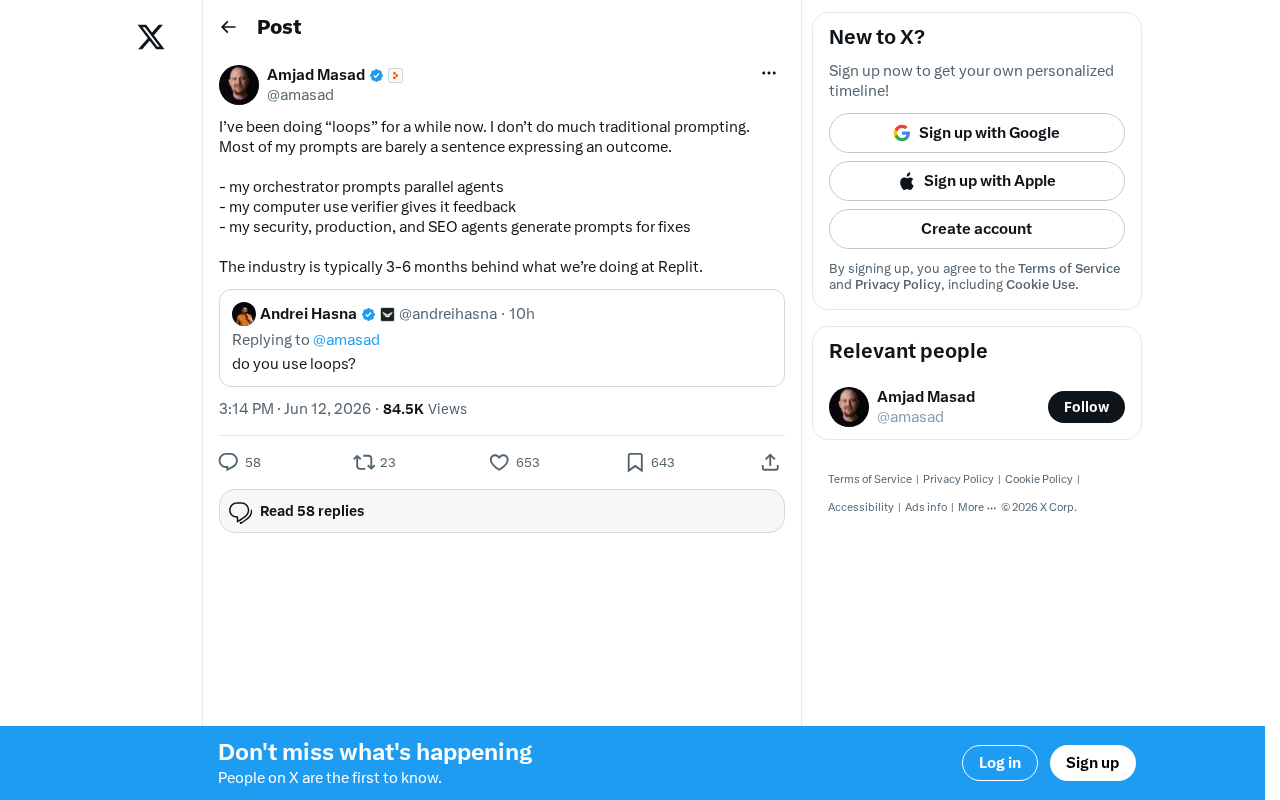
Replit's AI Loops Workflow Explained: Multi-Agent Collaboration Replaces Prompt Engineering
Deep dive into Replit's AI Loops workflow: how orchestrators, parallel agents, and Computer Use Verifiers build automated closed-loop systems through multi-agent collaboration.

Claude Code + Skills: A Practical Guide to AI-Powered Test Case Generation
Learn how to use Claude Code + Skills to auto-generate enterprise-grade test cases. Covers AI Agent vs LLM differences, the four core capabilities, and the complete workflow from requirements to test cases.