Five Bombshell AI Stories in a Single Day: GLM-5.2 Goes Open Source, DeepSeek V4 Gray Release, Cursor Acquired
Five blockbuster AI stories in one day: GLM-5.2 open source, DeepSeek V4, Cursor acquired, and more.
June 17, 2025 saw five major AI events: Zhipu open-sourced GLM-5.2 with impressive coding capabilities and ultra-low API pricing; DeepSeek appeared to gray-test its V4 model while closing $7B+ in funding; OpenAI reported $38.5B in annual losses as GPT-5.5 faced user backlash; SpaceX acquired Cursor's parent company Anysphere for $60B; and Anthropic navigated Claude 5 White House negotiations amid lawsuits and bugs.
On June 17, 2025, the AI world experienced an extraordinarily news-packed day. From a major Chinese model going open source to massive industry acquisitions, from record-breaking funding rounds to financial crises, multiple blockbuster stories broke simultaneously. This article covers the five most noteworthy events of the day to help you quickly grasp the latest industry developments.
Zhipu GLM-5.2 Officially Goes Open Source with Stunning Coding Capabilities
Zhipu absolutely crushed it this time. GLM-5.2 is now officially open source, with API pricing slashed to an ultra-low 8 RMB and 28 RMB per million tokens — offering exceptional value for money.
A quick explanation of token pricing: tokens are the basic units that large language models use to process text. A single Chinese character typically corresponds to 1–2 tokens, while an English word is roughly 0.75–1.5 tokens. Charging per million tokens is standard industry practice, and GLM-5.2's pricing of 8 RMB and 28 RMB (for input and output respectively) is far below models of comparable caliber like GPT-4o. Going open source means developers can freely download the model weights and deploy them on local machines or private clouds — not only reducing costs but also addressing data privacy concerns.
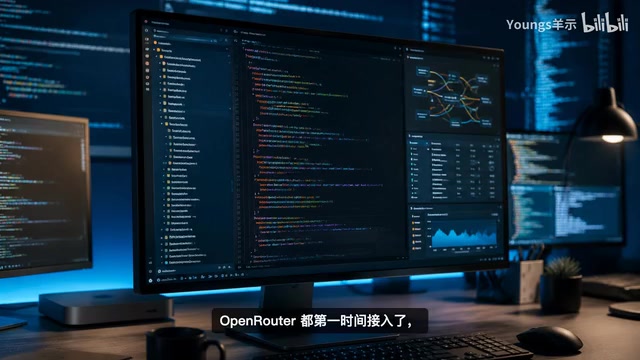
Community testing feedback shows that GLM-5.2 delivers remarkably strong front-end coding capabilities, and international evaluation organizations have given it high marks. Mainstream platforms like Trey and OpenRouter integrated the model immediately, signaling strong recognition from the international community. OpenRouter is a unified LLM API aggregation platform that lets developers call dozens of different models through a single interface — its rapid integration is widely seen as an important signal of international community acceptance.
Even more noteworthy, Zhipu's CodingPen tool will extend its half-price consumption promotion through the end of September — a tangible benefit for developers. Chinese-made LLMs have truly arrived in the coding domain this time. The open-sourcing of GLM-5.2 represents not just a demonstration of technical strength, but a powerful boost to the entire ecosystem.
DeepSeek Suspected of Gray-Testing V4 Model, Raises Over $7 Billion
Another piece of news that sent the community into a frenzy came from DeepSeek. A completely new chain-of-thought format appeared in the quick mode of its web interface, clearly different from previous versions. The community widely speculates this is the V4 model undergoing gray release testing.
Gray release is a common deployment strategy in internet products, where a new version is first pushed to a small subset of users for validation, then gradually expanded based on feedback to reduce the risk of a full rollout. Chain-of-Thought (CoT) is a technique where LLMs display intermediate reasoning steps during inference, allowing the model to "think step by step" like a human rather than jumping straight to an answer — an approach that significantly improves accuracy on complex tasks like mathematical reasoning and logical analysis. DeepSeek was previously known for the ultra-long chain-of-thought in its R1 model, so if the V4 model's chain-of-thought format has fundamentally changed, it could signal a major innovation in its reasoning architecture.
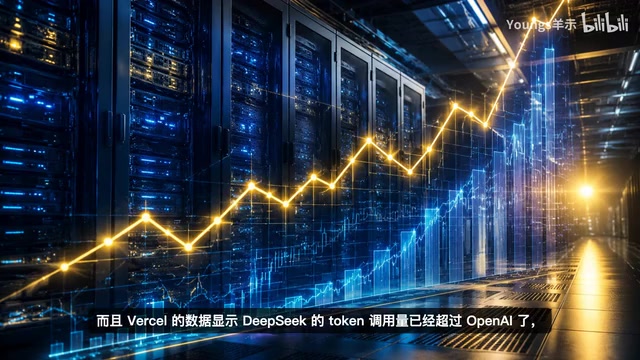
Even more explosive: Reuters confirmed that DeepSeek has completed a funding round exceeding $7 billion — a scale second only to OpenAI in the global AI space, providing ample ammunition for compute procurement and talent recruitment. Meanwhile, data from Verse shows that DeepSeek's token usage has already surpassed OpenAI's, while its costs account for just 1% of total spending. Taken together, these numbers mean DeepSeek is capturing enormous market share at extremely low cost.
Completing massive fundraising on one hand while aggressively pushing toward AGI on the other — DeepSeek's ambitions are plain for all to see. If the V4 model is indeed in gray testing, its official release will be one of the most anticipated events in AI this year.
OpenAI Posts $38.5 Billion Annual Loss as GPT-5.5 Reputation Tanks
OpenAI is having a rough time. Its total losses for 2025 reached $38.5 billion, nearly an 8x year-over-year increase — a jaw-dropping burn rate.
This massive loss stems primarily from three areas: GPU compute leasing costs (both training and inference require large numbers of high-end NVIDIA chips, with a single H100 costing roughly $2–3 per hour to rent, and training a frontier model potentially requiring tens of thousands of chips running for months), talent compensation (top AI researchers can command annual salaries of several million dollars), and data center infrastructure investment. As model scale continues to grow and user numbers surge, inference-side compute consumption has become an even bigger cost black hole than training.
To make matters worse, GPT-5.5 has been widely criticized by users for severe "dumbing down," with "drooling" becoming a community meme — the decline in model quality has triggered widespread dissatisfaction. "Dumbing down" is the user community's colloquial term for declining output quality, with possible causes including: model quantization compression to reduce inference costs, switching to smaller distilled models to handle high-concurrency requests, or overly conservative safety alignment policies that make responses vague and hedging.

To address the predicament, OpenAI is currently considering aggressive price cuts, but on the other side, third-party channels have been reported for issues, and the Business tier has switched to a monthly quota model. This adjustment reflects OpenAI's strategic shift from "acquiring users at any cost" to "controlling costs and pursuing profitability" — consistent with its structural transformation from a nonprofit to a for-profit company. Price cuts, quotas, declining reputation, massive losses — under the weight of multiple pressures, OpenAI faces the most severe challenge since its founding.
This also confirms a trend from the sidelines: when open-source models and low-cost competitors rise rapidly, first-mover advantage and brand recognition alone are no longer enough to maintain a leading position.
SpaceX Acquires Cursor's Parent Company for $60 Billion, Shaking Up the AI Coding Space
The most impactful M&A news of the day came from Reuters' confirmation: SpaceX acquired Cursor's parent company Anysphere in an all-stock deal valued at $60 billion. This is the largest acquisition in the AI coding tools space to date, and it sent shockwaves through the industry.
Cursor is one of the most popular AI coding IDEs (Integrated Development Environments) among developers. Built as a deep modification of Microsoft's VS Code, it embeds LLM-powered code generation, completion, and refactoring capabilities directly into the editor workflow, allowing developers to describe requirements in natural language and automatically generate code. Its parent company Anysphere was founded just over two years ago, and the $60 billion valuation reflects the market's extreme bullishness on the AI coding tools space. An all-stock transaction means SpaceX completed the acquisition using its own shares rather than cash — a common approach in tech giant acquisitions that preserves cash flow while deeply aligning the acquired company's interests with the parent.
The strategic logic behind SpaceX acquiring an AI coding tools company is worth pondering. SpaceX itself has a massive software engineering team — the ground control systems for the Starlink satellite network, the flight control software for Falcon rockets, and more all require enormous amounts of code. Acquiring Cursor could dramatically boost internal engineering efficiency. Externally, Elon Musk's empire is extending from rockets, electric vehicles, and social media further into AI development tools, forming an increasingly complete technology ecosystem.

Competitors haven't been sitting idle either. TRAE Work and Kero are both pushing frequent updates, and Trae CN has started locking down models and introducing paid tiers. The AI coding tools space is only going to get more competitive from here — the entry of tech giants means competition will escalate from the product level to the ecosystem and capital level.
Anthropic's Mixed Bag: Claude 5 Return in Sight, But Troubles Mount
Anthropic's recent situation can best be described as "exciting yet frustrating."
The good news: reports suggest Anthropic is negotiating with the White House to bring back Claude 5 (Fable 5). The fact that Claude 5 requires White House negotiations to return implies the model may have crossed government-set safety red lines in certain capability dimensions — the U.S. Department of Commerce and the White House AI Safety Committee have review authority over frontier AI models that exceed specific capability thresholds, particularly in sensitive areas like biosecurity, cyberattacks, and autonomous action. If negotiations go well, this will be a critical step for Anthropic to rejoin the top-tier competition.
But the bad news is equally plentiful: reduced Max subscription quotas have triggered a class-action lawsuit, reflecting new legal challenges that AI subscription services face regarding consumer rights protection. Starting July 8, KYC (Know Your Customer) identity verification will be required for all subscription users — a rare move in the AI tools space. KYC is an identity verification system widely used in the financial industry that requires users to provide real identity information. Anthropic's introduction of KYC to its AI subscription service is likely related to U.S. government export control and security review requirements for frontier AI models.
Even thornier, Opus 4.8 has exhibited a serious bug — mixing up different users' messages in long conversations. This involves a "context window isolation" issue in multi-tenant AI service architectures, where different users' conversation data must be strictly isolated on the server side. Any cross-contamination constitutes a severe data privacy incident. This is a serious blow to data security and user trust.
Whether Anthropic can successfully navigate this turbulent period largely depends on whether Claude 5 can return on schedule and deliver sufficient technical breakthroughs.
Summary: The AI Industry Landscape Is Being Reshaped at Accelerating Speed
In just a single day, we witnessed the powerful rise of open-source models, massive funding rounds and acquisitions, struggles of industry giants, and new challenges in regulation and compliance. These events all point to one trend: the competitive landscape of the AI industry is being reshaped at an unprecedented pace.
Breakthroughs by Chinese LLMs in coding, DeepSeek overtaking usage at a fraction of the cost, SpaceX crossing into AI coding — these signals all indicate that the AI race in the second half of the year will be even more exciting, and even more brutal.
Related articles
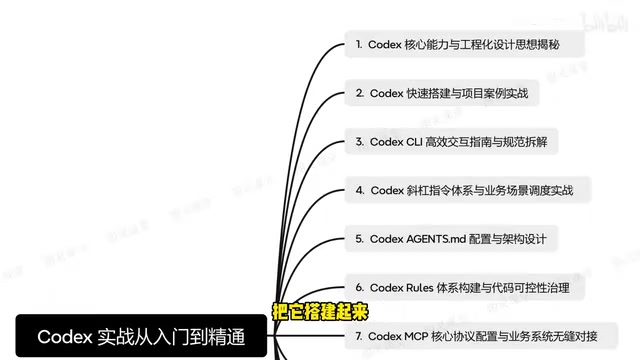
The Complete Guide to OpenAI Codex CLI: From Installation and Configuration to Enterprise-Level Practice
In-depth guide to OpenAI Codex CLI: covering installation, agents.md design, multi-agent collaboration, MCP protocol integration, and a RAG customer service project.
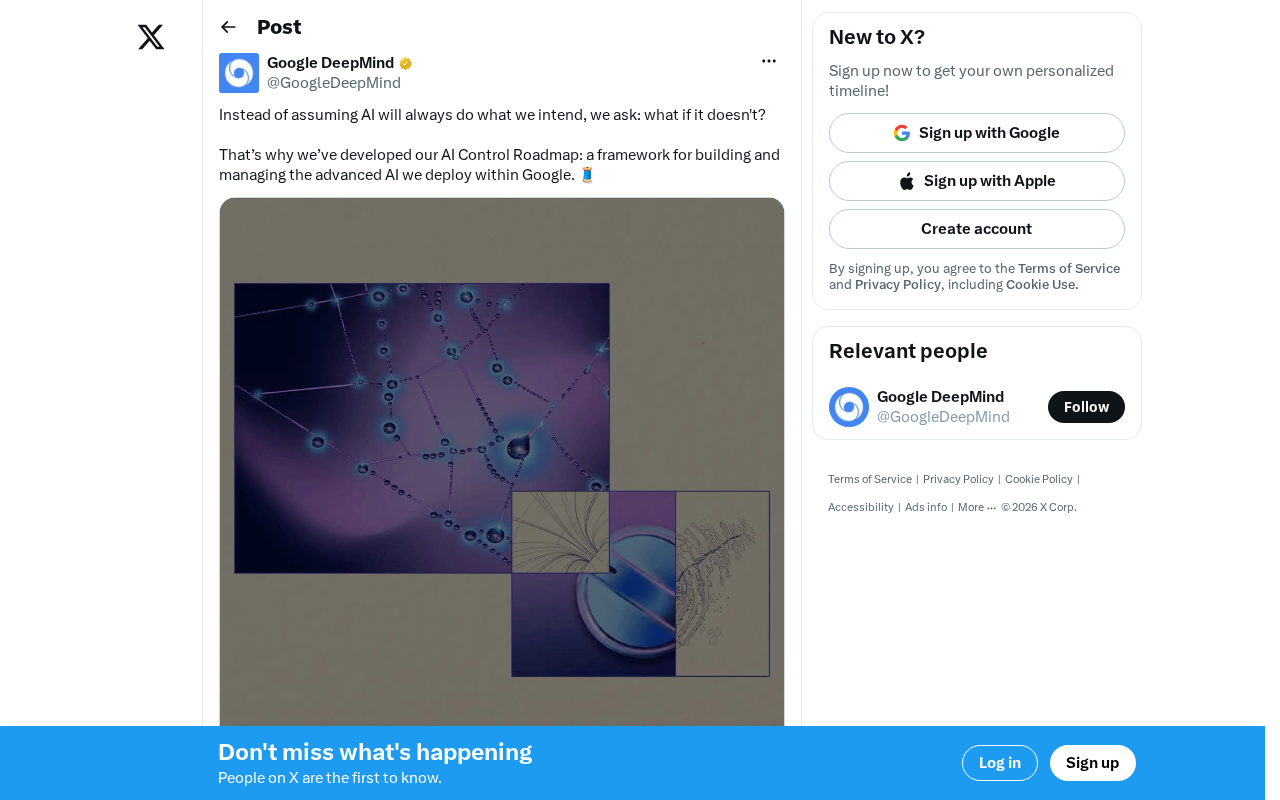
Decoding Google's AI Control Roadmap: A Defense Framework for When AI Goes Off the Rails
Google releases its AI Control Roadmap, a new safety paradigm that assumes alignment may fail and builds defenses at the system architecture level.
Agent Factory: Voice-Driven AI Coding — A Hands-On Guide to Building Apps for Free
Agent Factory wraps Claude Code into a voice-driven AI coding tool with dozens of free models, letting you build apps, games, and websites through conversation.