Fusion Startup Funding Landscape: A Deep Dive into the $7.1 Billion Flow and Industry Dynamics
Global fusion startups have raised $7.1B, with capital heavily concentrated in a few leading companies.
Global fusion startups have raised a cumulative $7.1 billion, with funding heavily concentrated among top players in a winner-take-all dynamic. Breakthroughs like NIF's ignition milestone and high-temperature superconducting magnets have boosted investor confidence. Multiple technical pathways — tokamaks, inertial confinement, and hybrid approaches — are advancing in parallel, but massive challenges in materials science, engineering scale-up, and timeline uncertainty remain. The next 3-5 years will be the critical window for validating commercial viability.
The Capital Frenzy in the Fusion Sector
Nuclear fusion — the technology often called "humanity's ultimate energy source" — is attracting unprecedented capital attention. According to the latest data, fusion startups worldwide have raised a cumulative $7.1 billion to date. However, this massive pool of funding is far from evenly distributed, with the vast majority concentrated in the hands of a few leading companies.
Nuclear fusion is the process of merging light atomic nuclei (such as deuterium and tritium, isotopes of hydrogen) under extreme temperatures and pressures to form heavier nuclei (such as helium), releasing enormous amounts of energy in the process. This is exactly how the Sun and stars generate their power — the Sun's core reaches temperatures of about 15 million degrees Celsius, with pressures 250 billion times Earth's atmospheric pressure, converting roughly 600 million tons of hydrogen into helium every second. It's called the "ultimate energy source" because the fusion fuel deuterium can be extracted from seawater (each liter contains about 33 milligrams of deuterium), and the deuterium reserves in Earth's oceans could theoretically power humanity for billions of years. At the same time, fusion reactions produce no carbon dioxide and don't generate the long-lived highly radioactive waste that nuclear fission does — waste that requires storage for tens of thousands of years.
Extreme Capital Concentration: The Winner-Take-All Effect in Fusion
The fusion sector exhibits a classic "winner-take-all" pattern. Among all funded fusion startups, those that have raised over $100 million — while limited in number — account for the overwhelming majority of total industry funding. Several key factors drive this capital concentration:
- Extremely high technical barriers: Fusion R&D requires large-scale experimental facilities, top-tier plasma physics talent, and lengthy development cycles. Small funding rounds simply cannot support meaningful technical breakthroughs. To achieve controlled fusion on Earth, fuel must be heated to over 100 million degrees Celsius (roughly six times hotter than the Sun's core), at which point matter enters a plasma state — a highly ionized gas where atomic nuclei and electrons are completely separated. Plasma is the fourth state of matter, exhibiting extremely complex collective behavior and prone to various instabilities (such as kink modes, tearing modes, and other magnetohydrodynamic instabilities) that can cause confinement disruptions and energy leakage. How to stably confine this ultra-hot plasma for long enough to sustain fusion reactions and produce net energy output has been the core scientific and engineering challenge of fusion research for over 60 years.
- Investors favor certainty: In a field with extremely high technical risk, capital tends to back teams that have already demonstrated technical feasibility.
- Strong scale effects: Once a company achieves a milestone on its technical pathway, subsequent funding rounds often grow exponentially.
Why Is Capital Bullish on Fusion?
The Ultimate Answer to the Energy Transition
Unlike nuclear fission, fusion uses fuels (deuterium and tritium) that are virtually inexhaustible and produces no long-lived radioactive waste. Once commercialized, fusion would fundamentally reshape the global energy landscape. Driven by carbon neutrality goals, governments and private capital alike are accelerating their bets on this sector.
Key Technical Breakthroughs Boosting Industry Confidence
In recent years, several milestone events have significantly boosted confidence in the fusion industry. On December 5, 2022, the National Ignition Facility (NIF) at Lawrence Livermore National Laboratory in California used 192 high-energy laser beams to deliver 2.05 megajoules of energy to a tiny deuterium-tritium fuel capsule, triggering a fusion reaction that released 3.15 megajoules of energy — achieving "scientific energy gain" (Q>1, meaning fusion energy output exceeded the energy directly delivered to the capsule) for the first time. However, it's important to note that powering those 192 laser beams consumed approximately 300 megajoules of electrical energy, so from a total-system "engineering energy gain" perspective, efficiency remains extremely low. The significance of this experiment lies in validating the physical feasibility of fusion ignition under laboratory conditions for the first time, providing a solid scientific foundation for subsequent engineering optimization. While commercial viability remains a long way off, this breakthrough proved the physical feasibility of fusion energy.
Meanwhile, another key enabling technology driving the rapid development of private fusion companies in recent years has been the breakthrough in high-temperature superconducting (HTS) magnets. Traditional tokamaks (such as ITER) use low-temperature superconductors (such as niobium-tin alloy Nb₃Sn), which must be cooled to approximately 4K (-269°C) and are limited to magnetic field strengths of about 12 tesla. The new generation of rare-earth barium copper oxide (REBCO) high-temperature superconducting tapes can operate at approximately 20K and generate strong magnetic fields exceeding 20 tesla. Since fusion power density scales with the fourth power of magnetic field strength, stronger fields mean equivalent fusion performance can be achieved with much smaller devices. Commonwealth Fusion Systems successfully tested a 20-tesla HTS magnet in 2021, which is considered one of the most important breakthroughs in fusion engineering in recent years and the core technology underpinning the company's over $2 billion in funding.
Multiple Technical Pathways Advancing in Parallel
The fusion companies that have secured large funding rounds are pursuing different technical approaches, including:
- Magnetic confinement fusion (e.g., tokamaks, stellarators): The tokamak is currently the most mature magnetic confinement fusion device, invented by Soviet scientists in the 1950s. It uses a combination of toroidal magnetic fields and magnetic fields generated by plasma current to confine the plasma. Representative private companies include Commonwealth Fusion Systems (CFS). The stellarator also uses magnetic confinement but relies entirely on external coils to generate complex three-dimensional twisted magnetic fields, requiring no plasma current. It is theoretically more stable but extremely complex to engineer. Germany's Wendelstein 7-X is the most advanced stellarator experimental device.
- Inertial confinement fusion (laser-driven): This approach uses powerful lasers or particle beams to simultaneously compress a tiny fuel capsule from all directions, achieving fusion conditions in an extremely short time. The NIF ignition experiment falls into this category.
- Magnetized target fusion and other hybrid approaches: Additionally, TAE Technologies employs a field-reversed configuration (FRC), General Fusion has explored magnetized target fusion (MTF), and Helion Energy uses pulsed magnetic fields to compress plasma. Each technical pathway has its own advantages and disadvantages.
The parallel advancement of multiple technical pathways increases the probability that at least one will ultimately succeed — a key reason capital is willing to invest heavily.
Is $7.1 Billion Enough? The Real Challenges of Fusion Commercialization
While $7.1 billion sounds like a massive sum, measured against the grand ambition of fusion commercialization, it may be just the tip of the iceberg. The International Thermonuclear Experimental Reactor (ITER) project's total budget has already exceeded $20 billion, and it is merely an experimental facility — not a commercial power plant. ITER is the world's largest fusion science experiment, jointly funded by seven parties: China, the European Union, India, Japan, South Korea, Russia, and the United States, and is located in Cadarache, southern France. ITER uses the tokamak approach, with a design goal of achieving an energy gain of Q≥10 (inputting 50 megawatts of heating power to produce 500 megawatts of fusion power), with a plasma volume of 840 cubic meters. The project's initial budget was approximately €5 billion, but due to escalating engineering complexity, total costs are now estimated to exceed $20 billion, and the first plasma experiment has been postponed multiple times from its original 2020 target. The lessons from ITER — including the inefficiency of international coordination and cost overruns — are precisely what private fusion companies aim to avoid through more agile organizational approaches.
Private fusion companies have the advantage of faster decision-making and more rapid technology iteration, but they face equally daunting challenges:
- The lab-to-commercialization gap: Achieving a fusion reaction is one thing; generating power continuously and stably while feeding it into the grid is an entirely different engineering challenge.
- Materials science bottlenecks: Materials capable of withstanding the extreme conditions of fusion reactions (temperatures of hundreds of millions of degrees, intense neutron irradiation) are still under development. In fusion reactions, the 14.1 MeV high-energy neutrons produced by deuterium-tritium fusion pose a severe engineering challenge. These neutrons bombard the reactor's first wall and structural materials, causing atomic displacement damage (each atom may be knocked from its lattice position dozens of times during service life), helium bubble formation, material swelling, and embrittlement. The most promising candidate materials currently include reduced-activation ferritic/martensitic steels (RAFM, such as EUROFER97), silicon carbide composites, and tungsten alloys, but no material has been validated under real fusion neutron environments over extended periods. Furthermore, plasma-facing first wall materials must simultaneously withstand extreme heat loads (up to 10-20 MW/m²) and particle bombardment. Tungsten is the preferred choice due to its high melting point (3,422°C), but its brittleness and radiation damage issues remain unresolved. The materials problem is considered by many industry insiders to be the "last mile" challenge of fusion commercialization.
- Timeline uncertainty: Most companies promise commercialization in the 2030s, but historically, fusion timelines have been repeatedly pushed back.
Fusion Industry Outlook: The Next 3-5 Years Are the Critical Window
The fusion startup sector is at a critical inflection point. As leading companies enter the engineering validation phase one by one, the next 3-5 years will be the crucial window for testing the viability of each technical pathway. It's foreseeable that the Matthew effect in funding will intensify further — companies that are first to demonstrate net energy gain will attract even more capital, while those making slow progress may face funding difficulties.
For the clean energy industry as a whole, the influx of $7.1 billion in private capital into the fusion sector is itself a positive signal. It indicates that the market is finally getting serious about a technology that has been "always 30 years away."
Key Takeaways
Related articles

Vibe Coding in Practice: How a Product Manager Built a Study App from Pain Point to Launch Using AI Tools
A product manager used AI tools like Claude Code to independently build a quiz app from exam prep pain points to launch. A full walkthrough of Vibe Coding methodology, MVP definition, and testing.
PilotDeck: A Local Console That Tames Multi-Task Agent Chaos
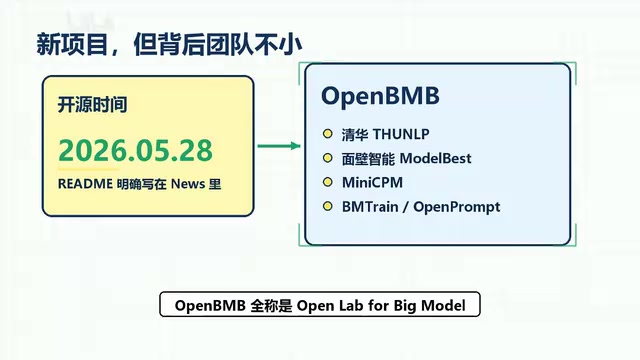
PilotDeck is an open-source local Agent console from a Tsinghua-affiliated team that solves multi-task chaos with workspace isolation, white-box memory management, and smart model routing.

Codex and Claude Code Dual-Engine: A Practical Guide to AI-Powered Engineering
A deep dive into AI engineering with Codex and Claude Code: Vibe Coding limitations, Chinese LLM rankings, Skill-driven development, and enterprise project practices.