Gemini 3.5 Flash In-Depth Review: Pro-Level Performance at Flash-Level Pricing

Gemini 3.5 Flash delivers Pro-level AI performance at a fraction of the cost across real-world tasks.
Google's Gemini 3.5 Flash offers a 1M token context window and 64K token output at just $1.50/$9 per million tokens — roughly one-third the price of Claude Opus 4.7 and GPT 5.5. Testing across multimodal vision, native video analysis, contract review, Vibe Coding, multilingual receipt extraction, and Workspace agent chains shows Pro-level results. Key caveats include long-context retrieval regression, verbose output, and a silent thinking level downgrade.
Google delayed the Gemini 3.5 Pro release to June at I/O, pushing the Flash model into the spotlight instead. After a week of intensive hands-on testing across the Gemini app, AI Studio, Workspace extensions, and more, this model's performance is genuinely surprising — Flash has quietly taken over the role of Pro-tier models.
Multimodal Vision: Fridge Ingredient Recognition Test
I uploaded a photo of a half-empty fridge in the Gemini app, asking the model to identify all ingredients, suggest dinner recipes, and list any additional items I'd need to buy. The key challenge: two jars at the back of the fridge were partially obscuring each other — Flash accurately identified both and incorporated them into its recipe suggestions.
This isn't a trivial vision task. Most models either miss occluded items or hallucinate things that aren't there. Flash's output was clean and precise: complete recipe steps plus an accurate shopping list containing only the actually missing ingredients, with nothing fabricated. Compared to 2.5 Pro on the same test, Flash was faster and produced cleaner output.
Native Video Understanding: Long-Form Video Analysis & Data Visualization
For the second test, I dragged a full-length video directly into the chat window — no transcription step, no external tools. The prompt asked the model to extract the top five key insights with precise timestamps, then locate a data table at the 23-minute mark and redraw the chart using Python.
An expandable "Analyzing video" module appears in the interface, letting you watch the model scan through the content in real time. After verification, the returned timestamps were accurate to within 20 seconds. Even more impressive, the Python chart rendered directly in the chat window — Flash extracted data from the 23-minute mark and completed the visualization in the same response, with no copy-pasting or opening an external notebook.
This is made possible by the 64K token output window — code, charts, and full analysis are completed in a single continuous response without truncation.
Core Specs & Pricing: Just How Big Is Flash's Cost Advantage?
Gemini 3.5 Flash comes with a 1 million token context window and a 64,000 token output limit. Getting 64K tokens in a single response is the biggest practical improvement — earlier models would cut off mid-task on complex requests, while Flash delivers complete output.
The pricing comparison is striking:
- Gemini 3.5 Flash: $1.50/million input tokens, $9/million output tokens
- Claude Opus 4.7: $5 input, $25 output
- GPT 5.5: $5 input, $30 output
Flash isn't slightly cheaper — it's in an entirely different cost tier. In production environments, output tokens are the primary expense, and the $9 vs. $25 gap becomes massive at scale. Google has already made Flash the global default model for Google Search AI Mode.
Thinking Level Toggle: Contract Analysis in Practice
I tested a 40-page B2B contract PDF analysis in AI Studio. The prompt asked the model to review the entire document as a contract attorney, flagging all hidden fees, auto-renewal clauses, and penalties that clients might overlook.
The entire document fits comfortably within Flash's context window. The key finding was the impact of toggling thinking levels:
- Low thinking level: Fast response, decent results
- High thinking level: Expands a chain-of-thought module where you can observe the model analyzing clauses one by one and cross-referencing sections
The high thinking level caught two additional penalty clauses and one auto-renewal trigger that were completely missed at the low thinking level. For contracts, legal documents, and financial reports — where wrong answers are costly — set thinking to high. For quick summaries or email drafts, low level works fine.
Vibe Coding Test: Hand-Drawn Sketch to React App
Skipping wireframe tools and Figma entirely, I photographed a hand-drawn app layout and asked Flash to build a React component using Tailwind with Apple-style design.
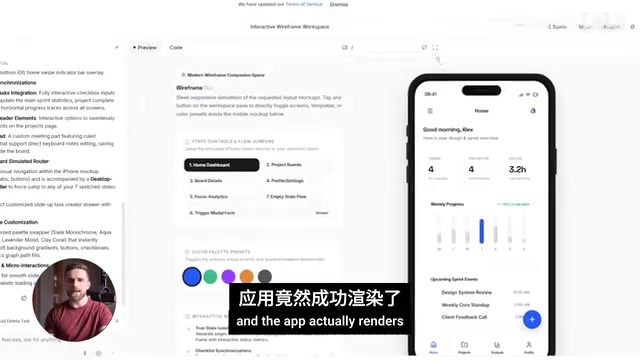
The output streamed hundreds of lines of complete React code without hitting the truncation limit. Earlier models would break off mid-component at this scale, requiring follow-up prompts to continue. Flash completed it in one shot. Pasting the code into AI Studio's built-in live preview panel, the app rendered immediately — buttons were clickable, layout rendered correctly, all without leaving AI Studio.
Structured Data Extraction: Batch Processing 15 Multilingual Receipts
I uploaded 15 receipt photos from different countries, in different languages and formats, with the goal of extracting clean structured data. AI Studio provides a dedicated structured output panel where you can visually define a schema (merchant name, date, total amount, currency, line items) without writing any code.
A single request processed all 15 receipts, outputting valid JSON. Flash automatically handled language switching, returning correct fields in the same schema for every receipt regardless of language. The entire process took under 2 minutes — work that previously required a paid OCR API is now done natively at no additional cost.
Workspace Agent Chains: One Prompt Driving Multi-App Collaboration
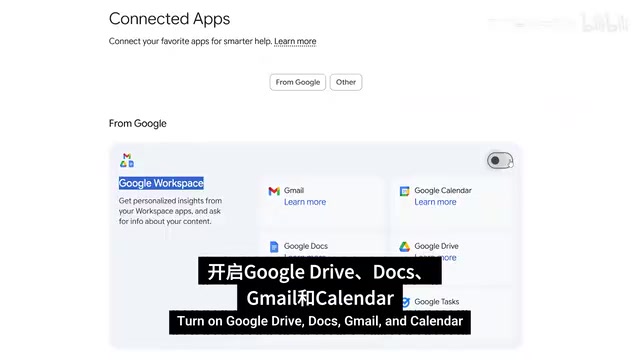
With Workspace extensions enabled (Drive, Docs, Gmail, Calendar), I completed the following with a single prompt: find the May sales report in Drive → create a new summary document → draft a team update email with the link included.
Gemini sequentially opened Drive to locate the file, read its contents, created a new Docs file with a written summary, and finally drafted a Gmail with the embedded link. Three Google products chained together through a single prompt, with zero manual interaction in any app. This is true agentic AI — no longer a text generator, but an operator executing multi-step work across real tools.
Three Known Issues with Gemini 3.5 Flash
Three issues most reviews won't mention:
- Long-context retrieval regression: Flash scores 7.6 points lower than Gemini 3.1 Pro on the MRCR V2 benchmark (128K token context), indicating a decline in precise information retrieval capability
- Verbose output: On reasoning-intensive tasks, Flash uses roughly twice the tokens of earlier models
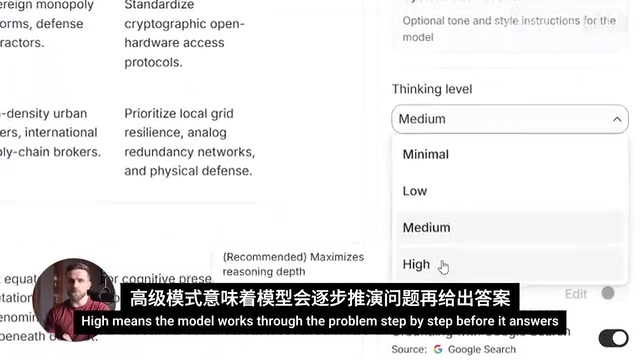
- Silent default thinking level downgrade: When migrating from 2.5 Pro to 3.5 Flash, the default thinking level in the Gemini app dropped from high to medium, with no announcement from Google. Check your settings immediately and manually switch it back to high
Verdict: Is Flash Worth Replacing Your Pro Subscription?
Flash excels at its price point. For most production workflows, it delivers Pro-level results at Flash pricing — a genuine shift in the economics of AI at scale. However, for precise long-context retrieval tasks, you'll still want to pair it with a human verification step.
If you're currently paying for multiple AI subscriptions, Flash's value proposition deserves serious consideration — it's not a compromise, but the optimal choice for the majority of use cases.
Related articles
Building a Cold Chain Logistics Optimization Research Project with Codex: A Complete Workflow from Scratch to PDF Paper
Learn how to use OpenAI Codex to build a complete cold chain logistics optimization research project from scratch, including simulated annealing implementation, experiments, figures, and LaTeX paper compilation.
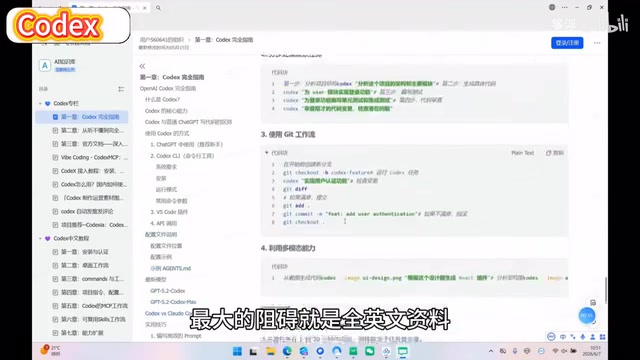
Codex Beginner's Practical Guide: Master Core AI Programming Skills in One Weekend
OpenAI Codex beginner's practical guide covering environment setup, code generation, bug fixing, and project refactoring. Includes efficient learning tips and Prompt techniques for fast AI programming mastery.

AI Agent Systematic Learning Path: From Zero to Independent Development
A systematic AI Agent learning path covering core principles, Prompt engineering, RAG, multi-Agent collaboration, and hands-on projects for beginners.