Gemini Omni Live Demo Preview: A Deep Dive into Multimodal Conversational Video Creation

Google announces June 3 live demo of Gemini Omni with multimodal input, real-world knowledge, and conversational video editing.
Google has announced a live demo of Gemini Omni on June 3 via Discord, hosted by Product Manager Chloe. The product features three core capabilities: multimodal inputs (supporting text, images, voice, and video), real-world knowledge (integrating Google's knowledge graph for content accuracy), and conversational editing (editing videos through natural language instructions). Unlike competitors' one-directional text-to-video approach, Gemini Omni emphasizes a complete input-understanding-iteration creative loop, potentially marking a differentiated breakthrough in AI video creation.
Google Announces Gemini Omni Live Demo Event
Google recently announced on social media that it will host a live demonstration of Gemini Omni on Wednesday, June 3rd at 11:30 AM Pacific Time. The demo will be hosted by Chloe, a product manager who helped build the product, and will be streamed live via Discord.
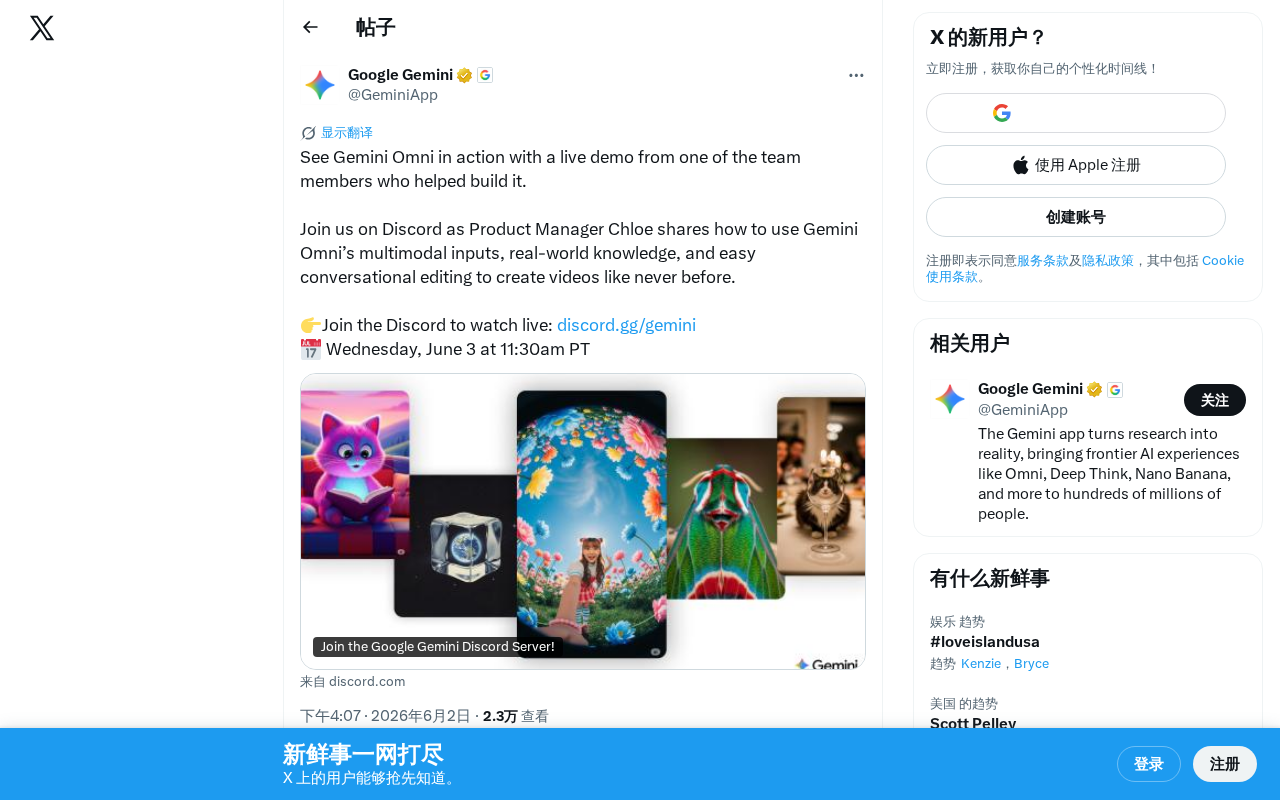
Breaking Down Gemini Omni's Three Core Capabilities
Based on the official announcement, Gemini Omni features three core capabilities covering input, understanding, and editing:
Multimodal Inputs
Gemini Omni supports multiple input formats including text, images, voice, and even video, allowing users to interact with the model through different modalities. This multimodal fusion makes the video creation workflow more natural and intuitive, significantly lowering the barrier to professional video production.
From a technical perspective, Multimodal AI refers to artificial intelligence systems capable of simultaneously processing and understanding multiple data types. Traditional AI models typically handle only a single modality—such as text-only language models or image-only classification models. Multimodal models use a unified architecture to map different signals like text, images, audio, and video into a shared representation space, enabling cross-modal understanding and generation. Google has deep expertise in this area, from the early PaLM-E to the Gemini series. Their core technical approach involves large-scale multimodal pretraining, exposing the model to various modalities during training to achieve native cross-modal understanding, rather than stitching together separate models after the fact. The "Omni" in Gemini Omni (Latin for "all") directly reflects this all-modality capability.
Real-world Knowledge
The model possesses extensive real-world knowledge, capable of understanding and applying various types of real-world information. This is particularly crucial for video content creation—creators no longer need to manually search for and organize reference materials, as the AI can automatically supplement relevant background knowledge and context, making generated video content more accurate and rich.
This capability is underpinned by the Gemini series' massive pretraining corpus and Google's proprietary knowledge graph system. Unlike pure video generation models, Gemini Omni can integrate the vast structured knowledge accumulated through Google Search into the video creation process. For example, when a user requests a video about a historical event, the model can not only generate visual imagery but also ensure the accuracy of timelines, character relationships, geographical locations, and other details. This "knowledge-enhanced" approach to video generation could potentially solve the factual errors and "hallucination" problems that plague current AI video tools.
Conversational Editing
The most notable feature is its conversational editing capability. Users can edit and adjust video content through natural language dialogue, without relying on complex timeline operations or professional editing software. This interaction method makes video creation as simple as everyday conversation, dramatically improving creative efficiency.
Conversational editing represents a major shift in human-computer interaction paradigms. Traditional video editing relies on non-linear editing systems (NLE) such as Adobe Premiere Pro, Final Cut Pro, and DaVinci Resolve, where users must precisely manipulate each frame on a timeline, handling complex parameters like keyframes, masks, and color curves. While precise, this approach has a steep learning curve, and professional editors typically need years of training to achieve mastery. The core idea behind conversational editing is converting natural language instructions (such as "warm up the color tone in the second shot" or "add a slow-motion transition here") into specific editing operations. This requires the model to simultaneously possess natural language understanding, video temporal content comprehension, and editing operation generation—a triple capability that far exceeds the technical difficulty of simple text-to-video tasks.
Gemini Omni's Potential Impact on AI Video Creation
The official description uses "create videos like never before" to characterize Gemini Omni's capabilities, suggesting the tool could bring significant breakthroughs to the AI video generation space.
The current AI video generation landscape is fiercely competitive, with numerous players ranging from OpenAI's Sora to various open-source solutions. Since 2024, this field has experienced explosive growth: OpenAI's Sora stunned the industry in early 2024 with impressive demo videos showcasing the possibility of generating high-quality long-form video using Diffusion Transformer architecture; subsequently, Runway's Gen-3 Alpha, Pika Labs 2.0, Stability AI's Stable Video Diffusion, ByteDance's Jimeng, and Kuaishou's Kling launched and rapidly iterated. On the open-source front, projects like CogVideo, Open-Sora, and Mochi continue to advance. Current competitive dimensions include: generated video length and resolution, adherence to physical laws, temporal consistency, fine-grained controllability, and generation speed. Google previously had video generation models like Veo 2 and Imagen Video; the launch of Gemini Omni signals that Google is deeply integrating its multimodal large model's deep understanding capabilities with video generation, carving out a differentiated path.
Google's decision to showcase a live demo of Gemini Omni at this time clearly aims to demonstrate its differentiated advantages—particularly the unique experience in multimodal understanding and conversational interaction. Compared to competitors that primarily focus on one-directional "text-to-video" generation, Gemini Omni emphasizes a complete creative cycle: Input (multimodal) → Understanding (real-world knowledge) → Iteration (conversational editing). If executed well, this closed-loop experience will significantly distinguish it from existing tools.
Notably, Google chose to livestream the demo through a Discord community rather than a traditional launch event. Discord originally served as a voice chat tool for gamers but has evolved in recent years into a core gathering place for AI and developer communities. Midjourney was the first to offer AI image generation services through a Discord bot, validating the viability of community-driven AI product distribution. Since then, numerous AI companies have used Discord as their primary platform for product testing, user feedback, and community operations. Compared to the one-way communication of traditional launch events, Discord's real-time interactive nature allows users to ask questions instantly and share experiences, forming a tighter product-user feedback loop. Google's choice of this channel reflects a shift by major tech companies toward community-driven models for AI product promotion, while also suggesting the product may be approaching public availability.
How to Watch the Gemini Omni Demo
- Time: Wednesday, June 3, 2025 at 11:30 AM Pacific Time (2:30 AM Beijing Time on June 4)
- Platform: Google's official Discord channel
- Content: Product Manager Chloe will demonstrate Gemini Omni's features live
For professionals and enthusiasts following the development of AI video creation tools, this demo is worth watching. It will help us gain a more intuitive understanding of Gemini Omni's performance in real-world use cases, as well as Google's latest progress in multimodal AI video generation. With major companies continuing to invest heavily in the AI video space, 2025 is poised to become a pivotal year when AI video creation tools transition from "tech demos" to "productivity tools."
Key Takeaways
- Google will livestream a Gemini Omni demo on June 3 via Discord, hosted by Product Manager Chloe
- Gemini Omni features three core capabilities: multimodal inputs, real-world knowledge, and conversational editing
- The tool aims to revolutionize the video creation experience, allowing users to edit videos through natural language conversation
- Compared to competitors, Gemini Omni emphasizes a complete input-understanding-iteration creative loop, rather than simple text-to-video generation
- Google's choice of the community-oriented Discord platform for the demo suggests the product may be nearing public release
Related articles
 Tech Frontiers
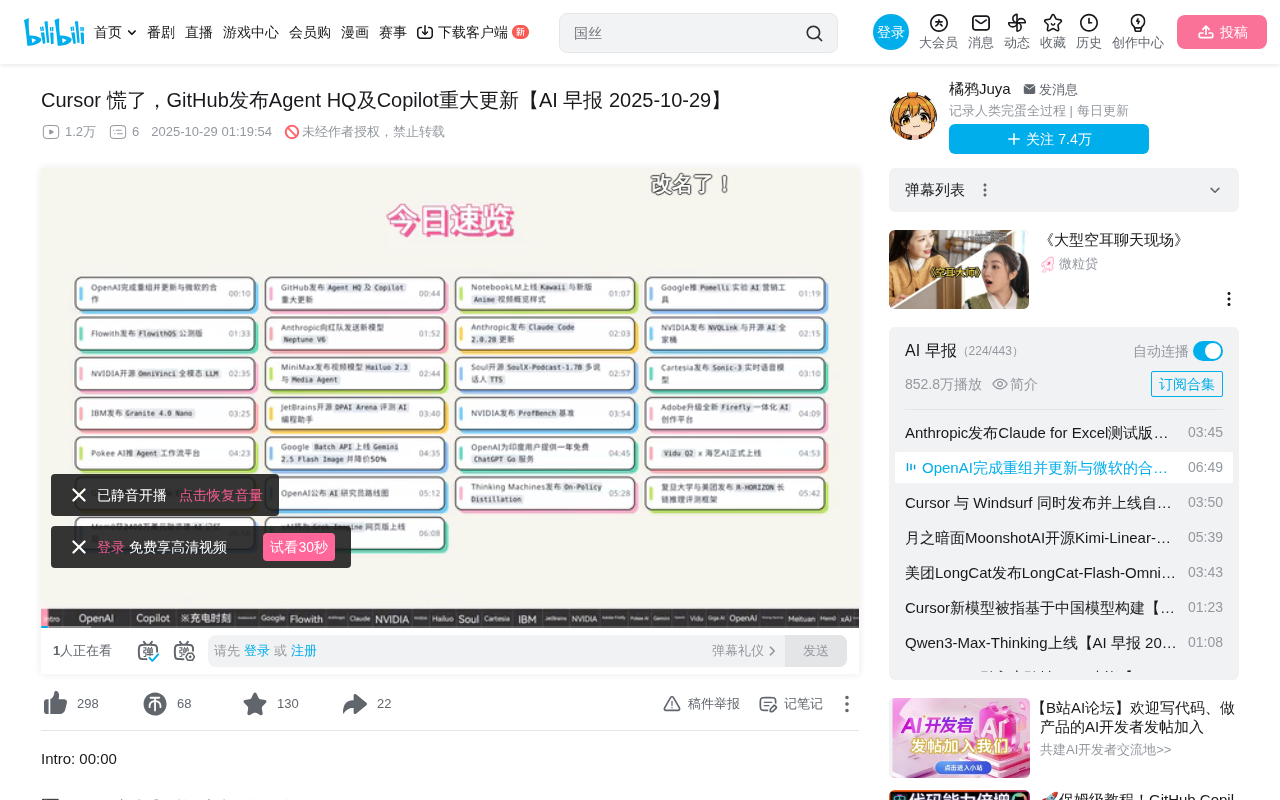
GitHub Agent HQ Launch: AI Coding Tools Enter the Era of Platform Competition
GitHub Universe unveils Agent HQ platform for unified coding agent management, Copilot upgrades with multi-model support. OpenAI completes restructuring, Anthropic tests new model, NVIDIA open-sources AI models.
 Tech Frontiers
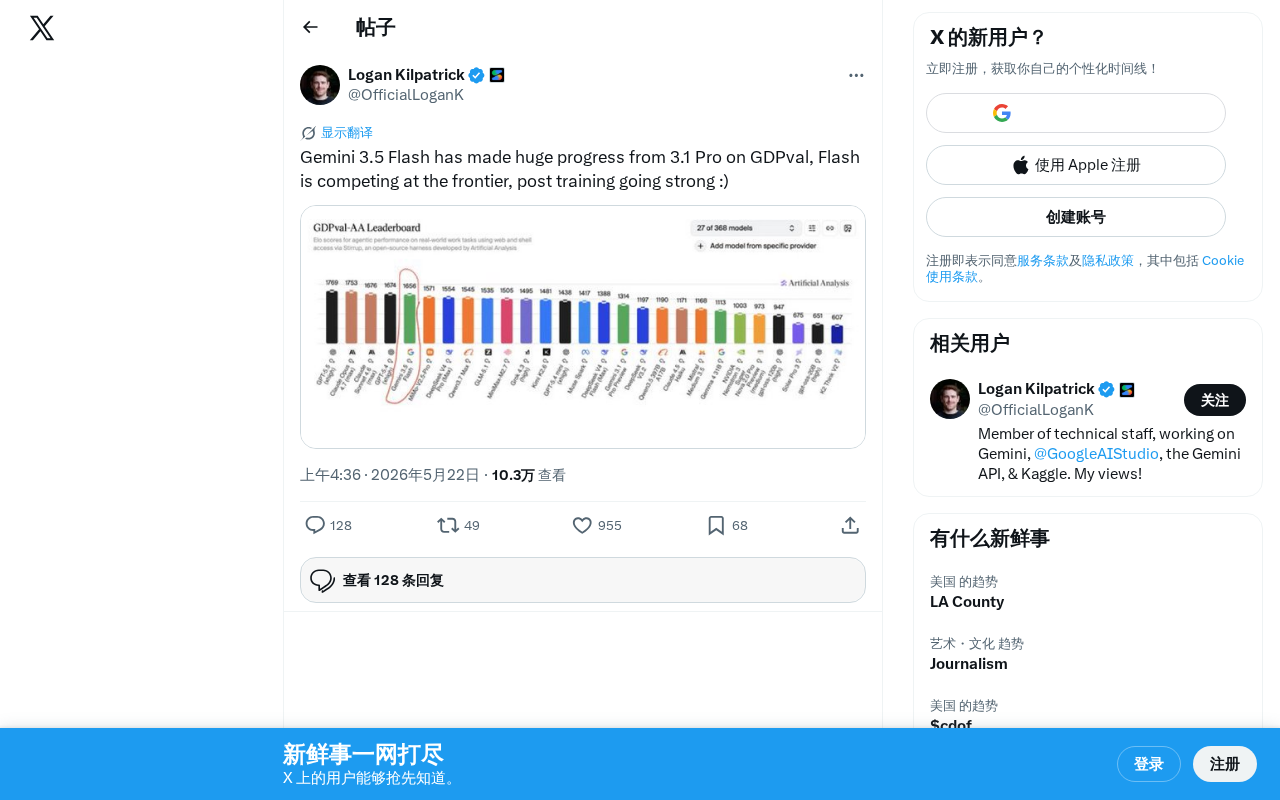
Gemini 3.5 Flash Achieves a Massive Leap on the GDPval Benchmark
Google Gemini 3.5 Flash surpasses Gemini 3.1 Pro on the GDPval benchmark. The lightweight Flash model leverages post-training techniques to approach frontier-level performance, redefining the balance between quality and cost.
 Tech Frontiers
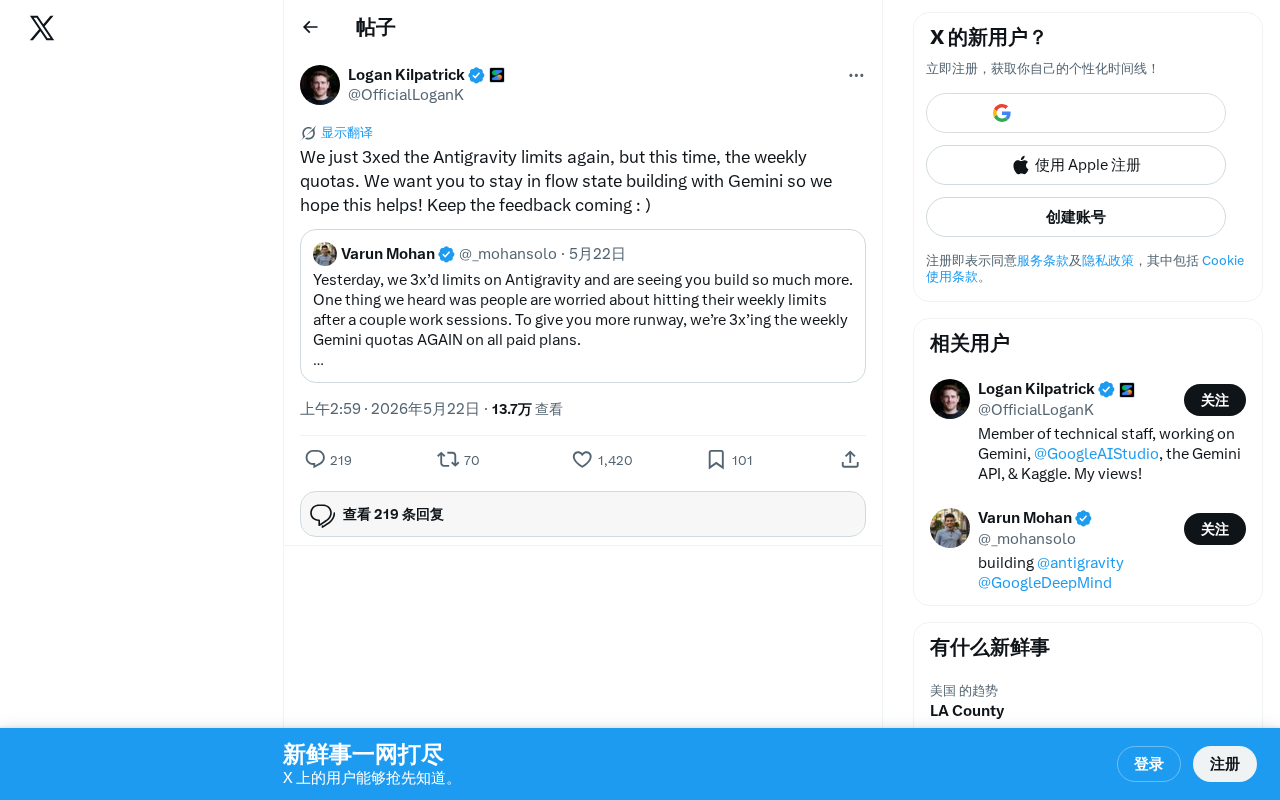
Google Gemini Antigravity Weekly Quota Tripled — AI Coding Without Limits
Google Gemini triples Antigravity weekly quotas following a prior daily quota boost. Analyzing the impact on developers and its strategic significance in AI coding.