Gemini Spark Officially Launches: Google Builds a Cross-Service AI Action Assistant

Google launches Gemini Spark, upgrading AI assistants from conversation to autonomous cross-service task execution
Google has launched Gemini Spark for U.S. AI Ultra subscribers ($249.99/month), an AI Agent capable of autonomously executing tasks across Google's service ecosystem. It marks a critical leap from Q&A assistants to task executors, competing with OpenAI, Anthropic, and Microsoft in the accelerating AI Agent race.
Google recently announced that Gemini Spark is now available to all Google AI Ultra subscribers in the United States. This new AI assistant can not only handle complex tasks but also connect across a user's entire digital ecosystem, automatically taking action at critical moments.
What Is Gemini Spark?
Gemini Spark is an advanced feature within Google's Gemini ecosystem, positioned as an intelligent action assistant capable of working collaboratively across apps and services. Unlike traditional conversational AI, Spark's core strength lies in "connecting" and "executing" — it can discover relationships within a user's digital ecosystem, synthesize information, and take real action where it's needed most.
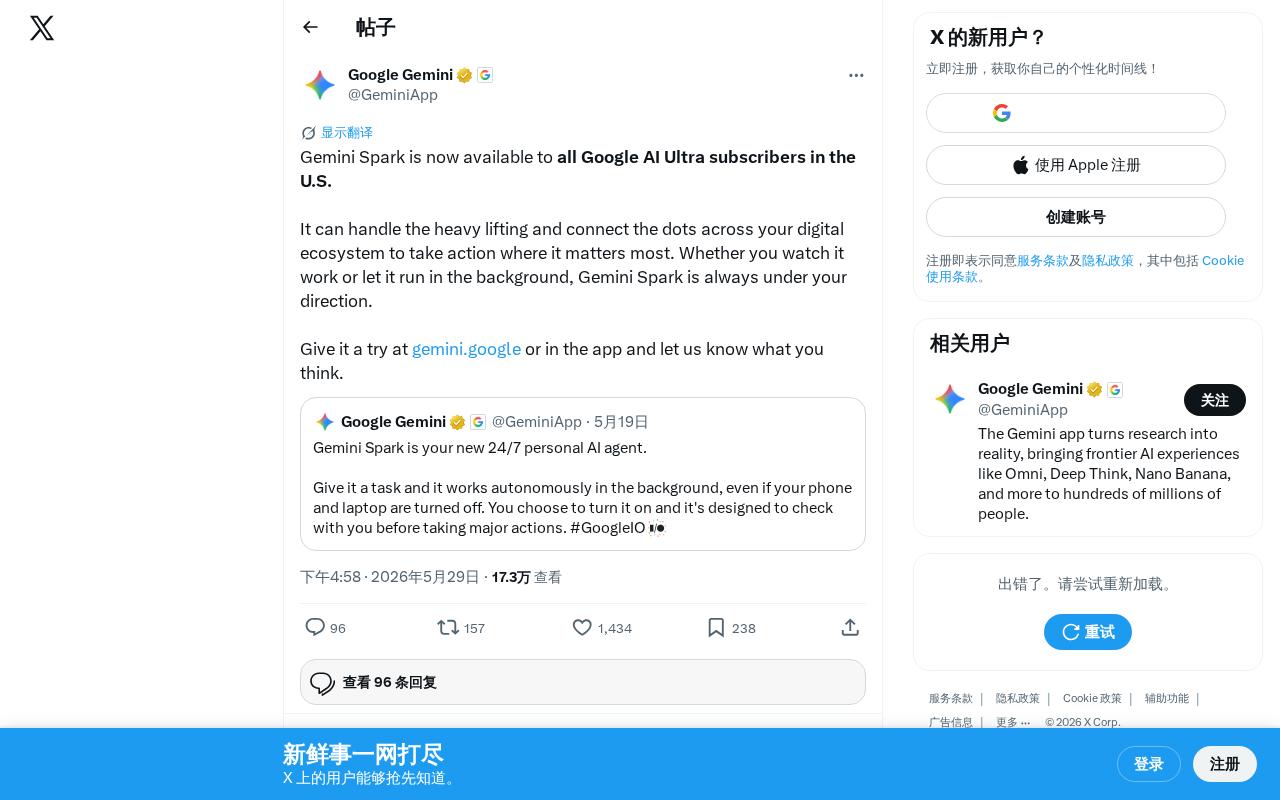
According to Google's official description, Gemini Spark offers two working modes: users can watch its work process in real time, or let it run silently in the background. But regardless of the mode, ultimate control always remains with the user. This design philosophy reflects Google's cautious approach in the AI Agent space — granting AI autonomous action capabilities while ensuring humans always retain final decision-making authority.
Why Gemini Spark Deserves Attention
A Critical Leap from Conversation to Action
The core interaction model of today's mainstream AI assistants (including ChatGPT, Claude, etc.) remains "question-and-answer" — users ask, AI responds. Gemini Spark attempts to take a crucial step forward: transforming from an information provider into a task executor.
To understand the technical significance of this leap, you need to grasp the concept of AI Agents. An AI Agent is an AI system capable of perceiving its environment, autonomously planning, and executing multi-step tasks. What distinguishes it from single-turn Q&A is its three core capability modules: "tool calling," "memory," and "planning." From a technical architecture perspective, modern AI Agents typically use a large language model (LLM) as their reasoning core, combined with Function Calling or Tool Use mechanisms to interact with external systems. Compared to conversational AI that only outputs text suggestions, Agents can call APIs, read and write files, and manipulate interfaces — truly converting "understanding" into "execution." Gemini Spark is precisely the consumer-product realization of this technical paradigm.
The statement about "handling the heavy lifting and connecting the dots across your digital ecosystem" suggests that Spark likely deeply integrates with Google's suite of services — Gmail, Google Calendar, Google Docs, Google Maps, and more. Imagine this scenario: when you receive an email about a meeting change, Spark not only understands the email content but can also automatically update your calendar, notify relevant participants, and even re-plan your travel route.
The AI Agent Race Heats Up
This launch also marks an escalation in the competition among tech giants in the AI Agent space. OpenAI previously launched Operator, Anthropic released its Computer Use feature, and Microsoft has been continuously strengthening automation capabilities within Copilot. With its massive service ecosystem and vast user data, Google holds a natural advantage when it comes to real-world AI Agent deployment scenarios.
Compared to competitors, Google's differentiating advantage lies in its unparalleled breadth of service coverage. From search, email, and productivity tools to maps and payments, Google's products cover virtually every aspect of a user's digital life. If Gemini Spark can truly break down the barriers between these services, its practical value will far exceed that of single-function AI tools.
Current Limitations and Outlook
Limited to U.S. Ultra Subscribers
Currently, Gemini Spark is only available to Google AI Ultra subscribers in the United States. Google AI Ultra is Google's highest-tier paid subscription plan, priced at approximately $249.99 per month — far above the $19.99 monthly fee for Google One AI Premium. This pricing strategy is in the same league as OpenAI's ChatGPT Pro ($200/month) and Anthropic's Claude Max plan, collectively targeting a professional user base willing to pay a significant premium for cutting-edge AI capabilities. For users in other regions worldwide, it remains unclear when this feature will become available. However, the high pricing threshold itself suggests that Google is still in a feature validation phase and does not yet view Spark as a mainstream product for the general public.
Balancing Trust and Safety
Allowing AI to autonomously execute tasks in the background places extremely high demands on user trust. Google emphasizes that Spark "always operates under your guidance," but in practice, defining the boundaries of AI actions, handling authorization confirmations for sensitive operations, and preventing erroneous actions are all issues that need continuous refinement through real-world use.
From an industry practice standpoint, AI Agent safety design typically follows two core principles: the "principle of least privilege" and "Human-in-the-Loop." The former requires that an Agent only obtains the permissions necessary to complete the current task, while the latter mandates user confirmation at high-risk operation points to prevent cascading errors. Gemini Spark's emphasis on "always operating under user guidance" is a product-level expression of the Human-in-the-Loop philosophy. However, finding the right balance between a smooth user experience and the necessary friction of safety confirmations remains a shared challenge across the entire AI Agent industry.
Implications for the Industry
The launch of Gemini Spark once again confirms a trend: AI Agents are becoming the industry's primary battleground. AI is evolving from "eloquent conversationalist" to "capable executor." For developers and enterprises, thinking about how to integrate AI's action capabilities into their own products and workflows is no longer a future consideration — it's an urgent task for today.
Conclusion
Gemini Spark represents Google's latest ambition in the AI assistant space — no longer content with just answering questions, but aiming to become an intelligent executor in users' digital lives. Although currently limited to premium subscribers in the U.S. market, the product philosophy and technical direction behind it deserve attention from the entire industry. As AI Agent technology matures and user acceptance grows, this type of cross-service, autonomously acting AI assistant is likely to become the standard form of next-generation human-computer interaction.
Key Takeaways
- Gemini Spark is now available to all Google AI Ultra subscribers in the U.S., supporting intelligent actions across the digital ecosystem
- Spark offers two working modes — foreground visualization and background silent operation — but users always retain ultimate decision-making control
- The product marks a critical shift from conversational AI assistants to task-executing Agents, powered by the mature LLM + Function Calling technical architecture
- Google holds a unique advantage in AI Agent deployment thanks to its massive service ecosystem (Gmail, Calendar, Docs, etc.)
- The AI Agent race is accelerating, with 2025 shaping up to be a pivotal year for large-scale agent technology deployment
Related articles
 Tech Frontiers
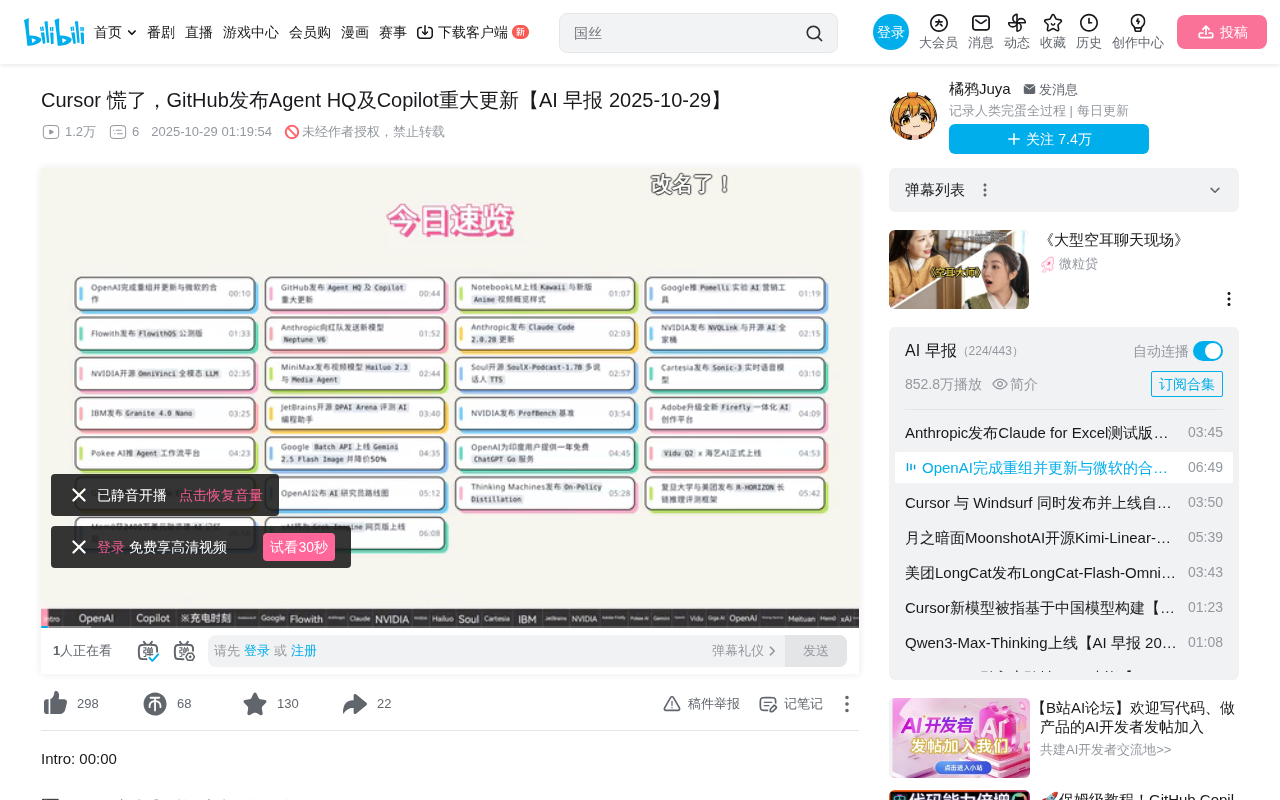
GitHub Agent HQ Launch: AI Coding Tools Enter the Era of Platform Competition
GitHub Universe unveils Agent HQ platform for unified coding agent management, Copilot upgrades with multi-model support. OpenAI completes restructuring, Anthropic tests new model, NVIDIA open-sources AI models.
 Tech Frontiers
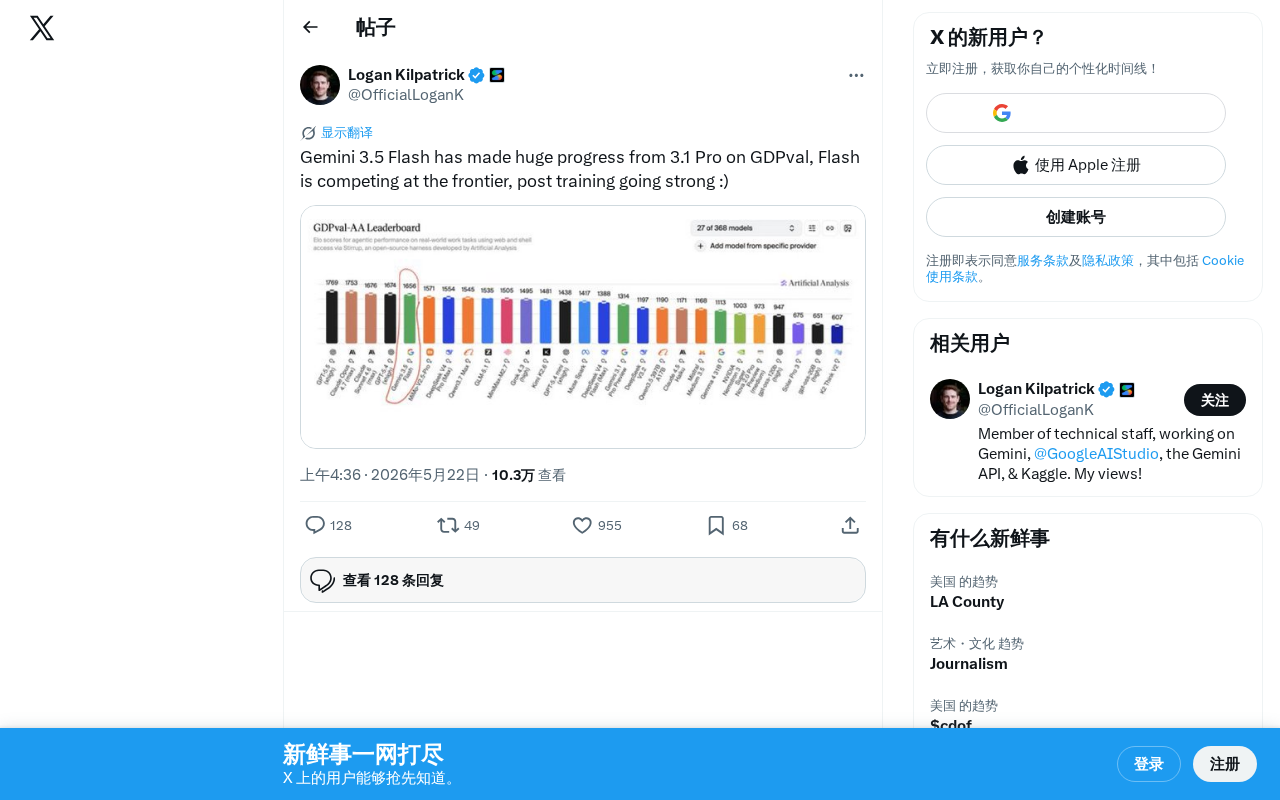
Gemini 3.5 Flash Achieves a Massive Leap on the GDPval Benchmark
Google Gemini 3.5 Flash surpasses Gemini 3.1 Pro on the GDPval benchmark. The lightweight Flash model leverages post-training techniques to approach frontier-level performance, redefining the balance between quality and cost.
 Tech Frontiers
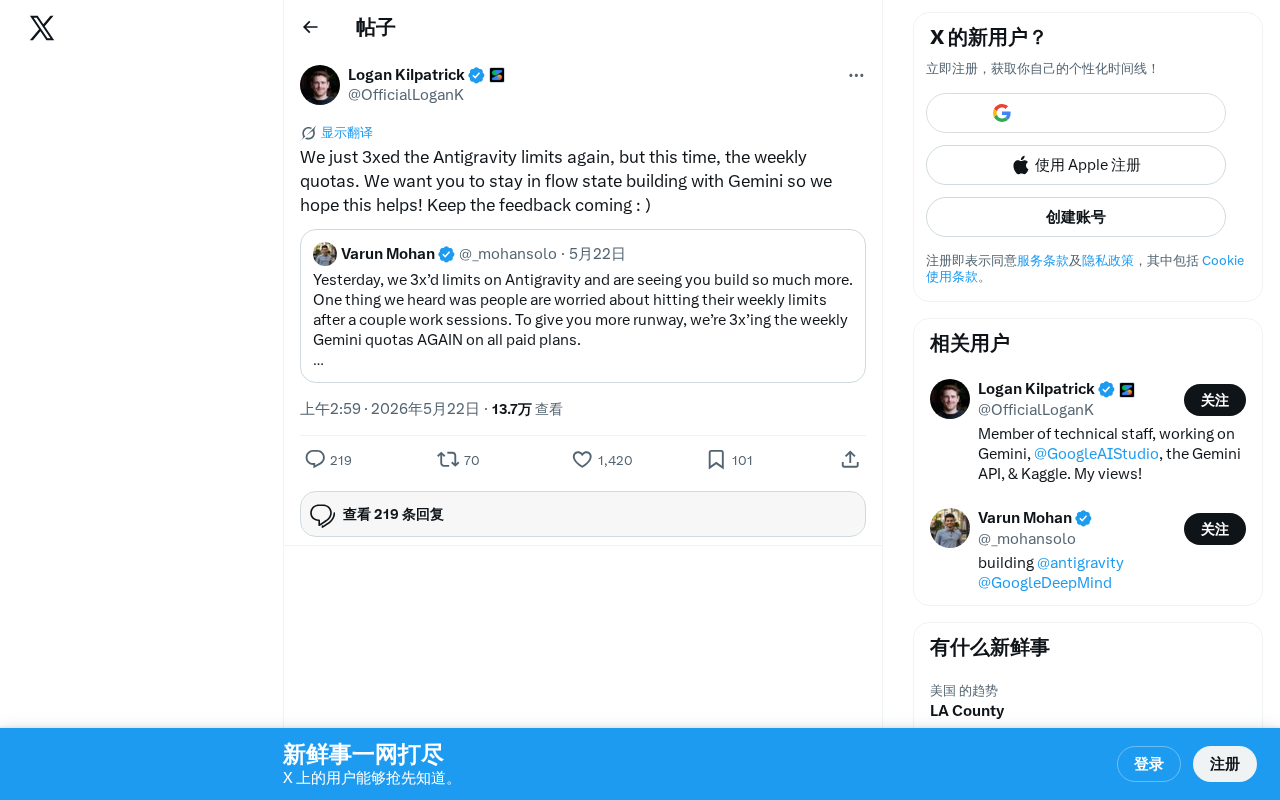
Google Gemini Antigravity Weekly Quota Tripled — AI Coding Without Limits
Google Gemini triples Antigravity weekly quotas following a prior daily quota boost. Analyzing the impact on developers and its strategic significance in AI coding.