Generic Agent: A Self-Evolving AI Agent Built with Just 3,000 Lines of Code
Generic Agent: A Self-Evolving AI Agen…
Generic Agent's 3,000-line self-evolving AI agent outperforms mature 530K-line frameworks.
Generic Agent achieves continuous capability growth with just 3,000 lines of core code and 9 atomic tools through a self-evolution mechanism, outperforming mature frameworks with 530,000 lines of code across multiple benchmarks. Its core design includes skill crystallization (automatically storing completed tasks as reusable skills), a five-layer memory architecture (supporting persistent cross-session memory), and extreme token efficiency (just one-sixth of competitors), proving the "less is more" design philosophy in the AI Agent space.
Core Philosophy: Capabilities Aren't Stacked — They're Grown
A counterintuitive phenomenon is unfolding in the AI agent space: Generic Agent, with a core codebase of just 3,000 lines, has outperformed mature frameworks like OpenClaw — which boasts 530,000 lines of code — across multiple benchmarks. It's more resource-efficient, more stable, and here's the kicker — it writes its own new skills and gets stronger the more you use it.
In software engineering, the relationship between code volume and system capability has never been linear. Mature Agent frameworks like OpenClaw accumulate 530,000 lines of code largely due to the inertia of "defensive programming" — pre-writing handling logic for every possible scenario and developing separate adapters for every tool category. This "cathedral-style" approach can cover requirements quickly in the early stages, but as the codebase bloats, maintenance costs grow exponentially, and introducing new features often requires understanding and maintaining compatibility with vast amounts of legacy logic. Generic Agent's 3,000-line core represents a different philosophy: retain only the irreducible primitives and defer complexity to runtime, where the AI resolves it autonomously.
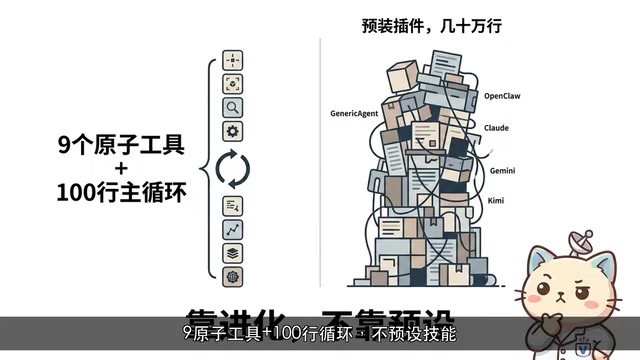
The design philosophy behind this stands in stark contrast to mainstream Agent frameworks. While most frameworks are busy stacking features through plugins and trading code volume for coverage, Generic Agent chose a minimalist path: 9 atomic tools + roughly 100 lines of main loop, no preset skills whatsoever — all capabilities emerge through self-evolution during actual use.
The design inspiration for the "9 atomic tools" is directly aligned with the "minimal instruction set" concept in computer science. Just as RISC architecture uses a small set of streamlined instructions that combine to perform complex computations, Generic Agent's atomic tools (browser, terminal, file system, keyboard/mouse, screen vision, ADB, etc.) cover the fundamental dimensions of computer interaction. In theory, any complex task can be decomposed into sequential combinations of these atomic operations. The key breakthrough is this: previously, human programmers were needed to perform this "decomposition and composition," but now large language models possess sufficient reasoning capability to do it autonomously. This is what made the "few tools + strong reasoning" approach practically viable only after 2024.
Self-Evolution Mechanism: From Clumsy to Proficient
Skill Crystallization: Struggle Once, Benefit Forever
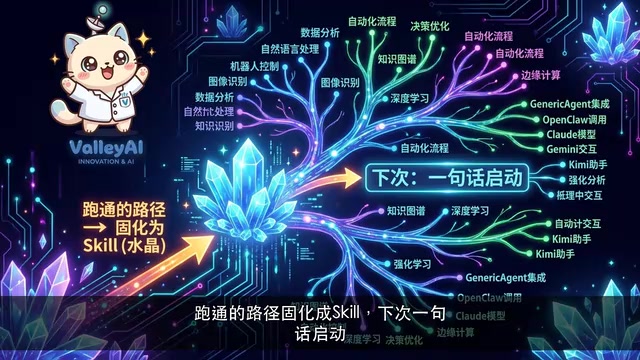
Generic Agent's most defining feature is "self-evolution." Let's illustrate with a concrete scenario:
The first time you ask it to monitor stocks, it needs to install dependencies on its own, write scripts, and debug iteratively — the whole process can be quite tortuous. But here's the crucial part — the successful path gets crystallized into a skill and stored. The next time the same request comes up, a single sentence launches it, no repeated struggle required.
The more tasks it completes, the richer its accumulated skill library becomes. This isn't simple caching or template reuse — it's genuine experience accumulation and capability growth.
Generic Agent's skill crystallization mechanism is closely related to academic research in "Program Synthesis" and "Few-shot Learning." When the Agent completes a task for the first time, it has essentially performed a synthesis from natural language requirements to an executable program. Persisting the artifacts of this process (debugged scripts, parameter configurations, execution paths) is fundamentally building a "program library" driven by actual usage. This is similar to the "skill library" concept proposed by DeepMind in Voyager (a Minecraft AI Agent), but Generic Agent applies it to real computer environments, which is far more challenging — real-world website structures, API interfaces, and system environments are vastly more complex and variable than game sandboxes.
Five-Layer Memory Architecture: Persistent Memory Across Sessions
Generic Agent employs a five-layer memory structure from L0 to L4 to manage knowledge and skills. The core advantage of this layered design is: no forgetting across sessions. Skills learned today can be used tomorrow, enabling truly continuous capability accumulation.
This architecture draws from cognitive science's layered models of human memory systems. Human memory is divided into sensory memory, working memory, short-term memory, long-term memory, and other layers, each with different trade-offs in capacity, persistence, and retrieval speed. AI Agent memory architecture faces similar engineering trade-offs: L0 typically corresponds to immediate information within the current context window (analogous to working memory), while L4 corresponds to highly abstracted and compressed long-term skill knowledge. The core technical challenge of cross-session persistence lies in "memory retrieval" — when a task arrives, how to quickly locate the most relevant experience from a vast historical skill library. This is typically achieved through vector databases and semantic similarity search.
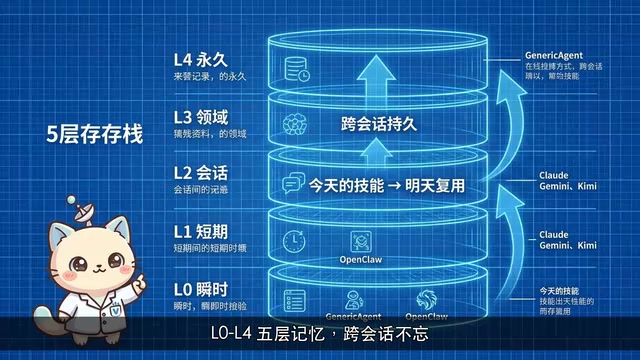
This stands in sharp contrast to most AI Agent frameworks, which typically start from scratch with each new session, unable to leverage historical experience.
Comprehensive Capabilities Under a Minimalist Architecture
What Can 3,000 Lines of Code Do?
Don't be fooled by the code volume — Generic Agent's capabilities are remarkably comprehensive:
- Browser control: Injects into real browsers, preserving login states
- Terminal operations: Directly executes command-line tasks
- File system: Reads, writes, and manages local files
- Keyboard/mouse input: Simulates human operations
- Screen vision: Understands screen content
- Mobile devices: Controls phones via ADB
Essentially, anything your computer can do, it can reach.
Real Browser Injection: A Smart Design Decision
The browser injection strategy deserves special attention. The browser automation field has long debated two technical approaches: sandbox solutions (like launching isolated browser instances with Playwright or Puppeteer) offer the advantage of environment isolation and security, but the cost is needing to re-establish session state for every task. When facing websites that require login, they're often helpless or require additional credential management systems. Real browser injection (connecting to the user's already-running browser via Chrome DevTools Protocol) directly inherits the user's complete session state — including cookies, LocalStorage, logged-in accounts, and more.
Unlike sandbox approaches, Generic Agent injects directly into the user's real browser environment, preserving existing login states and cookies. This means it doesn't need to re-login to various websites each time — all necessary context is already in place. This approach demands a higher level of trust regarding privacy and security, but it's far superior in practicality, making it especially suitable for personal assistant scenarios. Generic Agent's choice here reflects a clear "practicality-first" value orientation.
Token Efficiency: Just One-Sixth of Competitors
In LLM applications, token consumption directly correlates with usage cost and response speed. Token consumption plays a role similar to "fuel efficiency" in LLM applications, directly determining a product's commercial viability. Taking GPT-4o as an example, input tokens cost approximately $0.005 per thousand tokens. An Agent task consuming a 200K-token context costs $1 in context alone. Running dozens of tasks daily, monthly costs can easily exceed several hundred dollars. Generic Agent's performance in this regard is nothing short of impressive:
- Context window under 30K tokens, while many Agents routinely start at 200K+
- For the same tasks, token consumption is just one-sixth of competitors
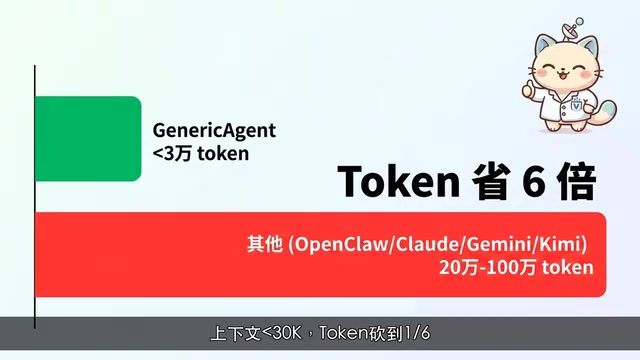
Generic Agent compresses context to under 30K tokens through a carefully designed "context compression strategy" — retaining only the memory fragments most relevant to the current task rather than stuffing all historical information into the context. This "load-on-demand" memory mechanism shares the same design philosophy as database indexing. Saving tokens means saving money, and it also means faster response times. As the skill library matures, the Agent can directly invoke verified skills instead of re-reasoning, further compressing token consumption and creating a positive flywheel.
Across multiple benchmarks including SWEBench and Lifelong Agent Bench, Generic Agent reportedly leads comprehensively in tool usage efficiency, token consumption, and request count. SWEBench (Software Engineering Benchmark) is one of the most authoritative evaluation benchmarks in the AI Agent field, released by Princeton University in 2023. It extracts tasks from real GitHub issues, requiring Agents to locate bugs in actual code repositories, write fix code, and pass tests — all without human intervention. Lifelong Agent Bench focuses on evaluating Agent performance in continuous multi-task scenarios, with particular attention to knowledge accumulation and transfer capabilities, which aligns closely with Generic Agent's self-evolution design philosophy. More critically, tests show that after multiple consecutive rounds of execution, it converges to a stable low-cost state — this is precisely the dividend of the self-evolution mechanism.
Generic Agent currently supports mainstream LLMs including Claude, Gemini, and Qwen, with good compatibility.
A Sober Assessment: Opportunities and Challenges of the Minimalist Approach
Generic Agent raises a thought-provoking question: Must an AI agent's capabilities be built by piling on code and plugins?
Its self-evolution approach is genuinely elegant — using minimal presets and growing capabilities through actual use. This approach has several clear advantages:
- Low maintenance cost: Maintaining 3,000 lines of code is far easier than 530,000
- Strong adaptability: Not dependent on preset skills, theoretically adaptable to any new scenario
- Controllable costs: Token consumption continuously decreases as skills accumulate
But potential challenges must also be acknowledged:
- What's the success rate and efficiency when executing a new task for the first time?
- How are management and conflict issues resolved as the skill library grows?
- Is a minimalist architecture robust enough for complex enterprise scenarios?
As the original author put it, "Whether it can truly beat mature frameworks — we need to let the dust settle." But regardless of the final outcome, Generic Agent has proven at least one thing: in AI Agent design, less is more is not just an empty slogan — self-evolution may be a more vital path than feature stacking.
Key Takeaways
- Generic Agent uses just 3,000 lines of core code and 9 atomic tools, achieving capability growth through self-evolution without preset skills
- Employs a five-layer memory architecture (L0–L4), inspired by cognitive science's layered memory models, supporting cross-session skill accumulation and persistent memory
- Token consumption is just one-sixth of competitors, with a context window under 30K tokens, dramatically reducing usage costs
- Capabilities span browser, terminal, file system, keyboard/mouse, screen vision, and mobile device control, with real browser injection preserving login states
- Demonstrates strong performance on benchmarks like SWEBench, proposing a new AI Agent paradigm: "capabilities are grown, not stacked"
Related articles
 Tech Frontiers
GitHub Agent HQ Launch: AI Coding Tools Enter the Era of Platform Competition
GitHub Universe unveils Agent HQ platform for unified coding agent management, Copilot upgrades with multi-model support. OpenAI completes restructuring, Anthropic tests new model, NVIDIA open-sources AI models.
 Tech Frontiers
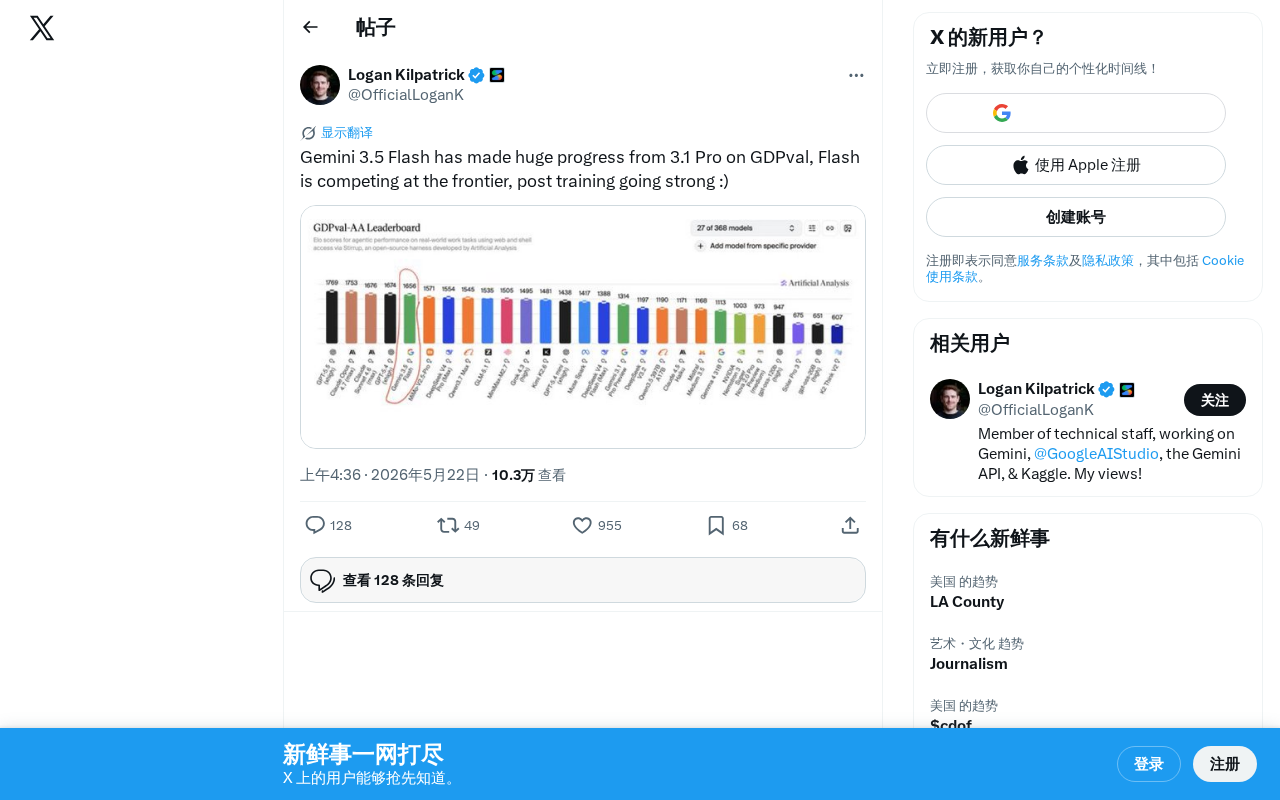
Gemini 3.5 Flash Achieves a Massive Leap on the GDPval Benchmark
Google Gemini 3.5 Flash surpasses Gemini 3.1 Pro on the GDPval benchmark. The lightweight Flash model leverages post-training techniques to approach frontier-level performance, redefining the balance between quality and cost.
 Tech Frontiers
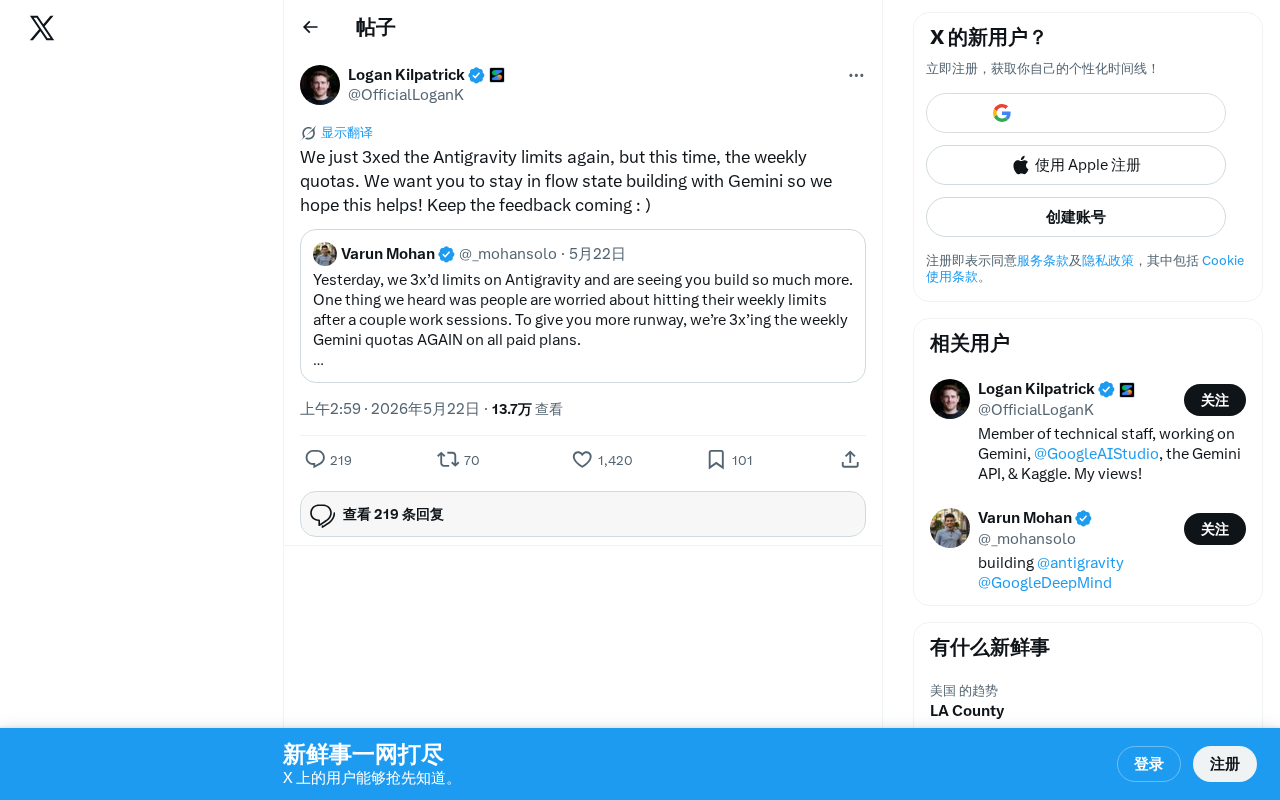
Google Gemini Antigravity Weekly Quota Tripled — AI Coding Without Limits
Google Gemini triples Antigravity weekly quotas following a prior daily quota boost. Analyzing the impact on developers and its strategic significance in AI coding.