Getting Started with Spring AI Alibaba: Best Practices for Java Developers to Integrate LLMs
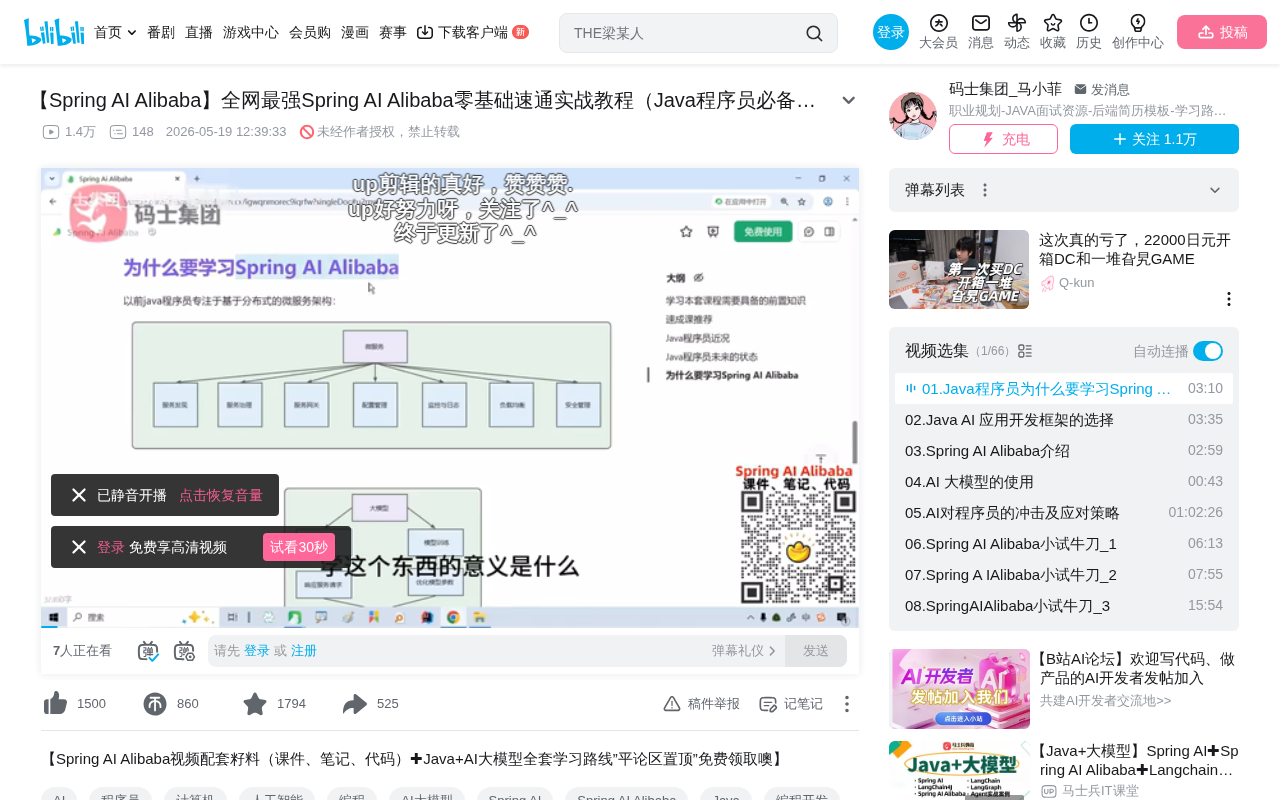
Spring AI Alibaba is an enterprise bridge framework connecting Java microservices with large language models
Spring AI Alibaba is Alibaba's enhanced framework built on Spring AI, designed to solve the integration challenge between Java microservices architecture and LLM capabilities. Similar to how JDBC bridges Java and databases, it provides unified API abstractions that let Java developers call LLM capabilities without deep AI expertise, while offering native support for China's ecosystem (Qwen models, Alibaba Cloud Bailian platform) — making it an essential skill for Java developers in the AI era.
Why Should Java Developers Learn Spring AI Alibaba?
With the explosive growth of large model technology, a practical question faces every Java developer: How do you integrate LLM capabilities into your existing Java microservices architecture? Spring AI Alibaba is an enterprise-grade framework built specifically to solve this problem.
Java Microservices and LLMs: The Need to Merge Two Independent Worlds
The Traditional Technical Domain of Java Microservices
As Java developers, our past tech stacks have primarily revolved around distributed microservices architecture — Redis, MySQL, Spring Cloud, Spring Cloud Alibaba, and similar technologies form the core of our daily work. This ecosystem has matured over many years and effectively supports enterprise application development and deployment.
Specifically, Spring Cloud provides distributed system infrastructure such as service registration and discovery (Eureka/Consul), load balancing (Ribbon), circuit breakers (Hystrix/Resilience4j), and API gateways (Gateway). Spring Cloud Alibaba builds on this by integrating Alibaba's open-source middleware, including Nacos (service registration and configuration center), Sentinel (traffic control and circuit breaking), and Seata (distributed transactions). This ecosystem has been battle-tested through Double 11 and other ultra-large-scale traffic scenarios, making it the de facto standard for enterprise Java applications in China.
The Exclusive Technical Domain of LLM Engineers
LLM engineers, on the other hand, focus on an entirely different tech stack: model training, parameter tuning, model deployment, inference optimization, and more. This is a technical world dominated by Python and centered around deep learning frameworks.
The LLM (Large Language Model) tech stack revolves around deep learning frameworks like PyTorch and TensorFlow, involving training techniques such as pre-training, fine-tuning, and RLHF (Reinforcement Learning from Human Feedback), as well as deployment optimization techniques like quantization, distillation, and vLLM inference acceleration. Models are typically deployed and exposed via RESTful APIs or gRPC interfaces — this is also the technical foundation that enables Java applications to call LLM capabilities, communicating with model inference services over HTTP.
These two domains may seem completely separate, but real enterprise needs demand they work together. When you want to empower traditional Java microservices with LLMs, you need a bridge connecting the two.
Understanding Spring AI Alibaba's Positioning Through a JDBC Analogy
An Elegant Analogy
Looking back at Java's history, we find that similar integration needs have appeared before. Java and MySQL are also two completely independent technology systems, but through JDBC (Java Database Connectivity), we successfully accessed and manipulated databases from Java programs. Later, frameworks like MyBatis and JPA further simplified this process, but at their core, they are all bridges connecting two independent technology systems.
JDBC, as the standard API specification for Java to access relational databases, defines a unified set of interfaces (such as Connection, Statement, ResultSet), while specific database vendors (MySQL, Oracle, PostgreSQL) provide their own JDBC driver implementations. This "interface-oriented programming" design philosophy decouples application code from specific database implementations. Spring AI Alibaba adopts exactly the same design philosophy — it defines unified abstract interfaces like ChatModel and EmbeddingModel, with the underlying layer connecting to different LLM providers (Qwen, GPT, ERNIE Bot, etc.), achieving decoupling between business code and specific models.
Spring AI Alibaba's Role in the Java AI Ecosystem
Spring AI Alibaba plays a role similar to JDBC — it serves as the bridge and link between Java applications and large models. Through this framework, Java developers can call LLM capabilities within the familiar Spring ecosystem without needing to deeply understand the complex underlying implementations of large models.
Currently, there are three mainstream Java AI development frameworks to choose from:
- LangChain for Java (LangChain4j): The Java implementation of the LangChain ecosystem. LangChain was originally the most popular LLM application development framework in the Python ecosystem, created by Harrison Chase in 2022, providing core abstractions like Chains, Agents, and Retrieval-Augmented Generation (RAG). LangChain4j is the Java community's port, retaining LangChain's core design philosophy while adapting to Java's programming paradigms and ecosystem characteristics. Its advantage lies in conceptual consistency with the LangChain ecosystem, making it easy for developers to transfer experience between Python and Java.
- Spring AI: The official AI development framework from the Spring team
- Spring AI Alibaba: Alibaba's enhanced version based on Spring AI, providing better support for domestic LLMs (such as Qwen)
All three share the same general direction: helping Java developers quickly integrate LLM capabilities.
The Practical Value of Learning Spring AI Alibaba
Essential Skills for Enterprise AI Application Development
From a practical perspective, Spring AI Alibaba's value is reflected in the following aspects:
- Lowering the barrier to LLM integration: Java developers can integrate LLM capabilities into existing projects without transforming into AI engineers
- Unified tech stack: Built on the Spring ecosystem, it integrates seamlessly with existing Spring Boot/Cloud projects
- Domestic ecosystem adaptation: Provides native support for Alibaba Cloud Bailian platform and the Qwen model series, making it more suitable for Chinese enterprises. Alibaba Cloud Bailian is Alibaba's one-stop large model development and service platform, offering full-lifecycle capabilities for model training, fine-tuning, evaluation, and deployment. The Qwen model family includes Qwen (general language model), Tongyi Wanxiang (image generation), Tongyi Tingwu (speech understanding), and other multimodal models. The Qwen series has open-sourced multiple versions (Qwen-7B to Qwen-72B) and has performed excellently on multiple international benchmarks. Spring AI Alibaba's deep integration with the Bailian platform means developers can call these model APIs through simple configuration, including chat completion, text embedding, function calling, and more.
- Standardized development patterns: Provides unified API abstractions so that even if the underlying model changes, business code remains unaffected. This is one of Spring AI Alibaba's most important architectural designs — in real enterprise applications, LLM selection may change frequently due to cost, performance, or compliance factors. If business code is directly coupled to a specific model's SDK, every switch means extensive code changes. Spring AI Alibaba provides standardized interfaces like ChatClient, Prompt, and ChatResponse, abstracting model calls into a programming experience similar to Spring Data Repository. Developers only need to modify the model provider parameters in configuration files to seamlessly switch between different models, which is crucial for the maintainability and flexibility of enterprise applications.
Summary
Spring AI Alibaba is essentially an enterprise-grade Java AI application development framework. Its core mission is to bridge the gap between Java microservices and large models, enabling traditional Java applications to conveniently gain AI capabilities. For Java developers who want to stay competitive in the AI era, mastering such frameworks has shifted from a "nice-to-have" to a "must-have" skill.
Whether you choose Spring AI Alibaba, Spring AI, or LangChain4j, the key is understanding their essential positioning as "middleware" — they don't require you to become an AI expert, but rather let you embrace AI capabilities in a familiar way.
Related articles
 Tutorials
Cursor + Codex Dual-IDE Collaboration: A Practical Methodology for Open-Source Project Customization
A complete methodology for open-source project customization based on real-world experience, detailing the Cursor+Codex dual-IDE workflow, seven-stage process, MVP validation, and AI source code reading techniques.
 Tutorials
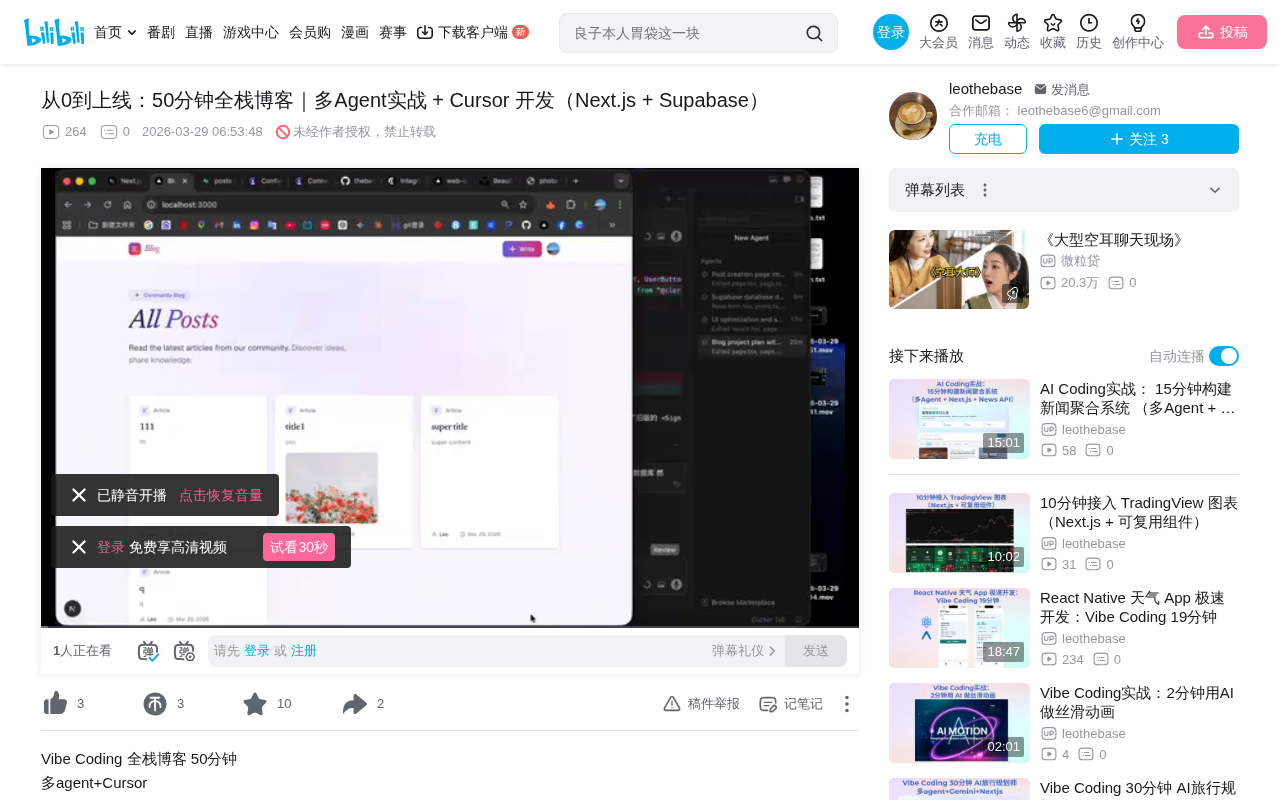
Cursor Multi-Agent in Practice: Building a Full-Stack Next.js Blog in 50 Minutes
Build a full-stack blog in 50 minutes using Cursor IDE's multi-Agent mode with Next.js, Clerk auth, and Supabase. Learn the 4-phase AI Agent workflow and key integration pitfalls.
 Tutorials
Building an AI Software Factory from Scratch: A Cursor Engineer's Hands-On Experience with Multi-Agent Collaboration
Cursor engineer Eric shares practical insights on building an AI software factory: automation levels, guardrail design, parallel Agent management, and scaling to 1000+ Agents for 24/7 development.