Google AI Studio Now Directly Connects to Gmail/Drive/Sheets for One-Stop AI App Development

Google AI Studio can now build AI apps directly connected to Gmail, Drive, and other Google services
Google AI Studio released a major update allowing users to build AI apps connected to Gmail, Google Drive, and Google Sheets directly within the platform, eliminating the need to navigate elsewhere for complex OAuth configuration. New built-in tester management is available, with public sharing coming soon. This elevates AI Studio from a model debugging tool to a full-lifecycle app development platform, accelerating the deep integration of Google's AI capabilities with the Workspace ecosystem.
Core Update: Build Apps Connected to Google Services Directly Within AI Studio
The Google AI Studio team just released a major update: users can now build applications that connect to Gmail, Google Drive, Google Sheets, and other Google services directly within AI Studio—no need to navigate to other websites.
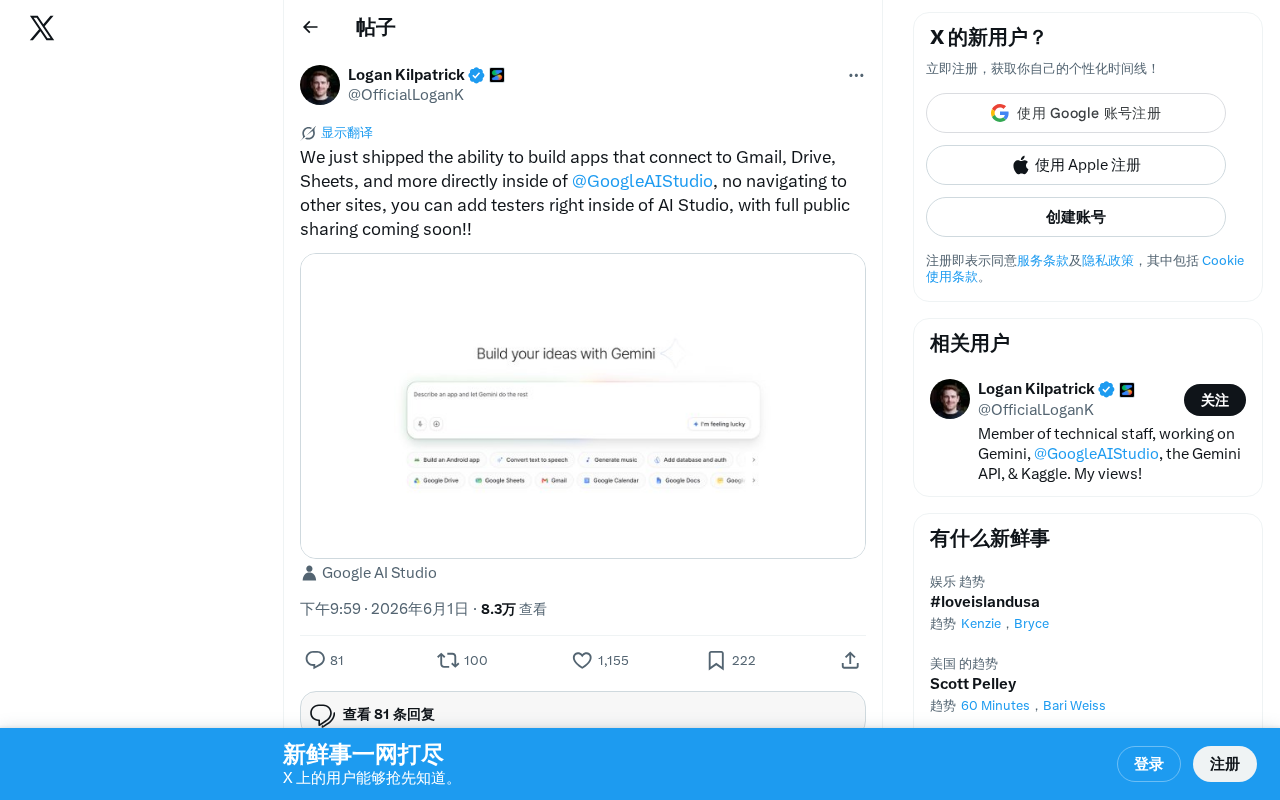
Feature Highlights
One-Stop Development Experience
The biggest highlight of this update is the "one-stop" experience. Previously, if developers wanted to build an AI application that could read Gmail messages, manipulate Google Drive files, or edit Google Sheets spreadsheets, they typically had to switch between multiple platforms—configuring OAuth authentication, setting up API permissions, managing service accounts, and other steps that often involved multiple backends like Google Cloud Console.
To understand the significance of this improvement, you need to appreciate the complexity of the traditional workflow. OAuth 2.0 is currently the most widely used authorization framework on the internet, allowing third-party applications to access user data on other services with user consent without exposing passwords. In the Google ecosystem, any application wanting to access user Gmail, Drive, or other data must go through the OAuth authentication flow. Traditionally, developers needed to create projects in Google Cloud Console, configure OAuth consent screens, set up redirect URIs, request API scopes, manage client secrets, and complete a series of other steps. For non-specialist backend developers, this process was often time-consuming and error-prone, especially when dealing with token refresh and scope review processes.
Now, all of this can be done within Google AI Studio. Developers can more rapidly prototype and build intelligent applications based on Gemini models while leveraging the rich data sources within the Google ecosystem. It's worth noting that Google AI Studio (formerly MakerSuite) was originally launched as an experimental interactive interface for Gemini models, primarily used by developers to test prompts, debug model outputs, and obtain API keys—positioned similarly to OpenAI's Playground. But with continuous feature expansion—from supporting multimodal inputs and structured outputs to now integrating Google services—AI Studio is transforming from a simple model debugging tool into a complete application development platform. This evolution path aligns with Google's consistent product strategy: attract developers with low-barrier tools first, then gradually expand into an ecosystem platform.
Built-in Tester Management
Another noteworthy feature is the built-in tester management system. Developers can add testers directly within AI Studio, allowing team members or early users to quickly experience the application without needing additional deployment or complex permission system configuration. This significantly reduces friction from development to testing.
Public Sharing Coming Soon
According to official announcements, full public sharing functionality is coming soon. In the future, AI applications built by users won't just be available for internal testing—they can be published directly to the public. This will further evolve Google AI Studio from a development experimentation tool into a complete AI application publishing platform.
Practical Implications for Developers
Lowering the Barrier to AI App Development
The strategic significance of this update is that Google is building AI Studio into a low-barrier AI application development platform. Through native integration with Google Workspace services, developers can quickly build applications such as:
- Smart Email Assistants: Connect to Gmail to automatically categorize, summarize, or reply to emails
- Intelligent Document Processing: Connect to Drive for AI-powered file analysis and organization
- Automated Data Workflows: Connect to Sheets for intelligent data entry and analysis
These scenarios previously required significant engineering effort but can now potentially be achieved within AI Studio with simple configuration and prompt engineering. The key insight here is that Prompt Engineering is substantively replacing traditional programming logic—developers don't need to write complex code to define business rules but instead specify AI application behavior through natural language descriptions. For example, the core logic of a smart email assistant might simply be a carefully designed system prompt that defines classification rules, summary formats, and reply tone. This paradigm shift enables non-programmers to build functional AI applications, dramatically expanding the pool of AI application developers.
Accelerating the Google Ecosystem Closed Loop
From a broader perspective, this is another move by Google to deeply integrate AI capabilities with its massive Workspace ecosystem. Compared to other AI platforms, one of Google's greatest differentiating advantages is owning productivity tools like Gmail, Drive, Sheets, and Calendar that serve billions of users. Embedding these services' APIs directly into the AI development platform, allowing developers to leverage these data sources at minimal cost, is Google's unique play in AI platform competition.
Placed in the context of current AI platform competition, the strategic significance of this move becomes even clearer. Competition has shifted from pure model capability comparisons to ecosystem integration battles. OpenAI is building through ChatGPT plugins and the GPTs ecosystem, Microsoft through deep integration of Copilot Studio with Microsoft 365, and Anthropic through the MCP (Model Context Protocol) for tool connectivity—everyone is trying to enable AI models to reach more real-world data and services. Google's unique advantage lies in owning the world's largest productivity tool suite—Gmail has over 1.8 billion users, Google Drive is a mainstream choice for enterprise cloud storage, and Google Sheets is the go-to tool for lightweight data management. Embedding native access to these services directly into the AI development platform means developers can immediately gain access to massive amounts of real data—a structural advantage that other AI platforms find difficult to replicate.
Outlook
With public sharing functionality coming soon, Google AI Studio is poised to become a full-lifecycle AI application platform spanning development, testing, and publishing. For developers looking to quickly build AI applications based on Google services, this is a tool evolution worth watching closely.
Key Takeaways
- Google AI Studio adds the ability to build apps directly connected to Gmail, Drive, Sheets, and other Google services
- Developers can complete app development entirely within AI Studio without navigating to other websites
- Built-in tester management allows adding testers to experience apps directly
- Full public sharing functionality is coming soon, evolving AI Studio into an app publishing platform
- This move accelerates the deep integration of Google's AI capabilities with the Workspace ecosystem
Related articles
 Tech Frontiers
GitHub Agent HQ Launch: AI Coding Tools Enter the Era of Platform Competition
GitHub Universe unveils Agent HQ platform for unified coding agent management, Copilot upgrades with multi-model support. OpenAI completes restructuring, Anthropic tests new model, NVIDIA open-sources AI models.
 Tech Frontiers
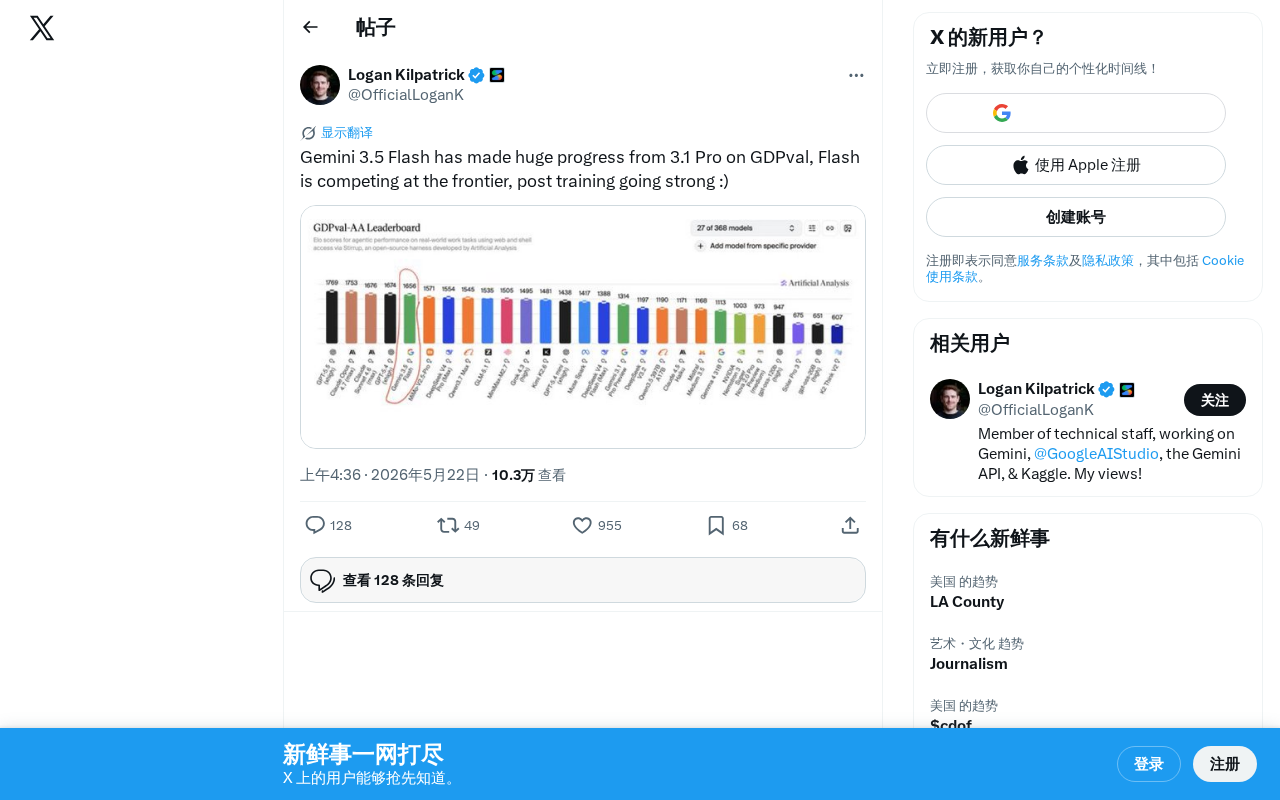
Gemini 3.5 Flash Achieves a Massive Leap on the GDPval Benchmark
Google Gemini 3.5 Flash surpasses Gemini 3.1 Pro on the GDPval benchmark. The lightweight Flash model leverages post-training techniques to approach frontier-level performance, redefining the balance between quality and cost.
 Tech Frontiers
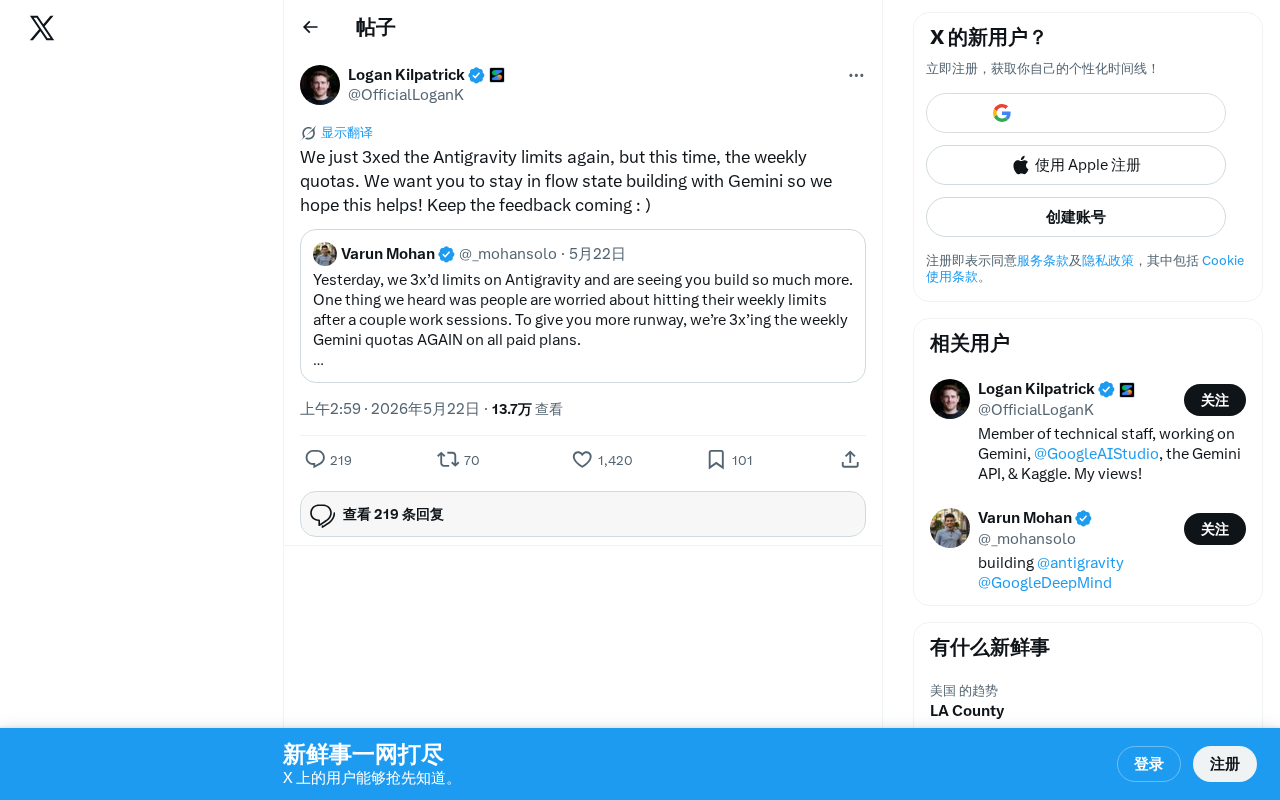
Google Gemini Antigravity Weekly Quota Tripled — AI Coding Without Limits
Google Gemini triples Antigravity weekly quotas following a prior daily quota boost. Analyzing the impact on developers and its strategic significance in AI coding.