Google AI Studio Builds Android Apps for Free: 250K in One Week, 99% of Creators Have Zero Coding Experience
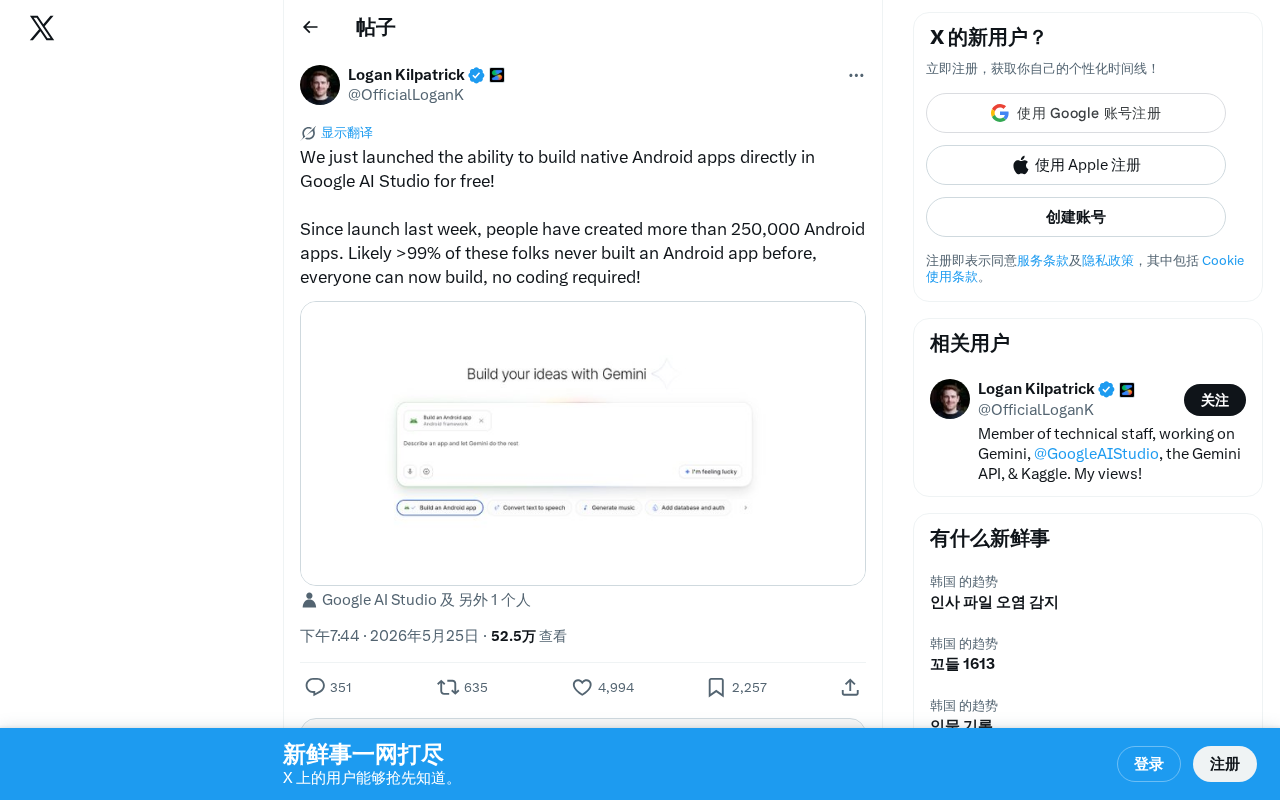
Google AI Studio enables free zero-code native Android app building, with 250K apps created in one week.
Google AI Studio launched a free native Android app building feature that saw over 250,000 apps created within one week, with 99%+ of creators having no prior Android development experience. Powered by the Gemini large model, the feature generates genuine native apps from natural language descriptions rather than web wrappers. This represents Google's strategic move to expand the Android ecosystem, showcase Gemini's capabilities, and capture the AI development tools market — marking a shift from app development as a technical privilege to a universal capability.
The Zero-Code Era Has Arrived: Google AI Studio Opens Native Android App Building
Google recently announced a major feature update — users can now build native Android apps directly in Google AI Studio for free. Within just one week of launch, over 250,000 Android apps have been created, with the vast majority of creators (estimated by Google at over 99%) having never developed an Android app before.
This means the barrier to app development is being completely shattered by AI — no programming experience needed, anyone can build their own mobile app.
250,000 Apps in One Week: A Milestone for Technology Democratization
What the Staggering Growth Numbers Tell Us
The creation of 250,000 apps in a single week is an extraordinarily compelling figure on its own. Traditional Android development requires mastering Kotlin or Java programming languages, understanding the Android SDK, familiarity with the Android Studio IDE, and a whole stack of technologies — a learning curve typically measured in months or even years. The traditional Android development tech stack is quite extensive — Kotlin became Google's officially recommended primary language for Android in 2019, with Java having dominated for years before that; the Android SDK contains thousands of API interfaces covering UI components, network communication, data storage, sensor access, and much more; Android Studio itself is built on JetBrains' IntelliJ IDEA and is a complex tool requiring dedicated study. Beyond that, developers need to understand the Gradle build system, Activity lifecycles, Fragment management, Jetpack component libraries, and other concepts — a beginner Android developer typically needs 3-6 months of systematic study before they can independently complete a fully functional app. Google AI Studio compresses all of this into a conversational interaction — users simply describe the desired app functionality in natural language, and the AI automatically generates a runnable native Android app.
Even more noteworthy is the "99% have never built an Android app" statistic. This indicates that Google AI Studio is attracting not existing developer communities, but large numbers of ordinary users who were previously locked out by technical barriers — perhaps product managers with creative ideas, teachers wanting to build educational tools, or everyday people hoping to solve specific problems.
These Are Native Apps, Not Simple Web Wrappers
Google specifically emphasized the term "native Android apps." This means the generated apps are not simple WebView-wrapped applications, but genuine native Android apps capable of fully leveraging device hardware capabilities, system APIs, and the various features of the Android ecosystem.
Understanding this requires knowledge of the three main technical approaches to mobile app development: native development, hybrid development, and cross-platform development. Native apps are written directly using the platform's SDK and programming languages, enabling direct access to device cameras, GPS, gyroscopes, NFC, and other hardware capabilities, while benefiting from system-level performance optimization and smooth 60fps rendering. WebView-wrapped apps are essentially web pages embedded in an app shell — while development costs are low, they have clear shortcomings in performance, offline capability, and system integration. Cross-platform frameworks like React Native and Flutter attempt to strike a balance between the two, but still cannot fully replace native development's advantages in performance-sensitive scenarios. Google's emphasis on the "native" characteristic means the AI-generated code compiles directly into Android executables rather than being simple web technology packaging.
Native apps are far superior to hybrid solutions in performance, user experience, and system integration, giving AI Studio-generated apps genuine practical value.
Google AI Studio's Profound Impact on the Developer Ecosystem
The "ChatGPT Moment" for App Development
If ChatGPT enabled everyone to write articles, then this Google AI Studio update may well be the "ChatGPT moment" for app development. When the cost of building an app drops from weeks of development time to a few minutes of natural language description, the entire software industry's supply-side logic undergoes a fundamental shift.
The core engine powering this capability is Google's Gemini series of large models. Gemini, developed by Google DeepMind, is a multimodal AI model capable of understanding and generating text, code, images, audio, and video. Gemini 2.5 Pro performs particularly well on code generation benchmarks, able to understand complex programming logic and generate structured project code. Transforming natural language descriptions into compilable, runnable native Android apps requires the model to simultaneously possess natural language understanding, code generation, UI layout design, API call planning, and other multidimensional capabilities — placing extremely high demands on the model's reasoning ability and context window length. Gemini 2.5 Pro features a context window of up to 1 million tokens, enabling it to handle complete application-level code generation tasks — this is precisely the technical foundation for achieving "conversation as development."
For professional developers, this doesn't mean a threat of unemployment, but rather an upgrade in productivity tools. Simple utility apps, prototype validation, internal-use tools, and similar scenarios will be covered by AI generation, while developers can focus their energy on more complex projects requiring architectural design and deep optimization.
Google's Strategic Intent Behind Zero-Code Development
From Google's perspective, this move has clear strategic logic:
- Expanding the Android ecosystem: More apps mean a richer ecosystem, directly enhancing the Android platform's attractiveness
- Promoting Gemini model capabilities: AI Studio is powered by Google's Gemini large model — every successfully generated app is the best advertisement for the model's capabilities
- Capturing the AI development tools market: In the fiercely competitive landscape of AI programming tools like Cursor and Replit, Google chose to cut directly into the zero-code track, creating a dimensional advantage
It's worth noting that the AI-assisted programming tools market experienced explosive growth between 2023 and 2025. Cursor is a VS Code-based AI code editor that achieves code completion, refactoring, and generation through deep integration of large language models, reaching a valuation exceeding several billion dollars in 2024. Replit is an online programming platform whose AI feature, Replit Agent, can automatically build complete web applications from natural language descriptions. There's also GitHub Copilot (a collaboration between Microsoft and OpenAI), Anthropic-backed Claude Code, and emerging tools focused on zero-code app generation like Bolt.new and Lovable. Most of these tools focus on web applications or code assistance layers, while Google's direct entry into zero-code generation of native mobile apps goes further in both technical difficulty and commercial value, creating a differentiated competitive advantage.
Challenges and Outlook: Where Are the Boundaries of Zero-Code Development?
Of course, questions remain about the quality of those 250,000 apps, how many can actually be put to real use, and what the upper limit of app complexity might be. AI-generated apps also face scrutiny regarding security, maintainability, and long-term iteration.
Specifically, AI-generated apps face multidimensional challenges. In terms of security, automatically generated code may contain common vulnerabilities such as SQL injection, insecure data storage, and lack of input validation — and non-professional developers often lack the ability to identify and fix these issues. In terms of maintainability, AI-generated code structures may lack clear architectural design, making modifications and extensions far more difficult than expected when apps need iterative upgrades. The Google Play Store has strict review standards for listed apps, including privacy policies, data collection disclosures, target API levels, and other requirements — these compliance issues represent hurdles that zero-code apps must clear to go from "created" to "officially published." Additionally, a flood of low-quality apps could impact the app store's ecosystem quality — how to maintain ecosystem health while lowering creation barriers is a problem Google will need to continuously balance.
But what is undeniably true is that this Google AI Studio update marks an important turning point: app development is transforming from a "technical privilege" into a "universal capability." When the barrier to creating software drops to near zero, what truly determines an app's value will no longer be technical implementation ability, but insight into user needs and creativity itself.
This is perhaps the most profound transformation of the AI era — technology is no longer the bottleneck; imagination is.
Key Takeaways
- Google AI Studio added free native Android app building, with over 250,000 apps created in the first week
- Over 99% of app creators had never developed an Android app before, truly achieving zero-code development
- Generated apps are native Android applications rather than web wrappers, offering genuine practical value
- This is part of Google's strategic play to expand the Android ecosystem, promote Gemini models, and capture the AI development tools market
- App development is shifting from a technical privilege to a universal capability, marking a fundamental change in the software industry's supply side
Related articles
 Tech Frontiers
GitHub Agent HQ Launch: AI Coding Tools Enter the Era of Platform Competition
GitHub Universe unveils Agent HQ platform for unified coding agent management, Copilot upgrades with multi-model support. OpenAI completes restructuring, Anthropic tests new model, NVIDIA open-sources AI models.
 Tech Frontiers
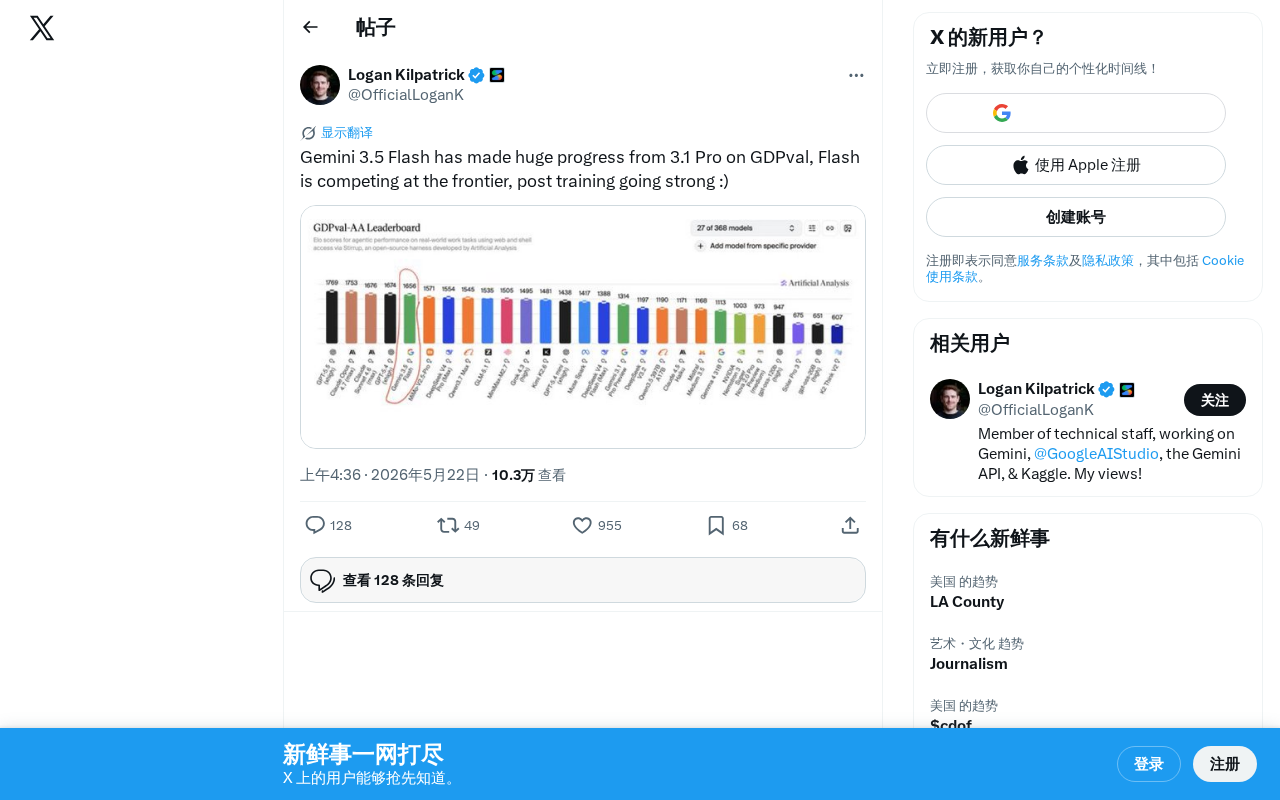
Gemini 3.5 Flash Achieves a Massive Leap on the GDPval Benchmark
Google Gemini 3.5 Flash surpasses Gemini 3.1 Pro on the GDPval benchmark. The lightweight Flash model leverages post-training techniques to approach frontier-level performance, redefining the balance between quality and cost.
 Tech Frontiers
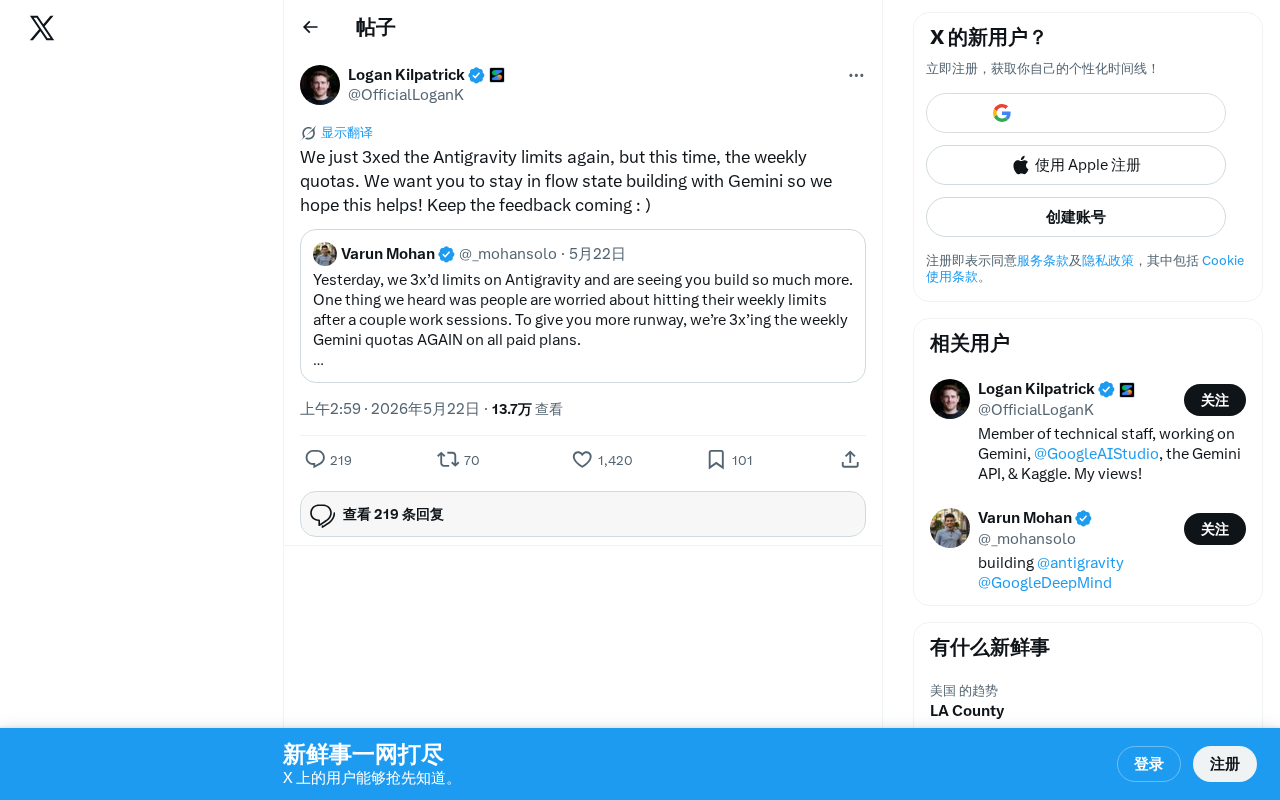
Google Gemini Antigravity Weekly Quota Tripled — AI Coding Without Limits
Google Gemini triples Antigravity weekly quotas following a prior daily quota boost. Analyzing the impact on developers and its strategic significance in AI coding.