Google Anti-Gravity 2.0 Explained: The Multi-Agent Development Platform Replacing Gemini CLI
Google Anti-Gravity 2.0 Explained: The…
Google fully replaces Gemini CLI with Anti-Gravity 2.0, an Agent-First development platform.
Google announced at I/O 2026 the termination of Gemini CLI, replaced by the new Anti-Gravity 2.0 platform. Built on Agent-First design principles supporting multi-Agent parallel collaboration, it offers three product forms—desktop app, CLI terminal, and SDK—sharing unified underlying Agent infrastructure. Combined with the 4x faster Gemini 3.5 Flash model and Managed Agents functionality, it marks AI development's evolution from single-Agent tools to production-grade multi-Agent ecosystems.
Gemini CLI Officially Retired, Anti-Gravity 2.0 Takes Over
Google completed a major product transition at Google I/O 2026—Gemini CLI was officially declared end-of-life. Starting May 19, 2026, the replacement solution went live; by June 18, 2026, Gemini CLI will be completely shut down, affecting both Google AI Pro Ultra and free-tier users.
This isn't a gentle version iteration—it's a complete product replacement. Taking its place is Anti-Gravity 2.0—Google's entirely new Agent-First development platform.
Agent-First is a core design philosophy that has emerged in AI engineering over the past two years. Traditional software development centers on "tool invocation"—developers explicitly specify every step of an operation. The Agent-First paradigm, by contrast, hands a "goal description" to AI, letting the Agent autonomously plan execution paths, invoke tools, and handle exceptions. The technical foundation for this shift is the maturation of large language model reasoning capabilities (Chain-of-Thought) and tool-use capabilities (Function Calling/Tool Use). From OpenAI's Assistants API to Anthropic's Claude Agents to Google's Anti-Gravity, all major players are betting on this direction. The core challenge is that a single Agent's context window and execution time are limited—complex tasks must be decomposed into multi-Agent collaboration to complete, which is the fundamental starting point for Anti-Gravity 2.0's architectural design.
Gemini CLI's design philosophy belonged to a previous era: one AI Agent handling one task at a time, executing steps sequentially. But real-world team collaboration has long evolved to require multiple Agents working together, processing large tasks in parallel. Gemini CLI's architecture simply couldn't support this need, so Google chose to start from scratch.
Anti-Gravity 2.0's Three Product Forms
Anti-Gravity 2.0 isn't a single product—it's a complete ecosystem, primarily presented in three forms:
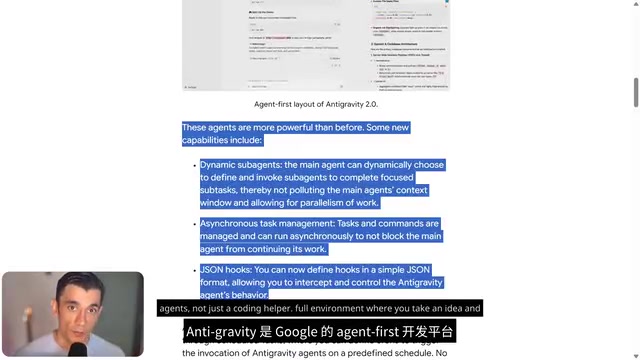
Desktop App: Command Center for Multi-Agent Parallelism
The new desktop application is specifically designed for running multiple Agents simultaneously, supporting background task processing and natively connecting to Google AI Studio, Android, and Firebase. This is a true "command center," not merely a code editor.
CLI Terminal: The Direct Replacement for Gemini CLI
Anti-Gravity CLI is the direct successor to Gemini CLI, built natively in Go for significantly faster performance. The most critical feature is persistent execution—start a large task, and it continues running in the background. Come back hours later, and all files and state remain exactly where you left them.
Persistent Execution solves the "stateless dilemma" of AI Agents. Traditional API calls are stateless—each request is independent, context must be maintained client-side, and long-running tasks lose all progress if interrupted. Persistent Agents maintain complete execution state on the server side, including completed tool call records, file system changes, intermediate variables, and more, allowing tasks to run across hours or even days. Technically, this relies on checkpointing mechanisms and Event Sourcing architecture. For tasks requiring large-scale data crawling, complex code execution, or long document processing, persistent execution is the critical threshold from "toy-grade" to "production-grade." Anti-Gravity CLI's persistence feature means developers can truly treat Agents as "background services" rather than "interactive assistants."
SDK: Programmatic Access to Underlying Agent Infrastructure
The Anti-Gravity SDK provides programmatic access to the underlying Agent infrastructure—the exact same infrastructure used by Google's own internal products. The enterprise edition also connects directly to Google Cloud.
Unified Infrastructure: Anti-Gravity 2.0's Core Competitive Moat
Here's the most fundamental difference between Anti-Gravity 2.0 and other AI development tools on the market: the desktop app, CLI, and SDK all run on the same underlying Agent system.

Google's decision to unify three product forms on a single Agent infrastructure reflects deep platform strategy logic. In software engineering, this is called the "Single Source of Truth" principle—avoiding feature drift and maintenance costs across multiple codebases. For users, what matters more is the accumulation of reliability: Google's internal products (like Workspace and Search) use the same infrastructure, meaning this system has been validated under ultra-large-scale real-world loads. This is also Google's structural advantage over IDE-focused competitors like Cursor and Windsurf—the latter's Agent capabilities depend on third-party APIs, while Google's entire tech stack is vertically integrated.
Once Google upgrades its core Agent technology, every product in the ecosystem automatically receives the update. Users aren't connecting to some replica—they're accessing the same infrastructure Google uses internally.
For AI companies, this represents a continuously compounding advantage: every time Google releases a smarter Agent update, your workflow pipeline automatically becomes more intelligent without any additional effort from your team. Meanwhile, competitors using fragmented, disconnected tools must manually update and reconnect everything.
Gemini 3.5 Flash Model: 4x Speed Improvement
The model powering all of this is Gemini 3.5 Flash, also announced at Google I/O 2026. This model surpasses Gemini 3.1 Pro on nearly every benchmark while being 4x faster than other frontier models.
LLM inference speed is determined by multiple factors: model parameter count, inference architecture (Dense vs MoE), hardware acceleration (TPU/GPU), and inference optimization techniques (quantization, speculative decoding, etc.). The Flash series is Google's product line specifically optimized for the "speed-performance" tradeoff, typically employing Mixture of Experts (MoE) architecture—activating only a subset of parameters per inference, dramatically reducing computation. Notably, speed improvements are amplified further in Agent scenarios: in multi-Agent parallel workflows, each Subagent's latency affects overall task completion time, so model speed improvements have a multiplier effect on the entire pipeline's throughput.
What does 4x speed mean in practice? Suppose a team currently spends two hours producing a long-form piece of content—with the new model, the same content takes less than 30 minutes. This isn't just time savings; it means the possibility of content output jumping from 2 pieces per week to 10 pieces per week.
Managed Agents: Launch an Intelligent Agent with a Single API Call
Google introduced Managed Agents in the Gemini API. With just one API call, you can launch an Agent equipped with reasoning capabilities and tool-use abilities that can execute code in its own isolated Linux environment.

Related articles
 Tech Frontiers
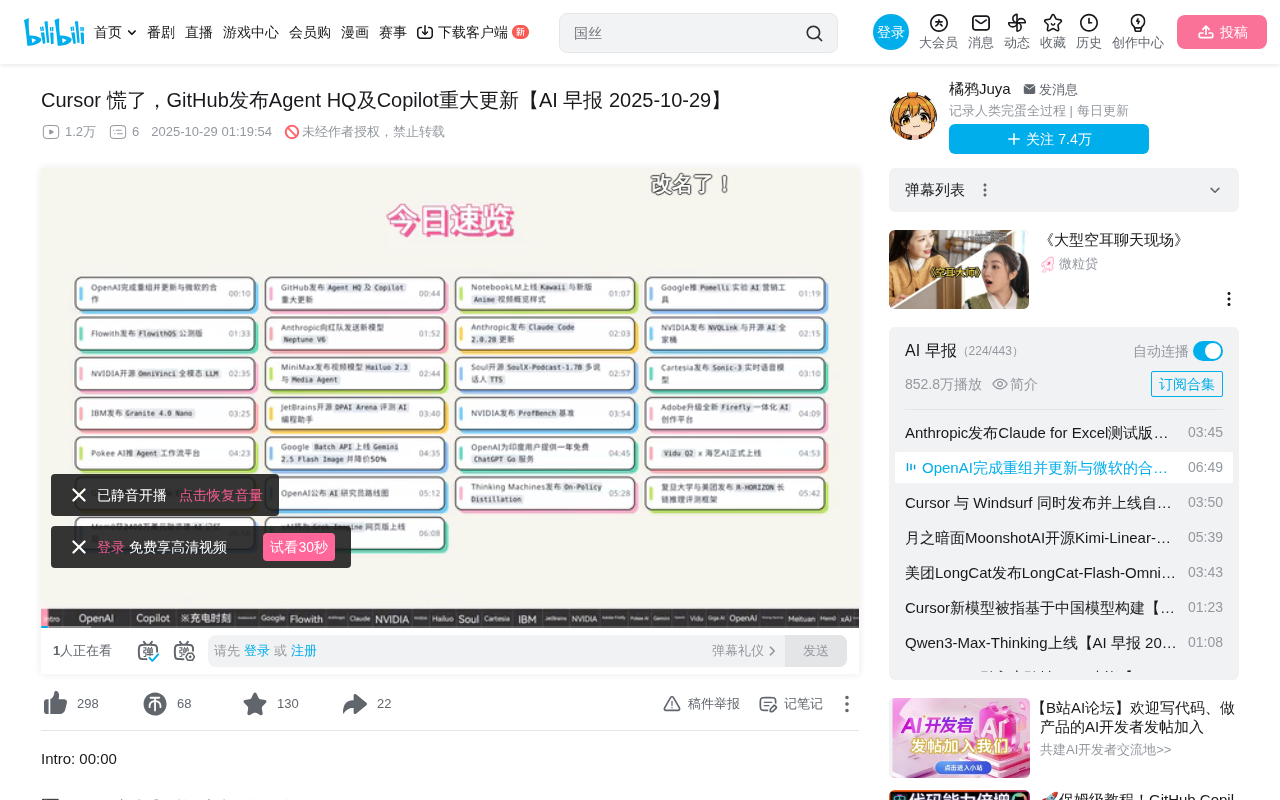
GitHub Agent HQ Launch: AI Coding Tools Enter the Era of Platform Competition
GitHub Universe unveils Agent HQ platform for unified coding agent management, Copilot upgrades with multi-model support. OpenAI completes restructuring, Anthropic tests new model, NVIDIA open-sources AI models.
 Tech Frontiers
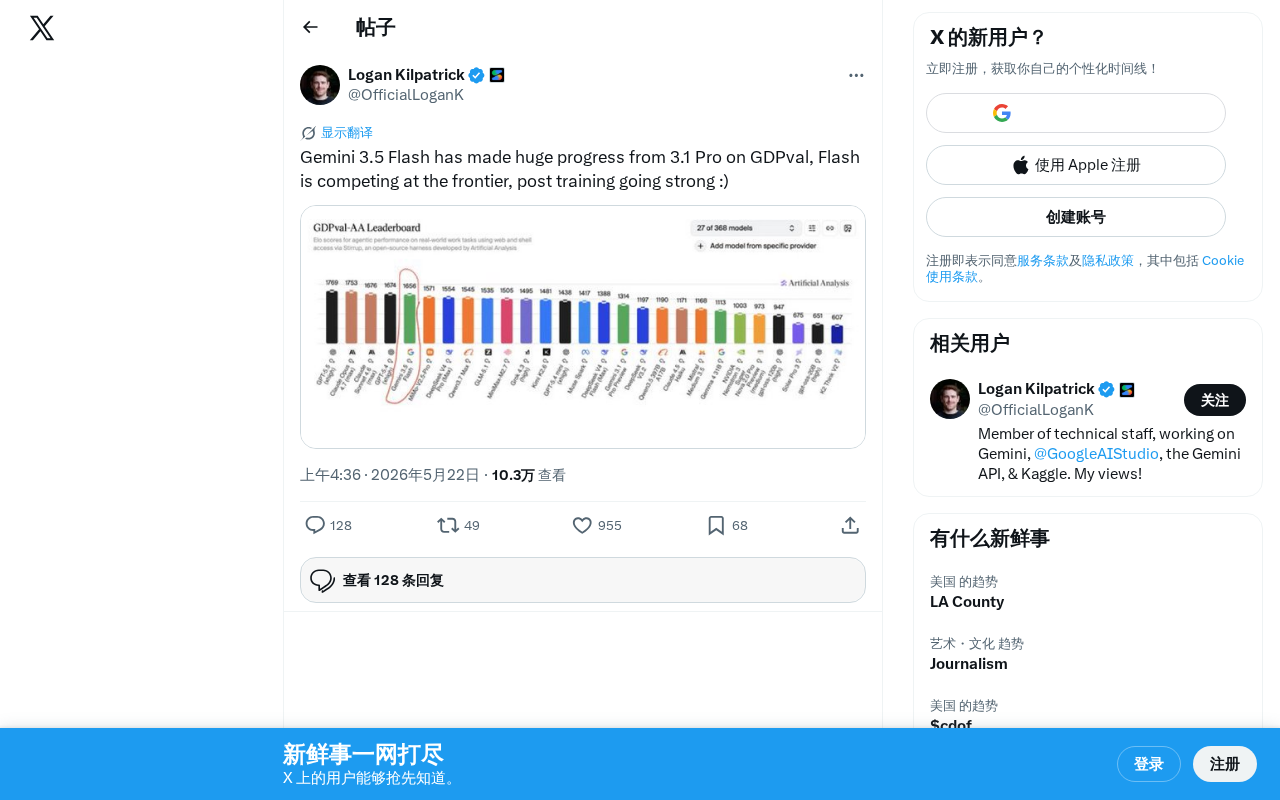
Gemini 3.5 Flash Achieves a Massive Leap on the GDPval Benchmark
Google Gemini 3.5 Flash surpasses Gemini 3.1 Pro on the GDPval benchmark. The lightweight Flash model leverages post-training techniques to approach frontier-level performance, redefining the balance between quality and cost.
 Tech Frontiers
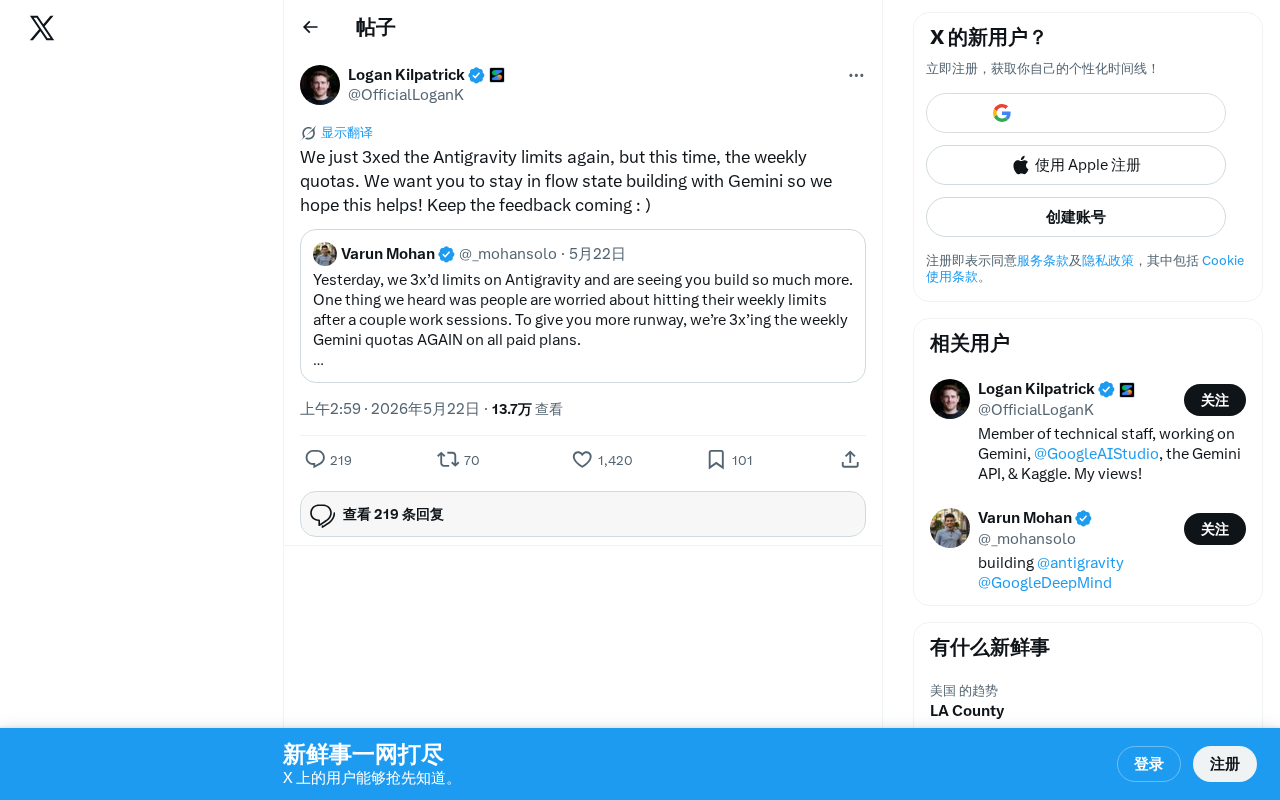
Google Gemini Antigravity Weekly Quota Tripled — AI Coding Without Limits
Google Gemini triples Antigravity weekly quotas following a prior daily quota boost. Analyzing the impact on developers and its strategic significance in AI coding.