Google Gemini Drops Update: New Interface Design and Spark Intelligent Agent Assistant Explained

Google releases major Gemini update with 24/7 intelligent agent assistant Gemini Spark
Google's latest Gemini Drops delivers major updates: a completely redesigned Gemini interface for enhanced multimodal interaction, plus Gemini Spark—a 24/7 intelligent agent assistant marking AI's evolution from passive conversational tools to proactive task-executing agentic AI. With its massive ecosystem spanning Gmail, Calendar, Search, and more, Google holds a structural competitive advantage in the AI agent race.
Overview
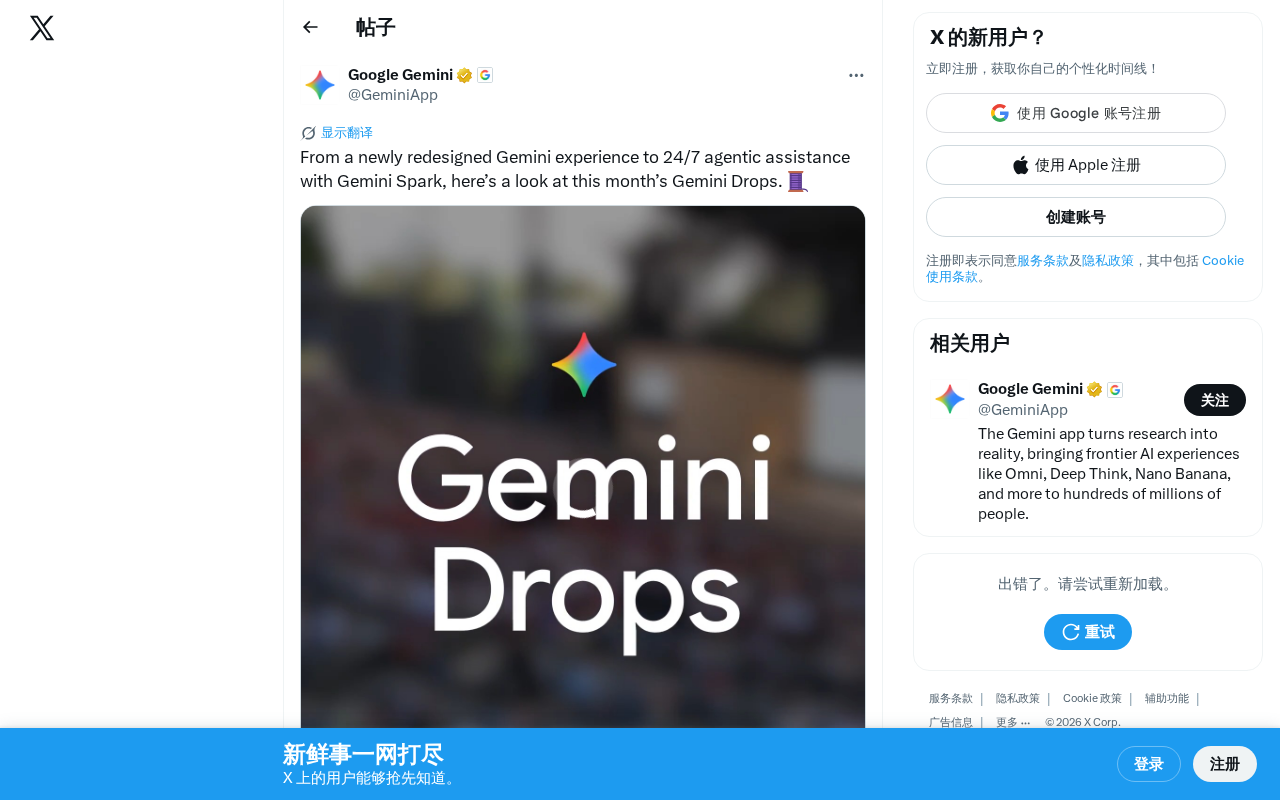
Google's Gemini Drops this month brings a series of major updates, including a completely redesigned Gemini experience and Gemini Spark, a 24/7 intelligent agent assistant. These updates mark Google's continued push in the AI assistant space and signal that AI products are rapidly evolving from "tools" to "intelligent companions."
The Redesigned Gemini Experience: More Than a Visual Refresh
A Complete Interface Overhaul
Google has completely redesigned Gemini's user interface. This isn't a simple visual refresh—it's a deep optimization at the interaction logic level, aimed at making conversations with AI more natural and fluid. The new interface better integrates multimodal capabilities, enabling seamless switching between text, images, code, and other content types within a single conversation window.
For everyday users, interface usability directly determines how often they use an AI tool. Google's decision to redesign the Gemini experience is clearly an attempt to boost user retention through superior product design amid fierce competition with ChatGPT, Claude, and other rivals.
Deeper Changes in Interaction Paradigms
Interestingly, Google used the phrase "redesigned experience" rather than simply "UI update." This suggests the update may involve deeper interaction paradigm shifts—such as smarter contextual understanding, more flexible task management, and tighter integration with the Google ecosystem (Gmail, Docs, Calendar, etc.).
It's worth noting that multimodal interaction isn't a new concept, but making it truly "seamless" is an enormous engineering challenge. Early multimodal models often required users to switch between different input fields, whereas next-generation architectures unify text, images, and audio through a shared token space for unified encoding and processing—this is what makes natural switching within a single conversation window possible. The breakthroughs in native multimodal architecture with the Gemini 1.5 series are precisely the technical prerequisite that enables this interface integration to ship.
Gemini Spark: A Breakthrough in 24/7 Intelligent Agent Assistance
From Conversation to Agency
Gemini Spark is the most notable highlight of this update. Positioned as a 24/7 "agentic assistance," it signals that Gemini is evolving from a chatbot that passively responds to user queries into an AI agent capable of proactively executing tasks and running continuously.
Agentic AI is one of the most important trends in the AI field today. Its core architecture is typically based on the "ReAct" (Reasoning + Acting) paradigm—allowing models to iteratively cycle between reasoning and action until the target task is completed. This paradigm was formally proposed in a 2022 research paper from Princeton University and has since rapidly become the mainstream framework for building AI agents. Technically, AI agents also require tool-calling (Function Calling) capabilities and long-term memory management mechanisms. Google's function-calling interface, already deployed in Gemini, is precisely the critical foundational infrastructure for agent applications like Spark.
Unlike traditional conversational AI, agentic AI possesses the following core capabilities:
- Autonomous Planning: Breaking complex tasks into multiple executable steps
- Continuous Execution: Completing multi-step tasks without requiring step-by-step user instructions
- 24/7 Operation: Continuously monitoring and processing tasks in the background
- Proactive Notifications: Actively reporting progress to users at key milestones
Competitive Landscape Analysis
With the launch of Gemini Spark, Google has officially entered the AI agent race. Currently, OpenAI's Operator, Anthropic's Computer Use feature, and Microsoft's Copilot agent capabilities are all vying for leadership in this space.
However, Google's massive service ecosystem—Search, Gmail, Calendar, Maps, YouTube, and more—gives it a natural structural advantage in AI agent application scenarios. The scale of this advantage is staggering: Gmail has over 1.8 billion monthly active users, and Google Calendar and Google Docs are nearly ubiquitous in enterprise and education settings. This means Gemini Spark inherently has access to extremely rich user data context—from schedules and email correspondence to search history. Deep cross-source data integration enables agent task execution with far greater precision than competitors relying on single data sources. This is a moat that products like OpenAI Operator will find difficult to replicate in the short term. When Gemini Spark can autonomously orchestrate and execute tasks across these services, its practical value will far exceed single-platform AI agent solutions.
The Strategic Significance of the Gemini Drops Release Model
A Continuous Iteration Product Strategy
Google's adoption of the "Gemini Drops" model for regular update releases is similar to Apple's product launch cadence but with higher iteration frequency. This strategy offers several clear advantages:
- Maintaining Market Attention: In the fast-iterating AI landscape, regular updates continuously attract user and media attention
- Rapid Competitive Response: Compared to major version releases, a rapid-iteration approach offers more flexibility in responding to competitors' moves
- Reduced Release Risk: Each update has a manageable scope, making it easier to collect user feedback and quickly adjust direction
This model is known as "Continuous Delivery" in software engineering, originally popularized by DevOps practices and now widely adopted by AI product companies. Compared to traditional quarterly or annual major releases, continuous delivery requires highly automated testing and deployment pipelines on the backend. For AI products, this also means rapidly completing safety red teaming and alignment evaluations—a technically demanding bar. Google's ability to transfer this engineering capability to Gemini's iteration cadence is itself a demonstration of its infrastructure strength.
What This Means for Users
For everyday users, Gemini Drops means receiving new features and experience improvements every month. This model of continuous evolution is redefining expectations for AI products—AI assistants are no longer static tools but intelligent companions that continuously grow and increasingly understand you.
Summary and Outlook
This month's Gemini Drops showcases Google's ambitions in AI productization. The new interface design elevates the foundational interaction experience, while Gemini Spark represents a significant step in the evolution of AI assistants toward agentic AI.
As agentic AI technology continues to mature and Google's ecosystem integration deepens, Gemini's potential in the intelligent agent space deserves ongoing attention. For users choosing an AI assistant, this round of Google Gemini updates undoubtedly strengthens its competitive position.
Key Takeaways
- Google has completely redesigned Gemini's interface and experience, optimizing user interaction logic
- Launched Gemini Spark, positioned as a 24/7 intelligent agent assistant, marking the evolution from conversational AI to agentic AI
- The Gemini Drops regular release model helps Google maintain continuous iteration and market attention amid fierce AI competition
- Agentic AI has become a core industry trend in 2025, with Google, OpenAI, Anthropic, and other major players all investing heavily
Related articles
 Tech Frontiers
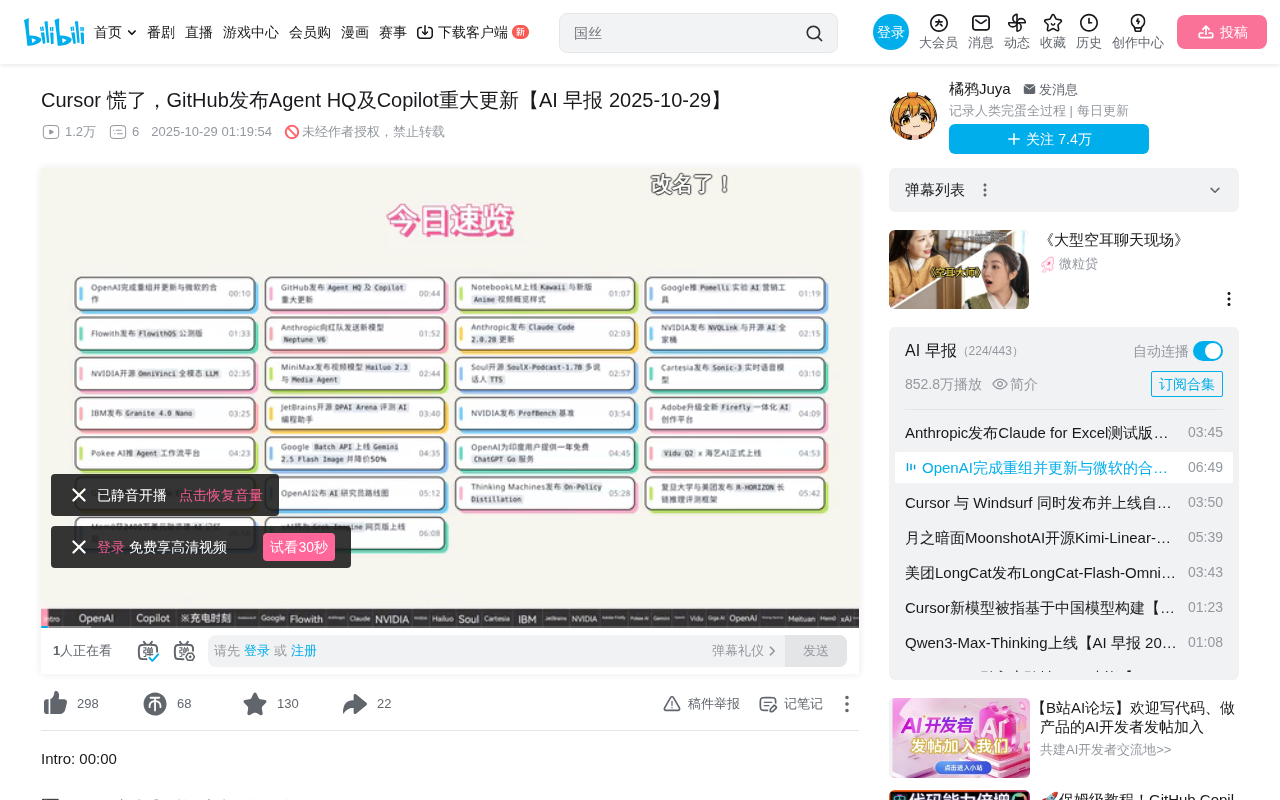
GitHub Agent HQ Launch: AI Coding Tools Enter the Era of Platform Competition
GitHub Universe unveils Agent HQ platform for unified coding agent management, Copilot upgrades with multi-model support. OpenAI completes restructuring, Anthropic tests new model, NVIDIA open-sources AI models.
 Tech Frontiers
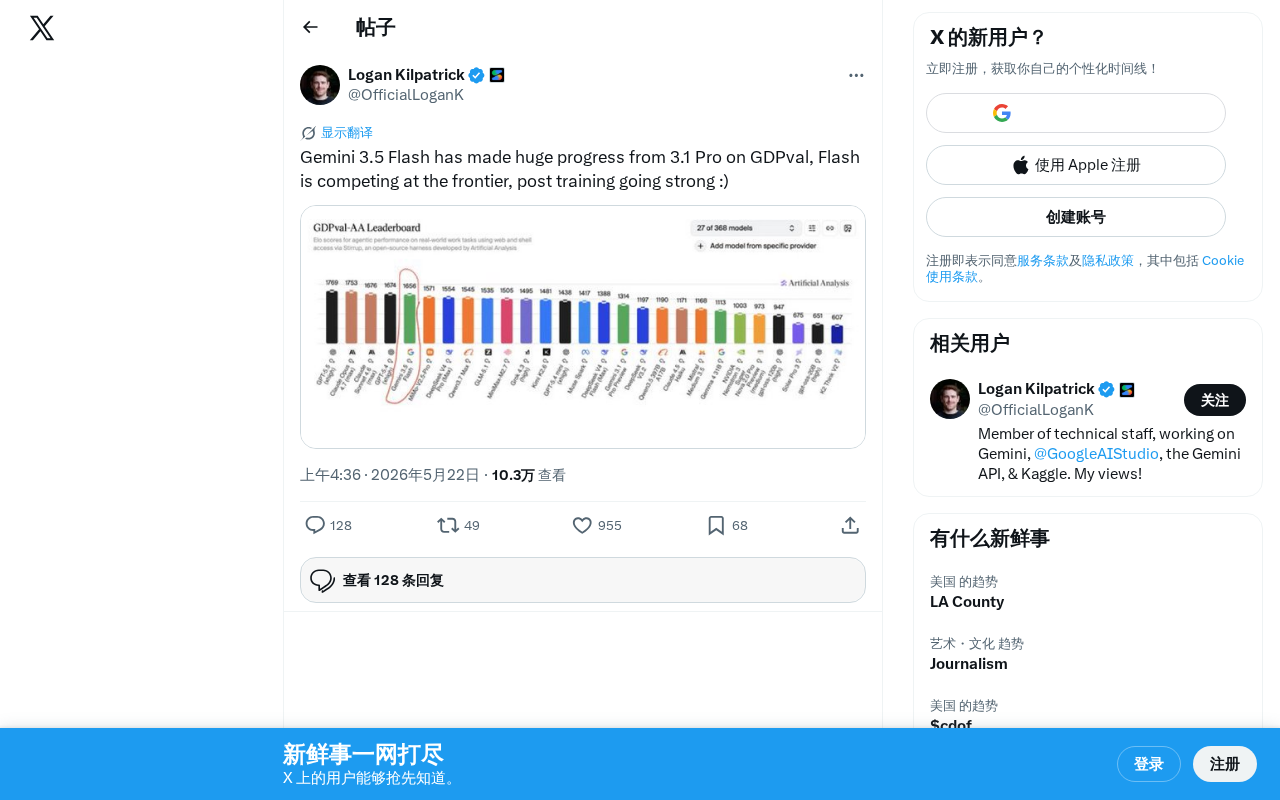
Gemini 3.5 Flash Achieves a Massive Leap on the GDPval Benchmark
Google Gemini 3.5 Flash surpasses Gemini 3.1 Pro on the GDPval benchmark. The lightweight Flash model leverages post-training techniques to approach frontier-level performance, redefining the balance between quality and cost.
 Tech Frontiers
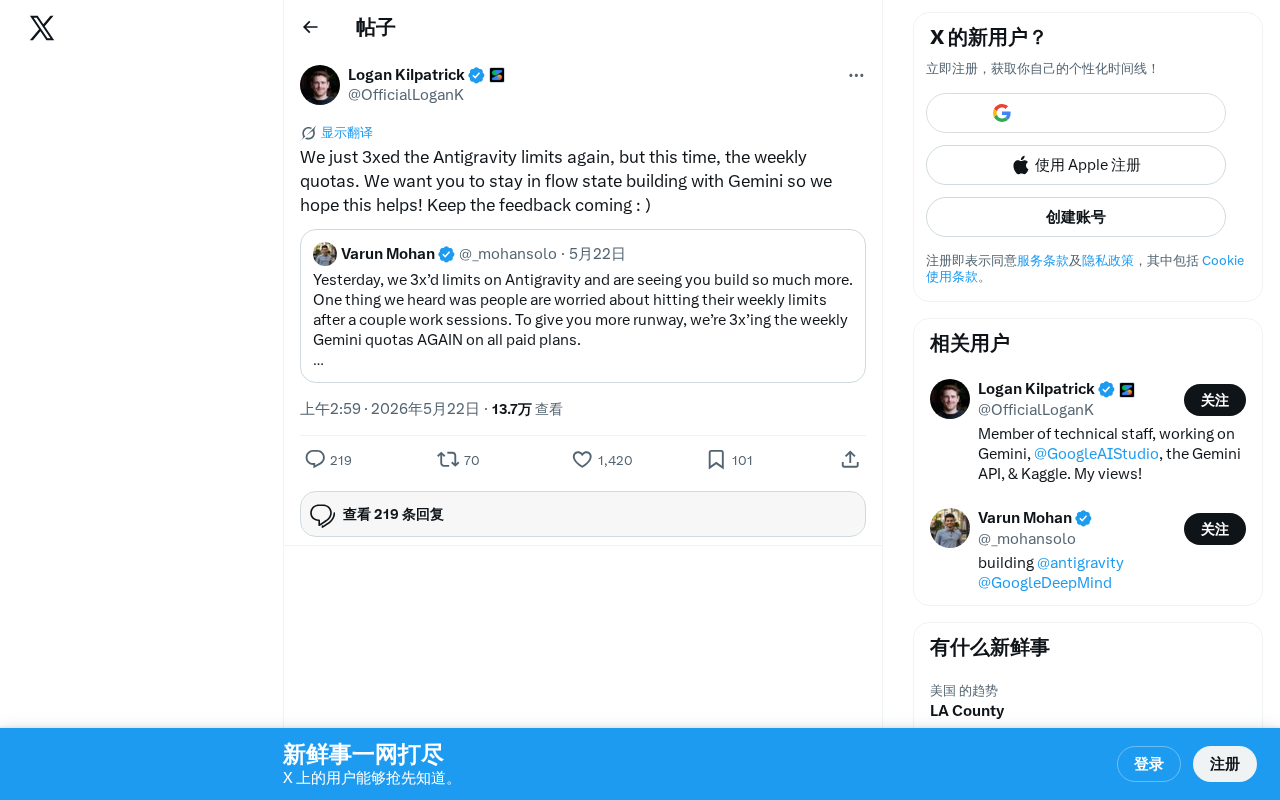
Google Gemini Antigravity Weekly Quota Tripled — AI Coding Without Limits
Google Gemini triples Antigravity weekly quotas following a prior daily quota boost. Analyzing the impact on developers and its strategic significance in AI coding.