GPT, Claude, Gemini vs. China's Top Three: A Complete Comparison of Coding Ability, Chinese Language Performance & Pricing
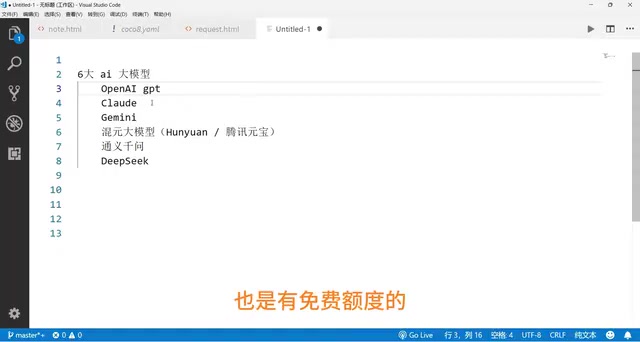
A comprehensive comparison of six leading AI models across coding, Chinese language, and pricing dimensions.
This article compares six mainstream AI models — GPT, Claude, Gemini, Tencent Hunyuan, Qwen, and DeepSeek — across coding ability, Chinese language performance, and API pricing. Claude leads in code quality, domestic models dominate Chinese tasks, and DeepSeek offers the best value at roughly 1/50th of Claude's price while being open-source.
With AI large language models flourishing today, the three major overseas models — GPT, Claude, and Gemini — each have their own strengths, as do China's top three: Hunyuan, Qwen, and DeepSeek. With so many options available, how should everyday users and developers choose? This article provides a comprehensive side-by-side comparison of these six mainstream AI models across three core dimensions: coding ability, Chinese language performance, and pricing.
The Overseas Big Three: GPT, Claude, Gemini — Strengths Analyzed
OpenAI GPT: The All-Around Benchmark
As the pioneer of the LLM space, GPT's coding ability remains top-tier. It supports complex logical reasoning, excels at code completion and comment generation, and is well-suited for full-stack development assistance. In terms of Chinese language capability, it handles everyday conversation and content creation adequately, but still falls short compared to domestic models specifically optimized for Chinese.
Regarding pricing, GPT's consumer-facing web version has limited free usage, while the API charges per token — approximately $2 per million input tokens and $10 per million output tokens, placing it at a relatively high price point. Here's a quick explanation of tokens: a token is the basic unit that LLMs use for processing and billing. In English, one token corresponds to roughly 4 characters or 0.75 words, while in Chinese, a single character is typically encoded as 1-2 tokens. LLMs use a tokenizer to split text into token sequences for processing. API billing distinguishes between "input tokens" and "output tokens," with output tokens typically costing 2-5x more than input tokens because text generation requires more computational resources — each generated token requires a complete autoregressive decoding process. Understanding this mechanism helps users optimize prompt design to effectively reduce costs.
Anthropic Claude: Widely Recognized as the Strongest Coder
Claude is a product of the American company Anthropic, and its coding ability is widely recognized as among the strongest in the industry. It produces high-quality code with precise bug analysis, making it particularly suitable for development and testing scenarios. However, its Chinese language capability is slightly weaker than GPT's, which is a shortcoming for Chinese-speaking users.
Anthropic was founded in 2021 by former OpenAI Research VP Dario Amodei and his sister Daniela Amodei, with a core team that includes several key researchers behind GPT-3. The company centers its philosophy on AI safety and introduced the Constitutional AI training method — having AI critique and revise its own outputs based on a set of predefined principles, reducing reliance on human annotation while improving both safety and usefulness. The Claude model series is trained using this approach, which also explains why Claude has a lower bug rate in code generation — its self-correction mechanism is deeply reinforced during training.
Cost-wise, Claude isn't cheap either — API input costs approximately $3 per million tokens, and output costs approximately $15 per million tokens, making it the most expensive among the six models. For heavy users, this expense is not to be overlooked.
Google Gemini: The Most Generous Free Tier
Gemini is Google's LLM product. Its coding ability is solid and sufficient for everyday programming assistance, though it falls slightly behind Claude and GPT when it comes to complex architecture design. Its Chinese language capability is continuously improving and can handle fluent conversations.
Gemini's biggest advantage is its generous free tier for consumers, with relatively affordable API pricing — input and output charges range between $1.25 and $3 per million tokens. For users on a budget who still want to experience overseas models, Gemini is a solid entry point.
China's Top Three: Hunyuan, Qwen, DeepSeek — In-Depth Analysis
Tencent Hunyuan: Outstanding in Enterprise Code Scenarios
Tencent's Hunyuan model (Tencent Yuanbao) excels in enterprise-level coding scenarios and is currently one of the top performers among domestic models in this area. It handles everyday Python development and front-end programming with ease.
Chinese language capability is a major highlight of Hunyuan — it demonstrates excellent understanding of internet slang and localized expressions. Pricing-wise, input costs approximately ¥1.5 RMB per million tokens and output approximately ¥5 RMB per million tokens (note: priced in Chinese yuan), offering a clear price advantage over overseas models.
Qwen (Tongyi Qianwen): The Ceiling of Chinese Language Understanding Among Domestic Models
Qwen is Alibaba's LLM product. Its code generation and debugging capabilities rank among the best of domestic models. Its greatest strength lies in the naturalness of Chinese comprehension and content creation, representing the pinnacle among domestic models.
The advantage domestic models hold in Chinese capability is no accident — it's the result of full-pipeline optimization spanning training data, tokenizer design, and alignment strategy. First, the proportion of Chinese data in pre-training corpora is significantly increased (typically 30%-50%, whereas overseas models often have less than 10% Chinese data). Second, more efficient tokenizers are designed specifically for Chinese, reducing the token inflation problem (the same Chinese content may require only half the tokens with an optimized tokenizer). Finally, large amounts of Chinese-annotated data are used during the RLHF (Reinforcement Learning from Human Feedback) phase to ensure model outputs align with native Chinese speakers' expression habits and cultural context. This is why Qwen and DeepSeek produce more natural and fluent Chinese writing.
Pricing-wise, Qwen charges approximately ¥2 RMB per million input tokens and ¥6 RMB per million output tokens, with free credits for new users, offering strong overall value. If your core need is Chinese content creation, Qwen deserves serious consideration.
DeepSeek: The Undisputed Value Champion
DeepSeek is a product of the company DeepSeek (深度求索), and one of the most talked-about domestic models recently. It performs exceptionally well in code generation, algorithm derivation, and bug fixing, firmly placing it in the top tier of Chinese models. Its Chinese language capability is equally impressive, aligning well with native Chinese expression habits.
Evaluating an LLM's coding ability doesn't rely on a single metric — the industry typically considers multiple dimensions: code generation (producing runnable code from natural language descriptions), code completion (predicting subsequent code based on context), bug detection and fixing (identifying logical errors and providing corrections), code explanation (converting complex code into natural language descriptions), and architecture design (providing system-level technical solutions). Common benchmarks include HumanEval, MBPP, and SWE-bench, with SWE-bench simulating real GitHub Issue fix scenarios and considered closest to actual development experience. Both Claude and DeepSeek perform excellently on this benchmark, confirming their strong capabilities in the coding domain.
But DeepSeek's real killer feature is pricing — the official chat interface is currently free to use, API input costs only about ¥0.14 to ¥1 RMB per million tokens, and output costs approximately ¥2 RMB per million tokens. More importantly, DeepSeek is an open-source model that supports local private deployment, which is extremely attractive for enterprises and individual developers with data security requirements.
Private deployment of open-source models offers three key benefits for enterprise users: first, data security — sensitive code and business documents never leave the internal network; second, cost control — after a one-time GPU hardware investment, marginal costs approach zero; third, customizability — enterprises can fine-tune the open-source model to better adapt to domain-specific tasks. Current mainstream private deployment solutions use NVIDIA A100/H100 GPU clusters with inference frameworks like vLLM or TGI. A single GPU can run 7B parameter models, while 70B+ models require multi-GPU parallelism. DeepSeek's open-source strategy enables small and medium enterprises to have their own dedicated AI capabilities at relatively low cost.
Comprehensive Comparison & Recommendations for All Six Models
Pricing Tiers at a Glance
From a pricing perspective, the six models fall into three clear tiers:
- High-end: Claude (output $15/million tokens), GPT (output $10/million tokens)
- Mid-range: Gemini (output ~$3/million tokens), Hunyuan and Qwen (priced in RMB, equivalent to ~$0.7-0.8)
- Budget: DeepSeek (output ~¥2 RMB/million tokens, less than $0.3 equivalent)
DeepSeek's API pricing is roughly one-fiftieth of Claude's — a staggering price gap.
Recommendations by Use Case
- Professional code development: Choose Claude if budget allows; choose DeepSeek for best value
- Chinese content creation: Qwen and DeepSeek are equally recommended
- Enterprise applications: Tencent Hunyuan has unique advantages in enterprise scenarios
- Learning and research: DeepSeek is the optimal choice — free + open-source + high performance
- All-around versatility: GPT remains the most balanced option
Final Thoughts
"The strongest AI is the one that works best in your hands." Rather than obsessing over benchmarks and rankings, choose based on your actual needs and budget. GPT is like a well-rounded elite, Claude is like a tech geek, and DeepSeek is the value champion — what matters isn't which is the strongest, but which is the best fit for you.
You may not have noticed, but the LLM space iterates extremely fast, with capabilities and pricing constantly evolving. I recommend trying multiple options, comparing them, and finding the one that best fits your workflow.
Related articles
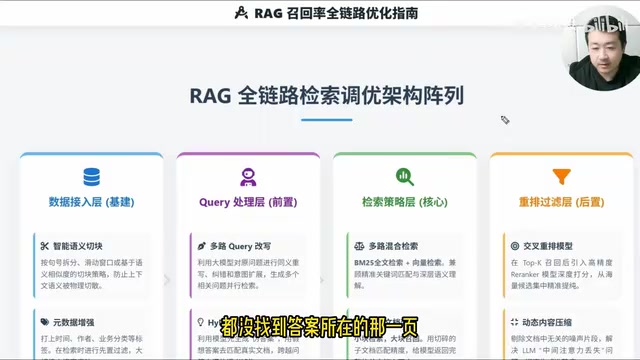
RAG Recall Rate Optimization: A Full-Pipeline Funnel Engineering Breakdown from Data Ingestion to Reranking
How to fix low RAG recall? A systematic breakdown covering data ingestion, query processing, retrieval strategy, and reranking—including semantic chunking, HyDE, hybrid search, and Cross-Encoder reranking.

A Complete Guide for Solo Developers to Build Profitable Apps from Scratch Using AI Tools
A solo developer used Vibe Coding to build an AI app earning $1,400/month in 23 days. Learn how to find validated ideas, choose tools, build MVPs fast, and generate recurring income.
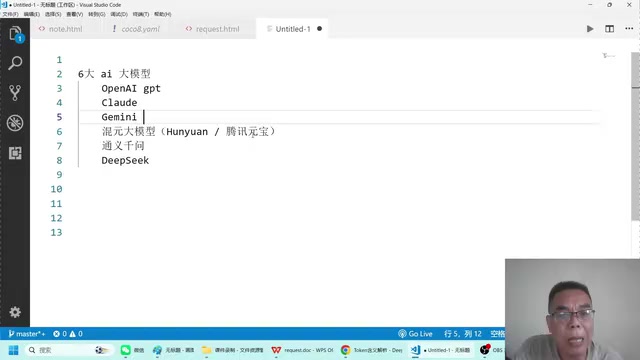
Six Major AI Models Compared: Coding Ability, Chinese Language Proficiency & Value for Money
Comprehensive comparison of GPT, Claude, Gemini, Hunyuan, Tongyi Qianwen & DeepSeek across coding ability, Chinese proficiency & API pricing with a full price table.