A Complete Guide for Solo Developers to Build Profitable Apps from Scratch Using AI Tools

How a solo developer built a $1,400/month AI app in 23 days using Vibe Coding tools.
A solo developer used Vibe Coding to build an AI resume tool in 23 days that now earns $1,400 MRR. This guide covers finding validated ideas through YC RFS and TrustMRR, choosing real pain points, leveraging AI tools like Lovable and Replit for rapid MVP development, and shipping fast to capture market opportunities before the window closes.
One person, 23 days, zero coding experience, building an AI app that generates $1,400 per month — this isn't marketing hype, but a real case from a solo developer using Vibe Coding. As AI tools continue to mature, the barrier to building profitable apps as an independent developer is being fundamentally reshaped.
Real Case Study: 23 Days of Development, $16,500 in Cumulative Revenue Over 4 Months
Video creator Eric shared his personal experience: he built an AI resume generator and review tool that allows users to create resumes within the app, with AI analyzing each bullet point and providing targeted optimization suggestions to help job seekers improve their success rates.
This app took only 23 days from development to launch. Even more surprisingly, four months after launch, cumulative revenue reached $16,500, with Monthly Recurring Revenue (MRR) stabilizing around $1,400. MRR is the most critical business metric for SaaS and subscription products, representing the predictable, stable monthly income stream. For a solo developer, $1,400 in MRR means the product has established a sustained paying user base — with virtually zero operational costs, this is nearly pure-profit passive income. Since November, Eric hasn't touched the codebase or done any marketing, yet the app continues to grow and generate new revenue.
The core insight from this case is: with AI tools, the cost of "building and shipping" has dropped to unprecedented levels. Vibe Coding — the development approach of rapidly turning ideas into products with AI-assisted programming tools — is becoming the solo developer's most powerful weapon. This concept was coined by OpenAI co-founder Andrej Karpathy in early 2025, referring to developers describing requirements in natural language and letting AI coding assistants (such as Cursor, GitHub Copilot, Claude, etc.) automatically generate code. Developers no longer write code line by line but instead act like "directors" orchestrating AI to handle technical implementation, transforming programming from "writing code" to "describing intent," dramatically lowering the technical barrier.
Finding Valuable Ideas: Originality Is Dead, Validation Is King
Many people think they have a million-dollar startup idea in their head, but Eric states bluntly: In the AI era, ideas themselves are essentially worthless.
The reason is simple — when everyone can turn ideas into products within days using AI tools, the scarcity of ideas ceases to exist. What truly matters is shipping fast, and this must be your top priority.
So how do you find a solid app idea? Eric recommends two proven resources:
Y Combinator's Request for Startups (RFS)
YC publicly publishes lists of problems they want founders to solve. Y Combinator is the world's most renowned startup accelerator, having incubated tech giants like Airbnb, Dropbox, Stripe, and Reddit. Their Request for Startups (RFS) list is backed by deep analysis of success and failure data from thousands of startups, representing rigorously validated market judgments. This is essentially the world's top accelerator telling you directly what the market needs, giving your idea a validation foundation from the start.

TrustMRR: Validating Revenue Potential with Data
This is the tool Eric himself used to discover the AI resume generator direction. TrustMRR lets you view listings of existing apps along with their revenue data, helping you determine which directions actually generate income, then think about how to replicate and improve these validated models. This "data-driven product selection" approach essentially front-loads the biggest uncertainty in entrepreneurship — market demand validation — before development begins, dramatically reducing the risk of failure.
Key Principle: Tie Your App to a Real Human Pain Point
When choosing an idea, Eric emphasizes one core principle: Your app must be tied to a real, validated human pain point.
For example, calorie tracking (like KL-AI), job search assistance (like his AI resume tool) — these are essential needs that people are willing to pay for. When the pain point is real enough, users naturally open their wallets. A simple criterion for judging whether a pain point is "painful enough": Are users already spending resources (whether time or money) to solve this problem, and do existing solutions have obvious experience gaps?
Don't Be Afraid That "Someone's Already Done It"
Many people hesitate: "There are already products in this space — is there any point in me building another one?" Eric's answer is emphatic: Originality is dead. Amplifying what already exists is the way forward.

He gives several vivid examples:
- Zoom's existence didn't stop Google Meet from succeeding
- ChatGPT's existence didn't stop thousands of AI wrapper products from making money
- Pizza Pizza's existence doesn't mean Domino's can't be equally successful
As a solo developer, you don't need to dominate the entire market. You only need to carve out a very small slice of an existing pie, and that's enough to earn substantial income. The market is big enough for multiple players. In business theory, this is called the "red ocean within a blue ocean strategy" — in a large, validated market, acquiring your own share through differentiated positioning (better user experience, more precise audience segmentation, lower pricing) is far easier than educating an entirely new market from scratch.
Tool Selection: No-Code Platforms and Foundational Concept Understanding Are Both Essential
Eric mentions no-code/low-code tools like Lovable and Replit, acknowledging they're genuinely impressive and can dramatically lower the development barrier. Lovable is an AI tool that generates complete web applications from natural language descriptions, automatically handling frontend interfaces, backend logic, and database design. Replit is an online integrated development environment that has deeply integrated AI capabilities in recent years, allowing users to build and deploy applications through conversation. The common characteristic of these tools is compressing traditional development cycles that would take months into just days.
But Eric also emphasizes: You still need to understand basic programming concepts at some level.
This doesn't mean you need to become a professional programmer, but you need to understand:
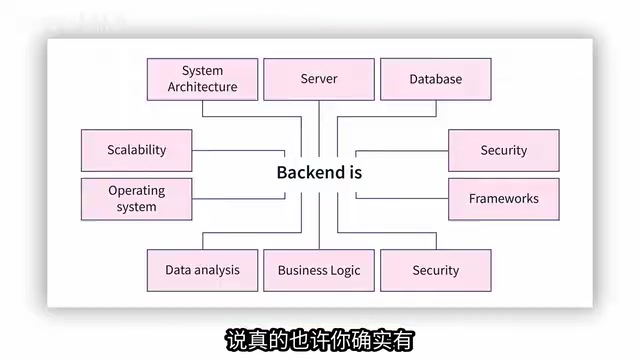
- How basic app architecture works (the frontend handles what users see, the backend processes business logic and data storage, and they communicate via APIs)
- How data flows (how user input is processed, stored, retrieved, and displayed)
- Basic API call logic (how your app interacts with external AI models like GPT-4, how to handle requests and responses)
- How to debug AI-generated code (when AI-generated code has bugs, you need to be able to read error messages and provide the AI with correct fix directions)
This foundational knowledge helps you use AI programming tools more efficiently and know where to start troubleshooting when problems arise. Essentially, the developer's role in the Vibe Coding era has shifted from "code writer" to "product architect and AI collaborator" — you don't need to write code, but you need to know what good code should look like.
Solo Developer Action Guide: From Idea to Monetization
Synthesizing Eric's experience, we can distill a clear action framework:
- Find your direction: Use tools like YC RFS and TrustMRR to find validated market demands, rather than building in isolation
- Choose a pain point: Ensure your app is tied to a real human pain point that people are willing to pay to solve
- Build fast: Use AI programming tools (Vibe Coding) to complete an MVP within days to weeks. MVP (Minimum Viable Product) is the core concept of lean startup methodology — building a product version with minimal resources that can validate core assumptions, using real user feedback to determine iteration direction rather than pursuing feature completeness before launch
- Ship fast: Don't chase perfection — launch first, iterate later. In the AI-assisted development era, MVP construction costs are extremely low, making the "fail fast, iterate often" strategy more viable than ever before
- Let the product speak for itself: If the product truly solves a pain point, it can continue growing through word-of-mouth and organic search traffic even without active marketing
The barrier to entry for solo development is dropping, but opportunities are multiplying. The key isn't whether you can write code, but whether you can find the right problem and deliver a good-enough solution at maximum speed. As Eric proved — 23 days is enough.
It's worth noting that this window of opportunity won't last forever. As more people master the Vibe Coding methodology, competition will gradually intensify. But for those who start taking action now, first-mover advantage remains significant — early entrants can accumulate user data, brand recognition, and product iteration experience, all of which are moats that latecomers cannot quickly replicate.
Related articles

AI Programming Learning Roadmap: A Complete Six-Stage Guide from Beginner to Expert
A systematic breakdown of the six-stage AI programming learning roadmap, from zero-code start to mastering Cursor and professional tools, methodology frameworks, advanced patterns, and project practice.

Deep Dive into Devin's Background Agent Architecture: Behind the 80% AI-Committed Code
Deep analysis of Devin's background agent architecture: brain-sandbox separation, environment setup, MCP integration, memory systems, and multi-agent collaboration challenges.

Claude Code in Practice: An In-Depth Efficiency Comparison Between Claude and DeepSeek for Programming
A hands-on comparison of Claude vs DeepSeek V4 for AI programming: code quality, development efficiency, and cost differences. DeepSeek costs 1/6 to 1/10 of Claude but requires 1-2x more time.