Six Major AI Models Compared: Coding Ability, Chinese Language Proficiency & Value for Money
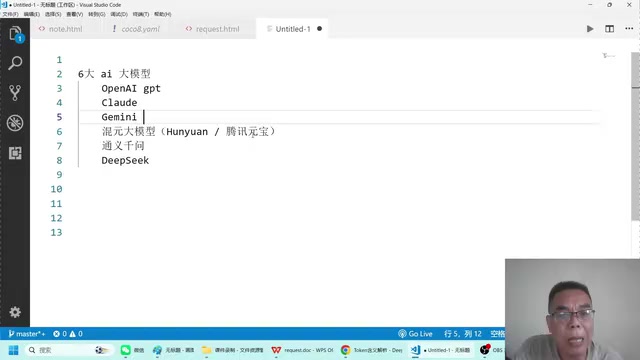
A head-to-head comparison of six major AI models on coding, Chinese language skills, and pricing.
This article compares six leading AI models — GPT, Claude, Gemini, Hunyuan, Tongyi Qianwen, and DeepSeek — across coding ability, Chinese language proficiency, and API pricing. Claude leads in code quality, GPT offers the best balance, and DeepSeek dominates on value with free chat access and open-source deployment. A detailed pricing table and use-case recommendations help readers choose the right model for their needs.
With AI large language models flourishing, six mainstream models — GPT, Claude, Gemini, Hunyuan, Tongyi Qianwen, and DeepSeek — each bring unique strengths to the table. To help you overcome decision paralysis, we've conducted a comprehensive comparison across three dimensions: coding ability, Chinese language proficiency, and pricing, so you can find the best fit for your needs.
Before diving into the comparison, it's essential to understand a core concept that runs throughout this article — the Token-based pricing mechanism. A Token is the basic billing and processing unit for large language models. It's not equivalent to a single character or word, but rather the smallest semantic fragment after the model splits the text. For English, one Token is roughly 4 characters or 0.75 words; for Chinese, a single character is typically encoded as 1–2 Tokens, meaning the same length of Chinese text may actually consume more Tokens than English. Input Tokens (what you send to the model) and output Tokens (what the model returns) are usually priced separately, with output prices typically 3–5x higher than input, since generating text requires more compute than understanding it. Grasping this mechanism is crucial for the pricing comparisons that follow.
The Big Three from Overseas: GPT, Claude, Gemini
OpenAI GPT: The All-Rounder
As the "OG" of the AI field, GPT's coding ability ranks among the top tier. It supports complex logical reasoning, excels at code completion and comment generation, and is well-suited for full-stack development assistance. Its Chinese language ability is solid — more than adequate for everyday conversations and content creation.
However, GPT sits at a relatively high price point. The API charges per Token, with input at approximately $2/million Tokens and output at around $10/million Tokens. The consumer-facing web version is free to use but comes with usage limits. For heavy users, the cost can add up quickly.
Claude: The King of Code
Claude, developed by Anthropic, is widely recognized as having one of the strongest coding capabilities — high code quality, precise bug analysis, and particular strength in development and testing scenarios. If you're a programmer, Claude is practically indispensable.
Anthropic was founded in 2021 by former OpenAI Research VP Dario Amodei and his sister Daniela Amodei as an AI safety company. The company introduced "Constitutional AI," a training method where the model critiques and corrects itself based on a set of predefined principles, thereby reducing harmful outputs. Claude's exceptional performance in coding is closely tied to Anthropic's deep optimization of Chain of Thought reasoning — the model is trained to perform logical decomposition before generating code, resulting in clearer structure and more rigorous logic.
However, Claude's Chinese language ability is slightly weaker than GPT's, which becomes noticeable in Chinese creative writing scenarios. Pricing-wise, it's firmly in "premium" territory: input at approximately $3/million Tokens and output at around $15/million Tokens, making it the most expensive of the six models. The consumer tier offers some free credits, but they're limited.
Gemini: Google's Value Pick
Gemini is a multimodal large model developed by Google's DeepMind team. Its standout feature is native support for multiple modalities — text, images, audio, and video — built into the architecture from the ground up, rather than bolted on after the fact like some other models. This gives Gemini a structural advantage in cross-modal tasks (such as generating code from images or analyzing video content). Google has also deeply integrated Gemini into its ecosystem, including Google Workspace, Android, and Search. This ecosystem synergy is a key pillar of its value-for-money strategy — spreading costs through massive-scale deployment.
Its coding ability is fairly strong and sufficient for everyday programming assistance, though it falls slightly behind Claude and GPT in complex architecture design. Chinese language ability is continuously improving — basically fluent but still has room for growth.
Pricing is one of Gemini's biggest advantages — input and output rates generally fall between $1.25 and $3/million Tokens, offering the best value among overseas models. The consumer tier also provides generous free credits, making it ideal for users who want to experience overseas models without breaking the bank.
The Top Three from China: Hunyuan, Tongyi Qianwen, DeepSeek
The Chinese language advantage of domestic models is no accident — it's rooted in training data composition and tokenization strategies. Overseas models are trained primarily on English corpora, with relatively lower proportions of Chinese data, and their Tokenizers encode Chinese less efficiently than models specifically optimized for it. Domestic models use large volumes of high-quality Chinese corpora during pre-training (including books, web pages, forums, code comments, etc.) and employ more efficient tokenization schemes tailored to Chinese characteristics. This means the same Chinese input consumes fewer Tokens and is understood more accurately. The difference is especially pronounced in scenarios involving idioms, internet slang, and dialectal expressions.
Tencent Hunyuan: A Domestic Champion for Enterprise Code Scenarios
The Hunyuan large model (Tencent Yuanbao) currently delivers the best domestic performance in enterprise-level code scenarios, handling everyday Python development and front-end development with ease. Its Chinese language ability is outstanding — it nails internet slang and local expressions, a natural advantage of domestic models.
A key note on pricing: Hunyuan is priced in RMB: input at approximately ¥1.5/million Tokens and output at around ¥5/million Tokens. Converted to USD, the price is far lower than overseas models, making it a pragmatic choice for domestic enterprise users.
Tongyi Qianwen: Alibaba's Balanced Choice
Tongyi Qianwen is Alibaba's AI product, with code generation and debugging capabilities ranking among the top domestic models. Its Chinese comprehension and creative writing feel very natural — top-tier among domestic models. This is inseparable from Alibaba's long-standing expertise in Chinese NLP — DAMO Academy has spent years working on pre-trained language models, knowledge graphs, and natural language understanding, and Tongyi Qianwen represents the culmination of all that accumulated technology.
Pricing is also in RMB: input at approximately ¥2/million Tokens and output at around ¥6/million Tokens. New users get free credits, and the overall value is strong — ideal for users with high demands for Chinese language scenarios.
DeepSeek: The Undisputed Value Champion
DeepSeek, from the company of the same name (深度求索), delivers exceptional performance in code generation, algorithm derivation, and bug fixing — firmly in the top tier among domestic models. Its Chinese language ability is equally impressive, aligning well with native Chinese expression habits.
But what truly sets DeepSeek apart is its pricing strategy: the official chat interface is currently completely free to use, and API prices are extremely low — input at just ¥0.14–1/million Tokens and output at around ¥2/million Tokens. New users also get free credits. More importantly, DeepSeek is an open-source model that supports local private deployment — a unique advantage for enterprises with data security requirements and individual researchers.
The value of an open-source model goes far beyond just being "free." DeepSeek's model weights and architecture code are fully public — anyone can download and run them on their own servers. This brings three core advantages: First, data security — all data is processed locally without being transmitted to third-party servers, meeting the strict data compliance requirements of industries like finance, healthcare, and government. Second, cost control — after a one-time hardware investment, subsequent usage incurs no per-Token fees, making it extremely economical for high-frequency use cases. Third, customizability — enterprises can fine-tune the open-source model to better fit specific business scenarios. This is why DeepSeek has garnered extremely high attention in the developer community.
Six AI Models: Pricing Comparison at a Glance
| Model | Input Price | Output Price | Currency | Free Tier |
|---|---|---|---|---|
| GPT | ~$2/million Tokens | ~$10/million Tokens | USD | Limited (consumer) |
| Claude | ~$3/million Tokens | ~$15/million Tokens | USD | Limited (consumer) |
| Gemini | ~$1.25–3/million Tokens | ~$1.25–3/million Tokens | USD | Generous (consumer) |
| Hunyuan | ~¥1.5/million Tokens | ~¥5/million Tokens | RMB | - |
| Tongyi Qianwen | ~¥2/million Tokens | ~¥6/million Tokens | RMB | Free for new users |
| DeepSeek | ~¥0.14–1/million Tokens | ~¥2/million Tokens | RMB | Chat page free |
From a pricing perspective, domestic models hold a crushing cost advantage. Even ignoring exchange rates, DeepSeek's API pricing is merely a fraction — sometimes one-thirtieth — of Claude's. Behind this price gap lies both the relatively lower compute costs in China and the "volume through pricing" market strategy adopted by domestic model vendors — using extremely low prices to rapidly acquire users and build developer ecosystems, creating a data flywheel effect.
How to Choose: Match Your Needs
Overall, these six models serve different positioning:
- Pursuing ultimate code quality: Claude is the top pick, with GPT close behind
- Full-stack development + Chinese content creation: GPT is the most balanced choice
- Budget-friendly overseas model experience: Gemini offers the most generous free tier
- Enterprise-level Chinese scenarios: Hunyuan and Tongyi Qianwen each have their strengths
- Learning, research, and personal development: DeepSeek is the undisputed value champion
Here's the honest truth: Don't obsess over which one is "the best" — the best AI is the one that works best for you. GPT is like a well-rounded returnee elite, Claude is like a hardcore tech geek, and DeepSeek is the value king. Rather than comparing which is superior, ask yourself what your needs are and what your budget can handle.
For most users in China, DeepSeek's free + open-source combination has virtually zero barrier to entry, making it the most worthwhile first choice to try. Once your needs become clearer and your usage scales up, upgrading based on specific scenarios is the most rational AI adoption strategy.
Related articles
AI Programming Learning Roadmap: A Complete Six-Stage Guide from Beginner to Expert
A systematic breakdown of the six-stage AI programming learning roadmap, from zero-code start to mastering Cursor and professional tools, methodology frameworks, advanced patterns, and project practice.

Deep Dive into Devin's Background Agent Architecture: Behind the 80% AI-Committed Code
Deep analysis of Devin's background agent architecture: brain-sandbox separation, environment setup, MCP integration, memory systems, and multi-agent collaboration challenges.

Claude Code in Practice: An In-Depth Efficiency Comparison Between Claude and DeepSeek for Programming
A hands-on comparison of Claude vs DeepSeek V4 for AI programming: code quality, development efficiency, and cost differences. DeepSeek costs 1/6 to 1/10 of Claude but requires 1-2x more time.