Grok Free Usage Guide: A Complete Breakdown of AI Chat and Image Generation Features
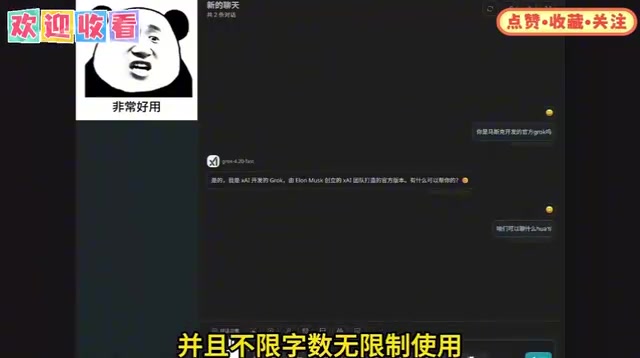
Complete guide to accessing Grok's AI chat and image generation features for free.
This guide covers everything you need to know about using xAI's Grok for free, including its multi-topic conversational abilities, AI image generation powered by diffusion models, and role-playing features. It compares Grok with ChatGPT and Claude, explains official and third-party access methods, clarifies the Groq vs. Grok confusion, and provides important security and compliance tips.
Overview of Using Grok for Free
Grok, the large language model developed by xAI, has attracted significant attention for its powerful conversational abilities and image generation features. xAI is an artificial intelligence company founded by Tesla CEO Elon Musk in July 2023, headquartered in the San Francisco Bay Area. The name "Grok" comes from science fiction writer Robert A. Heinlein's 1961 novel Stranger in a Strange Land, meaning "to understand something deeply and intuitively." The Grok series of models is trained on a large-scale Transformer architecture, with training data that includes real-time public data streams from the X platform, giving it a unique ability to access real-time information. As of 2024, Grok has iterated through multiple versions—from the original Grok-1 to subsequent Grok-2, Grok-3, and beyond—with each iteration bringing significant improvements in reasoning capability, multimodal understanding, and generation quality.
Many users are looking for ways to use Grok for free and without restrictions. This article provides a detailed overview of free access methods for Grok, its core features, and important usage considerations.
Detailed Breakdown of Grok's Core Features
Multi-Topic Conversational Ability
As a large language model launched by xAI, Grok offers broad topic coverage. Large Language Models (LLMs) are natural language processing systems based on deep learning, with the Transformer model proposed by Google in 2017 as their core architecture. These models learn statistical patterns and semantic relationships in language through self-supervised pre-training on massive text datasets, with parameter counts typically reaching billions or even trillions. After training, models undergo alignment processes such as Instruction Tuning and Reinforcement Learning from Human Feedback (RLHF) to make their outputs better match human expectations.
Compared to mainstream AI assistants like ChatGPT and Claude, Grok is relatively lenient in terms of conversational restrictions and can discuss a wider variety of topics with users. This aligns with xAI's product philosophy—Musk has repeatedly stated his desire to build an AI that "maximally pursues truth" with fewer unnecessary content restrictions.
Based on user testing, the full features of Grok's latest version can be experienced through certain free channels, including:
- Unlimited length conversational interactions
- AI image generation capabilities
- Support for Grok's latest model version
- Completely free to use
AI Image Generation
Grok's image generation feature is one of its most popular capabilities. This feature is based on Diffusion Model technology, and reportedly uses the FLUX model architecture under the hood. Diffusion models work by gradually adding noise to an image until it becomes pure noise, then training a neural network to learn the reverse denoising process, enabling the generation of high-quality images from random noise. Compared to earlier GANs (Generative Adversarial Networks), diffusion models produce higher-quality images with more stable training. Users simply input a text description (Text Prompt), and the model converts semantic information into visual content through text-image alignment techniques (such as CLIP).
Compared to other AI image generation tools, Grok has relatively fewer restrictions on content generation, allowing users to create images in more diverse styles. However, it's important to note that any AI tool should be used in compliance with relevant laws, regulations, and platform policies.
Role-Playing and Personalized Interaction
Grok also supports a role-playing mode, where users can use prompts to have the AI assume different characters for interactive conversations. Prompt Engineering refers to the technical method of carefully designing input text to guide AI models toward desired outputs. In role-playing scenarios, users typically use System Prompts to define the AI's personality traits, speaking style, and behavioral boundaries. Common prompting techniques include: Few-shot Learning (providing examples), Chain-of-Thought (guiding step-by-step reasoning), and Persona Setting. Effective prompt design can significantly improve the quality and relevance of AI output, which is why the same model can perform vastly differently under different prompts.
This feature has practical value in scenarios such as emotional companionship and creative writing.
Ways to Use Grok for Free
Official Channels
Current official access methods for Grok include:
- X Platform (formerly Twitter): X Premium subscribers can use Grok directly
- grok.x.ai website: Free registration available in some regions, but with daily usage limits
- Third-party API access: Through inference platforms
Regarding third-party API access, a common confusion needs to be clarified: Groq ≠ Grok. Groq is a semiconductor company focused on AI inference acceleration, founded in 2016 by Jonathan Ross, a former member of Google's TPU team. Groq developed a specialized chip called the LPU (Language Processing Unit), specifically optimized for high-speed inference of large language models, claiming to achieve ultra-fast text generation of hundreds of tokens per second. Groq offers cloud API services, allowing users to call open-source models like Llama and Mixtral at extremely high speeds through its platform. Grok, on the other hand, is the AI model itself developed by xAI. The two are easily confused by name but belong to completely different companies and products.
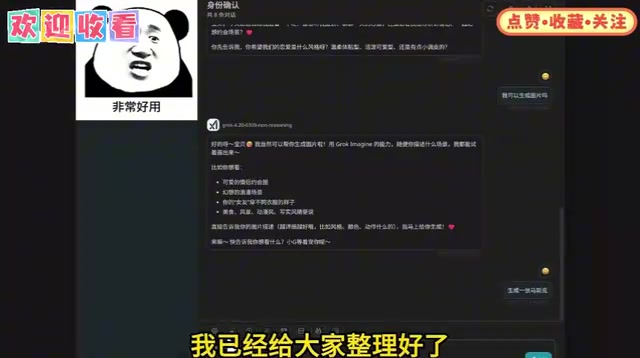
Usage Considerations
When looking for free Grok access channels, keep the following in mind:
- Security: Avoid entering personal sensitive information on third-party platforms of unknown origin
- Compliance: Ensure your usage complies with local laws and regulations
- Stability: Free channels may become unavailable at any time and are not recommended for production environments
- Privacy protection: Be aware that conversation content may be logged by third-party platforms
Grok vs. ChatGPT vs. Claude Feature Comparison
| Feature | Grok | ChatGPT | Claude |
|---|---|---|---|
| Free quota | Limited | Limited | Limited |
| Image generation | ✅ | ✅(Plus) | ❌ |
| Content restrictions | Relatively lenient | Relatively strict | Moderate |
| Chinese language ability | Moderate | Strong | Strong |
| Real-time information | ✅ | ✅(with browsing) | ❌ |
Grok's differentiating advantage lies in its relatively lenient content policy and integration with X platform's real-time data, giving it unique value in information retrieval and creative generation scenarios. ChatGPT, developed by OpenAI, is built around the GPT-4 series of models and boasts the largest user base and most mature plugin ecosystem. Claude, developed by Anthropic, is trained using the "Constitutional AI" method and excels in long-text processing and code generation. Each has its own strengths, and users can choose the appropriate tool based on their specific needs.
Conclusion
As an emerging force in the AI space, Grok has attracted a large user base with its open conversational style and powerful image generation capabilities. While free access channels do exist, users should pay attention to information security and compliant usage when trying them out. It's recommended to prioritize official channel updates for the most stable and secure Grok experience.
As competition in the AI industry intensifies, major model providers are competing for users through free quotas and feature openness. It's foreseeable that Grok's free usage policies may be adjusted as xAI's commercialization progresses, and users should stay tuned to official announcements for the latest information.
Key Takeaways
Related articles
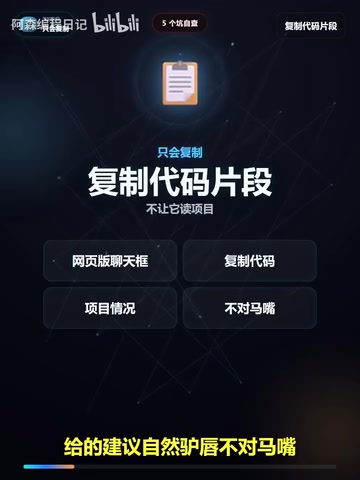
Five Common Claude Code Mistakes — How Many Are You Making?
Five common Claude Code mistakes developers make: copy-pasting code, skipping CLAUDE.md, inefficient prompting, ignoring docs, and poor context management — with fixes.
Andrew Ng's New Course Explained: A Practical Guide to Using OpenAI's O1 Reasoning Model
Deep dive into Andrew Ng and OpenAI's Reasoning with O1 course covering test-time scaling, new prompting paradigms, multi-model orchestration, and practical applications for developers.

Learning AI After College Entrance Exams: A Complete Path from Zero to Freelancing
How to efficiently learn AI skills during summer break after exams? A complete path from mastering prompts and hands-on projects to freelancing on platforms.