Harness AI Engineering Programming: A Detailed Methodology for Enterprise-Level Project Development
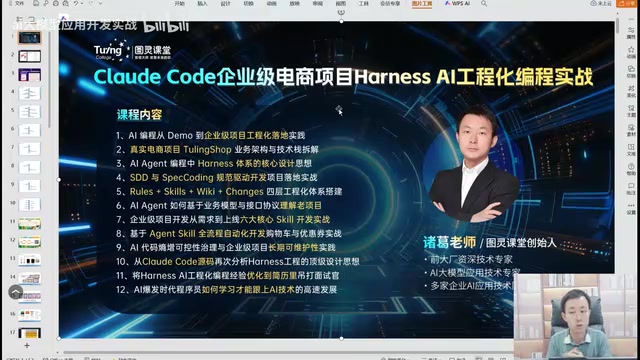
Harness Engineering methodology solves AI programming's quality and control challenges in enterprise projects.
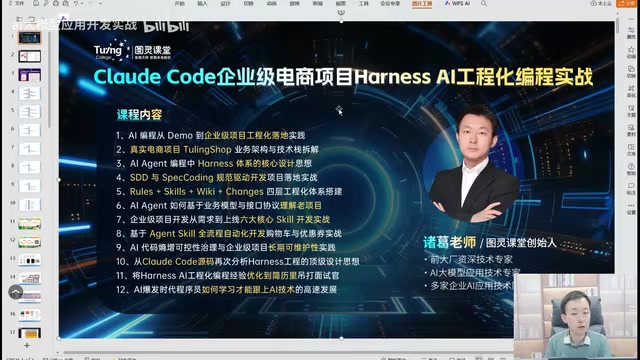
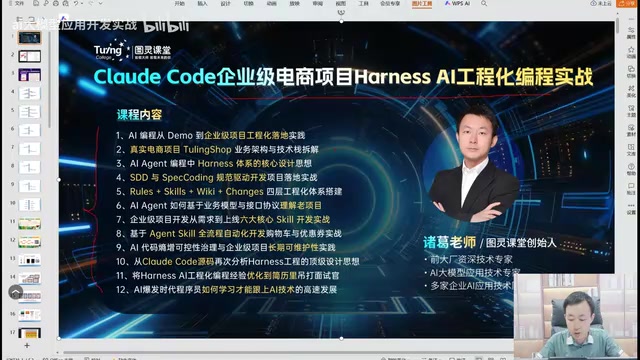
This article explores the Harness AI Engineering Programming methodology, addressing common pain points when using AI coding tools in enterprise projects—including infinite bug loops, code quality degradation, hallucinations, and high token costs. It introduces Specification-Driven Development (SDD) and Agent Skill development patterns as core practices for achieving controllable, maintainable, enterprise-grade AI-assisted development.
Introduction: The Truth and Anxiety Around AI Programming
Recently, social media has been flooded with claims like "non-technical people can use AI programming to replace developers," causing considerable anxiety among practitioners. But looking at this objectively, most projects showcased by these influencers are simple demos, small startup projects, or API-wrapper applications—cross-border e-commerce template sites, AI image generation websites, digital avatar software, etc.—with limited technical depth.
Truly enterprise-level projects—such as large-scale ERP systems like Yonyou or Kingdee, or high-concurrency distributed microservice architecture projects at major tech companies—have zero documented cases of non-technical personnel independently completing them with AI programming tools. Take Yonyou U9 Cloud as an example: a complete ERP system typically includes dozens of core modules covering financial management, supply chain management, manufacturing, human resources, and more, involving thousands of database tables, tens of thousands of business interfaces, and extremely complex business process orchestration. Distributed microservice architecture projects at major tech companies often need to handle hundreds of thousands of concurrent requests per second, involving service registration and discovery, load balancing, circuit breaking and degradation, distributed transactions, message queues, caching strategies, and an entire technology stack. Such projects typically have codebases in the millions of lines, with intricate coupling relationships between modules where any local change can trigger a chain reaction—this is precisely the domain where AI programming tools currently struggle to operate independently.
This leads to a core question: How should AI programming tools actually be used in enterprise-level projects? Harness AI Engineering Programming (Harness Engineering) is a methodology born specifically to address this problem.
Common Pain Points When Using AI Programming Tools in Practice
The "Infinite Loop" Bug Problem in Complex Projects
Many programmers using AI programming tools like Claude Code, Cursor, or Codex have encountered similar predicaments: everything goes smoothly in the early stages, with AI generating code quickly and effectively. But as system complexity increases, once a bug appears, asking the AI tool to repeatedly fix it leads to an infinite loop—fixing point A breaks point B, fixing point B crashes point C.
If developers lack solid technical foundations and don't carefully review the large volumes of AI-generated code, the project gets completely stuck. This isn't a tool problem—it's a problem of missing engineering management.
Loss of Code Quality Control: The Birth of "Code Mountains of Garbage"
Code generated by AI programming tools often doesn't conform to the project's existing coding standards and architectural conventions. As AI-generated code accumulates, the entire project gradually devolves into what developers call "spaghetti code"—inconsistent styles, chaotic structure, and impossible to maintain.
Hallucination, Trust, and Token Cost Issues
Beyond code quality, AI programming has several high-frequency pain points:
-
AI Hallucination: AI tools provide seemingly reasonable answers even for uncertain questions, easily misleading developers who don't carefully review the output. AI Hallucination is an inherent characteristic of large language models, rooted in the model's generation mechanism. LLMs are fundamentally probability-based next-token predictors that don't truly "understand" code semantics and logic, but generate seemingly reasonable output based on statistical patterns in training data. When the model encounters scenarios insufficiently covered in training data, it won't answer "I don't know" but will "fabricate" a plausible-looking answer based on probability distributions. In programming scenarios, this may manifest as calling non-existent APIs, using deprecated library functions, generating algorithmically self-consistent but semantically incorrect implementations, or even inventing non-existent third-party libraries. Such hallucinations are easy to spot in simple projects, but in complex enterprise-level projects, a hidden hallucination might not surface until months after deployment as a severe production incident.
-
Trust Deficit: For projects generated entirely by AI, developers have no confidence about where hidden issues might lurk, with potential disasters waiting to happen after deployment.
-
High Token Costs: Generating a single feature can easily cost tens or even hundreds of yuan in Token fees, which is a significant burden for individuals and small teams. Tokens are the basic unit of measurement for how LLMs process text—a Chinese character typically corresponds to 1-2 tokens, and an English word approximately 1-4 tokens. Taking Claude 3.5 Sonnet as an example, its input price is approximately $3 per million tokens, and output price approximately $15 per million tokens. In enterprise-level project development, AI programming tools need to include extensive project context (including existing code, specification documents, requirement descriptions, etc.) as input, and a single complete code generation request may consume tens of thousands or even hundreds of thousands of tokens. If developers frequently have AI repeatedly modify code and debug bugs, token consumption grows exponentially. Monthly AI programming token costs for a medium-scale project can reach thousands or even tens of thousands of yuan, making the "mindlessly calling AI" development approach economically unsustainable, which further validates the necessity of engineering management.
The root cause of these problems is: most people are simply "using AI to write code" rather than doing "AI engineering programming."
Core Principles of Harness AI Engineering Programming
What is Harness Engineering
Harness AI Engineering Programming is not a tutorial for any specific tool, but rather a methodology for integrating AI programming tools into enterprise-level software engineering workflows. It's language-agnostic (Java, Python, Go all apply), project-type-agnostic (e-commerce, finance, SaaS all work), with the core goal of making AI-generated code controllable, maintainable, and sustainably iterable.
Specification-Driven Development (SDD): Controlling Code Quality at the Source
One key practice is Specification-Driven Development (SDD). Currently, most mid-to-large-scale IT companies and major tech firms in China are adopting this approach.
The core idea of SDD is: before having AI generate code, first define complete specifications—including architecture standards, coding conventions, interface specifications, naming conventions, etc. AI tools generate code under these specification constraints rather than freely improvising. This fundamentally solves the "spaghetti code" problem.
The concept of Specification-Driven Development didn't emerge from nowhere—it evolved from long-accumulated best practices in software engineering, such as Test-Driven Development (TDD), Behavior-Driven Development (BDD), and Domain-Driven Design (DDD). TDD emphasizes writing tests before implementation, BDD emphasizes describing system behavior in business language, and DDD emphasizes driving architectural design with business domain models. SDD's unique contribution is elevating "specifications" to first-class citizens in the AI programming era. In traditional development, coding standards rely on code reviews and static analysis tools for after-the-fact checking; in AI programming scenarios, specifications need to be front-loaded as the AI's "system prompts" or contextual constraints, ensuring AI follows established standards at the moment of code generation. Currently, major Chinese tech companies like ByteDance and Alibaba are already implementing similar AI programming specification systems internally, using predefined prompt templates and code style configuration files (such as .cursorrules, CLAUDE.md, etc.) to constrain AI output quality.
Skill Development Pattern: A New Paradigm for Full-Process Automation
Another cutting-edge practice is Agent Skill Development. In the AI large model space, Skill development is becoming a new programming paradigm—developers no longer write functional code line by line, but instead develop reusable Skills (capability modules).
The rise of the Skill development pattern is closely tied to the rapid advancement of AI Agent technology. An AI Agent refers to an AI system capable of autonomously perceiving its environment, formulating plans, executing actions, and adjusting strategies based on feedback. In software development, Agents are no longer simple "Q&A-style" code generators, but autonomous development assistants that can understand task objectives, decompose subtasks, invoke tool chains, and verify execution results. Each Skill is essentially an Agent workflow encapsulating a specific capability, with clearly defined inputs/outputs, execution steps, quality checkpoints, and exception handling logic. This pattern draws from the Unix philosophy of "do one thing well" and the "single responsibility" principle from microservice architecture, decomposing complex software development processes into composable, reusable, independently evolvable capability units. Tools like OpenAI's Codex and Anthropic's Claude Code are all evolving in this direction.
In enterprise-level projects, a complete development workflow can be decomposed into six core Skills:
- Requirements Analysis Skill: Transforms business requirements into technical specifications
- Code Implementation Skill: Generates code under specification constraints
- Code Review Skill: Automated code quality inspection
- Test Generation Skill: Automatically generates unit tests and integration tests
- Continuous Integration Skill: Automated build and deployment pipelines
- Production Deployment Skill: Production environment release management
These six Skills cover the complete lifecycle from requirements to deployment, making AI programming no longer a "write and forget" one-time activity, but a continuous practice integrated into engineering workflows.
Enterprise-Level Project Practice: E-Commerce System Case Study
Why Choose an E-Commerce Project as the Practical Case
E-commerce systems are among the most representative enterprise-level projects: high business complexity (multiple subsystems including products, orders, payments, inventory, logistics), strict technical requirements (high concurrency, data consistency, distributed transactions), and most developers are familiar enough with e-commerce business that no additional business context explanation is needed.
Engineering Setup with Specifications First
Under the Harness methodology, the first step when starting a project is not having AI start writing code, but establishing complete engineering specifications. This specifically includes:
- Project directory structure standards
- Layered architecture conventions (Controller → Service → Repository)
- Database design standards
- API interface design specifications
- Exception handling and logging standards
The Controller → Service → Repository layered architecture is the most classic enterprise application architecture pattern in the Java/Spring Boot ecosystem. The Controller layer handles HTTP request reception and parameter validation, the Service layer encapsulates core business logic, and the Repository layer (also called the DAO layer) handles data persistence operations. In e-commerce systems, this layered architecture faces typical technical challenges including: order creation requiring simultaneous inventory deduction, payment order generation, and shopping cart updates, which involves distributed transaction consistency issues (typically solved using Saga or TCC patterns); high-concurrency inventory deduction in flash sale scenarios requiring Redis distributed locks or message queue peak-shaving; and payment callback idempotency handling to prevent duplicate charges. These technical challenges are interconnected, and code quality issues in any single link could lead to financial losses or user experience disasters—this is why e-commerce systems are chosen as the best practical case for the Harness methodology.
These specification documents serve as contextual input for AI programming tools, ensuring all generated code follows unified standards.
Legacy Project Transformation Strategy: Gradual Introduction
For existing legacy projects, Harness also provides a clear transformation path. The core approach is gradual introduction—not starting from scratch, but progressively establishing specifications on the existing codebase, allowing AI tools to perform incremental development and code refactoring within existing architectural constraints.
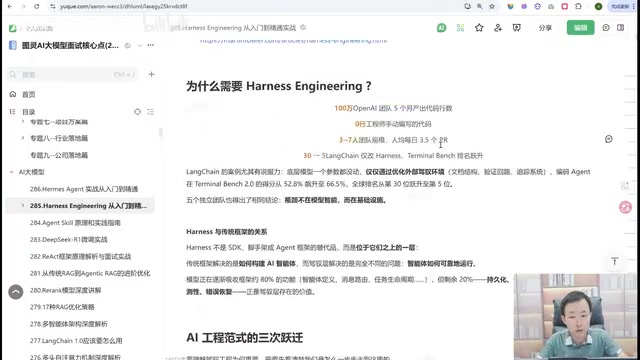
Harness Engineering Practices Behind Claude Code
A noteworthy fact: Claude Code's own backend is a standard Harness engineering implementation. The open-source code for Claude Code can be found on GitHub, and its internal engineering design is highly worth studying—it serves as the best practice case for Harness AI Engineering Programming itself.
Conclusion: Mastering AI Engineering Programming is the True Competitive Advantage
The value of AI programming tools is beyond question, but tools are merely means; engineering is the core. The significance of Harness AI Engineering Programming lies in:
- Making AI-generated code meet enterprise-level standards rather than being haphazardly assembled
- Controlling code quality at the source through Specification-Driven Development (SDD)
- Achieving full-process automation from requirements to deployment through the Skill development pattern
- Transforming programmers from "AI code porters" into "AI engineering architects"
For programmers, rather than worrying about whether AI will replace them, it's better to master this engineering methodology early. True competitive advantage lies not in whether you can use AI tools, but in whether you can use AI tools to deliver enterprise-grade quality projects.
Related articles

The Decline of Tokenmaxxing: Why Selling Outcomes Matters More Than Selling Tokens
The Tokenmaxxing craze is fading as enterprise AI procurement shifts from chasing Token counts to focusing on actual business outcomes. Learn why outcome-based AI evaluation is the right approach.
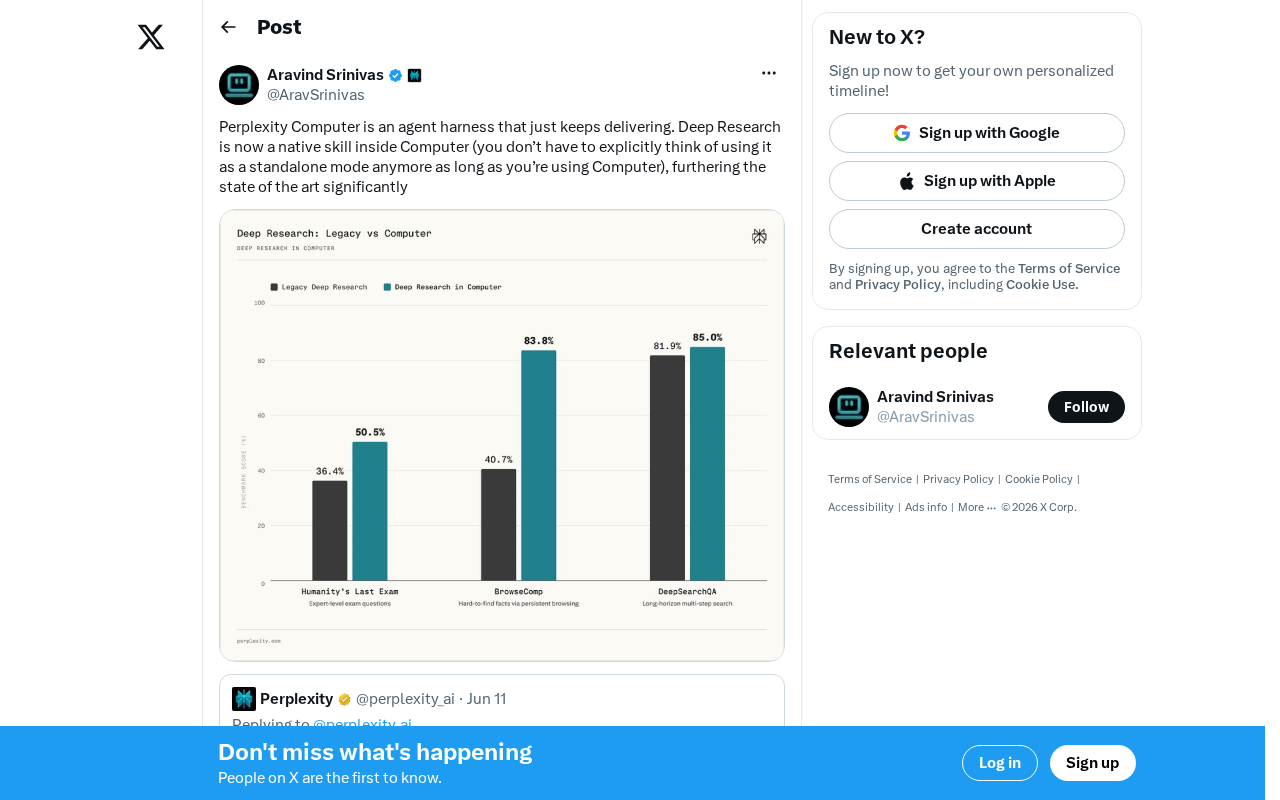
Perplexity Computer Integrates Deep Research as a Native Skill: A New Paradigm for AI Agent Capability Fusion
Perplexity integrates Deep Research as a native skill in Computer, enabling automatic invocation without manual mode switching. Analyzing the Agent Harness design philosophy and AI capability fusion trends.
Key Takeaways from Andrew Ng × OpenAI's Prompt Engineering Course: Two Core Principles Explained
Deep dive into Andrew Ng & OpenAI's ChatGPT Prompt Engineering course: Base LLM vs instruction-tuned models, two core prompting principles, and API-first development thinking for developers.