Harness: An Open-Source Framework That Generates Multi-Agent Teams from a Single Sentence
Harness auto-generates multi-Agent collaboration teams from a single sentence description.
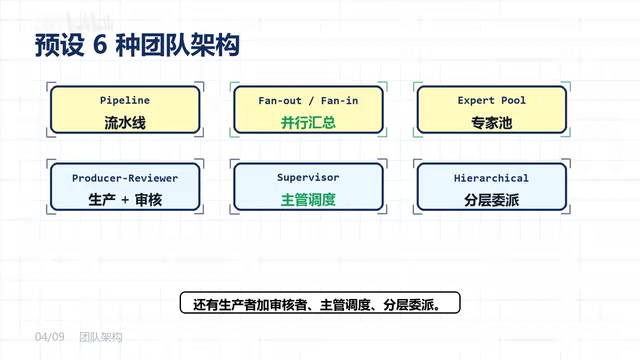
Harness is an open-source framework with 4.6K GitHub stars that automatically generates multi-Agent collaborative teams from a single project description. It features six pre-built team architectures — pipeline, parallel aggregation, expert routing, producer-reviewer, supervisor dispatch, and hierarchical delegation — covering most real-world scenarios. Primarily designed for the Claude Code environment, it outputs reusable agent and skills files that can be version-controlled and deployed via CI/CD.
When your AI Agent transitions from "solo operation" to "team collaboration," what's the biggest headache? It's not writing prompts — it's designing who should do what, in what order, and how they coordinate. Harness, an open-source project with 4.6K stars, is built to solve exactly this problem.
What Is Harness: An Automated Factory for Agent Teams
Harness has a clear positioning — it's not yet another chat assistant, nor a prompt template collection. It's an Agent team generator.
All you need is a single sentence describing your project goal, and it automatically breaks it down into a complete multi-role collaborative team. Here are two examples:
- Building a website: Automatically splits into roles like designer, frontend developer, backend developer, QA engineer, etc.
- Content production: Automatically splits into roles like topic planning, script writing, headline optimization, cover design, content review, etc.
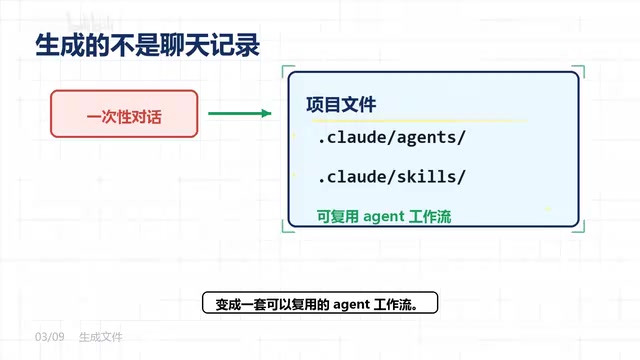
The key point is that what gets generated isn't a one-off chat transcript, but reusable agent files and skills files for your project. In Agent development practice, "agent files" typically define an Agent's role, system prompts, available tools, and behavioral constraints in configuration files (usually YAML or JSON format), while "skills files" encapsulate the Agent's specific capability implementations, including tool invocation logic, output format specifications, and error handling strategies. This approach of "file-ifying" Agent capabilities is essentially an extension of the "Infrastructure as Code" philosophy from software engineering into the AI domain — it solves a critical pain point: most people's Agent outputs are one-time conversation logs that can't be reused, version-controlled, or shared across teams. Once file-ified, Agent teams become engineering assets that can be managed with git and deployed via CI/CD.
In other words, it solidifies ad-hoc requirements into a sustainably running workflow.
Industry Background of Multi-Agent Collaboration
Multi-Agent Systems (MAS) are a core research direction in distributed artificial intelligence, with theoretical foundations tracing back to distributed problem-solving research in the 1980s. In the LLM era, the meaning of Multi-Agent has fundamentally changed: from traditional rule-based software agents to intelligent agent collaboration driven by large language models. Current mainstream frameworks like AutoGen, CrewAI, LangGraph, and others are all trying to solve the same core problem — how to make multiple LLM Agents collaborate efficiently without increasing information entropy. The difficulty here isn't in individual Agent capabilities, but in coordination mechanism design: including task decomposition strategies, communication protocols, conflict resolution mechanisms, and result aggregation methods. Harness's unique position in this space is that it doesn't require users to understand these underlying mechanisms — instead, it lowers the design barrier for multi-Agent systems through automated generation.
Six Pre-Built Team Architectures Explained
Harness comes with six battle-tested team collaboration patterns that cover the vast majority of real-world scenarios:
- Pipeline Mode: Ideal for tasks with a clear sequential order — A finishes and passes to B, B finishes and passes to C
- Parallel Aggregation Mode: Multiple Agents process different subtasks simultaneously, with results consolidated at the end
- Expert Routing Mode: Automatically invokes the corresponding domain expert Agent based on the type of problem
- Producer-Reviewer Mode: One Agent handles content production, another handles quality review
- Supervisor Dispatch Mode: A supervisor Agent coordinates and assigns tasks to subordinate Agents
- Hierarchical Delegation Mode: Multi-level management structure, suitable for large complex projects
These six architectures aren't Harness's invention — they're AI-adapted mappings of classic patterns from organizational management theory and software architecture design. Pipeline Mode corresponds to manufacturing assembly lines and the Pipeline pattern in software development; Parallel Aggregation Mode is similar to the MapReduce computational paradigm — first splitting a large task across multiple nodes for parallel processing, then reducing and merging the results; Expert Routing Mode is essentially the Strategy Pattern from design patterns applied at the Agent level; Producer-Reviewer Mode originates from the Code Review culture in software engineering and the editor-proofreader workflow in publishing; Supervisor Dispatch Mode corresponds to centralized decision-making structures in management theory; and Hierarchical Delegation Mode maps to the bureaucratic organizational structure of large enterprises.
Understanding these underlying mappings helps you choose the most appropriate collaboration pattern for your actual projects, rather than applying them blindly.
Core Value: From Solo Assistant to Team Orchestration
The traditional way of using Agents is: you figure out which Agent should do what and manually orchestrate the workflow. This works fine for simple tasks, but when tasks get complex, problems emerge —
- Poor role decomposition leads to redundant work
- Improperly designed collaboration sequences cause information gaps
- Every new project requires designing the workflow from scratch
Harness's approach is to hand off the "team design" task itself to AI. You describe the goal; it designs the optimal team structure and collaboration method. The logic behind this is: if AI already understands the structure and dependencies of a task well enough, then it should also be able to design a reasonable division of labor — just like an experienced project manager who can quickly assemble a team and assign responsibilities after seeing the requirements.
This approach is particularly well-suited for three types of scenarios:
- Development projects: Software engineering requiring multi-role division of labor
- Content projects: Complete content pipelines from planning to publishing
- Complex research: Investigation tasks requiring multi-perspective analysis
Usage Limitations and Applicability Boundaries

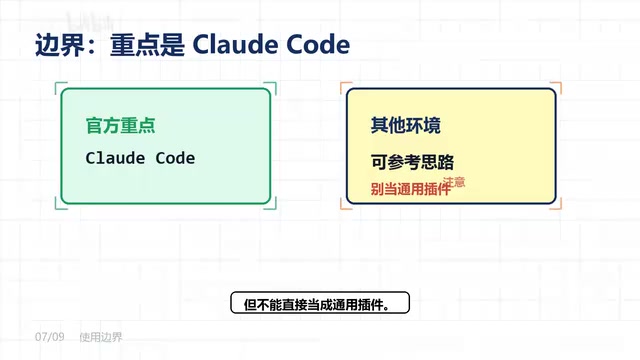
It's important to note that Harness currently focuses its official support on the Claude Code environment. Claude Code is a command-line AI programming tool from Anthropic that allows developers to interact directly with Claude models in the terminal, performing tasks like code writing, file operations, and system commands. Unlike traditional IDE plugins, Claude Code adopts an "agentic coding" paradigm — the AI doesn't just generate code snippets but can autonomously plan execution steps, read project context, run tests, and iteratively fix issues. Harness chose Claude Code as its primary supported environment because Claude Code natively supports defining Agent behavior through configuration files in the project directory (such as files under the .claude/ directory), providing a natural filesystem-level integration point for multi-Agent collaboration. The generated agent and skills files can be directly recognized and executed by Claude Code without requiring an additional runtime environment.
If you use other development environments, you can draw inspiration from its architectural approach, but it can't be used directly as a universal plugin.
Additionally, not all tasks require team orchestration. When a task is simple enough (like translating a paragraph or summarizing an article), a single Agent can handle it efficiently, and introducing team architecture only adds unnecessary complexity. This is known as "Over-engineering" in system design — when the complexity of the solution exceeds the complexity of the problem itself, it actually reduces efficiency.
Criteria for when Harness is a good fit:
- The task involves more than 3 roles with different functions
- The workflow needs to be executed repeatedly rather than as a one-off
- The task chain is long with clear upstream-downstream relationships
Summary
Harness represents an important evolutionary direction in Agent applications: from "how to use a single Agent well" to "how to organize a group of Agents to collaborate." It transforms team design theory from organizational management into an executable AI workflow framework. The significance of this direction lies in the fact that as individual Agent capabilities gradually approach their ceiling (constrained by context windows, reasoning depth, and tool invocation reliability), breaking through single-agent capability boundaries through multi-Agent collaboration is becoming a key path to improving overall AI system performance. For those deeply exploring Agent development, even if you don't use this tool directly, the multi-Agent collaboration architecture thinking behind it is well worth serious study.
Related articles
AI Full-Stack Development Architecture: A Three-Layer Progressive Path from Prototype to Production
A detailed guide to AI full-stack development architecture covering Node.js+TypeScript+Monorepo engineering, Docker CI/CD deployment, and AI engine design with interview tips.
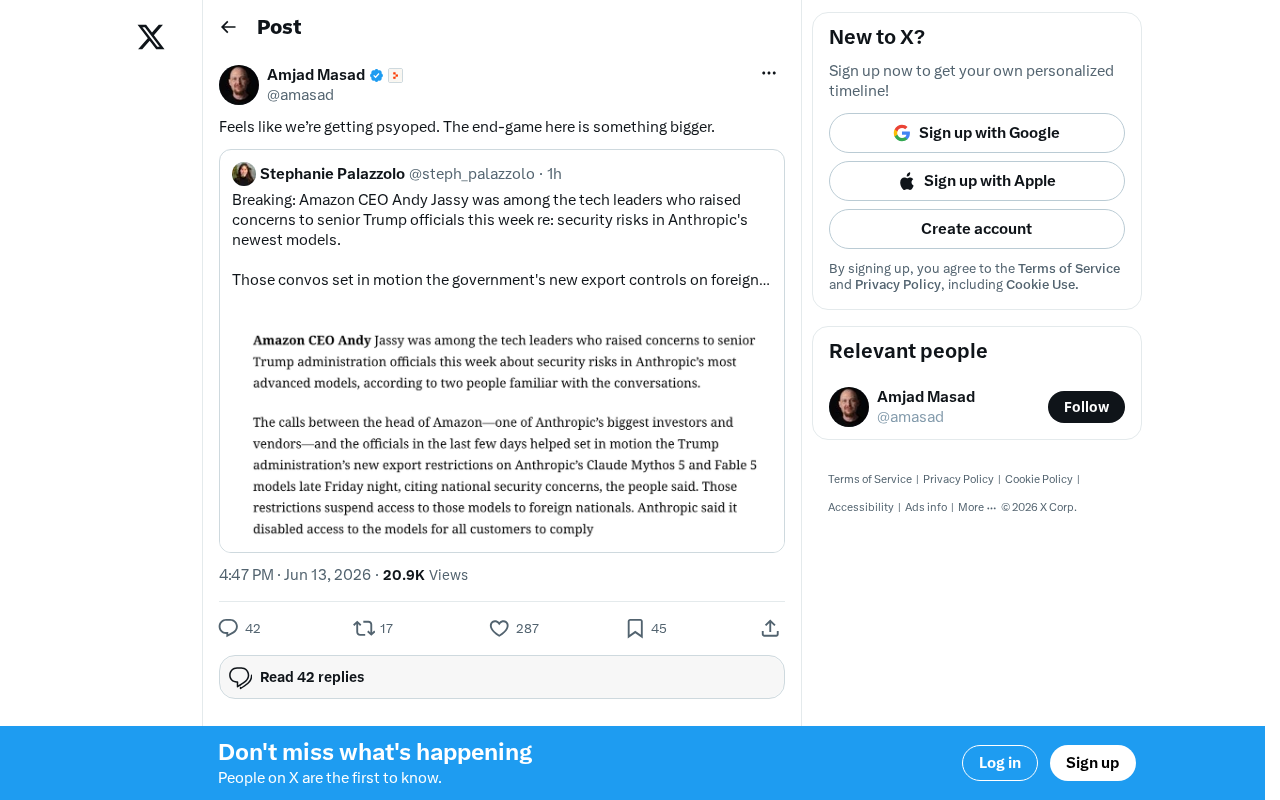
The AI Industry's Psychological Warfare: Narrative Manipulation, Ecosystem Lock-In, and the Endgame
Behind the AI industry's relentless product launches and narrative building lie deeper battles over data monopolies, ecosystem lock-in, and expectation management. A deep dive into the psyop phenomenon.
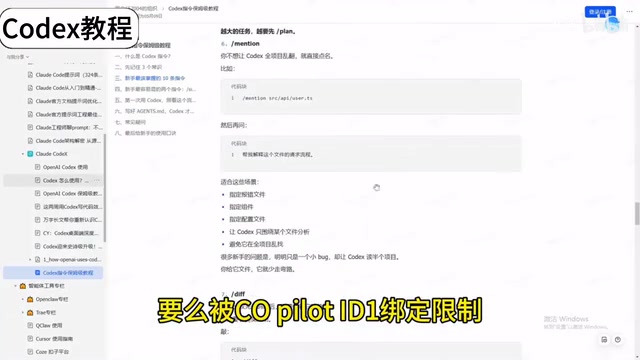
ByteDance Codex Chinese Manual: An In-Depth Guide to AI-Powered Programming
In-depth analysis of the ByteDance Codex Chinese Manual covering multi-language support, prompt standards, context management, and practical templates for AI programming.