Hermes Agent 0.14.0 Update: Native Windows Support and 180x Performance Boost

Hermes Agent 0.14.0 delivers major updates including performance leaps, Windows support, and new features.
Open-source AI Agent project Hermes Agent releases its 0.14.0 "Foundation Update" with milestone improvements: a new local proxy layer routes one subscription to all AI tools; browser automation achieves 180x speedup via persistent CDP connections; native Windows support, AI video generation, and SuperGrok integration are added; a lossless context Handoff system enables seamless multi-model switching; and free DeepSeek V4 Flash model access rounds out a comprehensive upgrade that lowers barriers while boosting system capabilities.
Overview: Hermes Agent Reaches a Milestone Update
Hermes Agent (also known as Kermis) is one of the most noteworthy open-source AI Agent projects today, developed by Manusreserve under the MIT license. It's designed as a persistent autonomous system that continuously evolves over time, building long-term memory, reusing skills, and deeply understanding user needs.
The core characteristic that distinguishes an Autonomous Agent from a regular chatbot is its ability to independently plan, execute multi-step tasks, and continue running without human intervention. Hermes's "persistent autonomous system" design means it not only executes immediate tasks but also maintains long-term memory across sessions. This is typically achieved by storing semantic embeddings of historical interactions in vector databases (such as ChromaDB or Qdrant), enabling the Agent to retrieve past experiences to guide current decisions. Skill Reuse refers to the Agent abstracting successfully completed task workflows into reusable "skill templates"—similar to function encapsulation in programming—which can be directly invoked for similar future tasks without replanning.
Recently, Hermes Agent released version 0.14.0, officially named the "Foundation Update," covering major improvements including native Windows support, significant performance boosts, native video generation, free DeepSeek V4 access, and more. This is arguably the most important version iteration in Hermes Agent's history.
New Local Proxy Feature: One Subscription for Everything
The most innovative feature in this update is the new Local Proxy layer. With this feature, users only need a single subscription (such as Claude, ChatGPT, or Grok) to route it to virtually any local coding tool or autonomous agent, without configuring separate API keys for each application.
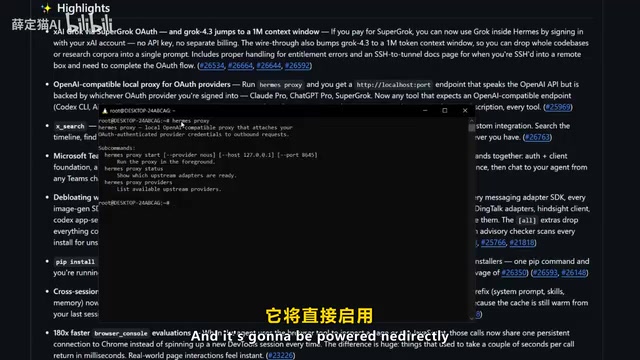
From a technical perspective, the local proxy layer is essentially a reverse proxy server running on the user's machine that intercepts API requests from local applications and forwards them to the user's subscribed cloud services. This architectural pattern is known as an "API Gateway" in the microservices domain, commonly seen in infrastructure like Envoy and Nginx. In the AI tool ecosystem, users typically need to configure API keys separately for each tool (such as Cursor, Continue, Cline, etc.), which is not only cumbersome but also poses key leakage risks. Hermes's local proxy completes one-time authentication via OAuth or browser cookies, then exposes a local endpoint in OpenAI-compatible format (typically a port on localhost), allowing any tool that supports the OpenAI API format to connect directly without additional configuration.
The core advantages of this proxy layer include:
- Unified Authentication: The proxy layer automatically handles all authentication flows
- Automatic Routing: Simpler setup, less configuration hassle
- Lower Barrier to Entry: No separate API keys needed
- Multi-Agent Workflows: Provides a simpler multi-Agent collaboration system
If you want to connect the Hermes agent to an OpenAI-compatible local endpoint (for example, using Codex), you simply enter the corresponding command, and it will immediately provide a local OpenAI-compatible API endpoint, directly enabling whatever subscription plan you already have. This improvement greatly unifies the AI collaborative workflow ecosystem, making the entire system more accessible.
SuperGrok Integration: Deep Access to the X Ecosystem
Hermes now fully supports Grok's SuperGrok subscription integration, which means:
- No API key needed, just a single browser login
- No separate billing system required
- Support for Grok 4.3 text chat
- Support for Grok text-to-speech
- Support for image and video generation
- Support for real-time X (Twitter) research
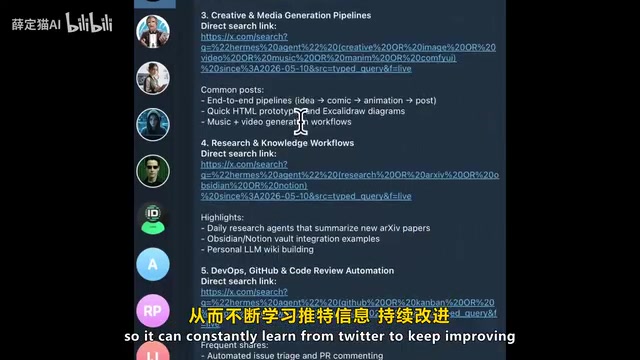
This means you can build dedicated autonomous research agents that continuously monitor the X platform, collect information, summarize trends, and feed results back into automated workflows. Hermes's self-evolving nature enables it to continuously learn from Twitter information and improve output quality over time. The entire setup process reportedly takes only about 60 seconds to complete.
Performance Leap: Faster Startup and Browser Automation Revolution
Startup Speed Optimization
Hermes's startup speed has improved by approximately 19 seconds, thanks to:
- Core startup flow optimization
- Lazy loading mechanisms
- Cache improvements
- Parallel boot checks
- Heavy adapters and plugins only load when actually needed
- Prioritizing local cache over network access
Lazy Loading is a classic optimization pattern in software engineering, with the core idea of "load on demand"—only loading resources into memory when they're actually used. In Hermes's scenario, the system may have dozens of Adapters and Plugins registered at startup; initializing all of them during the boot phase would cause severe startup delays. Through lazy loading, the system only loads the core scheduler and configuration manager at startup, with each adapter completing initialization only when first called. Combined with Parallel Boot Checks—simultaneously verifying the availability of multiple dependencies rather than checking them sequentially—and a local-cache-first strategy (avoiding network requests during startup), these optimizations collectively achieve the 19-second startup time reduction.
180x Browser Automation Speed Boost
The most stunning improvement is in browser automation performance. Hermes now supports persistent Chrome DevTools Protocol (CDP) connections, eliminating the need to launch a new browser session for every interaction.
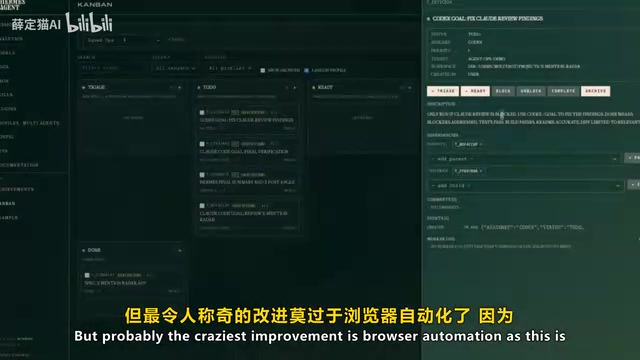
Chrome DevTools Protocol is a remote debugging protocol provided by the Chrome browser that allows external programs to control browser behavior through WebSocket connections, including page navigation, DOM manipulation, network interception, JavaScript execution, and more. Mainstream browser automation frameworks like Playwright and Puppeteer rely on CDP at their core. In the traditional approach, each automation task requires launching a completely new browser instance (cold start), involving process creation, memory allocation, page rendering, and other overhead, typically taking 2-5 seconds. Persistent CDP connections mean the browser instance remains running, and automation commands are sent directly through the established WebSocket channel, eliminating the enormous overhead of repeatedly starting and destroying browsers—this is the technical foundation for the 180x performance improvement.
Browser operations that previously took several seconds now complete almost instantly, with some workflows achieving speed improvements of up to 180x. Additionally, a one-hour cloud workflow prompt cache across sessions has been added, making first responses across sessions faster and more cost-effective.
Native Windows Support and AI Video Generation
Windows Beta Native Support
Hermes can now run directly on Windows without complex Linux environment configuration. The development team made significant fixes in the following areas:
- Terminal and process management
- Python and NPM environment native entity handling
- File path management
- Windows-specific behavior adaptation
- Gateway and tool orchestration
An official PIP package has also been released, greatly simplifying the installation process. Users can also launch the Web UI via the kermis dashboard command to easily configure skills, plugins, and scheduled tasks.
Native AI Video Generation
Hermes Agent now features native AI video generation capabilities. Through the new unified video generation system, AI Agents can create videos directly within workflows. This means your AI agent can:
- Generate realistic video content
- Produce automated edits
- Generate visual content
- Build multimedia workflows that run automatically on schedule
Handoff Command and Free DeepSeek V4 Access
Seamless Handoff System
The new Handoff command allows seamless transfer of entire live sessions between different models, personalities, or configurations without losing context.
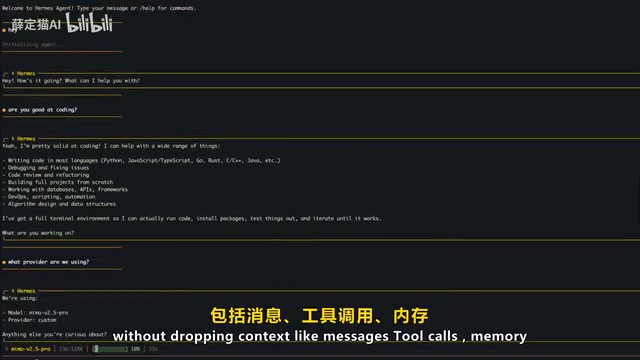
Transferred content includes: messages, tool calls, memory, active workflows, and state within the session. You can start a task on one model, then seamlessly hand it off to a deeper reasoning model for debugging, analysis, or optimization without restarting the workflow. This is particularly important for long-running autonomous agent workflows.
In multi-model collaboration scenarios, the biggest technical challenge is lossless Context transfer. A large language model's context includes not only conversation history but also tool call records, intermediate reasoning states, memory variables, and other structured data. The traditional approach serializes conversation history and reinjects it into the new model's prompt, but this wastes tokens and loses information. Hermes's Handoff system maintains a unified Session State Object containing the complete message chain, tool call stack, and workflow state machine. When switching models, only the inference backend is swapped while the state object remains unchanged. This is similar to the concept of Process Migration in operating systems, where a process's memory space and execution state are completely transferred to a new compute node.
Free DeepSeek V4 Flash
DeepSeek V4 Flash has been added to Hermes and is currently available for free. Users can use this powerful open-source agent model at no cost for autonomous workflows, coding, reasoning, and long-context processing.
DeepSeek is an open-source large language model series developed by DeepSeek AI, known for its exceptional cost-performance ratio. DeepSeek V4 is their latest generation model, employing a Mixture of Experts (MoE) architecture that activates only a subset of parameters during inference, dramatically reducing computational costs while maintaining high performance. The Flash version typically refers to an inference-optimized lightweight variant suitable for high-throughput, low-latency production scenarios. Offering DeepSeek V4 Flash for free in Hermes means users can access near-GPT-4-level reasoning capabilities without paying any API fees—particularly important for long-running autonomous agent workflows, as continuously running Agents generate substantial token consumption.
More Notable Updates
- X-Search Feature: Allows Hermes to search the X platform directly within workflows
- Vision Model Support: Receives images directly rather than text summaries for better visual reasoning
- Discord History Backup: Lets Hermes understand and process all ongoing conversations
- Telegram and Discord Native Interfaces: Convenient for understanding various commands
- Semantic Diagnostics: Captures compilation errors immediately after file edits
- Slash Command Feature: Dynamically adds goals to long-running autonomous workflows
Conclusion
Hermes Agent 0.14.0's "Foundation Update" is a comprehensive major upgrade. From unified local proxy authentication to 180x browser performance improvements, from native Windows support to AI video generation, from free DeepSeek V4 access to the lossless context Handoff system—every improvement lowers the barrier to entry while enhancing system capabilities. For developers and tech enthusiasts following open-source AI Agent development, this is undoubtedly a project worth exploring in depth.
Installation and update commands are straightforward: use kermis setup for configuration and kermis update to upgrade to the latest version.
Related articles
 Tech Frontiers
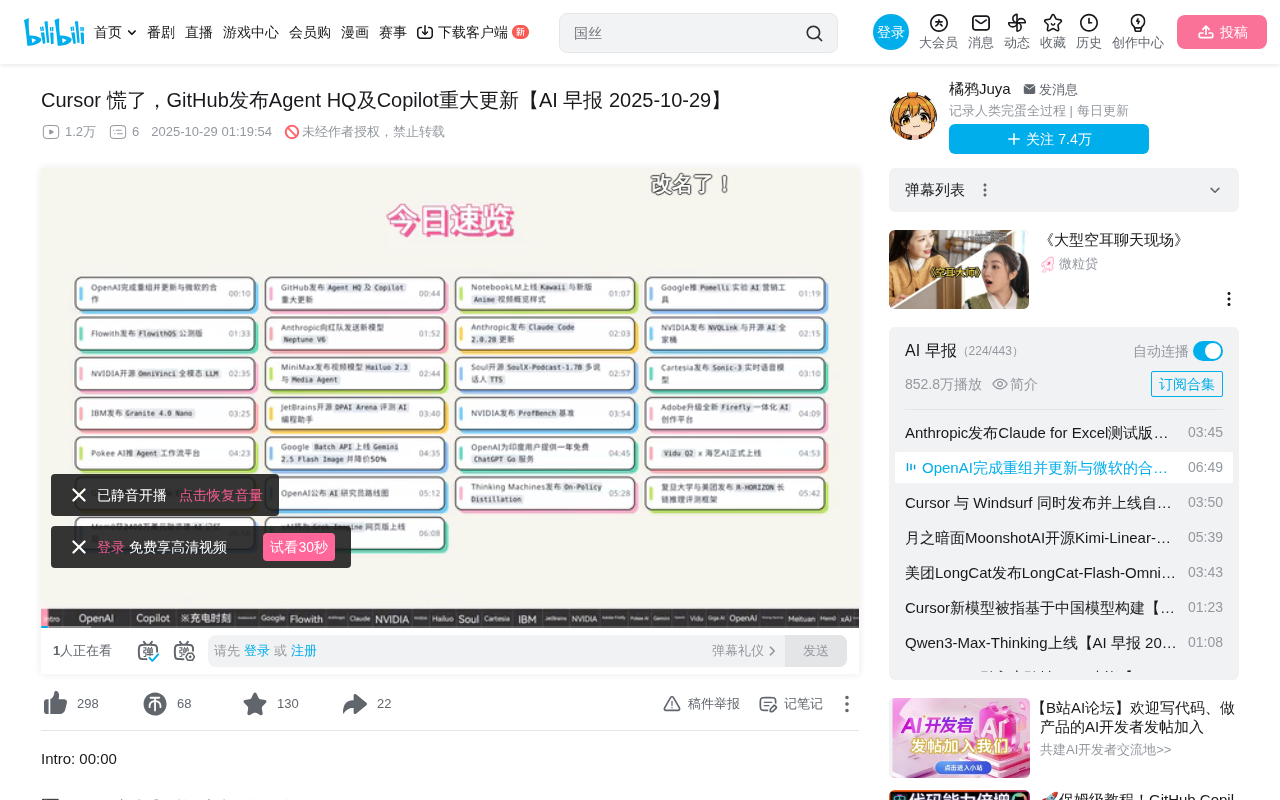
GitHub Agent HQ Launch: AI Coding Tools Enter the Era of Platform Competition
GitHub Universe unveils Agent HQ platform for unified coding agent management, Copilot upgrades with multi-model support. OpenAI completes restructuring, Anthropic tests new model, NVIDIA open-sources AI models.
 Tech Frontiers
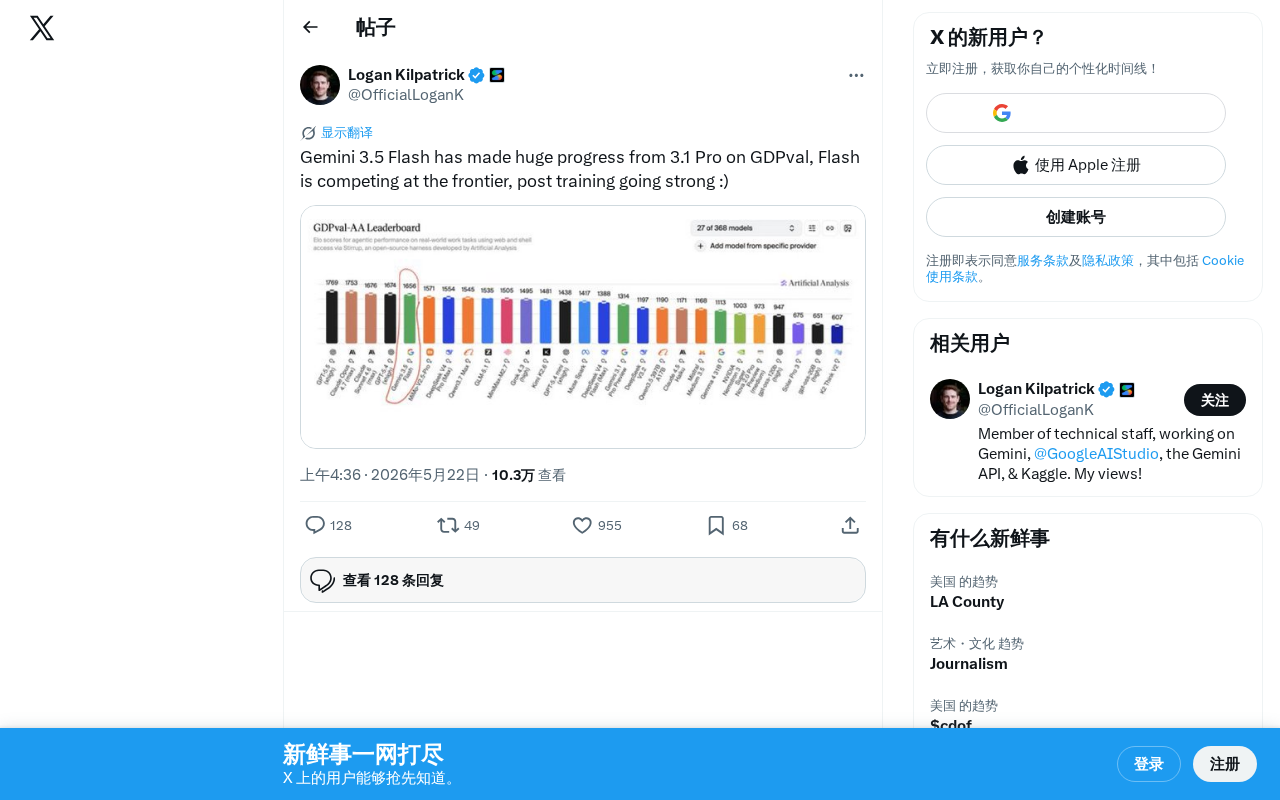
Gemini 3.5 Flash Achieves a Massive Leap on the GDPval Benchmark
Google Gemini 3.5 Flash surpasses Gemini 3.1 Pro on the GDPval benchmark. The lightweight Flash model leverages post-training techniques to approach frontier-level performance, redefining the balance between quality and cost.
 Tech Frontiers
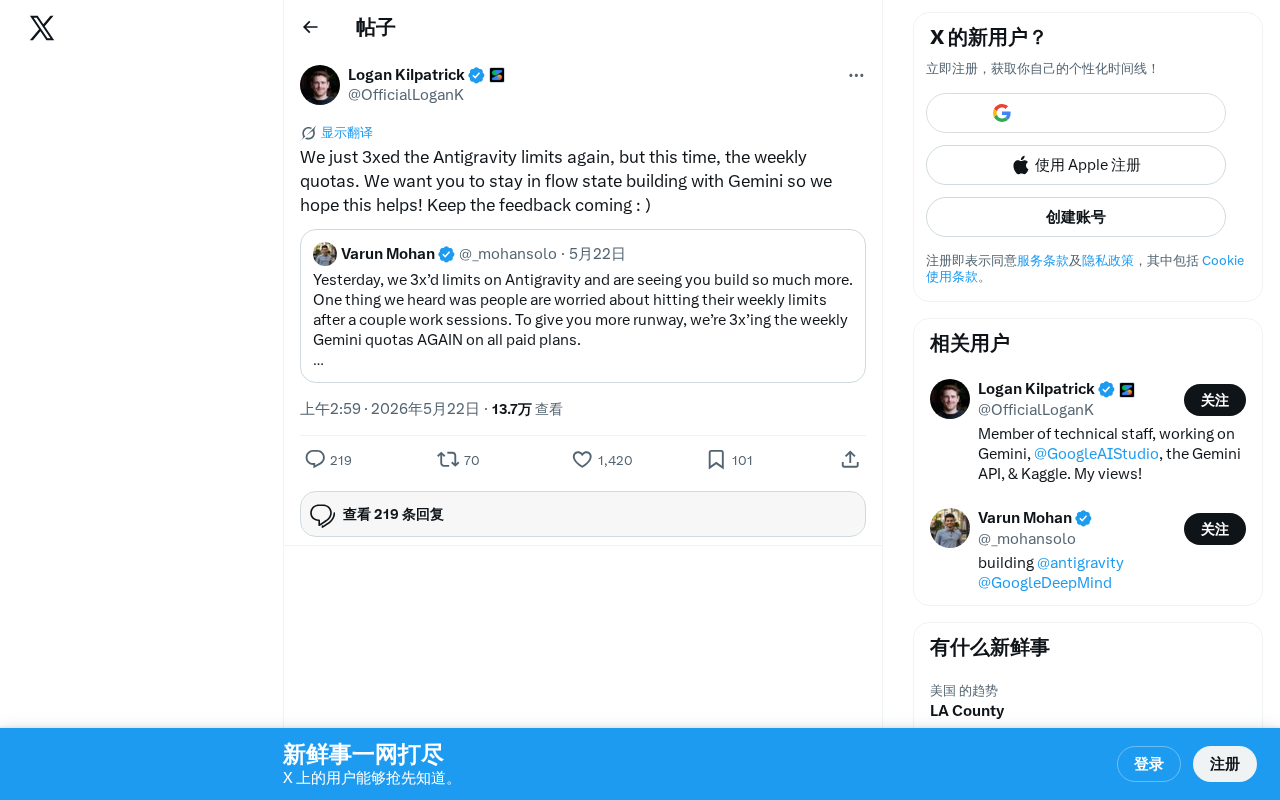
Google Gemini Antigravity Weekly Quota Tripled — AI Coding Without Limits
Google Gemini triples Antigravity weekly quotas following a prior daily quota boost. Analyzing the impact on developers and its strategic significance in AI coding.