Hermes Agent Deep Dive: A Self-Evolving Agent Architecture with Practical Implementation Guide

Hermes Agent is a self-evolving AI agent with persistent memory, auto-generated Skills, and Harness Engineering.
Hermes Agent is a fast-rising open-source AI agent framework featuring a four-layer memory system, a Skill self-evolution mechanism that compresses task execution time by over 50%, and a Harness Engineering methodology for reliable agent control. This deep dive covers its core architecture, the eGPA genetic algorithm-based optimization engine, a practical Feishu integration tutorial, and a detailed comparison with OpenCloud for informed selection.
Why Hermes Agent Suddenly Blew Up
In the AI agent space, an open-source project called Hermes Agent is rapidly gaining traction. Since going open-source in late February, it has skyrocketed to 40K stars in just two months, with momentum still building. Its core selling point is simple: every time it completes a task, it automatically saves the experience, and the next time it encounters a similar task, it picks up right where the stored experience left off.
This isn't just a simple memory feature. Hermes Agent is powered by two core engineering systems: one called Skills, responsible for adding new capabilities; and another called Harness Engineering, responsible for keeping those capabilities under control and preventing the agent from going off the rails. Only when both are in place can an agent avoid getting dumber as it gains more features.
From a functional positioning standpoint, Hermes Agent can be understood as an OpenCloud alternative built on the Harness Engineering framework. Its operational stability and iteration speed in industrial scenarios both outperform OpenCloud, which is the core reason behind its rapid rise.
Harness Engineering: A Methodology for Controlling Agents
Why Agents Are Hard to Control
Current agents face several real-world challenges:
-
Output randomness: Even with 100% identical parameter settings, LLMs generate different content. This randomness stems from the model's sampling mechanism — even with Temperature set to 0 (greedy decoding), non-determinism in GPU floating-point operations, numerical precision differences across inference batches, and KV Cache implementation details can still produce varying outputs. In practice, this means the same Prompt executed at different times may yield completely different results — a massive challenge for automation pipelines that require deterministic output.
-
Multi-step call degradation: Each individual step may have high accuracy, but long chains still break down at some point. This is a probability multiplication problem — assuming 95% accuracy per step, a 10-step chain has an overall success rate of only 0.95^10 ≈ 60%, dropping to about 36% at 20 steps. In the Agentic AI field, this is known as the "Compound Error Problem" and represents a fundamental challenge for all multi-step Agent systems.
-
Context amnesia: Each wake-up is like the movie Memento — the agent only remembers partial information.
-
Context panic: As the token limit approaches, models tend to rush through and wrap up tasks prematurely. Current mainstream models have context windows ranging from 8K to 200K (e.g., Claude 3.5 supports 200K, GPT-4 Turbo supports 128K), but research shows that models exhibit a "Lost in the Middle" phenomenon near the context limit — attention to information in the middle positions drops significantly, causing output quality to degrade sharply.
-
Aesthetic drift: Without human constraints, output quality continuously deteriorates.
The Core Framework of Harness Engineering
The core formula of Harness Engineering is: Good Agent = Strong Model + Good Constraints. These constraints come from two sources: the mechanical constraints of the Agent framework itself, and the skills and memories dynamically loaded at runtime.
The control levers of this system span seven dimensions: tool orchestration, context engineering, state management, error recovery, validation loops, security safeguards, and lifecycle management. Hermes Agent has corresponding engineering implementations for each dimension. The "validation loop" is the key mechanism for combating output randomness — after each tool call, the output is checked against expectations; if it doesn't match, a retry or rollback is triggered, keeping the impact of multi-step degradation within acceptable bounds.
Core Architecture of Hermes Agent
Four-Layer Memory System
Hermes Agent's memory system is its most critical differentiating feature, consisting of four components:
-
Memory.md: Persistent memory that automatically writes core information, capped at 800 tokens with automatic compression when exceeded. The 800-token limit is carefully designed to ensure critical information always sits in the position where the model's attention is strongest (the beginning of the Prompt), preventing it from being buried in lengthy context.
-
User.md: User profile that continuously accumulates user preferences, capped at 500 tokens. This component records meta-information such as the user's coding style preferences, commonly used tech stacks, and communication habits, allowing the Agent's output style to gradually align with user expectations.
-
SQLite full-text search: Stores complete conversation history in a local database, supporting 10-millisecond retrieval across 10,000 records. Choosing SQLite over vector databases (like Pinecone or Milvus) was a deliberate engineering decision — SQLite's FTS5 extension supports the BM25 ranking algorithm, which is more reliable than semantic vector search for precise recall (e.g., finding specific commands or error messages). Additionally, SQLite is a single-file database, naturally suited for lightweight local Agent deployment, avoiding the operational overhead of external database services.
-
External Provider: Hot-swappable plugins that support seamless memory migration from OpenCloud.
The key characteristic of this memory system is cross-thread sharing — conversation memories from different Sessions are unified and accumulated within the Agent, truly achieving a "gets smarter the more you use it" experience.
Fine-Tuned Toolset
Hermes Agent comes with 47 built-in tools across 20 categories, covering terminal, file, multimodal, search, vision, code, scheduling, memory, and more. The biggest difference from OpenCloud is that every tool's prompt has been carefully fine-tuned (known in the industry as "alchemy"), rather than simply stacked together.
"Alchemy" here refers to the process of repeatedly adjusting the wording, constraints, and examples in Tool Descriptions through extensive experimentation, so that the model can more accurately pass parameters and more reasonably interpret return results when calling the tool. A well-crafted tool prompt enables the model to "get it right on the first call," while a poor description may cause the model to trial-and-error repeatedly, wasting significant tokens and time.
This explains why, under the same model (e.g., DeepSeek), Hermes executes the same task 10 to 30 seconds faster than OpenCloud.
Skill Self-Evolution Mechanism
This is Hermes Agent's most impressive feature. When the Agent executes complex tasks (e.g., more than 5 tool calls, encountering errors, complex workflows), it proactively asks whether to create a Skill. Once confirmed:
- First execution of a security audit task: 6 minutes, with extensive brute-force scanning
- Second execution after creating a Skill: compressed to under 300 seconds, avoiding previously encountered pitfalls
- After multiple executions: runtime can be compressed to below 50% of the initial time
Skills are not only auto-generated but also auto-iterate based on feedback from each execution — adding new rules, locking in efficient patterns, and removing useless steps. At its core, the Skill mechanism compresses long multi-step call chains into experience-based short chains, probabilistically circumventing the Compound Error Problem: a task that originally took 20 steps gets compressed into 5 verified, efficient steps, boosting the overall success rate from 36% to 77%.
Hands-On: From Installation to Feishu Integration
Quick Installation
curl -fsSL https://raw.githubusercontent.com/.../install.sh | bash
After installation, run hermes doctor for an environment check, then use hermes config set to configure your model (supports mainstream models like DeepSeek, Claude, etc.).
Connecting to Feishu
Hermes connects to Feishu through its Gateway system, following a process similar to OpenCloud but more streamlined:
- Create a bot on the Feishu Open Platform and obtain the App ID and App Secret
- Select WebSocket connection mode for the bot
- Write the credentials to the
.hermes/.envfile - Run
hermes gatewayto start the gateway - Type
set homein a Feishu conversation to bind the channel
Choosing WebSocket over HTTP callbacks is a key design decision. A WebSocket persistent connection means the local Agent proactively establishes a lasting connection with the Feishu server, requiring no public IP or domain name, and no Nginx reverse proxy configuration. This breaks through NAT and firewall limitations, allowing an Agent running on a personal computer or intranet server to directly receive message pushes from Feishu — truly enabling the use case of "remotely controlling your local computer from your phone."
Afterward, you can directly command your local Hermes Agent to execute tasks from your phone via Feishu.
eGPA Evolution Engine
Hermes Agent also includes a built-in eGPA (a multi-objective optimization framework based on genetic algorithms), used not only for Skill optimization but also for optimizing system prompts, built-in tool prompts, and even guiding reinforcement learning post-training for open-source models.
eGPA introduces the "selection-crossover-mutation" iterative cycle of Genetic Algorithms into the prompt optimization domain. In its concrete implementation, each prompt variant is treated as an "individual," evaluated using task execution success rate and efficiency as the "fitness function." High-performing variants are retained and combined to produce the next generation. Compared to traditional manual trial-and-error or brute-force grid search, genetic algorithms can efficiently find local optima in high-dimensional search spaces without requiring gradient information, making them naturally suited for external optimization of black-box models.
Its working mode is: make micro-adjustments in one direction at a time, test for performance improvement, then merge — avoiding the instability that comes with full rewrites. This incremental optimization strategy ensures the system continues to evolve without risking a complete collapse from any single aggressive change.
Hermes Agent vs. OpenCloud: How to Choose
| Dimension | Hermes Agent | OpenCloud |
|---|---|---|
| Runtime Efficiency | Higher (fine-tuned tool prompts) | Average |
| Self-Evolution | Skill auto-generation + eGPA optimization | None |
| Stability | Stronger (robust state management) | Average |
| Ecosystem Richness | Limited | Richer |
| Multi-Agent | SubAgent dispatch only | Full Agent Teams support |
| Learning Curve | Steeper (CLI only) | Lower (has Web UI) |
In summary: if you need an agent that runs stably in engineering scenarios and continuously evolves, Hermes Agent is the better choice; if you need quick onboarding and multi-agent collaboration, OpenCloud still has the edge. The two are not complete substitutes but rather complementary solutions for different levels of usage depth.
Key Takeaways
Related articles
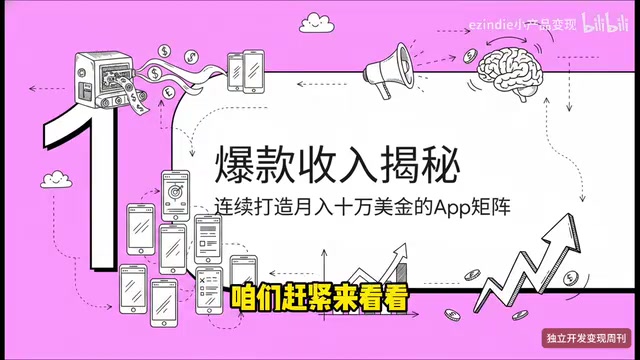
A Gen-Z Woman Making $1.5M/Month: Deconstructing the Growth Methodology Behind AI Apps
Gen-Z indie dev Nicole built 4 hit AI apps earning $1.5M/mo. Deep dive into her industrialized UGC engine, traffic testing system, and minimalist tech stack.
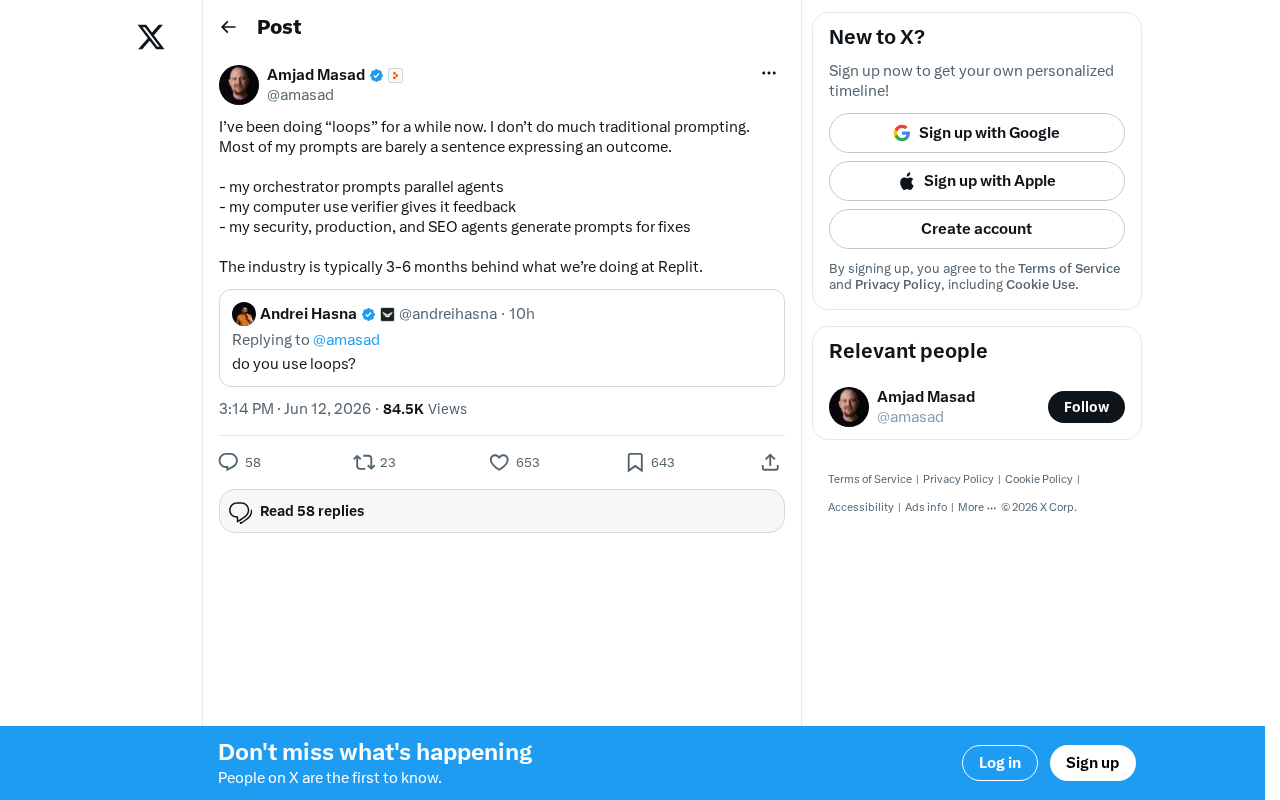
Replit's AI Loops Workflow Explained: Multi-Agent Collaboration Replaces Prompt Engineering
Deep dive into Replit's AI Loops workflow: how orchestrators, parallel agents, and Computer Use Verifiers build automated closed-loop systems through multi-agent collaboration.
Claude Code + Skills: A Practical Guide to AI-Powered Test Case Generation
Learn how to use Claude Code + Skills to auto-generate enterprise-grade test cases. Covers AI Agent vs LLM differences, the four core capabilities, and the complete workflow from requirements to test cases.