Hermes Agent Framework Practical Guide: Building AI Agents from Scratch

Hermes Agent is ByteDance's enterprise AI agent framework focused on engineering implementation and production stability.
Hermes Agent is an AI agent development framework widely used internally at ByteDance, with core advantages in engineering implementation and production environment stability. The framework supports multi-model integration, custom tool development, and task automation orchestration, applicable to scenarios like office automation, data analysis, and project collaboration. Enterprise deployment requires attention to key strategies including model fallback, concurrency control, security protection, and cost optimization.
Overview
Hermes Agent is an AI agent framework widely used internally at ByteDance, and it has recently attracted considerable attention in the developer community. For developers looking to quickly build enterprise-grade AI agents, this framework provides a complete solution from deployment to debugging. This article systematically covers the core features and practical essentials of Hermes Agent to help readers get started quickly.
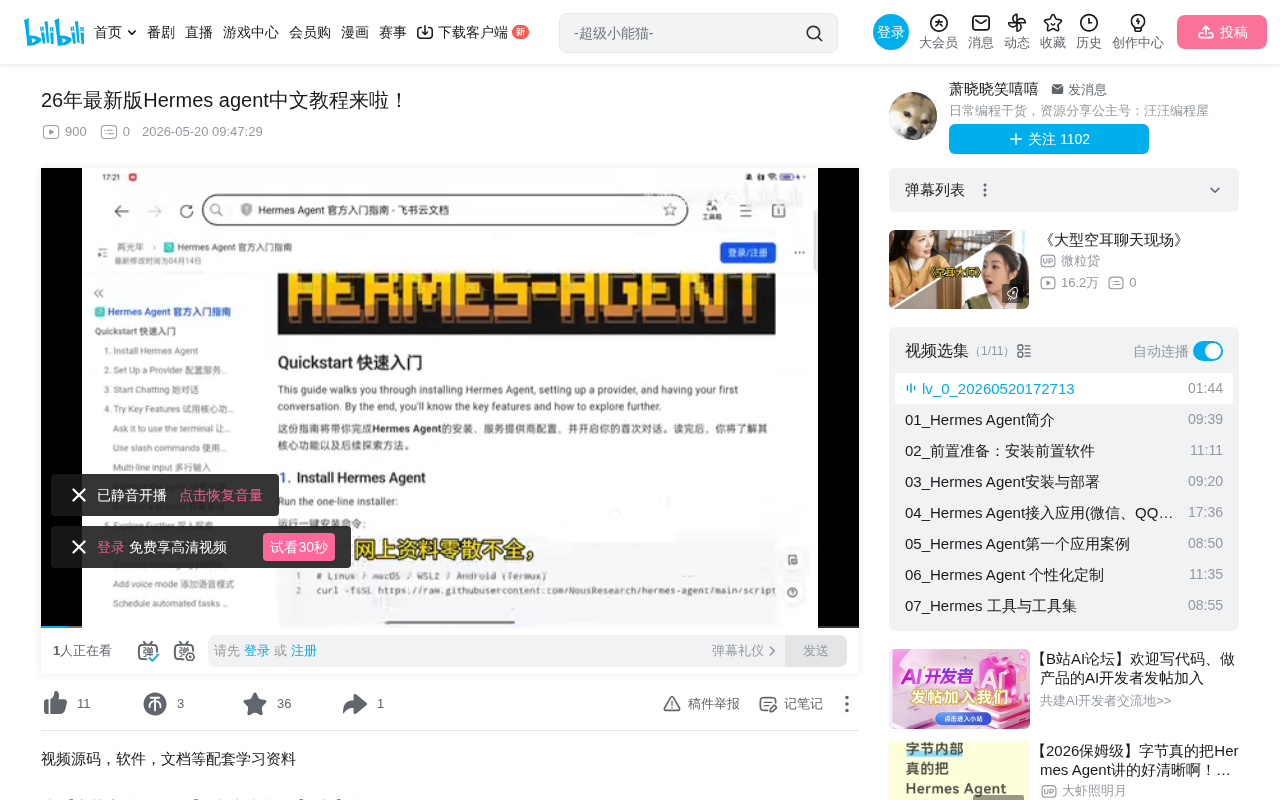
What is Hermes Agent
Framework Positioning
Hermes Agent is an AI agent development framework designed for enterprise applications. Its core design philosophy is to enable developers to quickly build, deploy, and manage AI Agents with autonomous decision-making capabilities.
An AI Agent is an artificial intelligence system capable of perceiving its environment, making autonomous decisions, and executing actions. Unlike traditional conversational AI, Agents possess tool-calling, multi-step reasoning, and autonomous planning capabilities. They can not only answer questions but also proactively decompose tasks, select appropriate tools, execute operations, and adjust subsequent strategies based on results. This autonomy enables Agents to handle real-world business scenarios far more complex than simple Q&A.
Compared to other Agent frameworks on the market (such as LangChain, AutoGen, etc.), Hermes Agent places greater emphasis on engineering implementation capabilities and production environment stability. Current mainstream Agent frameworks each have their own focus: LangChain emphasizes chain-based invocation and component composition, offering a rich integration ecosystem; AutoGen, launched by Microsoft, emphasizes multi-Agent conversational collaboration; CrewAI focuses on role-playing style multi-Agent collaboration. Hermes Agent's differentiated positioning lies in the fact that it was born from ByteDance's large-scale engineering practices, naturally possessing the DNA to handle high-concurrency, high-availability scenarios—complementing frameworks that are academically oriented or community-driven.
Core Capabilities
The framework covers the following key capability dimensions:
- Multi-environment rapid deployment: Supports one-click switching between local development, testing, and production environments
- Multi-model integration: Compatible with mainstream large language models, including the GPT series, Claude, Chinese domestic models, and more
- Custom tool development: Provides standardized tool interfaces for easily extending Agent capabilities
- Task automation orchestration: Supports definition and automatic execution of complex workflows
Regarding multi-model integration, the current large language model ecosystem presents a diversified landscape. The GPT series (OpenAI) is renowned for its powerful general capabilities, Claude (Anthropic) excels in long-text processing and safety, and Chinese domestic models such as ERNIE Bot (Baidu), Tongyi Qianwen (Alibaba), and Doubao (ByteDance) have advantages in Chinese-language scenarios and specific vertical domains. The value of multi-model adaptation lies in: selecting the most suitable model for different tasks, avoiding vendor lock-in, and achieving a balance between cost and performance. For example, simple classification tasks can use lightweight models to reduce costs, while complex reasoning tasks call high-performance models to ensure quality.
Quick Start Guide
Environment Configuration and Deployment
For beginners, environment configuration is often where most pitfalls occur. The Hermes Agent deployment process can be summarized in the following steps:
- Basic environment preparation: Ensure Python version ≥ 3.9 and install necessary dependency packages
- Framework installation: Install Hermes Agent core components via package manager or from source
- Configuration file initialization: Set up model API keys, tool registration information, and other basic configurations
- Verification run: Execute a sample Agent to confirm successful environment setup
Agent Workflow Configuration
Workflow configuration is the core aspect of Hermes Agent. The framework adopts a declarative configuration approach—developers only need to define the Agent's role settings, available tool sets, and task execution strategies, and the framework automatically handles the underlying scheduling logic.
An Agent's internal operating mechanism typically follows the "Perception-Reasoning-Action Loop." Typical implementation patterns include ReAct (Reasoning + Acting, where the model alternates between thinking and tool calling), Plan-and-Execute (creating a complete plan first, then executing step by step), and Tree of Thoughts (tree-structured thought search). The core idea of declarative configuration draws from the Infrastructure as Code philosophy—developers only need to describe "what they want" rather than "how to achieve it," and the framework is responsible for translating declarations into concrete execution logic.
This design significantly lowers the development barrier—you don't need to deeply understand the Agent's internal operating mechanisms; you only need to focus on the business logic itself. The framework automatically selects appropriate reasoning strategies, manages context windows, handles asynchronous orchestration of tool calls, and other complex details based on your declarations.
Practical Application Scenarios
Office Automation
In office automation scenarios, Hermes Agent can achieve:
- Automatic email classification and response
- Document summary generation and format conversion
- Automatic meeting minutes organization
- Cross-system data synchronization
Data Analysis
For data analysis needs, the Agent can autonomously complete a series of operations including data cleaning, statistical analysis, and visualization report generation, compressing what would originally take hours of manual work into just a few minutes.
Project Collaboration
In team collaboration scenarios, the Agent can serve as a project assistant, automatically tracking task progress, sending reminder notifications, generating weekly reports, and effectively improving team collaboration efficiency.
Advanced Development: Custom Tools and Debugging
Tool Development Standards
Hermes Agent provides standardized tool development interfaces. Developers only need to define the tool's input/output format and functional description according to specifications, and the framework automatically incorporates it into the Agent's capability system. This means you can infinitely extend the Agent's functional boundaries based on business requirements.
The core of tool development lies in providing clear functional descriptions (Description), because large language models determine when and how to call tools precisely by understanding these descriptions. A good tool description should include: the tool's purpose, applicable scenarios, the meaning and constraints of input parameters, and the expected output format. This is essentially writing "API documentation" for the model in natural language.
Log Debugging and Troubleshooting
Stability in production environments is crucial. The framework has a built-in comprehensive logging system that supports:
- Full-chain tracing: Records every step of the Agent's decision-making process
- Exception capture: Automatically identifies and logs runtime errors
- Performance monitoring: Tracks key metrics such as response time and token consumption
Distributed Tracing is a core observability technology in microservice architectures, and it is equally critical in AI Agent scenarios. Since an Agent's execution path is non-deterministic—the same input may produce different tool-calling sequences due to model reasoning variations—traditional logging struggles to reconstruct the complete decision chain. Full-chain tracing assigns a unique Trace ID to each Agent execution, linking the entire process from user input, model reasoning, tool calls, to final output. This is of critical value for debugging "hallucination" issues, analyzing tool call failure causes, and optimizing Prompt strategies. Common tracing standards in the industry include OpenTelemetry, while tools like LangSmith and Phoenix specifically provide tracing capabilities for LLM applications.
With these tools, developers can quickly locate issues and optimize performance.
Enterprise Deployment Recommendations
For teams that need to use Hermes Agent in production environments, the following recommendations are worth noting:
- Model fallback strategy: Configure multiple models as alternatives that automatically switch when the primary model is unavailable
The model fallback strategy draws from the Circuit Breaker Pattern design philosophy in traditional distributed systems. In AI applications, large language model APIs may become unavailable due to rate limiting, service failures, network fluctuations, and other reasons. Fallback strategies typically include multiple tiers: first attempt the primary model, switch to an alternative model of equivalent capability after timeout or error, degrade to a lightweight model for basic service if all high-performance models are unavailable, and the ultimate fallback may be returning cached results or preset responses. This layered degradation mechanism ensures business continuity and is a key characteristic that distinguishes enterprise-grade AI applications from demo-level projects.
-
Concurrency control: Set reasonable concurrency limits based on business volume to avoid resource exhaustion
-
Security protection: Strictly control the Agent's tool-calling permissions to prevent unauthorized operations
Agent security is an emerging but extremely important field. Since Agents possess autonomous decision-making and tool-calling capabilities, once attacked by malicious prompt injection or experiencing reasoning deviations, they may execute unintended dangerous operations (such as deleting data, sending sensitive information, etc.). Best practices include: implementing the principle of least privilege, setting up manual approval steps for high-risk operations, establishing tool-calling whitelists, and applying security filtering to Agent outputs.
- Cost optimization: Reduce API call costs through caching mechanisms and Prompt optimization
Large language model API calls are billed per token (a token is the basic unit of text processing for models; in Chinese, approximately 1.5-2 characters correspond to one token). In enterprise applications, token consumption can become a significant operational cost. Common optimization strategies include: Semantic Cache (directly returning cached results for semantically similar questions rather than exact matching), Prompt compression (shortening input length without losing key information), model routing (dynamically selecting models at different price points based on task complexity), and batch processing (combining multiple requests for bulk discounts). According to industry estimates, well-implemented cost optimization strategies can reduce API spending by 40%-70%.
Summary
As an AI agent framework validated by a major tech company, Hermes Agent has clear advantages in engineering implementation. It lowers the technical barrier to Agent development while ensuring production environment stability and maintainability. Whether for individual developers or enterprise teams, this framework enables rapid construction of AI agent applications that meet real business needs.
For beginners, it's recommended to start with simple single-tool Agents and gradually increase complexity. For experienced developers, you can directly focus on multi-Agent collaboration and enterprise deployment solutions to fully leverage the framework's advanced features.
Key Takeaways
- Hermes Agent is an AI agent framework used internally at ByteDance, emphasizing engineering implementation and production stability
- The framework supports multi-model integration, custom tool development, and task automation orchestration as core capabilities
- Applicable to various enterprise scenarios including office automation, data analysis, and project collaboration
- Built-in comprehensive log debugging system with full-chain tracing and performance monitoring
- Enterprise deployment requires attention to model fallback strategies, concurrency control, security protection, and cost optimization
Related articles
 Tutorials
Cursor + Codex Dual-IDE Collaboration: A Practical Methodology for Open-Source Project Customization
A complete methodology for open-source project customization based on real-world experience, detailing the Cursor+Codex dual-IDE workflow, seven-stage process, MVP validation, and AI source code reading techniques.
 Tutorials
Cursor Multi-Agent in Practice: Building a Full-Stack Next.js Blog in 50 Minutes
Build a full-stack blog in 50 minutes using Cursor IDE's multi-Agent mode with Next.js, Clerk auth, and Supabase. Learn the 4-phase AI Agent workflow and key integration pitfalls.
 Tutorials
Building an AI Software Factory from Scratch: A Cursor Engineer's Hands-On Experience with Multi-Agent Collaboration
Cursor engineer Eric shares practical insights on building an AI software factory: automation levels, guardrail design, parallel Agent management, and scaling to 1000+ Agents for 24/7 development.