How to Use Grok AI Image Generation for Free Without Limits: Method Analysis & Risk Warning
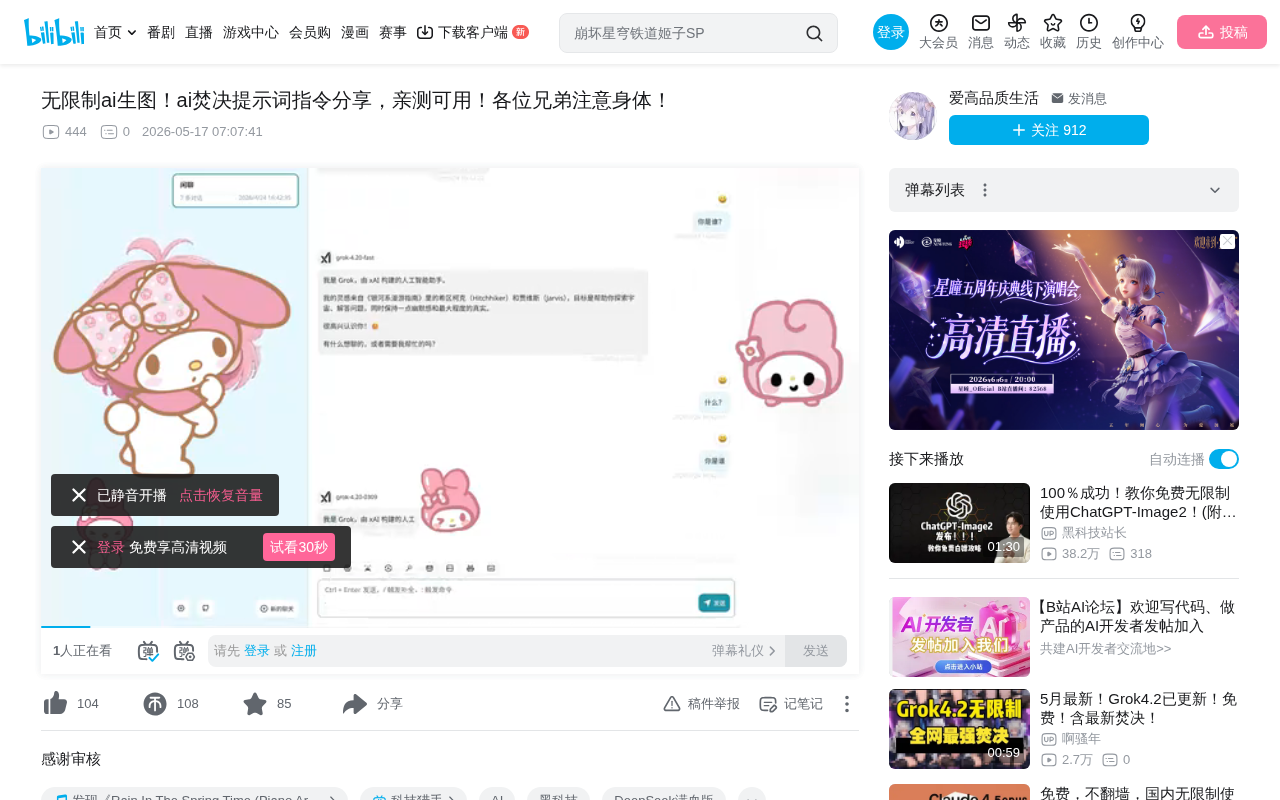
Users discover free unlimited Grok AI image generation via third-party methods, but security and legal risks remain.
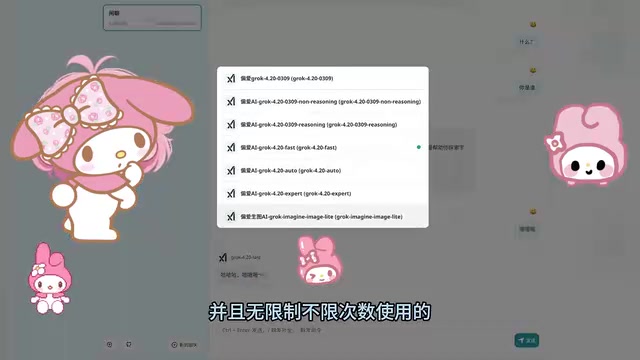
A Bilibili content creator shared a third-party method to access Grok AI's image generation for free without restrictions, supporting the latest models and text conversation. While Grok attracts attention for its lenient content moderation, such unofficial channels carry risks including data privacy leaks, account security issues, service instability, and legal compliance concerns. The article recommends users with long-term needs subscribe through official channels.
Overview
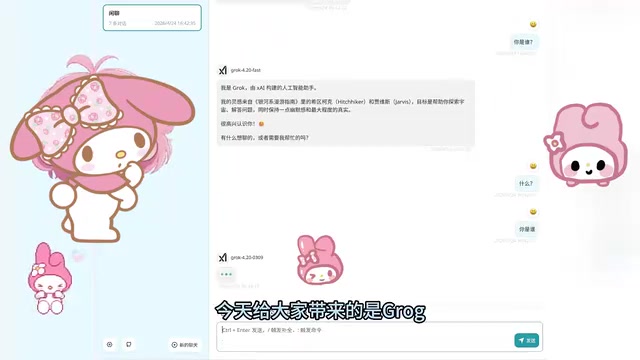
Recently, a Bilibili content creator shared a method to use Grok AI's image generation feature for free and without restrictions. Grok is a large language model developed by xAI (Elon Musk's AI company), and its image generation capability has gained significant attention in the community due to its "virtually unrestricted content moderation." This article provides an objective analysis of this discovery, exploring the underlying technical principles and usage considerations.
Core Features of Grok AI Image Generation
Technical Background of xAI and Grok
xAI was founded by Elon Musk in March 2023, headquartered in the San Francisco Bay Area. Grok was initially launched as a built-in AI assistant for the X platform (formerly Twitter). Its name is inspired by the word in Robert Heinlein's science fiction novel Stranger in a Strange Land, meaning "to understand profoundly." Grok's image generation capability is based on the Aurora model (earlier versions used Black Forest Labs' FLUX engine), employing a Diffusion Model architecture that generates high-quality images from random noise through progressive denoising. Unlike competitors, xAI has adopted a more open content policy — Musk himself has repeatedly expressed opposition to "excessive censorship" in AI, a philosophy directly reflected in Grok's product design.
Why Grok Image Generation Attracts So Much Attention
Grok's image generation feature has sparked heated discussion in the AI community primarily because of its relatively lenient content moderation policy. Compared to mainstream AI image generation tools like Midjourney and DALL-E, Grok imposes significantly fewer restrictions on generated content, giving users greater creative freedom and the ability to produce more diverse imagery.
Specifically, Midjourney employs a multi-layered moderation system including keyword blacklist filtering, post-generation image classification detection, and a community reporting system, with strict limitations on violent, sexual, and politically sensitive content. OpenAI's DALL-E 3 has built-in C2PA content credential standards that not only restrict the types of content generated but also annotate AI-generated markers in metadata. Stable Diffusion, due to its open-source nature, has virtually no restrictions in locally deployed versions, though its online services (such as DreamStudio) still feature safety filters. Grok's differentiated positioning lies in being a commercial closed-source product that offers creative freedom approaching that of open-source models — a rarity in the industry.
Official Limitations on Grok Usage
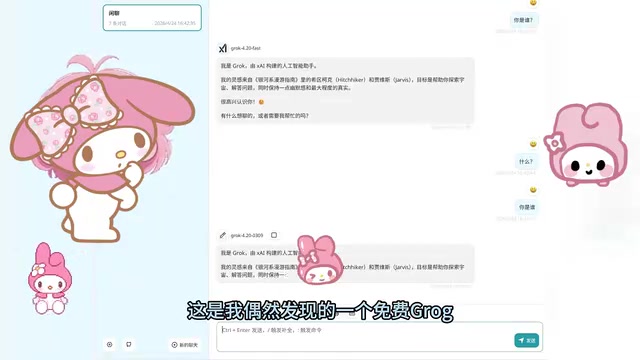
Under normal circumstances, Grok usage is subject to the following restrictions:
- Account requirement: Requires an X (formerly Twitter) Premium membership
- Usage limits: Free users have a daily generation cap
- Regional restrictions: Some regions may not have direct access
These limitations make it difficult for many users to fully experience Grok's AI image generation capabilities, which has spawned various methods to bypass these restrictions.
Methods for Free Unlimited Grok Image Generation
Discovery of Third-Party Interfaces
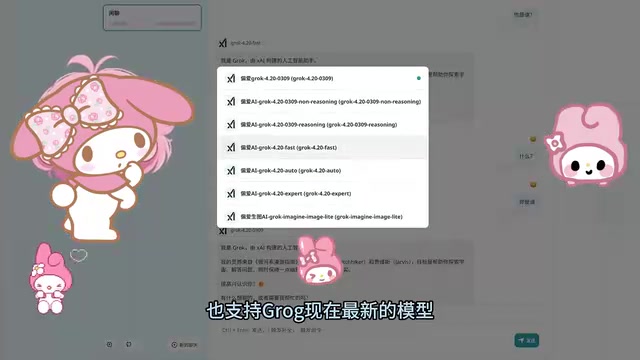
According to the content creator, they accidentally discovered a way to call Grok for free, with the following characteristics:
- Completely free, no paid subscription required
- No usage limits
- Supports Grok's latest models
- Supports both text conversation and image generation
Possible Technical Implementation Principles
Although the video didn't explain the technical details, based on community experience, such "free unlimited" usage methods typically involve one of the following approaches:
- API key sharing: Using someone else's paid API quota for calls
- Third-party proxy sites: Forwarding requests to official interfaces through intermediate servers
- Exploiting official vulnerabilities: Bypassing restrictions through unpatched platform interfaces
- Reverse engineering solutions: Open-source deployments based on unofficial clients
The typical pattern for API key sharing is: a user with a paid account deploys their API Key on a public server, and other users indirectly call the official interface through that server. This model is already very common in the OpenAI ecosystem, with numerous so-called "relay stations" appearing. Third-party proxy sites are more complex, typically using a Reverse Proxy architecture with a frontend providing the user interface and a backend distributing request pressure by polling multiple API Keys or leveraging Web Session Tokens. Some solutions also use edge computing services like Cloudflare Workers to hide the true request origin, reducing the probability of detection and banning by the official platform.
Usage Risks and Security Considerations
Potential Security Risks
Users should be wary of the following risks when using unofficial channels to access Grok AI image generation:
- Data privacy: Input prompts and generated content may be recorded or misused by third parties
- Account security: If login is required, there's a risk of credential leakage
- Service stability: Free services may become unavailable or blocked at any time
- Legal risk: Bypassing official restrictions may violate Terms of Service (ToS)
When users access AI image generation through third-party services, every node the data passes through can become a privacy leak point. Prompts themselves may contain personal preferences, creative ideas, or even trade secrets. More seriously, some third-party services record complete request logs, including IP addresses, device fingerprints, usage timestamps, and other metadata — information that, when combined, is sufficient to build user profiles. Multiple cases in 2024 have shown that some free AI proxy sites are actually phishing platforms that collect user data through free services for resale or targeted attacks. Additionally, if generated images are transmitted over insecure HTTP connections, there's a risk of man-in-the-middle (MITM) attacks.
Legal Boundaries and Compliance Considerations
Reverse engineering is a common practice in the tech community, where developers use packet capture analysis, decompilation, and other methods to reconstruct official API calling methods and build unofficial clients. On the legal front, Section 1201 of the U.S. Digital Millennium Copyright Act (DMCA) explicitly restricts circumvention of technological protection measures, while the EU's Directive on the Legal Protection of Computer Programs grants certain exemptions for interoperability purposes. China's Anti-Unfair Competition Law's "technical measures" provisions may also apply to such activities. In practice, most AI companies choose to respond through technical means (such as rate limiting and token invalidation) rather than legal action, but this doesn't mean users face no legal risk.
Content Compliance Reminder
Although Grok's content moderation is relatively lenient, users should still note:
- Generated content should comply with local laws and regulations
- AI-generated images should not be used for fraud, misinformation, or infringement purposes
- Extra caution is needed when generating content involving other people's likenesses
Summary and Recommendations
Free access to Grok AI image generation is certainly appealing, but users are advised to exercise rational judgment when trying it. For users with long-term AI image generation needs, subscribing to X Premium through official channels is recommended for a stable and reliable experience. For those who just want to try it occasionally, keep an eye on xAI's periodic free quota promotions.
AI image generation technology is evolving rapidly, and more compliant and free options may emerge in the future. Until then, security and compliance should always be the top priority when using AI tools.
Key Takeaways
- Users have discovered third-party methods to use Grok AI image generation for free without limits
- The method supports Grok's latest models, including both text conversation and image generation
- Using unofficial channels carries risks related to data privacy, account security, and legal compliance
- Grok has attracted significant attention in the AI image generation community due to its relatively lenient content moderation policy
- Users with long-term needs are advised to obtain stable service through official channels
Related articles
 Tutorials
Cursor + Codex Dual-IDE Collaboration: A Practical Methodology for Open-Source Project Customization
A complete methodology for open-source project customization based on real-world experience, detailing the Cursor+Codex dual-IDE workflow, seven-stage process, MVP validation, and AI source code reading techniques.
 Tutorials
Cursor Multi-Agent in Practice: Building a Full-Stack Next.js Blog in 50 Minutes
Build a full-stack blog in 50 minutes using Cursor IDE's multi-Agent mode with Next.js, Clerk auth, and Supabase. Learn the 4-phase AI Agent workflow and key integration pitfalls.
 Tutorials
Building an AI Software Factory from Scratch: A Cursor Engineer's Hands-On Experience with Multi-Agent Collaboration
Cursor engineer Eric shares practical insights on building an AI software factory: automation levels, guardrail design, parallel Agent management, and scaling to 1000+ Agents for 24/7 development.