In-Depth Review of a 628-Episode Python Full-Stack Tutorial: Can a Free Course Launch Your Career?

A critical analysis of a 628-episode free Python course: systematic but no substitute for hands-on practice.
A free 628-episode, 198-hour Python tutorial on Bilibili covers a complete path from zero to AI large models, using a practice-oriented, project-driven teaching approach. While its systematic planning deserves recognition, the "job-ready upon completion" promise requires rational skepticism — building real programming competence depends on continuous practice, diverse learning resources, and real project experience, not any single course.
Overview: A Python Course That Claims "Job-Ready Upon Completion"
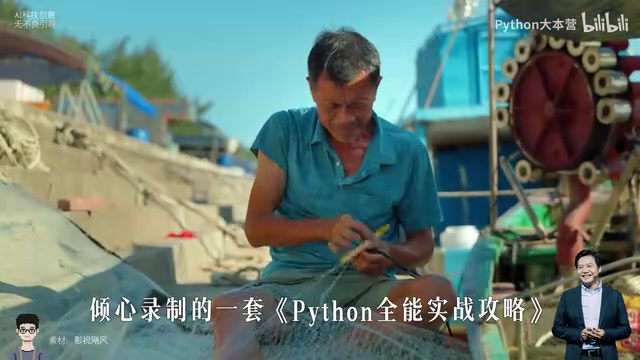
Recently, a tutorial titled "A Zhejiang University Expert's 198-Hour Complete Python Course" has been gaining attention on Bilibili (China's YouTube equivalent). Spanning 628 episodes, it covers a complete learning path from absolute beginner to AI large language models and full-stack development. The promotional video mimics the speaking style of Lei Jun (Xiaomi's CEO) for entertainment value, but setting aside the marketing packaging, are the course's content planning and learning philosophy actually worth considering?
Python's Industry Standing and Learning Value
Before diving into this course analysis, it's important to understand Python's position in the current tech ecosystem. Since its creation by Guido van Rossum in 1991, Python has consistently ranked in the top three on the TIOBE Programming Language Index for years. Its success stems from clean syntax and a rich ecosystem — PyPI (Python Package Index) hosts over 500,000 third-party libraries covering virtually every technical domain: web development (Django, Flask), data science (Pandas, NumPy), machine learning (TensorFlow, PyTorch), DevOps automation, and more. Since 2023, with the explosion of large language models like ChatGPT, demand for Python — the de facto standard language in AI — has surged once again. It's against this backdrop that Python tutorials have proliferated, and this 628-episode course is among the largest in sheer volume.
Course Positioning: Zero-to-Hero Python Teaching
A Learning Path Starting from Hello World
The tutorial positions itself as a "truly beginner-friendly, hand-holding course," starting from the very first line of code — Hello World — and gradually guiding learners into the world of Python. According to its description, the course deliberately avoids obscure theories, instead using everyday examples to explain programming concepts.

This teaching strategy isn't uncommon in today's programming education market, but it does address a core pain point for beginners — many people don't fail at programming because they lack ability, but because they're intimidated by abstract concepts and jargon. Using everyday analogies to lower cognitive barriers is a proven effective teaching method. Cognitive science research shows that the human brain is better at processing concrete information. Comparing "variables" to "boxes" or "functions" to "toolboxes" effectively activates learners' existing cognitive schemas, accelerating the internalization of new knowledge.
A Systematic Python Knowledge Structure
The course claims to cover the following complete path:
- Python Fundamentals: Core syntax and data structures (lists, dictionaries, tuples, sets, etc.), plus advanced concepts like object-oriented programming, exception handling, and file operations
- Front-end and Back-end Development: Full-stack web development capabilities, likely involving Flask/Django back-end frameworks paired with HTML/CSS/JavaScript front-end technologies
- Data Analysis: Data cleaning with Pandas, data visualization with Matplotlib/Seaborn, and basic statistical analysis methods
- AI Introduction: Fundamentals related to AI large models, including API calls, Prompt Engineering, and possibly model fine-tuning practice

The volume of 628 episodes and 198 hours is certainly sufficient to cover the above content, but the question remains: large volume doesn't equal high quality, and being systematic isn't just about stacking knowledge points. True systematization should be reflected in the logical progression between topics, well-designed difficulty curves, and the quality of exercises at each stage.
Core Selling Points: A Practice-Oriented Programming Education Philosophy
"Not a Dictionary, But a Map"
The course proposes a noteworthy distinction: it doesn't want to be a "syntax dictionary" but rather a "learning map." This manifests as:
- Project-Driven Learning: Guiding learners to build websites, analyze data, and create automation tools hands-on
- Resume-Oriented: Enabling learners to list real project experience on their resumes after completion
- Monetization Mindset: Emphasizing "real skills for making money and boosting efficiency through programming"
This practice-oriented teaching philosophy is fundamentally sound. Project-Based Learning (PBL) is a teaching method rooted in constructivist learning theory, developed from educator John Dewey's "learning by doing" philosophy. Research shows that compared to traditional knowledge-delivery teaching, PBL can increase knowledge retention from 5% (passive listening) to over 75% (hands-on practice), according to the Learning Pyramid theory. In programming education, GitHub's annual survey shows that over 80% of developers consider real project experience the most effective way to improve programming skills.
Today's job market demands far more from programmers than "knowing syntax" — it requires "solving problems." A candidate with real project experience is far more competitive than someone who has only drilled syntax exercises. Recruiters in technical interviews increasingly evaluate candidates' system design abilities, code engineering standards, and real-world problem-solving approaches rather than pure algorithm memorization.
Realistic Considerations on Learning Efficiency
However, the 198-hour learning commitment needs to be viewed rationally. At 2 hours of study per day, completing the entire course takes about 100 days. If you add practice and project time (the recommended ratio of video learning to hands-on practice is typically 1:2 to 1:3), the actual investment could exceed six months. This is a significant time commitment for working professionals. By comparison, MIT's introductory computer science course (6.0001) requires only about 40 hours of video learning and can cover basic Python instruction within a single semester with assignments. Of course, the two have different target audiences and scope, so direct comparison isn't entirely fair.
The Technical Connection Between AI Large Models and Python
The course's inclusion of AI large models as a major module is a highly timely choice. The current mainstream large language model (LLM) technology stack is built almost entirely on the Python ecosystem. The training frameworks for OpenAI's GPT series, Meta's LLaMA, and Google's Gemini are all based on PyTorch or JAX (Python interface). For application-layer developers, AI application development frameworks like LangChain and LlamaIndex also use Python as their primary language. Mastering Python means being able to directly call major model APIs, build RAG (Retrieval-Augmented Generation) systems, perform Prompt Engineering, and fine-tune models using platforms like Hugging Face.
This means that Python learners who can go beyond basic syntax to master AI application development will gain a significant competitive advantage in today's job market. However, it's important to note that AI application development and AI algorithm research represent two different levels of capability — the former leans toward engineering practice, while the latter requires deep mathematical and machine learning theoretical foundations. A 198-hour course is more likely to cover application-level content.
A Sober Assessment: The Value and Limitations of Free Python Courses
The Current State of Programming Education and the Business Logic of Free Courses
China's online programming education market has exceeded tens of billions of yuan in scale, and Bilibili, as a platform popular with young users, has become a major distribution channel for programming education content. The business logic behind free courses typically includes: building trust through free content to funnel users toward paid advanced courses, corporate training partnerships, job placement referral commissions, and platform creator revenue through traffic monetization. This doesn't necessarily mean free content is low quality, but learners should understand this business model and maintain clear judgment about potential paid upsells within the course.
Strengths
- Zero-cost experimentation: As a free Bilibili resource, learners bear no financial risk — compared to paid bootcamps costing thousands of yuan, the cost of trying is extremely low
- Complete system: Avoids the fragmented, piecemeal knowledge problem common in self-study, providing a clear path from beginner to advanced
- Community interaction: The comment section check-in mechanism provides a learning atmosphere, and the Peer Learning Effect helps maintain motivation
Concerns to Watch For
- Clickbait tendencies: Promises like "job-ready upon completion" are overly absolute — employment also depends on market conditions, overall personal qualities, interview performance, project depth, and many other factors. In 2024, China's IT job market is highly competitive, and completing a single course is far from a guarantee of employment
- Heavy marketing packaging: The Lei Jun-style promotional approach is entertaining but also suggests the course may prioritize traffic acquisition over teaching quality refinement
- Lack of personalized feedback: Pre-recorded courses cannot provide Code Review, one-on-one Q&A, or other deep learning support. In programming education, timely error feedback is crucial for building correct programming thinking — many beginners write code that runs but contains serious design flaws and bad habits that can only be identified through human review

Practical Advice for Python Beginners
For those looking to start learning Python, the following tips may be more practical:
- Don't put all your faith in any single course: No matter how "complete" a tutorial is, it needs to be supplemented with official documentation (docs.python.org), open-source project practice (GitHub), and technical community engagement (Stack Overflow, etc.). Diverse learning resources help you understand the same concepts from different angles
- Set milestone goals: You don't need to watch all 628 episodes — selectively study based on your direction (data analysis/web development/AI applications). Start with 50-80 episodes to build a solid syntax foundation, then immediately dive deep into your area of interest
- Start writing code early: Video watching should not exceed 40% of your total study time — spend the rest on actual coding. Start practicing with easy LeetCode problems, beginner Kaggle competitions, or your own small tool projects
- Follow technology trends: The combination of Python and AI large models is currently the hottest direction — prioritize accordingly. Specifically, mastering OpenAI API calls, the LangChain framework, and vector database operations can help you stand out in job searches
- Build a portfolio: Organize projects from your learning journey on GitHub to form a presentable personal portfolio. This is more convincing than any course completion certificate
Conclusion
As a free learning resource, this course's systematic content planning and practice-oriented teaching philosophy deserve recognition. But the "job-ready upon completion" promise should be taken with a grain of salt — building programming competence is a continuous practice process, and no course can replace the experience of writing code, hitting bugs, and debugging with your own hands. Using it as a starting point is fine, but don't treat it as the finish line. True programming ability comes from daily code practice, deep understanding of technical principles, and the accumulated experience of solving complex problems in real projects.
Related articles
 Tutorials
Cursor + Codex Dual-IDE Collaboration: A Practical Methodology for Open-Source Project Customization
A complete methodology for open-source project customization based on real-world experience, detailing the Cursor+Codex dual-IDE workflow, seven-stage process, MVP validation, and AI source code reading techniques.
 Tutorials
Cursor Multi-Agent in Practice: Building a Full-Stack Next.js Blog in 50 Minutes
Build a full-stack blog in 50 minutes using Cursor IDE's multi-Agent mode with Next.js, Clerk auth, and Supabase. Learn the 4-phase AI Agent workflow and key integration pitfalls.
 Tutorials
Building an AI Software Factory from Scratch: A Cursor Engineer's Hands-On Experience with Multi-Agent Collaboration
Cursor engineer Eric shares practical insights on building an AI software factory: automation levels, guardrail design, parallel Agent management, and scaling to 1000+ Agents for 24/7 development.