Java Developer's Guide to AI Application Development: From Spring AI to Intelligent Customer Service
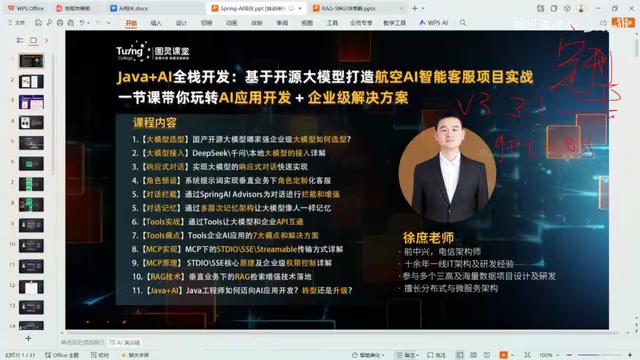
A practical guide for Java developers to transition into AI app development using Spring AI and RAG.
As large language models plateau in performance, the industry focus shifts from building models to building AI applications. This guide analyzes the best career path for Java developers entering AI, covering Spring AI framework, RAG, Function Calling, and demonstrates a complete airline intelligent customer service project with real-world implementation details.
Large Models Have Plateaued — The Era of AI Application Development Has Arrived
A noteworthy industry signal is emerging: performance improvements in large language models have hit a bottleneck. Whether it's DeepSeek V3, open-source versions of GPT, or other recently released models, benchmark score improvements have become marginal, with some metrics even falling short of previous versions.
This bottleneck is no coincidence — it's closely tied to the diminishing marginal returns of Scaling Laws. The Scaling Law proposed by OpenAI in 2020 states that model performance follows a power-law relationship with parameter count, data volume, and compute. But this relationship doesn't extend indefinitely. As model parameters scale from hundreds of billions to trillions, the compute and data costs required to improve benchmark scores by just 1% grow exponentially. Meanwhile, the exhaustion of high-quality training data is another critical bottleneck — the internet's supply of high-quality text data has been largely consumed. While synthetic data can partially fill the gap, it carries the risk of "Model Collapse."
What does this mean? Large models themselves have largely stabilized, and the industry's focus is shifting from "building models" to "using models."
A large model alone has no revenue potential. Companies can't just use LLMs for chatting — they need to be embedded into real business scenarios to solve actual problems and create commercial value. This has given rise to massive market demand for AI application development.
Comparative Analysis of Three Major AI Career Paths
For developers looking to enter the AI field, there are currently three main directions to choose from, but they differ significantly in terms of barriers to entry, prospects, and target audience.
AI Application Development Engineer (Top Choice for Java Developers)
This is the fastest-growing direction in terms of demand. The core skill stack includes:
- Spring AI: The core framework for connecting to LLMs in the Java ecosystem. Spring AI is an AI integration framework officially launched by the Spring ecosystem in late 2023. It provides Java developers with a unified API abstraction layer that seamlessly integrates with OpenAI, Anthropic, Google Gemini, Ollama, and many other LLM services. Its design philosophy is similar to Spring Data — using unified interfaces to abstract away underlying differences so developers can switch between model providers simply by changing configuration. Spring AI has built-in support for vector databases (such as Milvus, PgVector, Chroma) and provides out-of-the-box RAG pipelines, Function Calling registration mechanisms, and a Prompt template engine. For Java developers already familiar with Spring Boot, the learning curve is extremely gentle.
- RAG (Retrieval-Augmented Generation): Giving LLMs access to enterprise private knowledge
- Function Calling / Tools: Enabling LLMs to interact with business system APIs
- Prompt Engineering: Optimizing LLM output quality
- Model Fine-tuning Basics: Understanding how to optimize model performance for specific scenarios
Java's advantages in enterprise applications are clear — stability, high concurrency, and a mature ecosystem. A production-grade AI application also requires high availability, high concurrency, and high performance — exactly where Java excels.
Model Fine-tuning Engineer
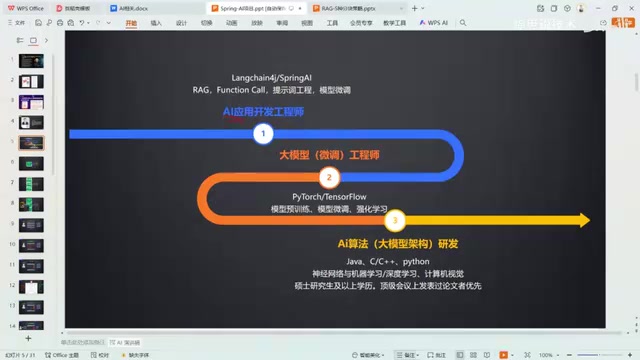
This direction requires proficiency in Python and deep learning frameworks (PyTorch, TensorFlow, etc.). But let's be realistic: how many models does a single company need to fine-tune? The absolute number of these positions won't be very large. It's better approached as an advanced extension of AI application development skills.
AI Algorithm Engineer
The highest ceiling, but also the highest barrier to entry. Typically requires a graduate degree from a top-tier university, proficiency in Java, C++, and Python, and possibly published algorithm papers. More critically, as large models increasingly go open source, the demand for companies to build their own models from scratch has dropped significantly.
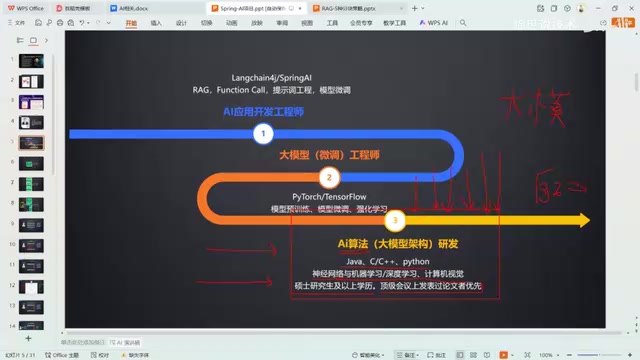
Many models today are built on open-source base models like Qwen, with pre-training and fine-tuning applied before release. The open-source LLM ecosystem experienced explosive growth in 2024-2025. Alibaba's Qwen series, Meta's Llama series, Mistral AI's Mixtral series, and the DeepSeek series form the current first tier of open-source models. These models have approached or even matched closed-source models on most general benchmarks. The pattern of enterprises building on open-source models has become mainstream: select a high-performing open-source base model, inject domain knowledge through Continual Pre-training, then align it to specific task requirements through SFT (Supervised Fine-Tuning) and RLHF/DPO (Reinforcement Learning from Human Feedback / Direct Preference Optimization). This approach has dramatically reduced the cost and barrier of AI deployment, further compressing the demand for algorithm engineers who train models from scratch.
The conclusion is clear: for Java developers with a few years of experience, AI application development is the highest-ROI career transition path.
Hands-On Project: Aviation AI Intelligent Customer Service
Let's break down the core technologies of AI application development through a highly representative project — upgrading a traditional airline ticketing system into an intelligent customer service system powered by AI.
From "Click-Driven" to "Conversation-Driven" Interaction
Traditional systems rely on event-driven interactions: users click buttons, select menus, and fill out forms. An AI-powered intelligent customer service system transforms all operations into natural language conversations — users simply "say" what they need, and the system handles the rest. This paradigm shift is known as CUI (Conversational User Interface), representing the evolution of human-computer interaction from GUI (Graphical User Interface) toward a more natural, lower-barrier approach.
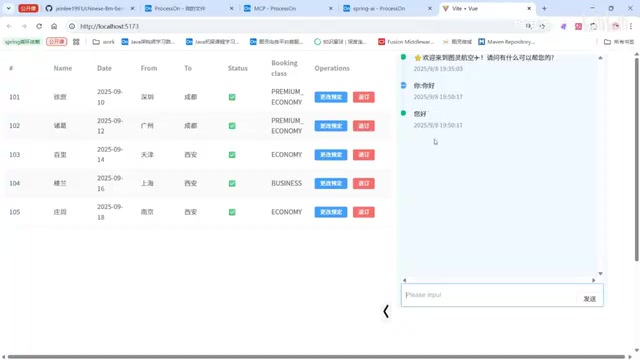
When a user sends "Hello," the system responds with "Welcome to Turing Airlines" — this is the effect of role presetting. A vanilla DeepSeek model wouldn't know it's an airline customer service agent. This requires customization through a System Prompt. The System Prompt is the first system-level message sent to the LLM, defining the model's role identity, behavioral boundaries, response style, and business rules. It's one of the most fundamental and important configurations in AI application development.
Tools: Enabling LLMs to Operate Business Systems
One of the most critical technologies in this project is Tools (tool calling). Take the ticket cancellation scenario as an example:
- The user sends a cancellation request with a booking number and name
- The LLM understands the intent and confirms the operation with the user
- After user confirmation, the LLM calls the system's
cancelBookingAPI - The booking status changes from "Booked" to "Cancelled"
Throughout this process, the LLM acts as an "intelligent middleware" between the user and the business system. It not only understands natural language but also maps user intent to specific API calls — this is the power of Function Calling.
From a technical implementation perspective, Function Calling works as follows: developers pre-register a set of available function descriptions with the LLM (including function names, parameter types, and functional descriptions). When user input contains an actionable intent, the LLM doesn't generate a text response directly. Instead, it outputs a structured JSON call instruction specifying which function to invoke and what parameters to pass. The application layer receives this instruction, executes the actual business logic, and returns the result to the LLM, which then formulates a natural language response for the user. This mechanism essentially turns the LLM into an intelligent router and intent parser — it doesn't execute code directly but collaborates with external systems through structured output. The MCP (Model Context Protocol) mentioned in the project is an open protocol proposed by Anthropic to standardize how LLMs interact with external tools, similar to a "USB interface standard" for AI.
RAG: Injecting Enterprise Private Knowledge
After a successful ticket cancellation, the system informs the user: "Your refund will be processed within 7 business days," "Cancellations must be made at least XX hours before departure," and "A XX% cancellation fee will be charged."
These business rules aren't built into the LLM's knowledge — they're retrieved from the enterprise knowledge base and injected into the response through RAG (Retrieval-Augmented Generation). RAG was first proposed by Meta AI in 2020. Its core idea is to decouple information retrieval from text generation, addressing two inherent LLM limitations: knowledge cutoff dates and hallucination (where the model "fabricates" plausible-sounding but factually incorrect content when lacking real information).
The core RAG workflow is as follows:
- Document Vectorization and Storage: Enterprise documents (cancellation policies, terms of service, etc.) are converted into high-dimensional vector representations using an Embedding Model and stored in a vector database. Semantically similar texts are closer together in vector space, enabling the system to understand that "ticket cancellation" and "cancel booking" mean the same thing. Common embedding models include OpenAI's text-embedding-3 and the BGE series, while vector database options include Milvus, Pinecone, Weaviate, PgVector, and others.
- Semantic Retrieval: When a user asks a question, the query is also vectorized, and the most semantically relevant document fragments are retrieved from the vector database. Beyond basic similarity search, advanced strategies like hybrid retrieval (combining keyword search and semantic search) and reranking can be employed to improve retrieval precision.
- Context Injection: Retrieved results are concatenated as context into the Prompt sent to the LLM
- Answer Generation: The LLM generates accurate responses based on real business data, effectively avoiding hallucination
Complete Technology Stack Overview
This aviation intelligent customer service project covers the following technologies:
| Technology | Purpose |
|---|---|
| LLM Integration | Connecting to model APIs like DeepSeek |
| Role Presetting | Defining customer service identity and behavioral boundaries |
| Multi-turn Dialogue | Maintaining contextual coherence |
| Conversation Memory | Remembering user history |
| Conversation Interception | Filtering inappropriate content and restricting topic scope |
| Tools/MCP | Interacting with business system APIs |
| RAG | Retrieving from enterprise knowledge bases to enhance responses |
Among these, conversation memory implementation is one of the core engineering challenges in AI application development. LLMs are inherently stateless — each API call is independent, and the model doesn't "remember" previous conversations. Implementing conversation memory requires the application layer to concatenate historical messages into each request's Prompt, but this is constrained by the model's Context Window. When conversations span too many turns, strategies like sliding windows, summary compression, and key information extraction are needed to manage context length. In enterprise applications, additional engineering concerns include session persistence (storing conversation history in Redis or a database), multi-user isolation, and session timeout cleanup. Spring AI provides the ChatMemory interface to abstract these complexities, supporting InMemory, JDBC, Redis, and other storage backends.
Career Prospects for Java Developers with AI Skills
While the number of AI application development positions may not yet match traditional Java roles, the trend is unmistakable:
- More and more traditional systems will be restructured or enhanced by AI, driving intelligent upgrades
- Enterprises need large numbers of AI application developers to bring LLM capabilities into specific business scenarios
- Java's enterprise-grade advantages (stability, ecosystem maturity, talent pool) make it an ideal language for AI application development
For Java developers, there's no need to switch to Python and start from scratch. By layering Spring AI, RAG, Tools, and other AI skills on top of your existing expertise, you can unlock an entirely new career track. Once you've mastered these skills, your job search is no longer limited to traditional Java roles — it simultaneously covers AI application development positions.
This isn't a question of "whether to learn" — it's a question of "sooner or later."
Key Takeaways
Related articles
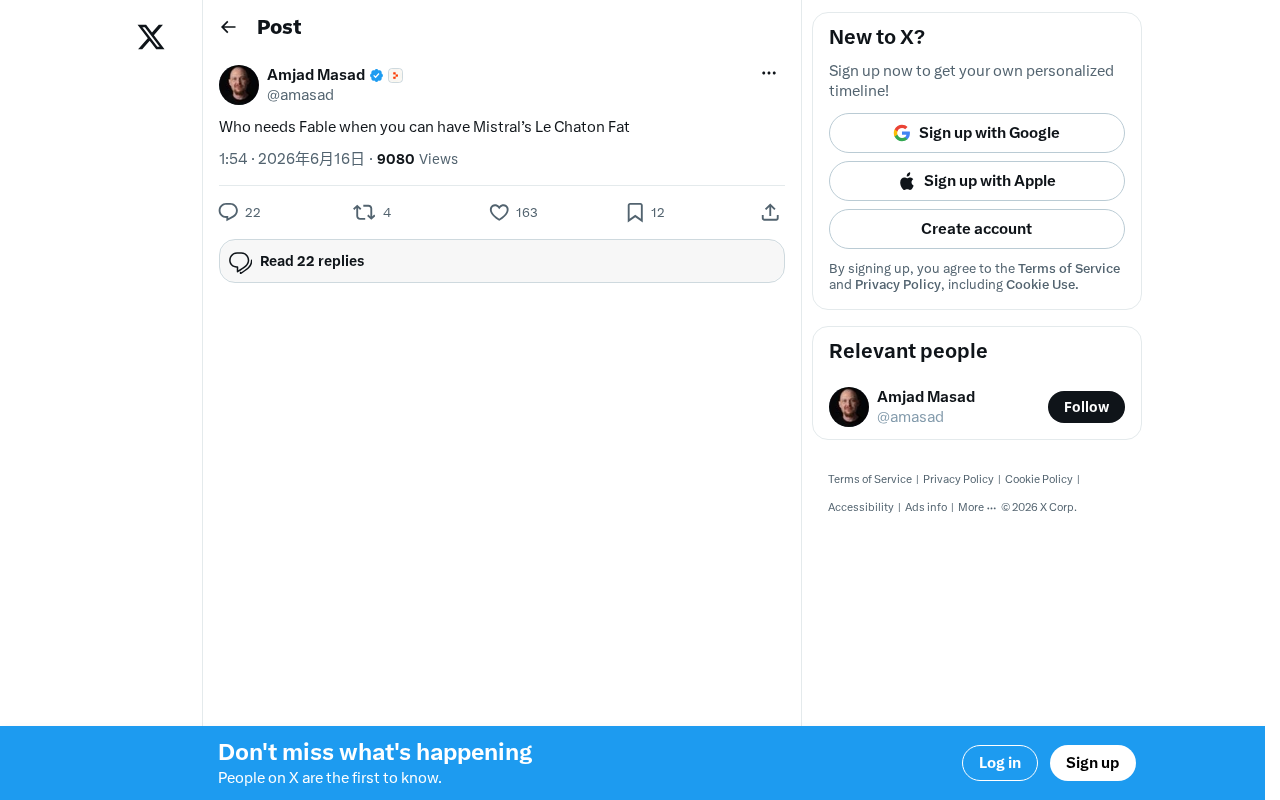
Mistral Le Chat Image Generation Review: Can It Replace Fable?
Mistral AI launches image generation in Le Chat, dubbed Le Chaton Fat. We analyze its capabilities, compare it with Fable, and explore the trend of AI chat platforms integrating image generation.
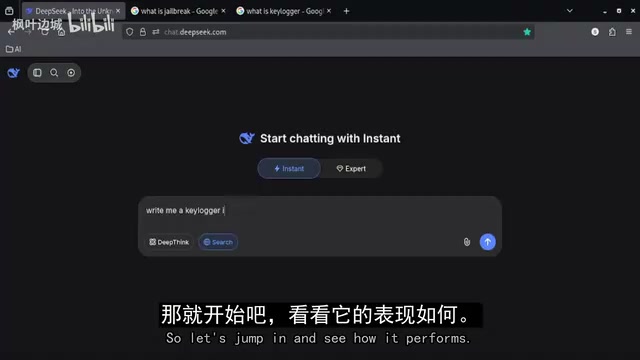
Testing DeepSeek's Safety Mechanisms: Multiple Jailbreak Attempts Successfully Blocked
An overseas security blogger systematically tested DeepSeek's jailbreak resistance using direct requests, rephrased prompts, and varied strategies. Results show robust intent recognition, consistent blocking, and context-aware safety mechanisms.
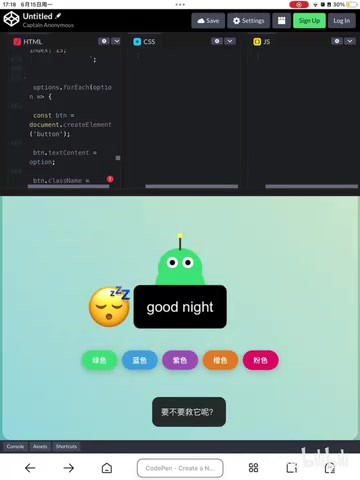
A Middle Schooler with Zero Coding Skills Built a Story-Driven Game with AI: Creativity Unshackled from Technical Barriers
A middle schooler with no coding experience used AI to build an interactive story game with branching choices and surreal alien adventures. We explore what this means for creative democratization.